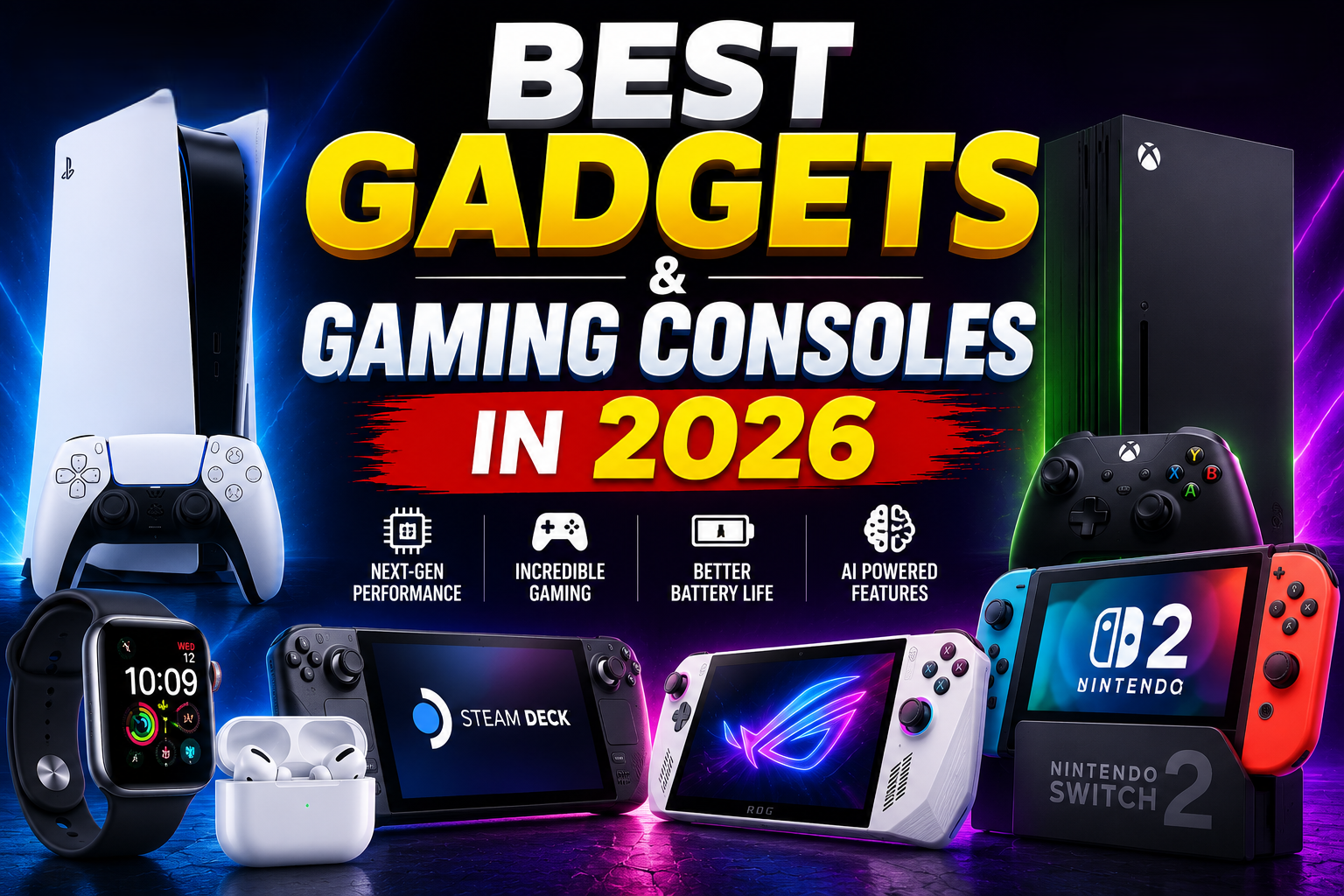
Gaming has evolved far beyond a hobby enjoyed in front of a television or computer screen. It has become a global entertainment industry where powerful hardware, immersive audio, responsive controls, and intelligent accessories work together to create experiences that feel increasingly realistic. From competitive esports and open-world adventures to casual mobile gaming, the right equipment can influence how players experience their favourite titles. Today’s best gaming gadgets are not simply about impressive specifications or expensive designs; they are about comfort, performance, convenience, and the ability to make every gaming session more enjoyable. As brands continue to compete for attention, the market has expanded to include next-generation consoles, precision controllers, wireless headsets, portable gaming PCs, mechanical keyboards, and accessories designed around the needs of modern players.
For gamers looking to upgrade their setup, the challenge is no longer finding a gadget that promises better performance. It is identifying the products that genuinely deliver value. A premium headset may improve communication during multiplayer matches, while a high-refresh-rate monitor can make fast-paced action feel smoother. A carefully designed controller can provide more precise input, and a portable gaming device can bring demanding games beyond the living room. The best gaming gadgets are therefore the ones that match a player’s habits, preferred platform, and budget rather than simply following the latest technology trend.
Gaming Consoles That Continue to Shape the Industry
Gaming consoles remain at the centre of the entertainment experience because they combine powerful hardware, accessible software, and dedicated gaming ecosystems. Unlike traditional gaming PCs, consoles offer a relatively straightforward way to play major releases without having to research individual components or constantly adjust system settings. They also connect players to digital storefronts, multiplayer communities, subscription services, and exclusive titles that help define each platform’s identity. For households seeking a dependable entertainment system, a modern console can serve as both a gaming machine and a hub for streaming and digital media.
The Sony PlayStation 5 continues to attract players who value cinematic storytelling, polished exclusives, and immersive gameplay. Its DualSense controller adds another dimension through adaptive triggers and haptic feedback, allowing supported games to simulate different levels of resistance and tactile sensations. These features can make actions such as drawing a bow, accelerating a vehicle, or moving across different surfaces feel more engaging. For players who prioritise narrative-driven adventures and visually ambitious releases, the PlayStation ecosystem remains an important option to consider.
Meanwhile, the Microsoft Xbox Series X appeals to gamers who want strong performance alongside a flexible digital gaming ecosystem. Its combination of powerful hardware, backward compatibility, and access to services such as Xbox Game Pass makes it attractive to players who enjoy exploring a broad library of titles. Rather than purchasing every game individually, subscribers can access a changing selection of games under eligible plans. The value depends on the available catalogue, subscription pricing, and how frequently a player uses the service, but the model has helped make game discovery an important part of the modern console experience.
Nintendo offers a different approach through its hybrid gaming philosophy. The Nintendo Switch family established a strong following by allowing players to move between television-based gaming and portable play, while the Nintendo Switch 2 builds on that concept with updated hardware and new capabilities. The appeal lies in flexibility: a gaming session can begin at home and continue during travel without requiring a completely separate portable system. Nintendo’s recognisable franchises and family-friendly multiplayer experiences also give its platforms a distinct position in a market often dominated by graphical performance and competitive specifications.
Handheld Gaming Devices Make Powerful Play More Portable
One of the most noticeable changes in gaming hardware is the growing popularity of handheld gaming PCs. These devices bring PC gaming into a compact form, giving players access to selected games from their libraries without being tied to a desk. They are particularly appealing to people who travel frequently, share a television with other household members, or simply prefer gaming from the sofa or bed. However, portability involves trade-offs, including battery life, screen size, cooling, storage, and the performance required by demanding games.
The Valve Steam Deck helped popularise this category by making a large portion of the Steam library accessible through a handheld design. Its integrated controls, portable screen, and console-like interface provide a relatively convenient experience, although game compatibility and performance vary. Players who already own PC games may find the device especially appealing because it can give existing purchases a new purpose. The experience is not identical to playing on a powerful desktop, but the freedom to continue a game away from a fixed setup is a meaningful advantage.
For players seeking a Windows-based handheld, the ASUS ROG Ally family and Lenovo Legion Go range offer alternatives with different screen sizes, controls, and software experiences. Windows compatibility can provide access to a broader selection of PC storefronts and launchers, although navigating a desktop operating system on a small screen can require patience. Before choosing a handheld gaming PC, buyers should consider whether their favourite titles run well, whether the device feels comfortable during long sessions, and how much battery life they can realistically expect from their preferred games.
Gaming Controllers That Deliver Better Precision and Comfort
A controller is one of the most important gaming accessories because it creates the direct connection between a player’s decisions and the action on screen. Small differences in button placement, joystick resistance, trigger sensitivity, and overall shape can significantly influence comfort and accuracy. Casual players may be perfectly satisfied with a standard controller, while competitive gamers often seek additional customisation and faster input options. The right choice depends on the type of games being played and how naturally the controller fits into the player’s hands.
The Sony DualSense controller remains a strong example of how a familiar design can introduce new forms of interaction. Its adaptive triggers and haptic feedback can provide a more detailed physical response in compatible games, while its built-in features support a more immersive console experience. It is particularly attractive to PlayStation players who want to experience games as their developers intended without investing in a specialist controller. Its effectiveness, however, depends on individual game support, and not every title uses its advanced features to the same extent.
Competitive players may prefer premium options such as the Xbox Elite Wireless Controller Series 2 or SCUF controllers designed for customisation. Depending on the model, these products can offer adjustable components, additional rear paddles, alternative thumbsticks, and profiles tailored to different games. Extra inputs can make certain actions easier to perform without removing a thumb from a primary joystick. Yet premium controllers are not automatically better for everyone. Players should assess build quality, compatibility, repairability, warranty coverage, and whether the added controls provide a genuine advantage in the games they regularly play.
Gaming Headsets That Bring Every Detail Closer
Sound plays a crucial role in gaming, influencing atmosphere, awareness, communication, and immersion. A quality gaming headset can make environmental effects easier to notice, improve voice clarity during team-based matches, and reduce distractions from the surrounding environment. While expensive audio equipment is not essential for enjoying every game, the difference between an uncomfortable headset with poor microphone quality and a well-designed model can become obvious during extended sessions.
The SteelSeries Arctis Nova Pro Wireless targets players who want premium audio features and a more versatile headset experience. Depending on the version and platform, its feature set may include active noise cancellation, multiple connection options, and a system designed to make switching between devices easier. These capabilities can be useful for people who move between a console, gaming PC, and other compatible devices. Buyers should carefully check platform support before purchasing because headset features and connection options are not necessarily identical across every version.
For gamers looking for a different balance between price and performance, the HyperX Cloud III and Logitech G PRO X families are worth considering. Comfort, microphone performance, and clear audio are especially important for multiplayer gaming, where teammates need to communicate quickly without repeatedly asking each other to speak louder. Wireless models offer greater freedom of movement, while wired headsets avoid battery charging and may provide a simpler connection. The best gaming headset is ultimately one that fits comfortably, reproduces sound clearly, and supports the devices a player already owns.
Gaming Keyboards and Mice Built for Faster Reactions
For PC gamers, the keyboard and mouse remain essential tools, particularly in competitive shooters, strategy games, and titles that require numerous commands. Gaming keyboards often include mechanical switches, programmable keys, adjustable lighting, and software-based profiles. These features can improve responsiveness and customisation, but their usefulness depends on individual preferences. Some players enjoy the distinct feedback of mechanical switches, while others prefer quieter keys and a more understated design for shared workspaces.
Brands such as Razer, Logitech G, and Corsair offer gaming keyboards across a wide range of price points and feature levels. Razer’s Huntsman and BlackWidow families appeal to players interested in responsive switches and gaming-focused customisation, while Logitech G’s mechanical keyboards combine performance features with designs intended for everyday use. Corsair’s gaming keyboards often provide extensive lighting controls and configuration options. When choosing a keyboard, buyers should pay attention to layout, switch type, typing comfort, software support, and whether a compact design would create more room for mouse movement.
A gaming mouse can be equally important because it affects aiming precision, movement, and long-term comfort. The Logitech G Pro X Superlight series is designed for players who prioritise lightweight construction and wireless performance, while Razer DeathAdder models are known for an ergonomic shape that appeals to many right-handed users. Lightweight mice can feel easier to move rapidly, but weight alone does not determine accuracy. Sensor quality, shape, grip style, button placement, and the size of the player’s hand all influence the experience. A mouse that feels natural after several hours is often a better investment than one chosen purely for its technical specifications.
Gaming Monitors That Make Performance Visible
A powerful gaming PC or console cannot deliver its full visual experience if the display becomes a limitation. Gaming monitors influence image clarity, motion smoothness, colour reproduction, and how quickly players can react to on-screen information. High refresh rates are particularly valuable in competitive games, where moving images can appear smoother than on conventional displays. Resolution, panel technology, response time, adaptive synchronisation, and connectivity also deserve attention when comparing different models.
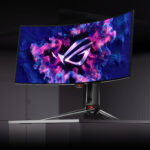
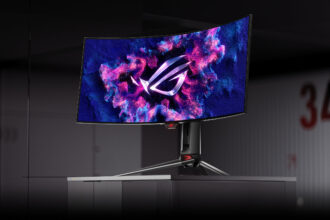
Brands including Alienware, ASUS ROG, and Samsung Odyssey have established strong positions in the gaming monitor category. OLED gaming displays have attracted attention because they can deliver deep blacks, strong contrast, and rapid pixel response, making them appealing for atmospheric games as well as fast-paced action. High-refresh-rate LCD monitors remain compelling alternatives, particularly for buyers who prioritise affordability, brightness, or a specific screen size. The ideal display depends on the games being played, the power of the connected hardware, and the available desk space.
It is important to avoid buying a monitor based on a single specification. A 240Hz display may be attractive to competitive players, but it offers less practical benefit if the system cannot consistently produce the required frame rates. Similarly, moving to a higher resolution can improve image detail while placing additional demands on graphics hardware. Matching the display to the capabilities of the gaming system helps ensure that the upgrade delivers a noticeable improvement rather than an impressive number on a product page.
Gaming Chairs, Desks, and Accessories That Improve Everyday Comfort
Gaming performance is not determined by electronics alone. The chair, desk, lighting, and cable arrangement surrounding a setup can influence how comfortable and organised the experience feels. Long sessions spent in an awkward position may cause discomfort, making ergonomics an important consideration for anyone who games regularly. A supportive chair, suitable desk height, and enough space for natural arm movement can make a setup more practical without requiring the most expensive equipment available.
Brands such as Secretlab and Herman Miller occupy different positions in the premium seating market, offering products aimed at buyers with varying priorities and budgets. A gaming-focused chair may feature a distinctive design and adjustable support, while an ergonomic office chair may prioritise flexibility and long-term everyday use. Neither category guarantees a perfect fit for every person. Seat dimensions, lumbar support, adjustability, material, and return policies are more useful factors to consider than appearance alone.
Other accessories can solve smaller problems that gradually become frustrating. A large mouse pad can provide a consistent surface for movement, a controller charging station can reduce cable clutter, and a powered USB hub can make it easier to connect compatible peripherals. A monitor arm may free up desk space, while a headset stand keeps audio equipment within reach. These additions rarely attract the same attention as a new console or graphics card, but practical accessories can make an existing gaming setup feel considerably more polished.
Streaming Gear for Gamers Who Want to Create Content
Gaming is no longer limited to playing games privately. Streaming, live commentary, tutorials, and gameplay videos have created a parallel market for creators who need equipment that captures their personality as well as their performance. A dedicated microphone can improve voice clarity, while a webcam can make streams feel more personal. Capture cards are particularly useful for creators who want to record or stream console gameplay through a computer, although the exact requirements depend on the console, resolution, frame rate, and streaming software.
The Elgato HD60 X is an example of a capture device designed for creators who want to bring compatible gaming sources into a streaming workflow. Products in Elgato’s broader ecosystem also include microphones, lighting, and control interfaces intended to simplify content production. For audio, USB microphones from brands such as Shure and HyperX can be attractive starting points, depending on the model and recording environment. Better equipment can help, but microphone placement, room acoustics, background noise, and consistent speaking levels remain important to achieving professional-sounding results.
Lighting is another accessory that can make a visible difference. A well-positioned light can improve webcam image quality without requiring an expensive camera. Creators should focus on even illumination, a clean background, and comfortable placement before investing in elaborate studio equipment. Starting with a dependable microphone and sensible lighting often makes more sense than purchasing an entire streaming setup at once.
How to Choose the Best Gaming Gadgets Without Overspending
The smartest gaming upgrade begins with identifying the problem that needs to be solved. If a console struggles to display games at the desired resolution or frame rate, a controller may not address the underlying limitation. If multiplayer communication is difficult, a headset with a clear microphone could offer a more immediate improvement than an expensive monitor. Players who experience discomfort during extended sessions may benefit more from improving their seating and desk arrangement than purchasing another performance accessory.
Compatibility should also influence every buying decision. A controller may support one platform but lack certain functions on another, while wireless headsets can differ in their support for Bluetooth, dedicated USB transmitters, and console-specific connections. Handheld gaming PCs require attention to game compatibility, storage capacity, and battery expectations. Before purchasing, buyers should review the exact model, included accessories, warranty conditions, and available replacement parts rather than relying exclusively on a brand name or influencer recommendation.
Budget allocation matters just as much as product selection. A balanced setup built around a reliable gaming system, a comfortable controller, a suitable display, and good audio can deliver a better experience than an expensive collection of mismatched accessories. There is also little reason to replace equipment that already meets a player’s needs simply because a newer version has appeared. Gaming hardware continues to evolve, but meaningful upgrades should solve real problems, introduce useful features, or support games and activities that were previously difficult to enjoy.
The Future of Gaming Gadgets Is About Personalised Experiences
The next phase of gaming hardware will likely place greater emphasis on flexibility, connectivity, customisation, and more immersive interaction. Handheld gaming PCs are expanding the ways players access their libraries, wireless peripherals are reducing the restrictions of traditional setups, and advanced displays are improving visual presentation. At the same time, software ecosystems and subscription services are changing how players discover games and decide which platforms deserve their attention. These developments suggest that gaming hardware will increasingly be judged by how effectively it fits into everyday life rather than by specifications alone.
For brands, this creates opportunities to build stronger relationships with consumers through products that combine thoughtful design, reliable performance, and genuine convenience. For gamers, it means having more choices than ever before, from affordable accessories that improve everyday comfort to premium devices designed for highly specialised needs. The best gaming gadgets are not necessarily the newest or most expensive products on the market. They are the ones that help players enjoy their favourite games, connect with friends, express their creativity, and build a setup that feels right for them.
Ultimately, choosing the right gaming equipment is about creating a better experience at every stage, from the moment a player picks up a controller to the final minutes of a competitive match or an unforgettable single-player adventure. Whether the priority is console gaming, portable entertainment, precise PC controls, immersive audio, or streaming content, a carefully chosen combination of hardware and accessories can make a meaningful difference. In a market filled with constant launches and ambitious promises, informed decisions remain the most valuable upgrade of all.