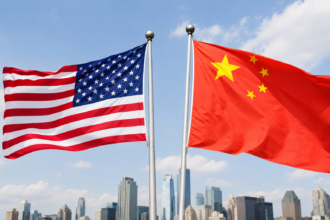
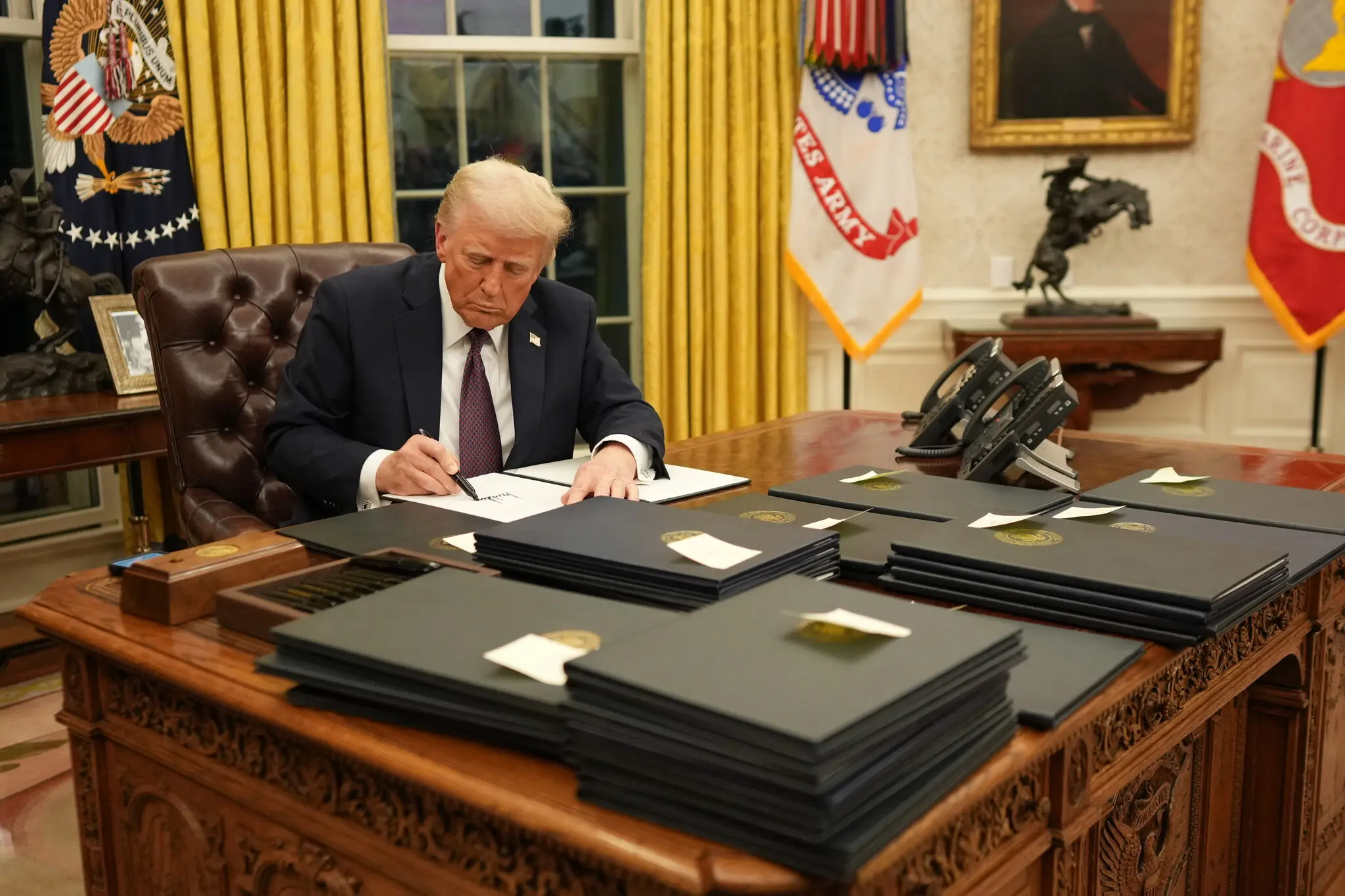
President Donald J. Trump has sent a jolt through global markets and diplomatic circles by raising the United States’ global import tariff from 10% to 15%, effective immediately, in the wake of a watershed U.S. Supreme Court ruling that curtailed his trade authority. What began as a legal setback has evolved into one of the most consequential trade policy shifts in recent U.S. history — with far-reaching implications for supply chains, multinational business strategy, and the global economic order.
The move comes less than 24 hours after the Supreme Court struck down key elements of Trump’s tariff regime, ruling that the administration exceeded its authority under the International Emergency Economic Powers Act (IEEPA). Trump responded with defiance, first announcing a 10% tariff under an alternative statutory authority and then upping the ante to the maximum 15% allowed under Section 122 of the Trade Act of 1974.
The result: a new tariff floor on imported goods worldwide — a seismic shift in U.S. trade policy that will test the resilience of global commerce and corporate planning.
From Judicial Restraint to Executive Escalation
The Supreme Court’s 6–3 decision was a major rebuke to the use of emergency powers to enact broad economic tariffs. Justices ruled that tariff authority — fundamentally a form of taxation — resides with Congress, not the president alone. That invalidated much of the “Liberation Day” tariffs Trump unleashed last year.
Instead of pausing, the administration pivoted to Section 122, a rarely used statute from the Trade Act of 1974 that allows the president to impose temporary import surcharges — up to 15% to address serious balance-of-payments imbalances or trade deficits. By immediately invoking this route, the White House ensured that tariffs remained in effect, and even elevated them to their statutory maximum.
Officials contend the tariff is temporary — 150 days unless extended by Congress — and legally sound under the alternative authority. Critics say the statute itself is untested in this context and anticipate further challenges in court.
A Global Shockwave: Markets, Supply Chains, and Diplomatic Strain
The immediate market reaction reflected uncertainty rather than celebration. Major stock indices experienced volatility, with exporters and manufacturing sectors seeing downward pressure as trading partners grappled with the implications of the abrupt rate hike.
International reactions have been swift:
- The European Union has publicly resisted the tariff increase, indicating it will not accept unilateral changes to previously negotiated trade terms and even pausing ratification of a key EU–U.S. trade agreement to seek clarity.
- Other major trading nations — including Japan, India, and Brazil — are reassessing export strategies as the new levy reshapes competitive dynamics.
- Economists warn the policy adds layers of uncertainty for global manufacturers and could disrupt investment decisions already strained by geopolitical tensions.
For multinational corporations with intricate supply chains, the sudden tariff escalation compounds planning risk. Costs on intermediate goods may rise, pass-through price effects could squeeze margins, and firms may accelerate relocation or diversification strategies to mitigate exposure. Chief financial officers and trade strategists are now reevaluating tariff models and engaging more intensively with customs forecasting and tariff engineering.
What This Means for U.S. Companies
Domestically, the tariff narrative is double-edged:
- Pro-tariff constituencies view the rate hike as a restoration of American leverage in global trade negotiations — a tool to counter persistent deficits and encourage onshoring.
- Business groups, however, warn of higher input costs, disrupted value chains, and inflationary pressure if tariffs are passed onto consumers and businesses. Many import-reliant sectors had welcomed the Supreme Court’s limitation on executive tariff powers as a check against unpredictability.
Moreover, the question of refunds for tariffs collected under the now-invalidated emergency powers regime remains unsettled and could trigger legal challenges from companies seeking reimbursement.
Geopolitical and Trade Order Implications
Beyond economics, the tariff escalation could reverberate through diplomatic relations. Countries subject to the 15% levy may consider retaliatory measures or reevaluate cooperation on broader strategic issues. Given the interconnectedness of trade partnerships, such responses could extend far beyond tariff policy into spheres like technology, defense, and climate collaboration.
Trade negotiators stress that stability and predictability are central to economic partnerships — and sudden unilateral shifts undermine confidence in long-term agreements. The pause on EU trade deal ratification highlights the diplomatic fragility exposed by rapid tariff policy reversals.
Legal and Political Aftershocks in Washington
The tariff tug-of-war also feeds into broader debates over separation of powers and executive authority. The Supreme Court’s limitation of emergency tariff powers was a substantive check on unilateral executive action. The administration’s quick pivot to alternative legal authority underscores the political stakes of trade policymaking.
In Congress, lawmakers from both parties are pressing for clearer statutory guidance on tariff authority, reflecting bipartisan discomfort with a framework that allows swift unilateral adjustments in global trade policy.
What Comes Next: A Watchlist for Business Leaders
As this policy unfolds, executives and investors should monitor:
1. Congressional Action: Whether lawmakers extend the 15% tariff beyond 150 days or provide new statutory backing.
2. Legal Challenges: Potential litigation challenging Section 122’s applicability or the refund mechanism for previously collected tariffs.
3. Retaliatory Moves: Responses from major trading partners that could escalate trade tensions or prompt negotiations.
4. Supply Chain Adjustments: Shifts in sourcing and manufacturing footprints as companies hedge against heightened tariff risk.
5. Consumer Price Dynamics: Whether cost pressures flow through to consumers, altering demand patterns and inflation outlooks.
The Bottom Line
President Trump’s decision to raise the global tariff rate to 15% in the wake of a Supreme Court rebuke marks a high-stakes escalation in U.S. trade policy. While aimed at bolstering American leverage and defending domestic industries, the move injects fresh uncertainty into global markets, complicates diplomatic relationships, and challenges long-standing norms of tariff governance.
For business leaders and investors, the message is clear: prepare for an era where trade policy volatility is an input to risk models, not an outlier to be ignored.