The healthcare industry is experiencing a major technological transformation, driven by advanced health wearables and AI-powered assistants. What once began as simple fitness trackers has evolved into sophisticated health monitoring systems capable of tracking vital signs, predicting illnesses, and offering real-time medical insights. Combined with artificial intelligence, these innovations are empowering individuals to take control of their health like never before.
As global healthcare systems face rising costs, aging populations, and lifestyle-related diseases, advanced health wearables and AI assistants are emerging as critical tools for prevention, early diagnosis, and personalized care.
The Evolution of Health Wearables
Early health wearables focused primarily on step counting and basic activity tracking. Devices such as pedometers and early smart bands provided limited data and lacked medical relevance. However, rapid advancements in sensor technology, connectivity, and artificial intelligence have dramatically expanded their capabilities.
Modern health wearables now monitor:
- Heart rate variability
- Blood oxygen levels (SpO₂)
- Sleep patterns and quality
- Stress levels
- Skin temperature
- ECG (electrocardiogram)
- Physical activity and recovery
These devices have moved beyond fitness, entering the realm of digital healthcare and preventive medicine.
The Role of Artificial Intelligence in Health Wearables
Artificial intelligence plays a crucial role in turning raw health data into meaningful insights. AI algorithms analyse vast amounts of data collected from sensors to detect patterns, identify abnormalities, and provide actionable recommendations.
Key AI Capabilities in Health Wearables
- Predictive Health Analysis
AI can detect early signs of potential health issues such as irregular heart rhythms, sleep disorders, or elevated stress levels. This allows users to seek medical attention before conditions worsen. - Personalized Health Insights
AI assistants adapt to individual users by learning their habits, routines, and baseline health metrics. This personalization leads to more accurate feedback and tailored health recommendations. - Real-Time Alerts and Notifications
If abnormal readings are detected—such as unusually high heart rate or low oxygen levels—AI systems can alert users immediately, potentially preventing medical emergencies. - Continuous Learning
With machine learning, AI assistants improve over time by analyzing long-term trends rather than isolated data points.
Advanced Health Wearables in Use Today
Advanced wearables are already making a significant impact across various health domains.
Smartwatches and Fitness Bands
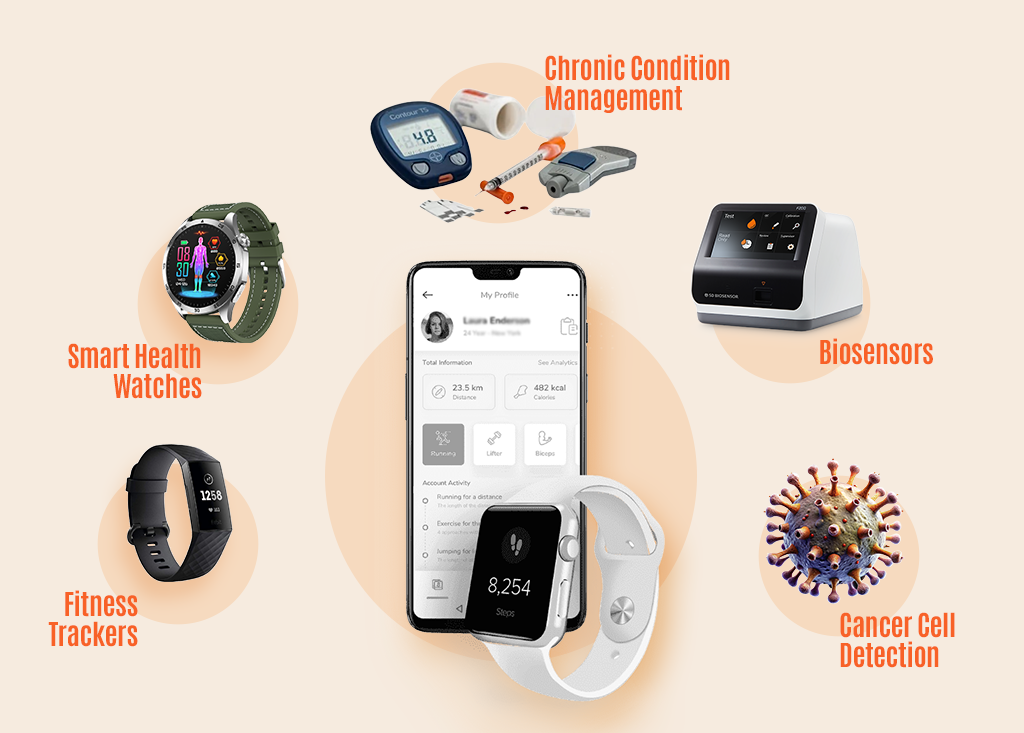
Today’s smartwatches integrate medical-grade sensors capable of ECG monitoring, fall detection, and blood oxygen tracking. Some devices can even detect irregular heartbeats and notify users of potential atrial fibrillation.
Smart Rings and Patches
Smart rings and wearable patches offer discreet, continuous monitoring of vital signs. These devices are gaining popularity for sleep tracking, recovery analysis, and long-term health monitoring.
Medical Wearables
Advanced medical wearables are being used for chronic disease management. Devices that monitor glucose levels, blood pressure, and respiratory activity help patients manage conditions such as diabetes, hypertension, and asthma more effectively.
AI Assistants: The Digital Health Companions
AI assistants are becoming the bridge between health data and user action. These digital companions process wearable data and provide guidance, motivation, and health insights.
How AI Assistants Enhance Healthcare
- Health Coaching: AI assistants act as personal health coaches, offering reminders, exercise suggestions, and lifestyle advice.
- Symptom Analysis: Some AI assistants can analyze symptoms and recommend whether medical consultation is necessary.
- Medication Management: AI-powered reminders help users take medications on time, reducing the risk of missed doses.
- Mental Health Support: AI assistants are increasingly used for stress management, mindfulness exercises, and emotional well-being support.
By combining data from wearables with conversational interfaces, AI assistants make healthcare more accessible and user-friendly.
Integration with Healthcare Systems
One of the most promising aspects of advanced health wearables is their integration with healthcare providers. Data collected by wearables can be securely shared with doctors, enabling remote monitoring and more informed medical decisions.
This integration supports:
- Telemedicine consultations
- Remote patient monitoring
- Early intervention and preventive care
- Reduced hospital visits and healthcare costs
For patients with chronic conditions, continuous monitoring through wearables allows doctors to track health trends without requiring frequent in-person appointments.
Benefits for Preventive Healthcare
Preventive healthcare is one of the biggest advantages of advanced health wearables and AI assistants. Instead of reacting to illness, these technologies focus on early detection and prevention.
Benefits include:
- Early identification of health risks
- Improved lifestyle awareness
- Better management of stress and sleep
- Encouragement of healthy habits
- Reduced long-term medical expenses
By promoting proactive health management, wearables and AI assistants help shift healthcare from treatment-focused to prevention-focused models.
Challenges and Ethical Concerns
Despite their benefits, advanced health wearables and AI assistants face several challenges.
Data Privacy and Security
Health data is highly sensitive. Ensuring secure data storage, encryption, and user consent is critical to maintaining trust.
Accuracy and Reliability
While wearable sensors are improving, they are not always as accurate as clinical-grade equipment. Over-reliance on wearables without medical validation can sometimes lead to false alarms or unnecessary anxiety.
Accessibility and Cost
Advanced health wearables can be expensive, limiting access for lower-income populations. Bridging this digital health gap remains an important challenge.
Ethical Use of AI
The use of AI in healthcare raises ethical questions related to bias, transparency, and accountability. Developers must ensure AI systems are fair, explainable, and used responsibly.
The Future of Health Wearables and AI Assistants
The future of advanced health wearables and AI assistants is incredibly promising. Emerging trends include:
- Non-invasive glucose monitoring
- Advanced mental health analytics
- AI-driven disease prediction
- Integration with smart home health systems
- Personalized nutrition and fitness planning
As technology continues to evolve, health wearables will become smaller, smarter, and more affordable, while AI assistants will become more intuitive and human-like in interaction.
Conclusion
Advanced health wearables and AI assistants are redefining the way individuals monitor and manage their health. By combining real-time data collection with intelligent analysis, these technologies empower users to take proactive control of their well-being.
As adoption increases and technology matures, health wearables and AI assistants will play a central role in shaping the future of healthcare—making it more personalized, preventive, and accessible for people around the world.