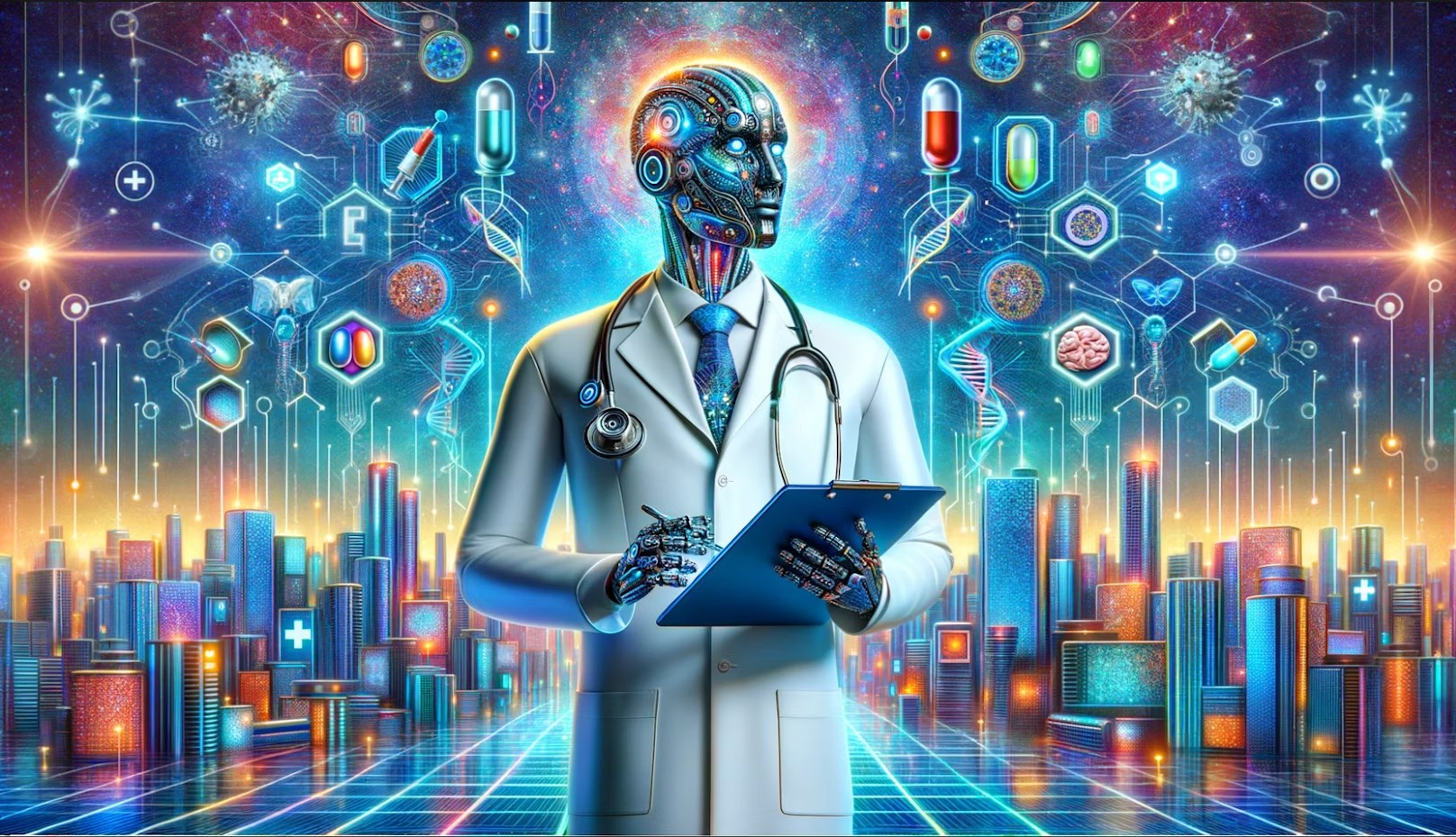
Artificial intelligence is redefining healthcare like no technology before it. From speeding up diagnoses to improving patient outcomes and reshaping hospital workflows, AI is becoming a central pillar of modern medicine.
Revolutionizing Medical Diagnosis
AI-powered diagnostic tools can scan medical images X-rays, MRIs, CT scans with exceptional accuracy. Algorithms trained on millions of images can detect:
- Tumors
- Bone fractures
- Heart abnormalities
- Neurological disorders
In many cases, AI systems can identify conditions earlier than human doctors, enabling faster intervention.
Personalized Treatment
AI enables personalized medicine by analyzing:
- Genetic profiles
- Patient histories
- Lifestyle data
- Clinical research
For example, AI tools can guide oncologists in selecting personalized chemotherapy combinations, improving outcomes and reducing side effects.
Wearables and Remote Monitoring
Wearable devices produce immense amounts of health data. When combined with AI:
- Irregular heart rhythms can be spotted instantly
- Sleep and stress levels can be analyzed
- Early warning signs of chronic diseases can be identified
This shifts healthcare from reactive to preventive.
Hospital and Administrative Optimization
Hospitals use AI to:
- Predict patient admissions
- Optimize bed allocations
- Manage supply chains
- Automate billing
This improves efficiency and reduces operational costs.
AI in Drug Discovery
AI is transforming pharmaceutical research. Instead of years spent testing chemical compounds, AI can:
- Predict molecular interactions
- Identify promising drug candidates
- Shorten clinical trial cycles
This acceleration was evident during the COVID-19 pandemic, where AI helped researchers analyze virus structures and speed up vaccine development.
Challenges and Ethical Concerns
AI adoption also raises concerns:
- Data privacy — patient records must be protected.
- Bias — faulty datasets can lead to misdiagnoses.
- Accountability — who is responsible if AI makes a wrong call?
Regulation and transparency will be vital as AI continues expanding in healthcare.
The Future: AI-Assisted Medicine
The future will likely see:
- Fully automated diagnostic labs
- AI-guided surgeries
- Virtual health assistants
- Predictive healthcare at population scale
AI will not replace doctors it will empower them to provide faster, more accurate, and more personalized care.