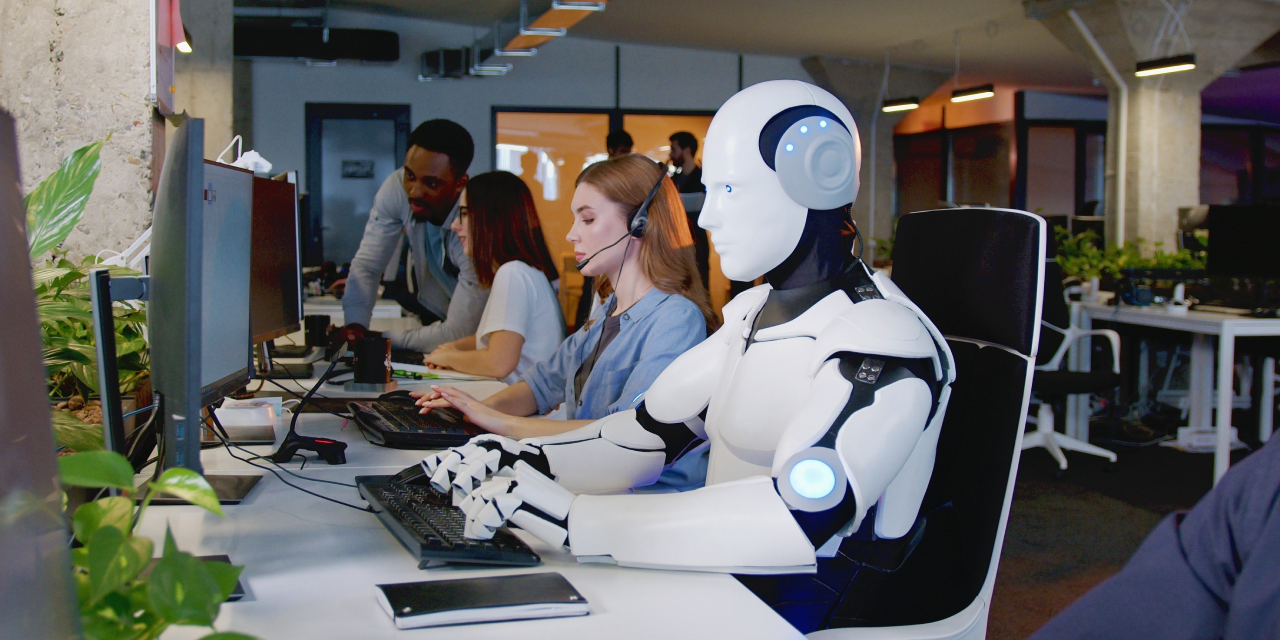
By the time the world realized AI was revolutionary, young people had already moved on to building with it.
Artificial Intelligence is often described as the defining technology of our era. Governments debate it. Corporations race to dominate it. Economists analyse its productivity curves. But amid the policy frameworks and trillion-dollar valuations, one force has quietly shaped the AI revolution from the ground up:
Youth.
Generation Z and young millennials didn’t just adopt AI — they operationalized it. They didn’t wait for permission. They experimented, monetized, remixed, disrupted, and redefined what work, creativity, education, and influence look like in an AI-powered world.
And in doing so, they’ve changed not only industries — but the global social fabric itself.
This is the story of how youth turned artificial intelligence into leverage.
The First Native AI Generation
Every generation has a defining technology.
Baby boomers had television.
Gen X had the internet.
Millennials had smartphones.
Gen Z? They have AI.
For this generation, artificial intelligence is not a futuristic concept. It is infrastructure. Recommendation engines shape their feeds. Smart assistants organize their schedules. Algorithms suggest their music. AI curates their social circles.
Unlike previous generations that had to learn technology, youth grew up inside it.
That familiarity created something powerful:
Fearlessness.
Where older professionals asked, “Will this replace us?”
Young builders asked, “How do we use this?”
AI as the Great Equalizer
For decades, access determined opportunity. Access to elite education. Access to capital. Access to networks. Access to tools.
AI has begun dismantling those barriers.
Today, a 19-year-old in a small town with a laptop can:
- Design brand-quality graphics using generative tools
- Write production-level code with AI assistance
- Launch a global e-commerce brand
- Produce music without a studio
- Publish a book without a publisher
The cost of creation has collapsed.
In previous eras, ambition required infrastructure. Today, ambition requires Wi-Fi.
Youth recognized this shift before institutions did.
From Consumers to Creators
The early internet made youth prolific content consumers. AI turned them into accelerated creators.
The Rise of the Solo Empire
AI tools now allow one individual to operate like an entire company:
- Content strategist
- Copywriter
- Video editor
- Designer
- Data analyst
- Customer support agent
Young entrepreneurs are launching startups with lean teams — sometimes alone — powered by AI copilots.
They automate workflows. They personalize marketing. They analyse consumer behaviour in real time.
And they scale faster than traditional business models ever allowed.
The result?
A surge of AI-enabled micro-enterprises redefining global commerce.
Education, Rewired
Traditional education was built for standardization. AI thrives on personalization.
Young learners are no longer dependent on a single curriculum or pace. AI-driven platforms provide:
- Adaptive learning paths
- Real-time feedback
- Skill-based certifications
- Multilingual access
- Interactive simulations
The shift is profound: learning is no longer linear — it’s dynamic.
Students who once struggled in rigid systems now thrive with personalized support. Skill acquisition has accelerated. Self-taught developers, marketers, analysts, and designers are entering industries without conventional gatekeepers.
The degree still matters.
But the skill matters more.
And AI helps youth build it faster.
The Creative Renaissance
For centuries, creativity was bound by resources. Film required cameras. Music required studios. Art required materials.
AI dissolved those constraints.
Now, creativity operates at the speed of imagination.
Young artists use generative models to:
- Prototype fashion collections
- Produce cinematic short films
- Compose orchestral scores
- Build immersive digital worlds
- Write novels with AI collaboration
Critics call it automation.
Creators call it amplification.
AI does not replace creativity — it extends it.
The youth-led creative economy is entering a renaissance — one where originality is shaped by human vision and machine execution.
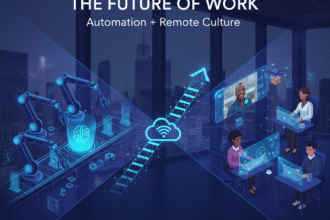
Work Without Borders
AI has redefined the geography of opportunity.
Freelancers now use AI-enhanced productivity to compete globally. A young analyst in India can provide insights to a firm in London. A designer in Nigeria can serve clients in New York. A developer in Indonesia can build for Silicon Valley startups.
Automation of repetitive tasks has increased efficiency allowing young professionals to focus on strategic and creative contributions.
Remote work, powered by AI systems, has broken location barriers.
Talent is no longer confined by birthplace.
This redistribution of economic power may become one of AI’s most transformative global effects.
The New Currency: Intelligence Leverage
In the industrial age, leverage came from machines.
In the digital age, leverage came from networks.
In the AI age, leverage comes from intelligence.
Youth understand this intuitively.
They use AI to:
- Analyse markets before launching products
- Predict trends before they peak
- Test ideas before investing capital
- Automate revenue streams
This creates a powerful asymmetry.
A single individual with AI tools can outperform traditional teams that rely solely on manual processes.
Speed has become strategy.
Adaptability has become currency.
And youth are fluent in both.
Social Influence in the Algorithm Era
AI doesn’t just shape productivity — it shapes culture.
Social platforms run on algorithmic intelligence. Youth, as digital natives, have learned how to navigate and optimize within those systems.
They:
- Decode engagement patterns
- Use AI to refine content
- Analyse audience behaviour
- Automate posting and insights
The influencer economy, once built on personality alone, is now powered by data-driven optimization.
Some creators are even designing virtual influencers — entirely AI-generated personas with millions of followers.
Reality and simulation are converging.
And youth are orchestrating the blend.
AI for Social Impact
While critics focus on commercial gain, many young innovators are applying AI toward social good.
Across the world, youth-led initiatives are using AI to:
- Monitor climate patterns
- Improve crop yield predictions
- Detect early signs of disease
- Map disaster-prone regions
- Improve accessibility tools for disabilities
Young developers are building chatbots for mental health support. Data scientists are analysing environmental degradation patterns. Engineers are developing AI-driven low-cost healthcare diagnostics.
The narrative that youth are “addicted to screens” ignores a deeper reality:
They are building systems that may solve generational problems.
Ethical Leadership from Below
Interestingly, youth are also among the loudest voices demanding ethical AI.
They question:
- Bias in algorithms
- Data privacy practices
- Surveillance risks
- Job displacement
- Environmental costs of computing
They organize digital campaigns. They join research collectives. They participate in policy dialogues.
Unlike earlier tech waves, this generation is not blindly optimistic. They are simultaneously builders and critics.
This duality may shape AI’s trajectory more than any corporate roadmap.
The Psychological Shift
Beyond economics and innovation, AI has changed how youth perceive possibility.
When tools respond intelligently, barriers feel smaller.
When information is instantly accessible, curiosity accelerates.
When automation reduces friction, experimentation increases.
The mindset has shifted from:
“Is this possible?”
to
“How fast can I build it?”
This shift influences ambition itself.
The Challenges No One Can Ignore
Yet, the transformation is not without risk.
Automation Anxiety
As AI advances, entry-level jobs face disruption. Youth must constantly reskill to remain competitive.
Misinformation
AI-generated deepfakes and synthetic content blur truth boundaries.
Mental Health Pressures
Algorithmic comparison culture intensifies social pressure.
Digital Divide
Not all youth have equal access to AI tools or digital literacy.
The AI revolution is empowering — but uneven.
How societies address these inequalities will determine whether AI becomes a bridge or a barrier.
A World Reshaped
Look across sectors and the impact is undeniable.
Education is personalized.
Entrepreneurship is democratized.
Creativity is accelerated.
Work is decentralized.
Influence is algorithmic.
Opportunity is global.
The relationship between human intelligence and machine intelligence is no longer hierarchical — it’s collaborative.
Youth are not replacing themselves with machines.
They are extending themselves through machines.
What Comes Next?
If the last five years were about adoption, the next decade will be about integration.
We may see:
- AI-native companies built entirely by young founders
- Hyper-personalized education ecosystems
- Creator economies powered by synthetic media
- Climate-tech innovations driven by predictive models
- Entirely new industries that don’t yet have names
The defining question will not be whether AI grows.
It will be:
Who shapes its direction?
And increasingly, the answer is: youth.
The Final Insight
History remembers technologies.
But it is people who activate them.
The steam engine did not change the world alone.
The internet did not either.
People did.
Today’s youth have taken artificial intelligence — a tool of staggering capability — and turned it into leverage, livelihood, and leadership.
They are not waiting for the future.
They are building it.
And if the trajectory continues, the AI age will not simply be defined by algorithms.
It will be defined by the generation that mastered them first.