In early 2026, the world’s geopolitical attention unexpectedly shifted northward to a remote island in the Arctic Greenland as tensions between the United States and European allies escalated over who should control or influence the strategically vital territory. This episode represents one of the most serious strains on transatlantic diplomacy in decades, raising critical questions about sovereignty, alliance cohesion, global security, and the future of international cooperation.
Why Greenland Matters
Greenland, the world’s largest island, is an autonomous territory within the Kingdom of Denmark. It spans more than two million square kilometres but has a small population of around 56,000. Despite its sparse population, Greenland has become geopolitically significant for several reasons:
- Strategic Military Location: Greenland sits between North America and Europe, overlooking the North Atlantic and the so-called GIUK (Greenland–Iceland–United Kingdom) gap a crucial naval and air transit corridor critical for NATO defence strategy in the North Atlantic.
- Arctic Security Interests: As the Arctic ice recedes due to climate change, the region is opening up for new shipping lanes, military logistics, and strategic surveillance far from traditional European and North American borders.
- Natural Resources: The island is believed to be rich in rare minerals and fossil fuels. Western powers see these resources as essential for future energy and technology transitions.
- Existing Defence Agreements: The United States already maintains the Pituffik Space Base (formerly Thule Air Base) in northern Greenland a pivotal installation for space uplift, missile warning, and radar capabilities.
These factors make Greenland both a nation-state’s dream and an alliance partner’s strategic necessity.
The Spark: Trump’s Bold Push on Greenland
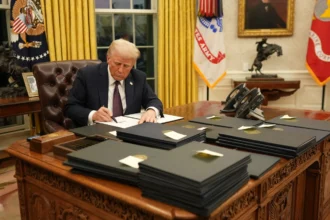
In January 2026, U.S. President Donald Trump reignited a controversial political ambition to bring Greenland into the American sphere of influence. While earlier U.S. interest in Greenland had historically been limited to defense cooperation and scientific research, Trump’s public rhetoric took a dramatic turn. He called for negotiations on U.S. control of Greenland and suggested that Washington might acquire the territory a suggestion that was widely opposed by both Denmark and Europe.
At the World Economic Forum in Davos, Trump explicitly pressed for a deal on Greenland, asserting that the U.S. needs Greenland for security reasons and questioning why it “wasn’t retained” by America after World War II. His speech marked by controversial statements regarding sovereignty and historical claims intensified concerns among NATO allies and global observers alike.
Trump initially threatened to impose tariffs of 10–25% on European goods if nations including Denmark, France, Germany, the U.K., and others did not back his Greenland proposals. Markets reacted negatively, with stock indices sliding and oil & gas stocks gaining on risk premiums tied to geopolitical tensions.
Europe’s Unified Pushback
European governments responded swiftly and decisively to the U.S. approach:
1. Sovereignty and Legal Rejection:
European leaders reaffirmed that Greenland’s sovereignty rests solely with Denmark and the Greenlandic people, not any external power. The European Parliament explicitly supported Greenland’s territorial integrity and condemned threats or coercive actions that could undermine international law.
2. Suspension of a Trade Deal:
In response to U.S. tariff threats linked to Greenland, the European Parliament suspended ratification of a U.S.–EU trade agreement, signalling that economic cooperation was being sacrificed over perceived violations of alliance trust.
3. NATO Cohesion at Risk:
Many European capitals warned that any attempt to alter the territorial status of a NATO member without its consent would jeopardize the mutual defence pact that has bound North America and Europe since 1949. Denmark’s Prime Minister publicly stated that sovereignty is non-negotiable and that any future discussions must directly involve both Danish and Greenlandic authorities.
4. Broader Diplomatic Backing:
Joint statements from multiple EU members — including France, Germany, Italy, Spain, and others underscored that Greenland’s future should be decided by its own people, affirming that they would support Denmark’s position.
Potential Implications for NATO and Global Security
The Greenland row is more than a diplomatic squabble it carries significant implications for global security architecture:
Alliance Fragmentation:
If the U.S. were to pursue territorial control over Greenland without allied endorsement, it could erode confidence within NATO, potentially leading to fractures in collective defense commitments. Critics argue this could embolden adversaries like Russia and China, who watch the dispute with interest and, in some quarters, with glee. Russian commentators have suggested U.S. manoeuvres deepen NATO’s divisions or dilute Western cohesion.
Rule-Based Order Under Strain:
The dispute raises broader questions about the international rules-based system — the set of norms and legal frameworks that govern state conduct and territorial integrity. Many European and international analysts argue that coercive tactics (such as tariff threats) undermine trust and set dangerous precedents.
Local Resistance and Autonomy Movements:
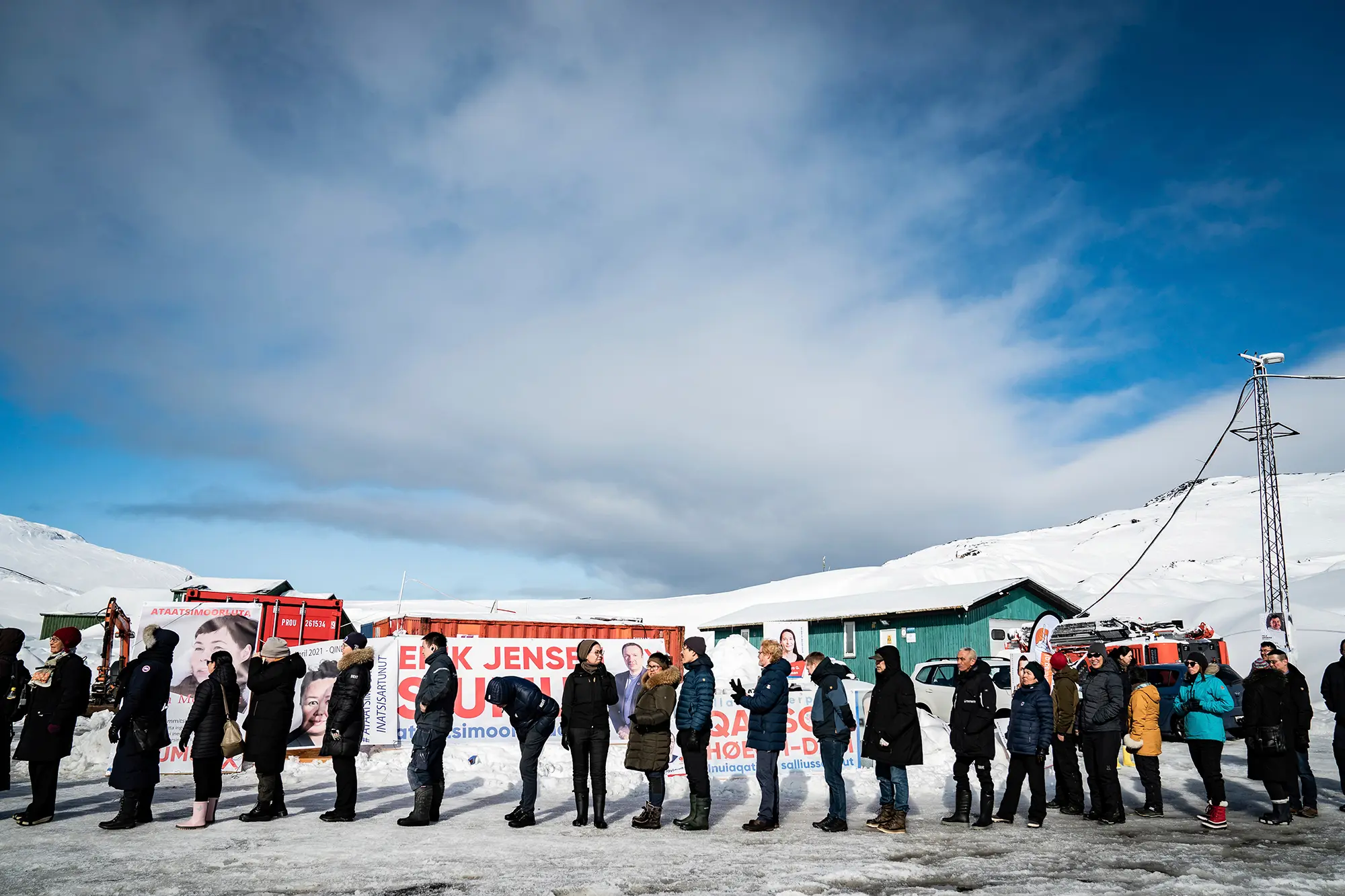
Within Greenland itself, protests and political mobilization against external interference have grown. Greenlanders have expressed strong opposition to being treated as a bargaining chip in great-power diplomacy, emphasizing their right to self-determination.
A Temporary De-Escalation — But Not a Resolution
In late January 2026, Trump announced a retreat from the threatened European tariffs, linking the decision to what he described as a “framework” for a future Arctic agreement shaped with NATO support. This was presented as a diplomatic reprieve and a step toward cooperation on shared Arctic interests.
However, European leaders were cautious, pointing out that no formal treaty or binding agreement had been finalized, and that sovereignty issues remained unresolved. Danish officials reiterated that any future cooperation must respect Greenland’s autonomy and legal status.
Greenland and Geopolitics: The New Fault Line in U.S.–Europe Relations
In early 2026, the world’s geopolitical attention unexpectedly shifted northward to a remote island in the Arctic Greenland as tensions between the United States and European allies escalated over who should control or influence the strategically vital territory. This episode represents one of the most serious strains on transatlantic diplomacy in decades, raising critical questions about sovereignty, alliance cohesion, global security, and the future of international cooperation.
Why Greenland Matters
Greenland, the world’s largest island, is an autonomous territory within the Kingdom of Denmark. It spans more than two million square kilometres but has a small population of around 56,000. Despite its sparse population, Greenland has become geopolitically significant for several reasons:
- Strategic Military Location: Greenland sits between North America and Europe, overlooking the North Atlantic and the so-called GIUK (Greenland–Iceland–United Kingdom) gap a crucial naval and air transit corridor critical for NATO defence strategy in the North Atlantic.
- Arctic Security Interests: As the Arctic ice recedes due to climate change, the region is opening up for new shipping lanes, military logistics, and strategic surveillance far from traditional European and North American borders.
- Natural Resources: The island is believed to be rich in rare minerals and fossil fuels. Western powers see these resources as essential for future energy and technology transitions.
- Existing Defence Agreements: The United States already maintains the Pituffik Space Base (formerly Thule Air Base) in northern Greenland a pivotal installation for space uplift, missile warning, and radar capabilities.
These factors make Greenland both a nation-state’s dream and an alliance partner’s strategic necessity.
The Spark: Trump’s Bold Push on Greenland
In January 2026, U.S. President Donald Trump reignited a controversial political ambition to bring Greenland into the American sphere of influence. While earlier U.S. interest in Greenland had historically been limited to defense cooperation and scientific research, Trump’s public rhetoric took a dramatic turn. He called for negotiations on U.S. control of Greenland and suggested that Washington might acquire the territory a suggestion that was widely opposed by both Denmark and Europe.
At the World Economic Forum in Davos, Trump explicitly pressed for a deal on Greenland, asserting that the U.S. needs Greenland for security reasons and questioning why it “wasn’t retained” by America after World War II. His speech marked by controversial statements regarding sovereignty and historical claims intensified concerns among NATO allies and global observers alike.
Trump initially threatened to impose tariffs of 10–25% on European goods if nations including Denmark, France, Germany, the U.K., and others did not back his Greenland proposals. Markets reacted negatively, with stock indices sliding and oil & gas stocks gaining on risk premiums tied to geopolitical tensions.
Europe’s Unified Pushback
European governments responded swiftly and decisively to the U.S. approach:
1. Sovereignty and Legal Rejection:
European leaders reaffirmed that Greenland’s sovereignty rests solely with Denmark and the Greenlandic people, not any external power. The European Parliament explicitly supported Greenland’s territorial integrity and condemned threats or coercive actions that could undermine international law.
2. Suspension of a Trade Deal:
In response to U.S. tariff threats linked to Greenland, the European Parliament suspended ratification of a U.S.–EU trade agreement, signalling that economic cooperation was being sacrificed over perceived violations of alliance trust.
3. NATO Cohesion at Risk:
Many European capitals warned that any attempt to alter the territorial status of a NATO member without its consent would jeopardize the mutual defence pact that has bound North America and Europe since 1949. Denmark’s Prime Minister publicly stated that sovereignty is non-negotiable and that any future discussions must directly involve both Danish and Greenlandic authorities.
4. Broader Diplomatic Backing:
Joint statements from multiple EU members — including France, Germany, Italy, Spain, and others underscored that Greenland’s future should be decided by its own people, affirming that they would support Denmark’s position.
Potential Implications for NATO and Global Security
The Greenland row is more than a diplomatic squabble — it carries significant implications for global security architecture:
Alliance Fragmentation:
If the U.S. were to pursue territorial control over Greenland without allied endorsement, it could erode confidence within NATO, potentially leading to fractures in collective defense commitments. Critics argue this could embolden adversaries like Russia and China, who watch the dispute with interest and, in some quarters, with glee. Russian commentators have suggested U.S. manoeuvres deepen NATO’s divisions or dilute Western cohesion.
Rule-Based Order Under Strain:
The dispute raises broader questions about the international rules-based system — the set of norms and legal frameworks that govern state conduct and territorial integrity. Many European and international analysts argue that coercive tactics (such as tariff threats) undermine trust and set dangerous precedents.
Local Resistance and Autonomy Movements:
Within Greenland itself, protests and political mobilization against external interference have grown. Greenlanders have expressed strong opposition to being treated as a bargaining chip in great-power diplomacy, emphasizing their right to self-determination.
A Temporary De-Escalation — But Not a Resolution
In late January 2026, Trump announced a retreat from the threatened European tariffs, linking the decision to what he described as a “framework” for a future Arctic agreement shaped with NATO support. This was presented as a diplomatic reprieve and a step toward cooperation on shared Arctic interests.
However, European leaders were cautious, pointing out that no formal treaty or binding agreement had been finalized, and that sovereignty issues remained unresolved. Danish officials reiterated that any future cooperation must respect Greenland’s autonomy and legal status.
Conclusion: A Strategic Crossroads
The Greenland dispute illustrates how small territories can become flashpoints of great-power rivalry when global strategic interests intersect. It underscores the enduring importance of international law, alliance cooperation, and respect for sovereignty even as geopolitical competition intensifies. As the Arctic becomes increasingly central to global security and economic interests, how the U.S. and Europe navigate Greenland’s future could shape transatlantic relations for years — or even decades — to come.