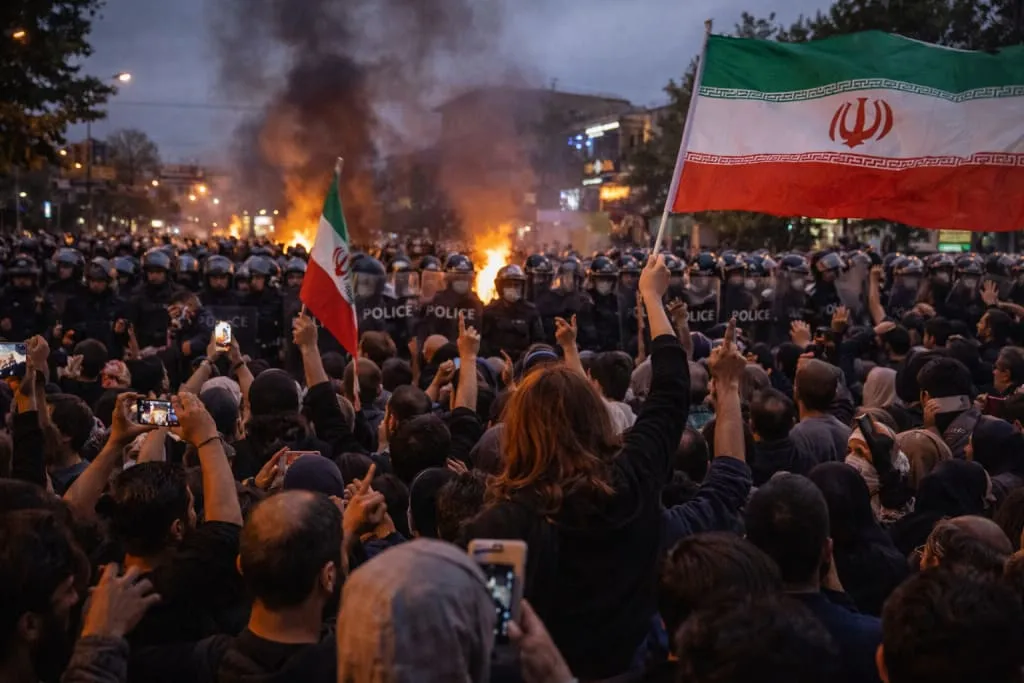
Since late December 2025, Iran has been convulsed by the largest wave of protests in decades — a nationwide uprising that has shaken the foundations of the Islamic Republic and drawn sharp international attention. Originally sparked by economic collapse and inflation, the unrest quickly evolved into a broader anti-government movement, with demonstrators openly calling for systemic change. The combination of internal discontent and escalating regional tensions has transformed this crisis into one of the most significant political challenges Iran has faced since the 1979 revolution.
Origins: Economic Hardship and Public Frustration
At the heart of the uprising lies a deeply troubled Iranian economy. Years of crippling international sanctions, particularly those targeting Iran’s oil exports, have drained state revenue and devastated public finances. Inflation surged past 50 percent, while prices for basic necessities such as food, medicine, and utilities soared, leaving many Iranians struggling to survive.
The immediate spark came when the Iranian rial collapsed, plunging to record lows against foreign currencies and wiping out much of the population’s purchasing power. In late December 2025, these economic grievances erupted into public protest in Tehran’s historic Grand Bazaar, where merchants began striking and marching against rapid inflation, currency depreciation, and deteriorating living conditions.
This wave of economic protests quickly spread across Tehran and then to major cities including Mashhad, Isfahan, Shiraz, Kermanshah, and Rasht, among others — covering almost every corner of the country. Within days, what began as demands for economic relief transformed into broader political protests challenging Iran’s political hierarchy.
From Economy to Politics: The Broadening of Protest Demands
Unlike earlier unrest in 2019 or the Women, Life, Freedom movement of 2022-23, which were driven largely by specific triggers like fuel price hikes or the tragic death of Mahsa Amini, the current uprising blends economic desperation with explicit political defiance. Demonstrators have not only demanded better living standards but have also openly criticized theocratic governance, foreign policy priorities, and the authority of Supreme Leader Ayatollah Ali Khamenei.
Slogans such as “Death to the dictator” and chants explicitly targeting the Supreme Leader have been reported in Tehran and other cities, reflecting a level of political boldness not seen in many previous protest cycles. Young people in particular — including students, bazaar workers, and ordinary citizens — have taken to the streets, forcing older political norms to give way to more radical calls for systemic change.
Government Crackdown and Human Cost
The Iranian government’s response has been increasingly brutal and uncompromising. Security forces — including the Islamic Revolutionary Guard Corps (IRGC) and police units have used live ammunition, shotgun pellets, tear gas, and mass arrests to suppress protests. In many cities, hospitals are overwhelmed, and state media has struggled to present a unified narrative amid conflicting casualty reports.
Estimating deaths is difficult due to a nationwide internet and communications blackout imposed by authorities on January 8, 2026, effectively cutting off independent reporting from within the country. Monitoring groups and activists estimate that thousands may have died with figures ranging from over 2,500 confirmed deaths to activist claims of 12,000 or even 20,000 victims. Iranian state media acknowledges around 2,000 fatalities, including some security personnel, but blames the violence on “terrorists” rather than its own forces.
In addition to casualties, tens of thousands of protesters have been detained with some facing threats of rapid trials and execution. Reports describe security forces firing on crowds, as well as disturbing patterns of targeted violence, including injuries caused by shots to the eyes.
Communications Blackout: A Strategy of Control
Iran’s authorities have effectively shut down the internet, blocking most online communication and severely restricting how information leaves the country. Since early January, national censorship has cut off social media, throttled access to independent news, and limited external monitoring — creating a situation where much of what is known about events comes from rare transmissions, satellite connections like Starlink, and networks of activists.
This blackout complicates efforts by human rights organizations to verify casualty figures, document abuses, and protect civilians. It also underscores the regime’s fear of uncontrolled information flow, which has historically fueled mobilization and international solidarity during popular uprisings.
Political Fractures and Opposition Voices
Amid the unrest, figures in Iran’s diaspora and opposition have sought to shape the movement’s direction. Notably, Reza Pahlavi, the exiled Crown Prince and a symbolic figure for some protestors, has called for nationwide strikes and coordinated action to seize city centres, urging workers in key sectors like transportation and energy to halt operations.
While his influence remains contested, these calls for general strikes signal a possible evolution from spontaneous street demonstrations to a more organized, strategic resistance a shift that could deepen the political stakes of the uprising.
Regional and International Response
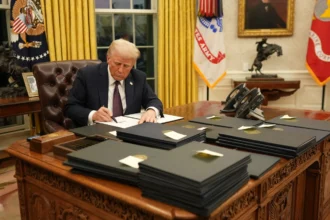
The crisis has not stayed confined within Iran’s borders. U.S. President Donald Trump publicly encouraged protests and suggested that “help is on the way”, while also threatening retaliatory action against further executions of detainees. Trump has cancelled talks with Iranian officials and applied punitive trade measures, including tariffs affecting nations that maintain economic links with Iran.
Iran, for its part, accuses the United States and its allies of attempting to use the protests as a pretext for military intervention. Tehran insists the situation is “under control” and blames foreign powers for stoking unrest — framing the unrest as part of a broader geopolitical struggle rather than a domestic crisis.
Meanwhile, regional powers and international organizations have called for restraint, warning that direct conflict would risk wider instability across the Middle East. Countries from Turkey to Egypt have urged de-escalation and avoided outright endorsements of either side’s narrative, reflecting global concerns about escalation.
Humanitarian and Societal Impacts
Beyond politics, the uprising has inflicted profound human suffering. Hospitals are overwhelmed with injured civilians, many of whom arrived with severe wounds due to live fire. Families struggle to locate missing loved ones amid mass arrests and shuttered communications. The economic collapse that helped spark the unrest is itself a humanitarian crisis with essential supplies becoming unaffordable and social services stressed to the breaking point.
The psychological impact on Iranian society, particularly among youth and marginalized groups, is significant. The breakdown of trust between citizens and state institutions threatens long-term stability and could reshape Iranian identity politics for generations.
What’s Next?
As of mid-January 2026, the protests show no signs of letting up. Security crackdowns continue, while many Iranians appear determined to channel economic frustration into a broader political movement. Whether the uprising will achieve meaningful reform or evolve into a protracted civil confrontation remains uncertain.
What is clear is that Iran’s internal dynamics and regional posture are in flux — and how Tehran manages the crisis will have far-reaching implications for Middle Eastern geopolitics, U.S. foreign policy, and global energy markets.
Conclusion
Iran’s 2025-2026 uprising is a multi-layered crisis rooted in economic suffering but driven by deeper political discontent. The government’s harsh response — marked by a communications blackout and widespread use of force has only intensified global scrutiny. As the world watches, Iran stands at a crossroads, facing pressures from within and without that may define its political trajectory for years to come.