
Hiking is one of the most thrilling ways to explore the natural world. From dense jungles and icy glaciers to towering cliffs and remote deserts, hiking trails offer a unique connection to the Earth that few other activities can match. But not all trails are created equal. Some are peaceful nature walks suitable for families and beginners, while others are so extreme, risky, and unpredictable that only experienced adventurers dare to attempt them.
Around the world, several hiking locations have gained legendary status not for their scenic beauty alone, but for their sheer danger. These are trails where one wrong step, sudden weather change, or unexpected wildlife encounter can be life-threatening. Despite the dangers, they attract thousands of adrenaline seekers each year, all eager to test their limits against nature’s toughest challenges.
This article explores the world’s most dangerous hiking places, their history, the reasons behind their notorious reputations, and why hikers chase the thrill of exploring them. Whether you’re an adventure lover or simply curious, these trails make for gripping, unforgettable reading.
1. Mount Hua Shan Plank Walk – China
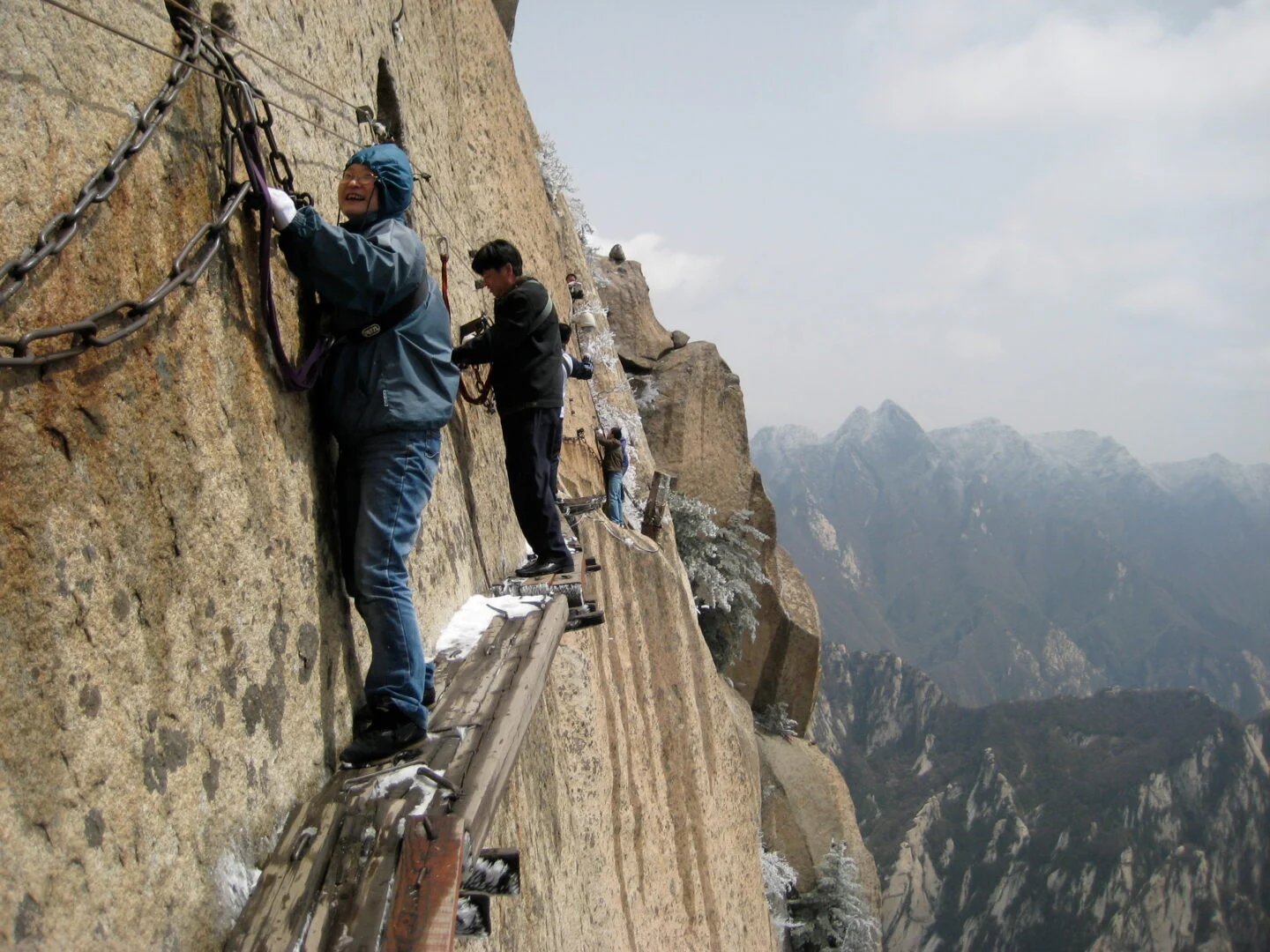
Often called the world’s most dangerous hike, the Mount Hua Shan Plank Walk is the kind of trail that leaves even the bravest adventurers trembling. Located near the city of Xi’an, this sacred mountain once served as a pilgrimage route for monks seeking spiritual enlightenment. Today, it stands as one of the most adrenaline-filled hiking experiences in the world.
Why It’s So Dangerous
- The trail requires hikers to walk across thin wooden planks bolted onto a vertical cliffside.
- The drop: over 2,000 feet straight down.
- In many stretches, there is no platform just iron stakes hammered into the cliff for footholds.
- Passing other hikers requires stepping around them while clinging to the cliff wall.
- Sudden winds, slippery surfaces, and crowded paths add to the risk.
The harness system installed in recent years improves safety, but the danger remains. One slip, one broken plank, or one moment of panic can be fatal.
2. The Drakensberg Traverse – South Africa & Lesotho
The Drakensberg Mountains offer stunning views, dramatic cliffs, and some of the most challenging terrain globally. The Drakensberg Traverse, stretching across the border of South Africa and Lesotho, is a multi-day trek that tests endurance, navigation skills, and mental resilience.
Why It’s So Dangerous
- The trail is unmarked hikers must navigate using GPS or pure experience.
- It includes two chain ladders that climb up vertical basalt cliffs.
- The weather changes unpredictably, with thick fog reducing visibility to almost zero.
- There are no rescue services in the remote areas.
- Hiking includes dangerous cliff edges and river crossings.
This trail is recommended only for seasoned hikers with wilderness survival experience. Despite the risks, the Drakensberg Traverse rewards adventurers with unforgettable vistas and untouched landscapes.
3. Angels Landing – Zion National Park, USA
Angels Landing is one of America’s most famous and famously dangerous hikes. Located in Utah’s Zion National Park, it draws thousands of thrill-seekers each year. The trail is only 5.4 miles round trip, but what it lacks in length, it makes up for in nerve-wracking exposure.
Why It’s So Dangerous
- The final half-mile involves traversing a narrow sandstone ridge only a few feet wide.
- On either side are 1,000-foot drops.
- Metal chains are the only support along steep, slippery sections.
- The rock becomes dangerously hot and loose during summer.
- High winds often sweep across the ridge unexpectedly.
Several hikers have lost their lives on Angels Landing, leading authorities to introduce a permit system to limit crowding. Still, it remains one of the most intense hikes in North America.
4. Everest Base Camp & The Khumbu Icefall – Nepal
While summiting Mount Everest is one of the world’s most dangerous accomplishments, even the trail to Everest Base Camp (EBC) poses extreme risks. The journey passes through steep ridges, avalanche zones, and high-altitude environments that challenge even fit hikers.
The most notorious section the Khumbu Icefall is part of the summit route but deserves mention because of its global reputation.
Why It’s So Dangerous
- The altitude can exceed 17,000 feet, causing severe altitude sickness.
- Temperatures drop below freezing even in peak season.
- Trails pass beneath unstable ice towers and avalanche-prone slopes.
- The Khumbu Icefall features moving glaciers, deep crevasses, and collapsing ice blocks.
- Emergency evacuation from these heights is extremely difficult and expensive.
Thousands attempt the EBC trek every year, but only those who respect the altitude and prepare properly make it safely.
5. Aonach Eagach Ridge – Scotland
Situated in the Scottish Highlands, the Aonach Eagach Ridge is considered the narrowest, most technical ridge walk in the UK. It stretches across razor-thin rock formations with dramatic drops on both sides.
Why It’s So Dangerous
- The ridge is extremely narrow, slippery, and exposed.
- Weather conditions change rapidly, often without warning.
- Most of the ridge must be traversed by scrambling using both hands and feet.
- A rescue is nearly impossible in bad weather.
- One wrong step can send a hiker hundreds of feet down the rocky slopes.
Even experienced hikers find the Aonach Eagach mentally exhausting because there’s no easy exit once you start.
6. Kalalau Trail – Hawaii, USA
Hawaii’s Na Pali Coast is one of the most breathtaking places on Earth. The Kalalau Trail winds along this coastline, offering unmatched tropical beauty but also severe danger.
Why It’s So Dangerous
- The trail traverses steep, eroding cliffs high above the ocean.
- The infamous Crawlers Ledge is a narrow, slippery shelf carved into the cliffside.
- Heavy rain creates flash floods that can sweep hikers away.
- Muddy sections become so slippery that footing is unpredictable.
- Rockfalls and landslides frequently occur.
Despite this, many hikers attempt it each year for its pristine beaches and untouched wilderness.
7. El Caminito del Rey – Spain
Once called “the world’s most dangerous walkway,” El Caminito del Rey was built in the early 1900s for construction workers maintaining a hydroelectric plant. Over time, the wooden planks and concrete supports crumbled away, leaving only fragments suspended over deep gorges.
Why It’s So Dangerous
Before renovation in 2015:
- The walkway had huge gaps, missing railings, and broken sections.
- Hikers had to cling to the cliff or balance on rusted steel beams.
- The drop below was over 300 feet.
- Several hikers died, earning it global notoriety.
Today, the path has been restored with modern safety features, but the trail still maintains its thrilling exposure and towering heights.
8. Huayna Picchu – Peru
Huayna Picchu is the iconic peak rising behind Machu Picchu. The climb to its summit is steep, narrow, and extremely exposed, rewarding hikers with breathtaking views of the ancient Inca ruins.
Why It’s So Dangerous
- The hike includes stone steps carved vertically into the mountain.
- Slippery surfaces make footing dangerous, especially during rain.
- Narrow trails run along cliff edges with no barriers.
- Altitude adds difficulty and fatigue.
- Weather can shift from sunny to wet within minutes.
The Inca themselves called part of the trail “the Stairs of Death,” and it’s easy to see why.
9. Mount Washington – USA
Although not extremely tall at 6,288 feet, Mount Washington in New Hampshire is infamous for having the world’s most unpredictable weather. Since the early 1900s, dozens of hikers have died attempting the ascent.
Why It’s So Dangerous
- Record-breaking wind speeds (the fastest recorded wind outside a tornado occurred here).
- Sudden temperature drops create frostbite conditions.
- Thick fog causes disorientation.
- Hypothermia is common, even in summer.
- Slippery rocks and hidden ice patches create tough terrain.
Mount Washington proves that danger isn’t always about height it’s about the environment.
10. The Maze – Utah, USA
Located in Canyonlands National Park, The Maze is one of the most remote hiking areas in the U.S. and lives up to its name with a labyrinth of canyons that confuse even experienced explorers.
Why It’s So Dangerous
- The remote location means no cell service, no signage, and very few water sources.
- Temperatures reach extreme highs in summer.
- The maze-like canyon network makes navigation extremely difficult.
- Rescue operations are complicated and slow.
- Rockfalls often block pathways.
Only expert hikers comfortable with absolute wilderness conditions should attempt this trail.
Why Do Hikers Risk These Trails?
Despite the frightening risks, dangerous hikes continue to attract thrill-seekers from all over the world. Here’s why:
1. The Thrill of Adventure
Humans have an innate desire to conquer the unknown. The adrenaline rush from pushing boundaries is unparalleled.
2. Stunning Natural Beauty
Many dangerous trails are located in some of the most breathtaking places on Earth—jungles, cliffs, mountain peaks, and ancient landscapes.
3. Personal Achievement
Reaching the end of a high-risk trail provides a sense of accomplishment that few other experiences offer.
4. Escape From Modern Life
The rawness of nature, especially in remote trails, offers peace and solitude impossible to find in crowded cities.
5. Social Media Influence
Today’s digital era often pushes people toward extreme activities that make for impressive stories and photographs.
How to Stay Safe on Dangerous Hikes
If you’re inspired by these trails but still want to approach them safely, keep these guidelines in mind:
- Train physically and mentally beforehand
- Research the trail thoroughly
- Carry proper gear
- Check weather forecasts
- Travel with experienced hikers
- Know your limits
- Always inform someone about your route
- Hire a guide when necessary
Nature is beautiful but unforgiving.
Conclusion: Walk With Awe, Not Fear
The world’s most dangerous hiking places remind us of nature’s unparalleled power. Whether it’s the vertical cliffs of Mount Hua Shan, the icy risks of Everest, or the unpredictable winds of Mount Washington, these trails push humans to their absolute limits.
Yet, despite the risks, they continue to inspire thousands, offering unmatched beauty and the thrill of confronting the wild. Hiking these trails is not just a physical challenge; it’s a journey into courage, endurance, and respect for the natural world.
Adventure calls to all of us but it’s up to each person to decide how far they’re willing to go.