In the world of consumer technology, the spotlight usually shines on smartphone manufacturers, laptop makers, and AI innovators. Yet behind every flagship device is an ecosystem of accessories that quietly shapes the user experience. Charging solutions, docking stations, wireless earbuds, power banks, cables, and smart home accessories have become essential parts of modern life. Few companies understand this ecosystem better than Belkin.
What started as a modest cable company has evolved into one of the world’s most trusted consumer electronics accessory brands. Today, Belkin is recognized for premium wireless chargers, MagSafe-compatible accessories, USB-C hubs, GaN chargers, screen protectors, smart home devices, and productivity tools that millions rely on every day.
Its transformation is more than a business success story. It reflects how e-commerce has changed consumer expectations. Modern buyers no longer search for products alone—they search for convenience, reliability, compatibility, and seamless experiences.
The future belongs to brands that solve everyday problems through intelligent design rather than simply adding another product to the marketplace.
The Beginning of Belkin’s Journey
Belkin was founded in California in 1983 by Chet Pipkin with a straightforward mission: create better computer cables and connectivity solutions.
During the personal computer boom, cables were considered simple accessories rather than premium technology products. Consumers rarely thought about the companies behind them. They were functional purchases with little brand loyalty.
Belkin saw a different opportunity.
Instead of competing solely on price, the company focused on quality, reliability, and compatibility. As personal computers became household essentials, Belkin gradually expanded into surge protectors, networking equipment, and charging solutions.
This steady evolution helped establish trust long before smartphones transformed the technology landscape.
Rather than chasing every trend, Belkin consistently solved practical problems for consumers, creating a reputation that would later become one of its strongest competitive advantages.
The Smartphone Revolution Changed Everything
The arrival of smartphones fundamentally reshaped consumer electronics.
People suddenly needed chargers at home, in offices, inside cars, and while traveling. Laptops became thinner, ports disappeared, and wireless technologies emerged as new standards. Consumers accumulated multiple devices, including tablets, smartwatches, wireless earbuds, gaming consoles, and portable workstations.
This growing digital lifestyle created enormous demand for accessories.
Belkin was perfectly positioned.
Instead of treating accessories as secondary products, the company built an ecosystem around the modern user. Every new technology trend—from USB-C to wireless charging and MagSafe compatibility became an opportunity to simplify everyday life.
This strategic positioning helped Belkin move from a hardware supplier to a lifestyle-focused technology brand.
Innovation Through Everyday Convenience
One reason Belkin stands out is its ability to improve experiences people encounter daily.
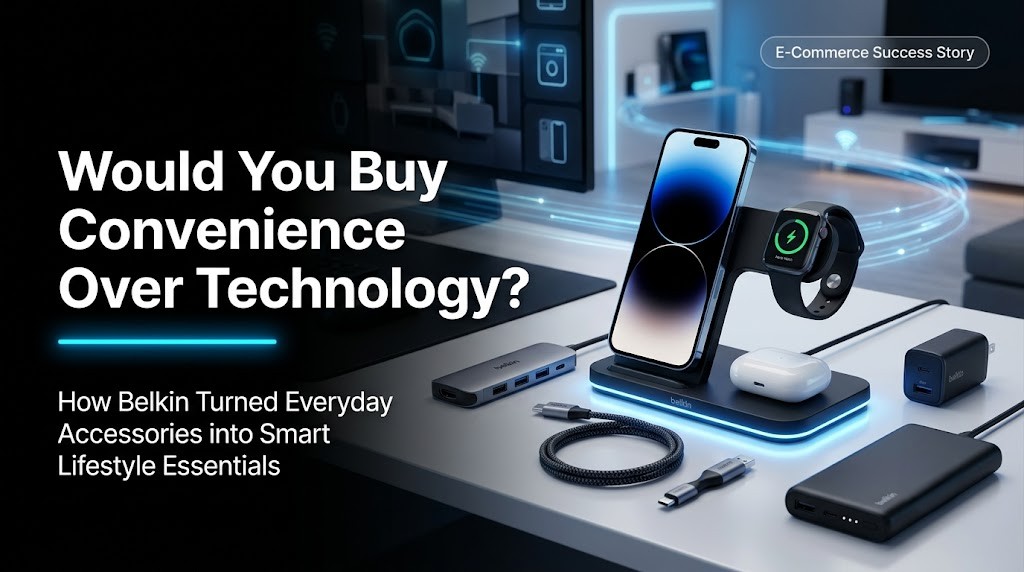
Wireless charging eliminated clutter from desks and bedside tables. Multi-port GaN chargers reduced the need for carrying several power adapters while traveling. USB-C hubs restored connectivity for increasingly minimalist laptops. Premium cables delivered faster charging and more durable performance.
None of these products reinvented technology.
Instead, they removed friction from everyday routines.
That philosophy represents one of the strongest trends in consumer electronics today. The biggest innovations are often invisible. They make life easier without demanding users change their habits.
Consumers rarely celebrate a charging cable until it stops working. Belkin understood that reliability itself could become a premium feature.
The Rise of Apple’s Accessory Ecosystem
Apple’s growing ecosystem significantly accelerated Belkin’s global presence.
As Apple removed headphone jacks, introduced USB-C, embraced MagSafe charging, and expanded products like the Apple Watch, iPad, AirPods, and MacBook lineup, accessory demand exploded.
Belkin became one of Apple’s preferred accessory partners.
Its MagSafe-compatible wireless charging stands, premium charging docks, travel accessories, and productivity solutions fit naturally into Apple’s design philosophy.
Rather than competing with Apple, Belkin complemented it.
This partnership illustrates an important lesson in modern commerce: successful brands often grow by strengthening larger ecosystems rather than trying to replace them.
Why Premium Accessories Continue to Win
Many consumers wonder why premium accessories command significantly higher prices than generic alternatives.
The answer lies in long-term value.
A poorly built charger can damage expensive devices. Low-quality cables often fail within months. Cheap power banks may lack proper safety certifications.
Belkin invests heavily in engineering, testing, compatibility, and certifications to reduce these risks.
Consumers increasingly understand that protecting a $1,000 smartphone with a trusted charger is often worth paying extra.
The same shift has occurred in industries ranging from automotive parts to health technology.
Quality has become a stronger purchasing factor than simply finding the lowest price.
E-Commerce Changed the Rules
The rapid growth of online shopping transformed accessory buying behavior.
In physical stores, consumers often purchased accessories as last-minute additions.
Online marketplaces created a different environment.
Customers now compare hundreds of similar products within minutes. Reviews, ratings, product videos, influencer recommendations, and detailed specifications heavily influence purchasing decisions.
Belkin adapted by emphasizing trust, durability, and premium user experiences.
Instead of competing in a race to the bottom, the company built confidence through consistent quality and recognizable branding.
This strategy has become increasingly important as marketplaces become crowded with low-cost alternatives.
Consumers buying online frequently choose familiar brands because trust reduces purchase risk.
Competing in a Crowded Market
Belkin operates in one of the most competitive technology categories.
Companies such as Anker, UGREEN, Baseus, Spigen, Satechi, Logitech, Samsung, and Apple’s own accessories constantly introduce innovative products.
Despite intense competition, Belkin continues to maintain a strong premium positioning.
The company’s strength lies in balancing innovation with consistency.
Rather than flooding the market with hundreds of experimental products, Belkin focuses on carefully designed solutions that integrate smoothly into users’ daily routines.
Its reputation allows consumers to purchase confidently without spending hours researching technical specifications.
In today’s attention economy, reducing decision fatigue has become a competitive advantage.
Smart Design Creates Emotional Value
Technology products increasingly compete through design rather than specifications alone.
Consumers want accessories that match modern workspaces, home interiors, and minimalist lifestyles.
Belkin’s products reflect this shift.
Clean aesthetics, premium materials, compact designs, and organized cable management contribute to an experience that feels intentional rather than purely functional.
This emotional connection influences purchasing decisions far more than many brands realize.
People no longer buy chargers simply because they need electricity.
They buy products that complement their devices, simplify routines, and fit their personal style.
The accessory becomes part of the overall lifestyle.
Sustainability Is Becoming a Business Advantage
Environmental responsibility has become increasingly important across the electronics industry.
Consumers are asking difficult questions about plastic waste, packaging, electronic recycling, and product longevity.
Belkin has responded by incorporating more recycled materials into several product lines while reducing unnecessary packaging.
Although sustainability remains an ongoing journey for the industry, brands that actively invest in environmentally responsible manufacturing are likely to gain stronger customer loyalty over time.
Future growth will depend not only on product performance but also on responsible production practices.
The next generation of technology buyers’ values transparency alongside innovation.
The Smart Home Opportunity
Belkin has also expanded beyond charging accessories into connected living.
Through products supporting smart home ecosystems, home networking, and intelligent device management, the company has positioned itself within another rapidly growing market.
As homes become increasingly connected through AI assistants, smart lighting, security systems, and IoT devices, accessory brands have opportunities to become infrastructure providers rather than simple product manufacturers.
This represents one of the most exciting shifts in consumer technology.
Accessories are evolving into intelligent platforms that connect digital lifestyles.
Lessons for E-Commerce Brands
Belkin’s success offers valuable lessons for companies across industries.
First, solving everyday problems often creates more value than pursuing flashy innovation. Consumers remember products that reliably improve daily routines.
Second, building trust takes time but creates lasting competitive advantages. In online commerce, reputation frequently influences purchasing decisions more than advertising.
Third, premium pricing becomes sustainable when customers clearly understand the value behind higher quality, better design, and dependable performance.
Finally, ecosystems matter more than individual products. Companies that integrate seamlessly with broader technology platforms often experience stronger long-term growth than brands attempting to dominate every category independently.
These principles extend beyond consumer electronics into fashion, healthcare, automotive technology, home improvement, and digital services.
The Future of Smart Accessories
Artificial intelligence, faster charging standards, foldable devices, wearable technology, and connected homes will continue transforming the accessory market.
Future products may automatically optimize charging based on battery health, intelligently manage connected devices, or integrate AI-powered productivity features.
Accessories will become smarter, more personalized, and increasingly software-driven.
Consumers will expect seamless compatibility across multiple devices regardless of manufacturer.
Brands that successfully combine hardware excellence with intelligent user experiences will define the next generation of consumer technology.
Belkin has already positioned itself within this evolving landscape by focusing on practical innovation rather than temporary trends.
Beyond Selling Products
The greatest strength of Belkin is not simply its catalogue of chargers, cables, or hubs.
It is the company’s understanding that technology should reduce complexity rather than create it.
Every successful product addresses a small frustration that millions of people experience daily. Collectively, those small improvements create a significantly better digital lifestyle.
This mindset explains why Belkin continues to remain relevant despite rapid technological change.
Consumers rarely remember the specifications of a charger years after purchasing it.
They remember whether it worked every single day.
Reliability builds trust.
Trust builds loyalty.
Loyalty builds global brands.
Final Thoughts: Would You Buy Convenience or Just Technology?
Technology is no longer defined solely by processors, cameras, or display resolution. Increasingly, the overall experience depends on the ecosystem surrounding those devices. Accessories have evolved from optional add-ons into essential components of modern living, influencing productivity, mobility, entertainment, and convenience every day.
Belkin’s remarkable journey from manufacturing simple computer cables to becoming a globally respected smart accessory brand demonstrates how understanding customer needs can create enduring success. By focusing on reliability, thoughtful design, seamless compatibility, and continuous innovation, the company transformed ordinary products into indispensable lifestyle solutions.
The future of e-commerce will reward brands that go beyond selling hardware. Consumers are looking for experiences that save time, reduce frustration, and make technology feel effortless. Companies that build trust through intelligent design and genuine utility will continue to stand apart in an increasingly competitive marketplace.
The real question for today’s consumers is no longer whether they need another piece of technology.
It is whether that technology genuinely makes life simpler.
Because in the digital age, convenience has become one of the most valuable products any brand can offer.