
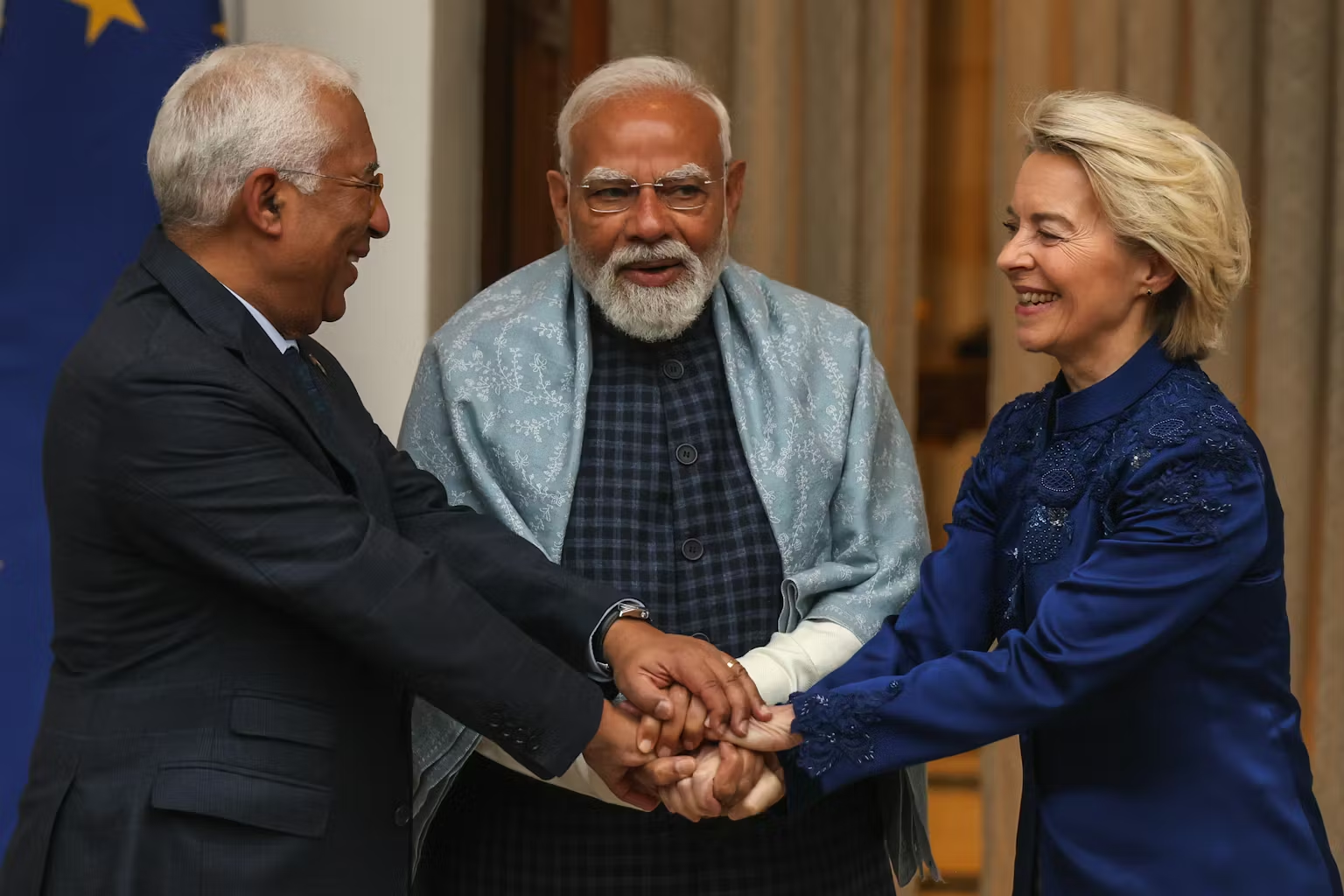
The world is entering a phase where economic strength, technological leadership, and strategic alliances matter more than ever. In this changing global order, the India–Europe Deal has emerged as one of the most important international partnerships of the decade. It is not just a trade agreement—it is a powerful signal of how two major democratic forces are preparing for the future together.
India, one of the fastest-growing economies in the world, and Europe, a global economic and regulatory powerhouse, are aligning their interests to create a partnership that goes beyond borders. From trade and investment to climate action, technology, and geopolitics, the India–Europe Deal has the potential to reshape how global cooperation works.
Let’s explore what this deal is all about, why it matters, and how it could impact businesses, economies, and global power dynamics.
What Is the India–Europe Deal?
The India–Europe Deal broadly refers to the strategic partnership between India and the European Union (EU), with the proposed India–EU Free Trade Agreement (FTA) at its core. Officially known as the Broad-based Trade and Investment Agreement (BTIA), this deal aims to strengthen economic ties while opening doors to collaboration in multiple sectors.
However, calling it just a “trade deal” would be an understatement. The partnership also includes cooperation in:
- Technology and digital innovation
- Climate change and sustainability
- Clean energy and green growth
- Defense and security
- Education, research, and mobility
Together, India and Europe are working toward a long-term, future-oriented relationship rather than a short-term commercial arrangement.
Why the India–Europe Deal Is So Important Right Now
1. A Changing Global Economy
Global trade patterns are shifting. The pandemic, geopolitical conflicts, and supply chain disruptions have forced countries to rethink their dependencies. Europe wants to diversify its supply chains, and India wants to position itself as a reliable global manufacturing and services hub.
This deal helps both sides reduce risks and build economic resilience.
2. Shared Democratic Values
India and Europe share core values such as democracy, rule of law, freedom, and multilateral cooperation. In a world where ideological divisions are growing, partnerships based on shared principles carry greater trust and stability.
This value alignment makes the India–Europe Deal stronger and more sustainable.
3. Strategic Balance in Global Politics
The world is no longer dominated by a single power. As a multipolar order takes shape, India and Europe see each other as strategic partners capable of maintaining global balance, especially in regions like the Indo-Pacific.
Trade: The Backbone of the Deal
Trade remains the foundation of the India–Europe partnership. The European Union is already one of India’s largest trading partners, and the deal aims to expand this relationship significantly.
Key Trade Benefits Include:
- Reduced tariffs on goods such as textiles, pharmaceuticals, automobiles, machinery, and chemicals
- Better access for Indian services, especially IT, consulting, and digital services
- Simplified customs procedures
- Clearer rules for intellectual property and competition
For Indian businesses, Europe offers a high-value, premium market. For European companies, India offers scale, growth, and long-term opportunity.
Investment: Fuelling Growth on Both Sides
European companies are among the largest investors in India. The deal encourages deeper investment by offering:
- Stronger investor protection
- Stable and predictable business policies
- Easier entry for European firms in Indian markets
- Opportunities for Indian startups and enterprises in Europe
This investment push directly supports India’s initiatives like Make in India, Startup India, and Atmanirbhar Bharat, while giving European firms access to one of the world’s most dynamic economies.
Technology and Digital Cooperation: Building the Future
One of the most exciting aspects of the India–Europe Deal is technology collaboration.
India brings scale, talent, and digital innovation, while Europe brings regulatory expertise, research strength, and ethical frameworks. Together, they are focusing on:
- Artificial Intelligence and emerging technologies
- Semiconductor manufacturing and supply chains
- Cybersecurity and data protection
- Digital public infrastructure
- Space and advanced research
This partnership promotes responsible, inclusive, and secure technological growth, which is crucial in today’s digital-first world.
Climate Change and Sustainability: A Shared Responsibility
Climate action is no longer optional—it is essential. Europe is a global leader in green policies, and India is rapidly expanding its clean energy capacity. The deal strengthens cooperation in areas such as:
- Renewable energy (solar, wind, green hydrogen)
- Carbon reduction and climate resilience
- Sustainable cities and infrastructure
- Circular economy models
- Green finance and climate investments
By working together, India and Europe can set an example for sustainable development without compromising economic growth.
Education, Mobility, and People-to-People Ties
A strong partnership is not built only on policies—it is built on people. The India–Europe Deal also focuses on:
- Student exchange programs
- Research and academic collaboration
- Skill development for future industries
- Easier mobility for professionals and researchers
These initiatives strengthen cultural understanding and help create a future-ready global workforce.
Challenges That Still Need Resolution
Despite its potential, the deal faces certain challenges:
- Differences in regulations and standards
- Concerns over market access
- Sensitive sectors like agriculture and manufacturing
- Data protection and privacy issues
However, ongoing dialogue shows that both sides are committed to finding balanced, practical solutions rather than letting disagreements stall progress.
What This Deal Means for India
For India, the India–Europe Deal offers:
- Expanded export opportunities
- Increased foreign investment
- Access to advanced technology
- Job creation and industrial growth
- Greater global influence
It also strengthens India’s position as a key player in global trade and diplomacy.
What This Deal Means for Europe
For Europe, the deal provides:
- Access to a fast-growing consumer market
- Supply chain diversification
- Strategic presence in the Indo-Pacific
- A reliable democratic partner
- New opportunities in green and digital sectors
Conclusion: More Than a Deal, a Strategic Vision
The India–Europe Deal is not just about numbers, tariffs, or policies. It represents a shared vision for the future—one based on cooperation, sustainability, innovation, and mutual respect.
In a world facing economic uncertainty and geopolitical tension, this partnership stands out as a positive example of how global alliances should work. If implemented effectively, the India–Europe Deal could become one of the most influential partnerships of the 21st century.
For businesses, policymakers, and citizens alike, this deal is worth watching—because its impact will be felt far beyond India and Europe.