
Introduction
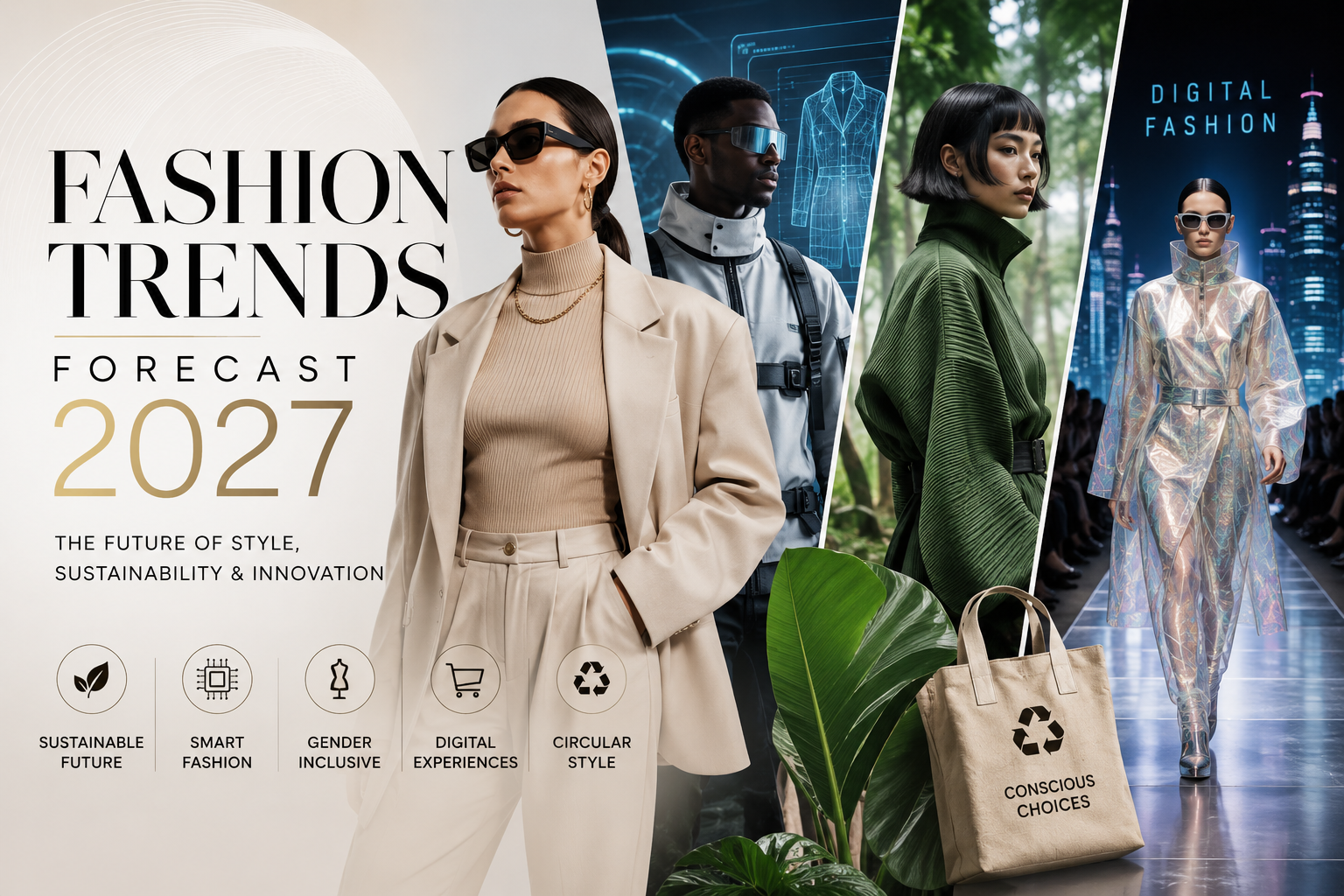
The fashion industry is entering a transformative era. As we move toward 2027, technological innovation, sustainability concerns, shifting consumer values, and digital experiences are reshaping how clothing is designed, manufactured, marketed, and worn. Fashion is no longer driven solely by seasonal runway collections. Instead, it is influenced by artificial intelligence, social commerce, environmental responsibility, and the growing demand for personalization.
Consumers across North America, Europe, Asia, and emerging markets are becoming more conscious about what they buy and why they buy it. Brands that can adapt to these changes will thrive, while those that fail to evolve may struggle to remain relevant.
This fashion trends forecast for 2027 explores the key developments expected to define the industry, from sustainable materials and AI-powered styling to digital fashion and the rise of gender-inclusive design.
1. Sustainability Will Become a Standard, not a Selling Point
For years, sustainability has been a competitive advantage. By 2027, it is expected to become a basic requirement for fashion brands.
Consumers are increasingly demanding transparency regarding sourcing, manufacturing processes, labour practices, and environmental impact. Governments worldwide are also introducing stricter regulations related to textile waste and carbon emissions.
Key Sustainability Trends
- Recycled and regenerative materials will become mainstream.
- Brands will publish detailed sustainability reports.
- Carbon-neutral production will gain momentum.
- Resale, rental, and repair services will expand significantly.
- Circular fashion models will become more common.
Fashion companies investing in long-term sustainability initiatives are likely to gain consumer trust and maintain stronger brand loyalty.
2. Artificial Intelligence Will Transform Fashion Personalization
Artificial intelligence is expected to play a major role in fashion by 2027. Rather than browsing thousands of products, consumers will increasingly rely on AI-powered recommendations tailored to their preferences, body type, budget, and lifestyle.
Retailers are already using machine learning to predict buying behaviour, but future applications will be far more sophisticated.
Expected AI Applications
- Virtual personal stylists
- AI-generated outfit recommendations
- Predictive trend forecasting
- Smart inventory management
- Personalized online shopping experiences
Brands that effectively integrate AI into their customer journey will be better positioned to improve engagement and increase conversion rates.
3. Digital Fashion Will Continue Expanding
Digital fashion, once considered a niche concept, is expected to become more widely adopted by 2027.
Consumers increasingly express themselves through social media, gaming platforms, and virtual environments. Digital garments designed specifically for online use are attracting younger audiences who value creativity and uniqueness.
Areas of Growth
- Virtual fashion collections
- Gaming and avatar clothing
- Augmented reality fashion experiences
- Digital fashion marketplaces
- Virtual fashion shows
Luxury brands have already begun experimenting with digital collections, and many experts expect further growth in this segment over the coming years.
4. Smart Clothing and Wearable Fashion Will Evolve
The convergence of fashion and technology is creating opportunities for smart clothing that serves practical purposes beyond aesthetics.
By 2027, advancements in textile technology may allow garments to monitor health metrics, regulate temperature, and connect with digital devices.
Emerging Innovations
- Fitness-tracking fabrics
- Temperature-adjusting materials
- UV-monitoring clothing
- Health-monitoring garments
- Interactive sportswear
As technology becomes less visible and more integrated into design, consumers may increasingly embrace smart apparel in their daily lives.
5. Gender-Neutral Fashion Will Gain Greater Acceptance
Fashion is becoming more inclusive, and gender-neutral clothing is expected to continue growing in popularity through 2027.
Many consumers, particularly younger generations, prefer clothing that focuses on style, comfort, and self-expression rather than traditional gender categories.
What to Expect
- Expanded unisex collections
- Inclusive sizing systems
- Less gender-specific marketing
- More fluid fashion aesthetics
- Greater diversity in advertising campaigns
Brands embracing inclusivity are likely to resonate with broader audiences and strengthen customer relationships.
6. Quiet Luxury Will Remain Influential
After the rise of logo-heavy fashion in previous decades, quiet luxury has emerged as a dominant trend emphasizing craftsmanship, quality, and timeless design.
This movement is expected to remain strong in 2027 as consumers seek long-lasting pieces instead of trend-driven purchases.
Characteristics of Quiet Luxury
- Minimalist design
- Premium fabrics
- Neutral color palettes
- Exceptional craftsmanship
- Understated branding
Brands such as The Row, Loro Piana, and Brunello Cucinelli have helped popularize this aesthetic, and similar approaches are likely to influence both luxury and premium fashion markets.
7. Hyper-Personalization Will Drive Consumer Engagement
Consumers increasingly expect products tailored to their unique preferences.
Advances in data analytics, AI, and manufacturing technologies will enable brands to offer highly personalized experiences by 2027.
Personalization Opportunities
- Customized garments
- Made-to-order production
- Personalized color selections
- AI-curated wardrobes
- Individual style profiles
Hyper-personalization can help reduce waste while increasing customer satisfaction and loyalty.
8. The Resale Market Will Continue Growing
The global second hand fashion market has experienced significant growth in recent years and is expected to expand further by 2027.
Consumers are becoming more comfortable purchasing pre-owned luxury and premium items due to affordability, sustainability concerns, and growing acceptance of resale platforms.
Drivers of Growth
- Increased environmental awareness
- Demand for luxury goods at lower prices
- Improved authentication technologies
- Expansion of resale marketplaces
- Growing interest in vintage fashion
Major brands may increasingly launch their own resale platforms to participate in this growing market.
9. Fashion Supply Chains Will Become More Transparent
Consumers are asking important questions about where their clothing comes from and how it is made.
As a result, transparency will become a critical competitive advantage by 2027.
Transparency Trends
- Product traceability systems
- QR-code-based supply chain information
- Ethical sourcing disclosures
- Blockchain verification solutions
- Greater manufacturing visibility
Fashion brands that provide clear information about their operations will likely gain stronger consumer trust.
10. Social Commerce Will Continue Reshaping Fashion Retail
The relationship between social media and fashion shopping is becoming increasingly interconnected.
Consumers are discovering products directly through platforms such as Instagram, TikTok, YouTube, and emerging social commerce channels.
Key Developments
- Livestream shopping events
- Influencer-driven product launches
- Integrated social checkout systems
- AI-generated shopping recommendations
- Community-driven purchasing decisions
Brands will continue investing heavily in social commerce as it becomes an essential component of modern retail strategies.
11. Comfort-Driven Fashion Will Remain Popular
Consumer priorities shifted significantly during the remote work era, and comfort remains a key factor influencing purchasing decisions.
While formal fashion is returning in some sectors, comfort-focused designs are expected to maintain strong demand.
Popular Categories
- Elevated athleisure
- Relaxed tailoring
- Soft fabrics
- Hybrid workwear
- Functional outerwear
Consumers increasingly seek clothing that balances comfort, versatility, and style.
12. Sustainable Materials Will Drive Innovation
Material innovation is one of the most exciting areas of fashion development heading into 2027.
Researchers and brands are investing in alternatives to traditional textiles that reduce environmental impact while maintaining performance and durability.
Innovative Materials to Watch
- Mushroom leather
- Algae-based textiles
- Bio-fabricated fabrics
- Recycled polyester alternatives
- Plant-based leather substitutes
As production scales increase, these materials may become more accessible and affordable.
13. Localized Production Will Gain Momentum
Global supply chain disruptions have encouraged many brands to explore regional manufacturing strategies.
By 2027, localized production could become more common as companies seek faster delivery times, greater flexibility, and improved sustainability.
Benefits
- Reduced transportation emissions
- Faster product launches
- Improved inventory control
- Enhanced quality oversight
- Greater responsiveness to consumer demand
This shift may help brands create more resilient business models.
14. Fashion Technology Careers Will Expand
As technology becomes more deeply integrated into fashion, demand for specialized talent will continue increasing.
New career opportunities are emerging at the intersection of fashion, technology, sustainability, and data science.
Growing Roles
- Fashion data analysts
- Digital fashion designers
- AI styling specialists
- Sustainability consultants
- Virtual experience creators
Educational institutions and fashion organizations are increasingly developing programs to support these evolving career paths.
Conclusion
The fashion industry of 2027 will be shaped by innovation, sustainability, inclusivity, and digital transformation. Consumers will demand greater transparency, personalized experiences, and environmentally responsible products. At the same time, technologies such as artificial intelligence, smart textiles, and digital fashion will redefine how people discover, purchase, and interact with clothing.
Brands that successfully balance creativity with technology, and style with sustainability, will be best positioned for long-term success. While trends will continue to evolve, the underlying direction is clear: the future of fashion is more intelligent, more personalized, and more conscious than ever before.
As 2027 approaches, businesses, designers, and consumers alike have an opportunity to help shape a fashion ecosystem that is both innovative and responsible, setting the stage for the next chapter of global style.