
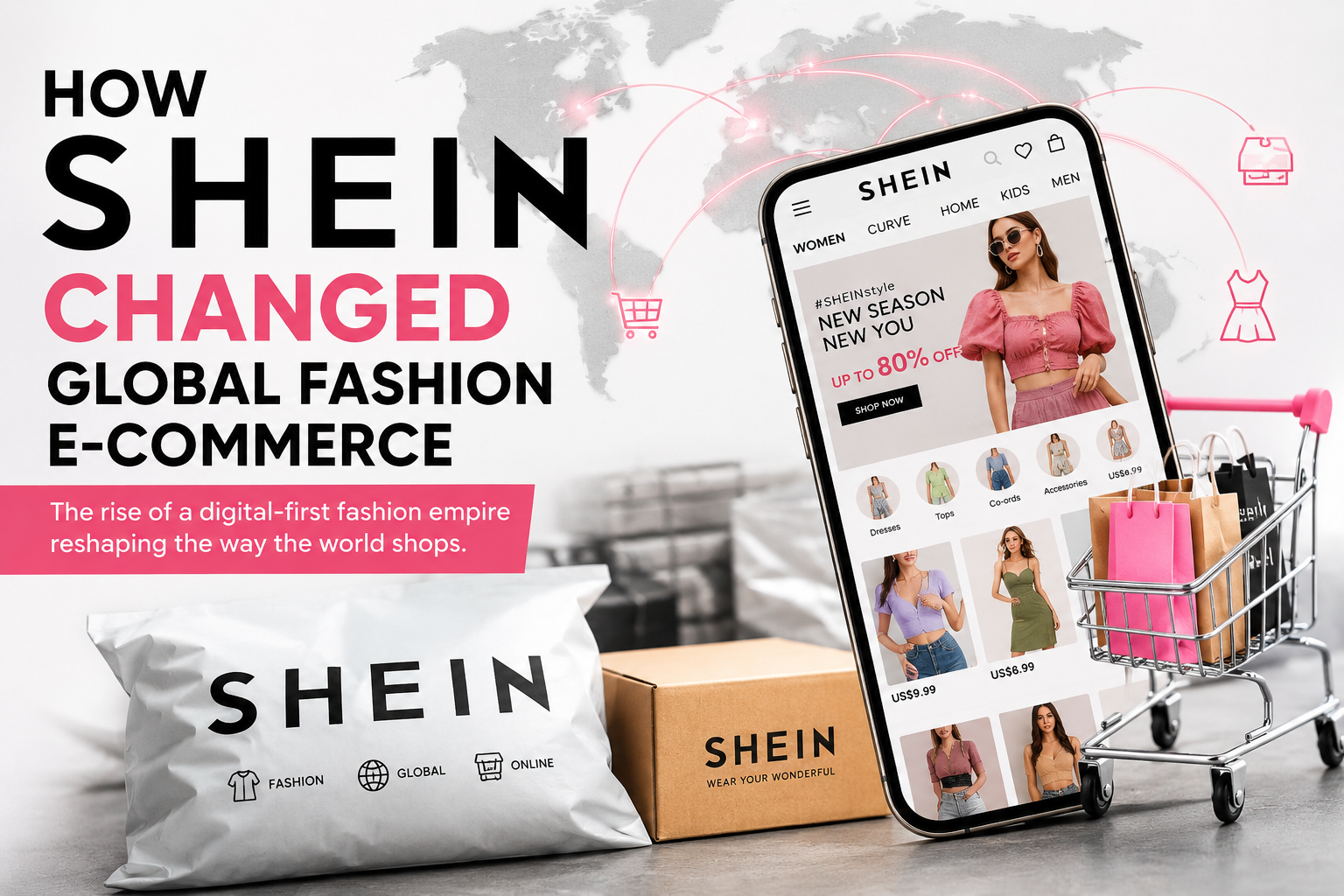
The global fashion industry has experienced a dramatic transformation over the past decade, and few companies have influenced this change as significantly as SHEIN. Founded in China in 2008, SHEIN evolved from a relatively unknown online retailer into one of the world’s largest fashion e-commerce platforms. Its rapid growth has reshaped consumer expectations, disrupted traditional fashion business models, and accelerated the evolution of digital retail.
Today, SHEIN is not just a fashion retailer; it represents a new approach to product development, supply chain management, digital marketing, and customer engagement. Whether admired for its innovation or criticized for its business practices, there is no denying that SHEIN has changed the global fashion e-commerce landscape.
The Rise of a Digital-First Fashion Brand
Unlike traditional fashion brands that built their businesses through physical stores, SHEIN adopted a digital-first strategy from the beginning. The company focused entirely on online sales, eliminating many of the costs associated with maintaining retail locations.
This approach allowed SHEIN to invest heavily in technology, data analytics, and global logistics. By targeting international markets through online channels, the company quickly expanded its reach beyond China and gained customers in North America, Europe, the Middle East, Latin America, and other regions.
As internet access and smartphone usage increased worldwide, SHEIN was well-positioned to capitalize on the growing demand for convenient online shopping experiences.
Redefining Fast Fashion
One of SHEIN’s most significant contributions to fashion e-commerce has been its ability to accelerate the fast-fashion model.
Traditional fashion retailers typically design collections months in advance, produce large quantities, and distribute products to stores. This process often results in excess inventory and delayed responses to changing trends.
SHEIN introduced an ultra-fast fashion model powered by real-time consumer data. The company monitors social media trends, search behaviour, customer feedback, and purchasing patterns to identify emerging styles.
Instead of producing thousands of units immediately, SHEIN often launches products in small batches. If a design performs well, production is quickly increased. If demand is weak, the company limits losses by avoiding large inventory commitments.
This data-driven approach enables SHEIN to bring new products to market at remarkable speed, sometimes within days rather than months.
Leveraging Data and Technology
Technology sits at the core of SHEIN’s business model.
The company uses sophisticated algorithms to analyse consumer preferences and identify trending products. Data collected from customer interactions helps determine which styles, colors, and designs are most likely to succeed.
This information allows SHEIN to make faster and more informed decisions than many traditional retailers.
Artificial intelligence, machine learning, and advanced forecasting systems help optimize inventory management, reduce waste, and improve operational efficiency.
As a result, SHEIN has demonstrated how technology can become a competitive advantage in the fashion industry.
Transforming Social Media Marketing
SHEIN’s marketing strategy has also reshaped how fashion brands connect with consumers.
Instead of relying primarily on traditional advertising channels, SHEIN embraced influencer marketing and social media engagement. The company partnered with creators across platforms such as Instagram, TikTok, YouTube, and Pinterest to showcase products through authentic content.
This strategy proved highly effective among younger consumers, particularly Generation Z, who often discover fashion trends through social media rather than traditional media outlets.
The hashtag-driven culture surrounding SHEIN generated billions of views, creating enormous brand awareness at a relatively low cost compared to traditional advertising campaigns.
Many fashion brands have since adopted similar influencer-focused marketing approaches, demonstrating SHEIN’s broader impact on digital commerce.
Making Fashion More Accessible
Price accessibility has been another major factor behind SHEIN’s success.
The company offers a vast range of trendy clothing, accessories, footwear, and beauty products at highly competitive prices. This affordability appeals to consumers seeking fashionable options without the premium costs associated with luxury or mid-market brands.
For many shoppers, particularly students and young adults, SHEIN provides access to the latest trends at prices that fit their budgets.
Its extensive product catalog also caters to diverse customer needs, including plus-size collections, maternity wear, modest fashion, and niche fashion categories that may be underserved by traditional retailers.
This broad accessibility has contributed significantly to SHEIN’s global popularity.
Global Expansion Without Physical Stores
Historically, international fashion expansion required significant investments in physical retail infrastructure. Brands often needed to establish stores, hire local staff, and manage complex regional operations.
SHEIN challenged this model by building a global business primarily through cross-border e-commerce.
Customers in dozens of countries can browse products online, place orders through mobile apps, and receive shipments directly from distribution centers.
This approach enabled SHEIN to enter multiple markets quickly while maintaining lower operating costs than many traditional competitors.
The company’s success has encouraged other retailers to explore direct-to-consumer international strategies, accelerating the globalization of fashion e-commerce.
Influencing Consumer Behaviour
SHEIN has also changed how consumers interact with fashion.
The constant introduction of new products encourages frequent visits to the platform. Customers often browse the app regularly to discover the latest arrivals, limited-time promotions, and trending items.
This creates a shopping experience similar to social media scrolling, where users continually engage with fresh content.
The combination of low prices, frequent product updates, personalized recommendations, and user-generated reviews has increased customer engagement and purchasing frequency.
Many competing retailers have adopted similar tactics to remain competitive in the evolving digital marketplace.
Challenges and Criticism
Despite its success, SHEIN has faced significant criticism regarding sustainability, labor practices, intellectual property concerns, and environmental impact.
Critics argue that the rapid production and consumption encouraged by ultra-fast fashion contribute to increased textile waste and environmental pressure. Others have raised questions about supply chain transparency and ethical sourcing practices.
In response, SHEIN has announced various sustainability initiatives, including recycling programs, supply chain improvements, and investments in environmental projects. However, debates surrounding the company’s practices continue.
These challenges highlight broader issues facing the fashion industry as brands balance affordability, growth, and sustainability.
The Future of Fashion E-Commerce
SHEIN’s influence extends beyond its own business operations. The company has fundamentally altered expectations regarding speed, pricing, product variety, and digital engagement.
Retailers around the world are investing more heavily in data analytics, supply chain agility, artificial intelligence, and influencer marketing as they seek to replicate aspects of SHEIN’s success.
As fashion e-commerce continues to evolve, technologies such as AI-driven personalization, virtual fitting rooms, digital fashion, and advanced logistics systems are likely to play increasingly important roles.
SHEIN’s model demonstrates how technology and consumer insights can transform traditional industries and create entirely new standards for global retail.
Conclusion
SHEIN has become one of the most influential forces in modern fashion e-commerce. Through its data-driven operations, ultra-fast production cycles, social media expertise, and global digital strategy, the company has redefined how fashion products are designed, marketed, and sold.
While the brand continues to face scrutiny regarding sustainability and ethical practices, its impact on the industry is undeniable. SHEIN has not only changed consumer expectations but has also pushed competitors to rethink their business models in an increasingly digital world.
As the future of fashion becomes more connected, personalized, and technology-driven, SHEIN’s role in shaping the next generation of global e-commerce will remain a significant topic of discussion across the industry.