
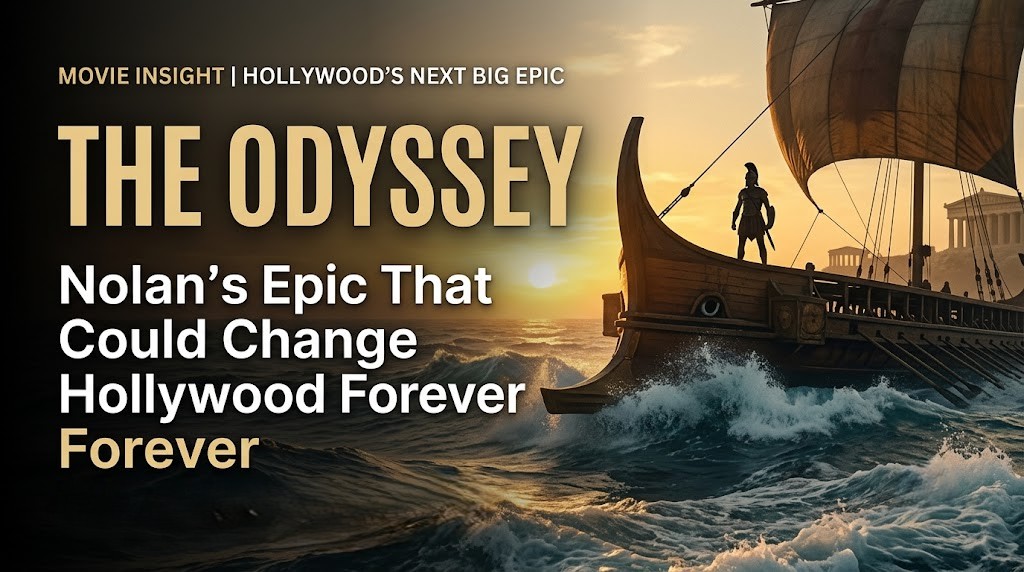
Introduction: Christopher Nolan’s Next Epic Could Redefine Modern Cinema
Few filmmakers have the ability to turn a historical event, a scientific concept, or a fictional idea into a global cinematic experience like Christopher Nolan. After the massive success of Oppenheimer, the filmmaker is taking on one of the oldest and most influential stories in human history — The Odyssey.
Based on the ancient Greek epic attributed to Homer, The Odyssey follows the legendary journey of Odysseus as he attempts to return home after the Trojan War. The story has survived for thousands of years because it explores themes that remain relevant today: survival, loyalty, identity, ambition, and the human desire to find home.
However, Nolan’s adaptation is not simply another mythology movie. Known for pushing cinematic boundaries, complex storytelling, and innovative filmmaking techniques, Nolan has the opportunity to transform an ancient legend into a modern global spectacle.
With a massive cast, advanced filmmaking technology, and an IMAX-focused production approach, The Odyssey could become one of Hollywood’s most ambitious projects and potentially reshape the future of blockbuster filmmaking.
Why Christopher Nolan Chose The Odyssey as His Next Project
Christopher Nolan has always been attracted to stories that combine human emotions with extraordinary concepts. From dreams and time travel in Inception to space exploration in Interstellar, his films often explore large ideas through personal journeys.
The Odyssey fits naturally into Nolan’s style because it is not only an adventure story but also a psychological exploration of a man facing impossible challenges. Odysseus is not simply fighting monsters or crossing dangerous seas; he is struggling with temptation, fear, loss, and the consequences of his choices.
The epic structure of the story gives Nolan the opportunity to create a film that combines action, philosophy, mythology, and emotional storytelling.
Unlike many modern superhero franchises that rely heavily on established cinematic universes, The Odyssey offers something different: a standalone legendary story with thousands of years of cultural influence.
The Return of Epic Storytelling in Hollywood
For years, Hollywood has been dominated by superhero films, sequels, and franchise-based entertainment. While these movies continue to attract audiences, there is growing demand for original cinematic experiences that feel larger than life.
Films like Dune, Oppenheimer, and Avatar have shown that audiences are still interested in ambitious storytelling when filmmakers create unique worlds and unforgettable experiences.
The Odyssey represents a return to classic epic filmmaking — the type of movies that once defined Hollywood’s golden era. Massive landscapes, historical worlds, practical filmmaking, and emotional storytelling are becoming increasingly valuable in a market where digital content is everywhere.
The success of Nolan’s upcoming film could encourage studios to invest more in original, director-driven blockbusters rather than depending only on existing franchises.
How The Odyssey Could Become Nolan’s Biggest Visual Achievement
One of the biggest reasons audiences are excited about The Odyssey is the scale of the project. Nolan is famous for creating realistic cinematic experiences, often using practical effects instead of depending entirely on computer-generated imagery.
The story of Odysseus requires vast oceans, ancient kingdoms, mythical creatures, battles, and unexplored worlds. Bringing this universe to life will require some of the most advanced filmmaking techniques available.
Nolan’s commitment to large-format filmmaking, especially IMAX, could make The Odyssey a completely immersive experience. The vast landscapes and ocean journeys could become some of the most visually impressive sequences ever shown on screen.
In an era where many films are designed primarily for streaming platforms, Nolan continues to defend the importance of theatrical experiences. His approach could remind audiences why watching a major film on the big screen remains special.
The Technology Behind Creating a Modern Mythological World
Modern cinema has entered a new technological era where filmmakers can combine practical production methods with advanced visual effects.
For a film like The Odyssey, technology will play a crucial role in creating ancient civilizations, legendary creatures, and massive environments. Visual effects artists can digitally expand real locations while maintaining realistic details.
Artificial intelligence, advanced animation systems, and virtual production techniques are also changing how filmmakers create fictional worlds. However, Nolan’s filmmaking philosophy has always focused on making fantasy feel realistic.
Instead of creating a completely artificial universe, his approach usually combines real environments, practical sets, and carefully designed visual effects. This balance between technology and traditional filmmaking could become a model for future blockbuster productions.
A Star-Studded Cast and Global Audience Appeal
One reason The Odyssey has attracted worldwide attention is its impressive ensemble cast. Nolan has a history of working with some of the biggest names in Hollywood, creating performances that become central to his storytelling.
A legendary story like The Odyssey requires actors who can bring emotional depth to larger-than-life characters. The challenge is not only portraying heroes and villains but making ancient figures feel relatable to modern audiences.
The universal themes of the story also give the film global appeal. Unlike stories connected to a specific culture or time period, the journey of someone trying to return home is something audiences everywhere can understand.
This international connection could help The Odyssey become one of the most widely discussed films of its generation.
Why The Odyssey Could Change Hollywood’s Approach to Blockbusters
The success of The Odyssey could influence the future direction of Hollywood. If the movie becomes a major commercial and critical success, studios may become more willing to support ambitious original projects.
For years, the film industry has focused on predictable formulas because large productions require significant investment. However, filmmakers like Nolan have shown that audiences will support complex stories when they are presented with creativity and confidence.
A successful The Odyssey could prove that blockbuster movies do not need to rely only on superheroes, sequels, or existing franchises. Original storytelling combined with strong filmmaking vision can still attract millions of viewers worldwide.
The movie could become an example of how traditional cinema can compete in a changing entertainment landscape.
The Business Strategy Behind Nolan’s The Odyssey
Beyond storytelling, The Odyssey represents a major business opportunity for Hollywood. Big-budget films today are not only entertainment products; they are global events that generate revenue through theaters, merchandise, digital platforms, and international markets.
Christopher Nolan has developed a reputation for creating films that attract both mainstream audiences and serious movie fans. This combination makes his projects valuable to studios because they create cultural conversations beyond opening weekend numbers.
The marketing strategy around The Odyssey will likely focus on its scale, cinematic experience, and connection to one of the world’s oldest stories.
If successful, the film could become a case study in how studios can market premium cinema experiences in the streaming era.
The Future of Cinema After The Odyssey
The entertainment industry is constantly changing. Streaming platforms have transformed how people consume content, while shorter digital formats have changed audience attention spans.
However, major theatrical experiences continue to have a unique advantage. Films like The Odyssey remind audiences that some stories are designed to be experienced collectively in theatres.
Nolan’s project represents more than just another movie release. It represents a larger conversation about the future of filmmaking — whether audiences still want ambitious, emotional, visually stunning stories on the biggest possible screen.
The answer could influence Hollywood’s decisions for years to come.
Conclusion: Can The Odyssey Become Nolan’s Defining Masterpiece?
Christopher Nolan’s The Odyssey has the potential to become one of the most significant cinematic projects of the decade. By combining an ancient legendary story with modern filmmaking technology, Nolan is attempting to create something that connects thousands of years of storytelling with the future of cinema.
The film represents a powerful combination of mythology, innovation, and artistic ambition. If successful, it could inspire a new generation of filmmakers and encourage Hollywood to take more creative risks.
Whether The Odyssey becomes Nolan’s greatest achievement remains to be seen, but one thing is certain: it is already shaping up to be one of the most anticipated cinematic events in modern entertainment history.