
Introduction: Google’s Next Step Toward Password-Free Security
Passwords have been the backbone of online security for decades, but they have also become one of the biggest weaknesses in the digital world. Weak passwords, reused credentials, phishing attacks, and data breaches continue to put millions of online accounts at risk. As technology evolves, companies are exploring smarter ways to verify identity without depending only on traditional passwords.
Google has been moving toward a future where digital identity is protected through advanced authentication methods. The company has introduced several security upgrades, including passkeys, biometric verification, and stronger account recovery options. One of the latest developments gaining attention is the use of selfie-based identity verification, where users may confirm their identity through a live facial scan instead of relying only on passwords or security questions.
This new approach combines artificial intelligence, facial recognition technology, and fraud detection systems to create a more secure login experience. The goal is to make account access easier for genuine users while making it harder for cybercriminals to take control of personal information.
What Is Google’s Selfie Login Verification Feature?
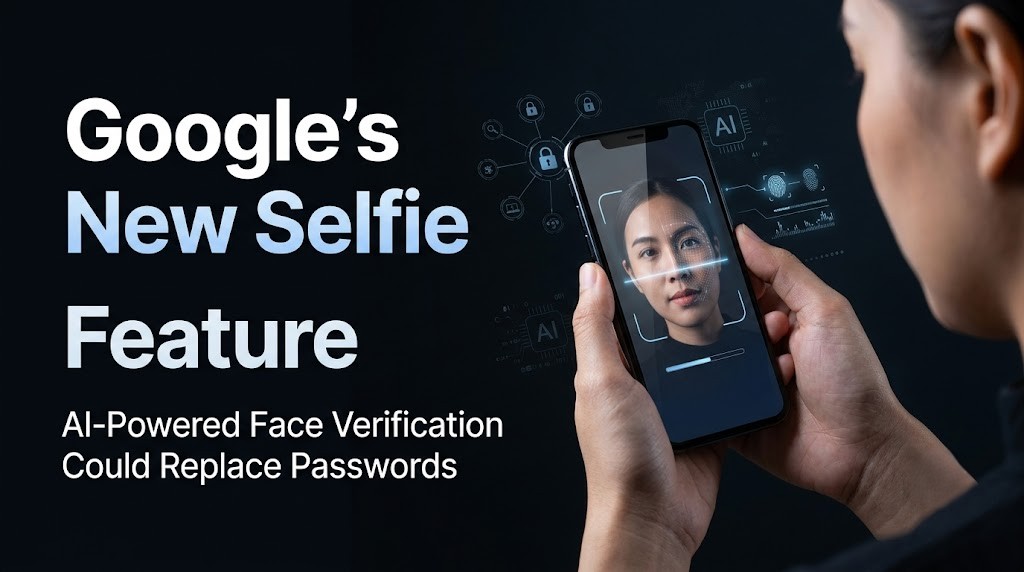
Google’s selfie verification feature is designed to add an additional layer of identity confirmation during account access or recovery processes. Instead of entering only a password, users may be asked to provide a selfie or a short facial verification scan to prove they are the actual account owner.
The technology works by analysing facial patterns and comparing them with previously verified identity information. Advanced AI models can detect whether the person attempting to log in is a real human or a fraudulent attempt using stolen images, deepfake videos, or fake identities.
Unlike traditional photo uploads, modern selfie verification systems often include a “liveness check.” This means the system may ask users to move their face, blink, turn their head, or follow simple instructions. These actions help confirm that the person is physically present rather than someone using a static image.
The introduction of selfie-based authentication represents a major shift in how companies think about digital security. Instead of asking users to remember complicated passwords, technology is moving toward identity–based verification.
Why Google Is Exploring Selfie-Based Authentication
The rise of cybercrime has made traditional login methods increasingly vulnerable. Hackers often gain access to accounts through phishing emails, leaked passwords, malware, and social engineering attacks.
Even users who follow security recommendations can become victims when large databases are compromised. A password can be changed, but personal identity information requires much stronger protection.
Selfie verification adds another security barrier because it connects account access with a real person. A cybercriminal who only has a stolen password may still fail if they cannot pass facial verification.
Google’s focus on stronger authentication is also connected to the broader industry movement toward password less technology. Companies are increasingly adopting biometrics, security keys, and passkeys because they offer better protection and a smoother user experience.
The idea is simple: instead of remembering dozens of passwords across different platforms, users can prove their identity through secure digital methods.
How AI Powers Google’s Selfie Verification Technology
Artificial intelligence plays a central role in modern facial authentication systems. Unlike basic facial recognition tools, today’s AI-powered security systems analyse multiple factors before approving access.
The system may examine facial features, movement patterns, lighting conditions, and other signals to determine whether the verification attempt is genuine.
Machine learning models are trained on large amounts of data to improve accuracy and identify suspicious activities. These systems can detect attempts involving edited photos, screen recordings, artificial faces generated by AI, or manipulated videos.
The development of generative AI has made digital fraud more advanced. Deepfake technology can create realistic images and videos that imitate real people. Because of this, companies like Google need stronger verification methods capable of distinguishing between real users and artificial content.
AI-based selfie verification is becoming an important tool in the fight against identity theft and online fraud.
Selfie Login vs Traditional Password Authentication
Traditional passwords depend mainly on something users know. A person remembers a password and enters it whenever they need access. However, passwords can be forgotten, stolen, shared, or exposed through security breaches.
Selfie authentication works differently because it depends on something users are. A face is connected to a real individual, making it more difficult for attackers to duplicate.
Password-based security also creates challenges for users. Many people reuse the same password across multiple websites, increasing the risk of account compromise. Managing multiple strong passwords can also become difficult.
Biometric verification offers convenience because users do not need to remember complex combinations of letters, numbers, and symbols. A quick facial scan can potentially provide faster access while maintaining strong security.
However, biometric systems also require careful privacy management because facial data is highly sensitive. Companies must ensure that this information is stored securely and handled responsibly.
Privacy Concerns Around Facial Recognition Login
While selfie verification offers stronger security, it also raises important privacy questions. Facial data is personal information, and users want to know how companies collect, store, and protect it.
A major concern is whether companies permanently store facial images or use them only temporarily for verification. Strong encryption, limited data retention, and transparent privacy policies are essential for building user trust.
Google and other technology companies must balance security improvements with privacy protection. Users need clear information about when facial verification is required, what data is collected, and how it is protected.
Privacy advocates have also highlighted concerns about facial recognition accuracy. AI systems must be designed carefully to reduce errors and ensure fair performance across different users.
As biometric technology becomes more common, responsible data handling will become just as important as security innovation.
How Selfie Verification Could Change Online Security
The introduction of selfie-based login systems could influence the future of digital identity. Online banking, e-commerce platforms, social networks, and government services are increasingly looking for stronger ways to verify users.
A secure biometric identity layer could reduce fraud in several industries. For example, financial platforms could use facial verification to prevent unauthorized transactions, while online marketplaces could reduce fake accounts and identity scams.
Social media platforms may also use stronger verification systems to prevent impersonation and protect public figures from fake profiles.
As consumers spend more time online, digital identity protection is becoming a major priority. The future of security may involve multiple layers working together, including passkeys, biometrics, AI fraud detection, and device authentication.
Google’s Move Toward a Passwordless Future
Google has already invested heavily in passwordless technologies. The company has supported passkeys, which allow users to sign in using device-based authentication methods such as fingerprints, face recognition, or security keys.
Selfie verification fits into this larger vision of creating safer and simpler digital experiences. Instead of depending entirely on passwords, users can authenticate themselves through secure identity signals.
The shift toward passwordless security is not only about convenience. It is also about reducing one of the biggest weaknesses in cybersecurity: human error.
People often choose simple passwords, forget security updates, or accidentally share login details. Automated identity verification systems can help reduce these risks.
Impact on Businesses and Digital Platforms
Google’s selfie login technology could influence how businesses approach customer authentication. Companies that handle sensitive information are constantly searching for ways to reduce fraud while improving user experience.
E-commerce platforms could use facial verification to protect customer accounts from unauthorized purchases. Financial services could strengthen identity checks during account creation or high-risk transactions.
Travel companies, healthcare platforms, and online education services may also benefit from stronger identity verification systems.
For businesses, better authentication means fewer fraud cases, improved customer trust, and stronger protection of digital services.
The Future of AI-Based Digital Identity
The future of online security will likely combine multiple technologies rather than relying on a single method. AI, biometrics, encryption, and passwordless authentication will work together to create safer digital environments.
Selfie verification is one example of how technology is changing the relationship between people and online accounts. As artificial intelligence becomes more powerful, security systems will continue evolving to identify genuine users and prevent digital fraud.
However, successful adoption will depend on trust. Users must feel confident that their personal information is protected and that these technologies are used responsibly.
The next generation of digital security will not only focus on stopping hackers but also on creating easier and safer experiences for everyday users.
Conclusion: A New Era of Digital Login Security
Google’s exploration of selfie-based login verification highlights a major transformation in online authentication. The internet is moving away from password-only security toward smarter identity verification powered by artificial intelligence.
While challenges around privacy and data protection remain, selfie authentication represents a significant step toward stronger account security. As cyber threats become more sophisticated, companies will continue developing advanced methods to protect user identities.
The future of logging into digital platforms may no longer depend on remembering passwords. Instead, secure AI-powered identity verification could become the new standard for accessing online services.