
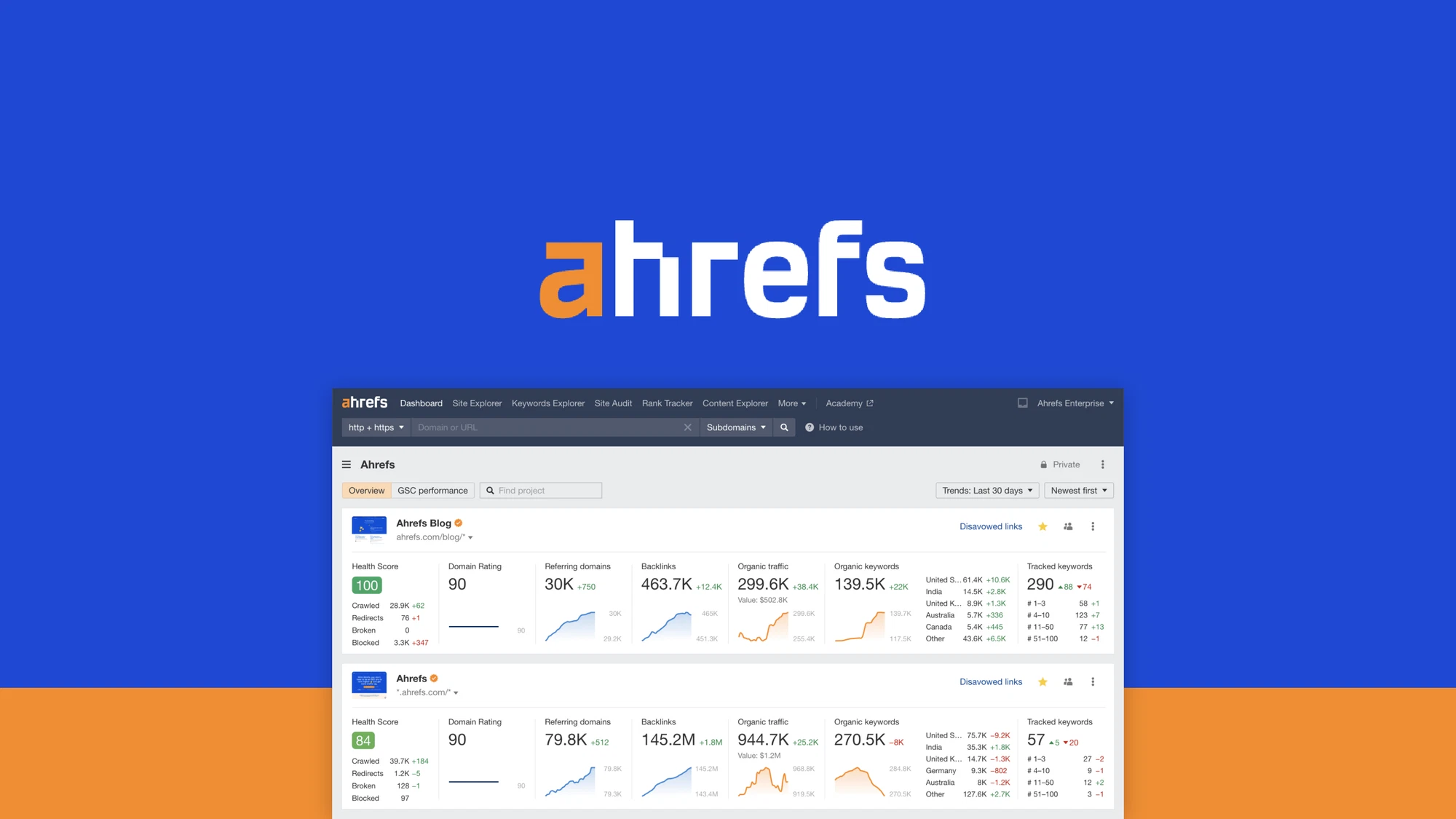
In digital marketing, success is rarely just about creating great content and hoping the right audience discovers it. Behind every successful website is a strategy built around understanding customer behaviour, identifying opportunities, and knowing what competitors are doing better. A brand might publish informative blog posts, invest in website design, and maintain an active online presence, yet still struggle to attract organic traffic. Meanwhile, a competing business with a similar product or service continues to rank higher on Google, attract potential customers, and earn valuable clicks. The difference often lies in how effectively each business understands the search landscape. This is where Ahrefs becomes a powerful resource for marketers who want to turn competitor research into a practical SEO advantage.
Ahrefs is an SEO and digital marketing platform that helps businesses analyse websites, discover keywords, evaluate backlinks, track search visibility, and research competing brands. Rather than relying on assumptions about why another website performs well, marketers can use its data to investigate the factors behind that performance. From identifying the search terms that bring visitors to a competitor’s website to uncovering content gaps that a brand has yet to address, Ahrefs provides insights that can inform smarter marketing decisions. For businesses competing in crowded industries, this information can help transform SEO from a process of trial and error into a more structured, evidence-based strategy.
1. Discover What Your Competitors Are Doing Better
One of the biggest challenges in digital marketing is understanding why a competing website attracts more organic traffic than your own. A competitor may have stronger content, a more established backlink profile, better keyword targeting, or a combination of several SEO advantages. Without the right information, marketers can spend months producing content without addressing the issues that are limiting their performance. Ahrefs helps bring these differences into focus by allowing users to analyse competing websites and examine their organic search performance.
Using Site Explorer, marketers can investigate a competitor’s estimated organic traffic, ranking keywords, backlink profile, and top-performing pages. These insights provide a starting point for understanding how a website attracts visitors through search engines. For example, an online skincare brand might discover that a competitor receives substantial organic traffic from educational articles about retinol, vitamin C serums, and sensitive-skin routines. This finding suggests that the competitor is attracting customers before they are ready to make a purchase, building awareness through useful information rather than relying exclusively on product pages.
The real advantage comes from interpreting these findings strategically. Instead of copying a competitor’s website or repeating its content, marketers can identify which tactics appear to work, why they might appeal to the target audience, and how their own brand can deliver something more useful. Competitor analysis becomes less about imitation and more about finding opportunities to create a stronger, more distinctive online presence.
2. Find the Keywords That Bring Competitors Valuable Traffic
Keywords remain an important part of search engine optimisation because they reveal the phrases people use when looking for information, products, and services. However, choosing keywords solely because they have high search volumes can lead marketers towards difficult rankings or audiences that are unlikely to convert. Understanding which keywords competitors rank for offers a more practical way to identify opportunities that align with a brand’s audience and business objectives.
Ahrefs allows marketers to examine the organic keywords associated with competing websites and explore metrics such as estimated search volume, keyword difficulty, and ranking positions. They can identify whether competitors are attracting visitors through broad searches, specific product-related queries, or detailed long-tail keywords. For instance, a home décor retailer may discover that a competitor ranks for phrases such as “small apartment storage ideas,” “minimalist bedroom furniture,” and “space-saving furniture for studio apartments.” These searches can reveal the questions and needs that influence customers before they make a purchase.
Long-tail keywords are particularly useful because they often communicate a more specific intention. Someone searching for “best ergonomic office chair for a small home office” may have a clearer requirement than someone searching simply for “office chair.” By examining the terms that already generate visibility for competitors, marketers can discover relevant topics, improve product descriptions, and develop blog content that answers specific customer questions. The objective is not to target every keyword a competitor ranks for, but to prioritise those that offer a realistic opportunity to attract relevant visitors and support business growth.
3. Identify Content Gaps and Create Better Content
Publishing consistently does not automatically guarantee strong search performance. A website may have dozens of articles and still fail to answer important questions that its audience is searching for. At the same time, competing websites may have already established visibility for topics that remain unexplored on the brand’s own platform. Ahrefs helps marketers identify these missed opportunities through competitor keyword research and its Content Gap analysis capabilities.
By comparing their website with competing domains, marketers can discover keywords for which other websites rank but their own site does not. These gaps can reveal overlooked customer questions, emerging content opportunities, or subjects where competitors have built stronger topical coverage. Consider a travel website that publishes destination guides but rarely covers practical travel planning. A competitor comparison might reveal strong rankings for searches related to budget itineraries, travel insurance, packing checklists, and destination-specific transport advice. Each gap represents a possible opportunity to create content that serves a clear audience need.
The most effective approach is to use these insights as a foundation for original, helpful content rather than producing articles simply to fill a keyword list. A marketer can study the competing pages, understand the search intent, identify missing information, and create a more comprehensive resource with clearer explanations and practical advice. This approach can strengthen topical relevance while giving readers a genuine reason to choose one website over another. Over time, a well-planned content strategy can help a brand build authority in its niche and attract visitors at different stages of the customer journey.
4. Analyse Competitor Backlinks to Understand Their Authority
Content quality is important, but backlinks have also played a significant role in SEO because they can help search engines discover pages and evaluate relationships between websites. When reputable websites link to a business’s content, those links can contribute to its search visibility. This is one reason why some competitors continue to perform well even in competitive markets: they may have earned links from industry publications, relevant blogs, news websites, and trusted online resources.
Ahrefs provides backlink analysis tools that help marketers investigate which websites link to their competitors, which pages attract the most links, and how competing backlink profiles differ. Its backlink index can reveal patterns that are difficult to identify through manual research alone. For example, a sustainable fashion brand might discover that a competitor has earned links from ethical fashion directories, sustainability reports, independent magazines, and articles discussing responsible manufacturing. These links provide clues about the relationships and content assets that may support the competitor’s online visibility.
Marketers can use these findings to develop their own outreach and digital public relations strategies. If an industry publication regularly references original research, a brand could commission a credible study or publish useful data that journalists and bloggers may want to cite. If competitors receive links through expert interviews or specialist guides, a business can explore similar opportunities with its own expertise and resources. The goal should be to earn relevant, editorially valuable backlinks rather than acquire large quantities of low-quality links. Competitor backlink analysis helps reveal where opportunities exist, but the quality and relevance of each potential link still require careful judgement.
5. Understand Which Competitor Pages Perform Best
Not every page on a competitor’s website contributes equally to its search performance. Some pages attract thousands of organic visitors, while others receive little attention despite covering similar subjects. Identifying the pages that generate the strongest visibility can help marketers understand which formats, topics, and resources appear to resonate with both search engines and users.
Through Ahrefs Site Explorer, marketers can investigate a competitor’s top pages and examine the keywords associated with those pages. This makes it possible to distinguish between content that attracts broad informational traffic and pages that target more specific commercial searches. An electronics retailer, for example, might discover that a competitor’s buying guides generate substantial organic visibility for searches such as “best noise-cancelling headphones for travel,” while comparison pages attract shoppers searching for specific product models.
These insights can influence how a brand organises its own content. Rather than producing another generic article about headphones, the retailer could develop a detailed comparison guide, explain the differences between product categories, or publish practical recommendations for different budgets and use cases. Marketers can also examine whether a competitor’s successful pages answer questions more thoroughly, present information more clearly, or offer a more useful browsing experience. Although third-party SEO estimates cannot reveal every reason a page performs well, they provide valuable clues for deciding where further research and content investment may be worthwhile.
6. Monitor Competitor SEO Performance Over Time
Competitor analysis is not a one-time activity. Search rankings change, new websites enter the market, established brands publish fresh content, and search engine updates can influence the visibility of existing pages. A website that performs exceptionally well today may lose rankings in the coming months, while a smaller competitor may gradually gain ground by targeting underserved search queries. Marketers who examine these changes regularly are better positioned to recognise opportunities before they become obvious to everyone else.
Ahrefs helps users examine historical organic traffic estimates, keyword movements, and changes in backlink profiles. By reviewing performance trends over different periods, marketers can investigate whether a competitor is gaining search visibility, losing rankings, or expanding into new topics. For example, if a competing software company begins ranking for a growing number of AI automation keywords, its content strategy may be shifting towards a developing market segment. This can prompt other businesses to investigate the same audience needs and determine whether their own products or content are relevant to that demand. However, historical patterns should be interpreted carefully because seasonal interest, algorithm updates, and changes in the wider market can also influence results.
Consistent monitoring also makes competitor research more actionable. Instead of reacting to a single ranking change, marketers can look for recurring patterns and investigate the pages or keywords behind them. Ahrefs’ historical reporting and monitoring features help turn these observations into an ongoing process, allowing marketing teams to review their strategy as the competitive landscape evolves. <Link url=”https://ahrefs.com/site-explorer” title=”Explore Ahrefs Site Explorer”/> to learn more about its website analysis capabilities.
7. Reveal Your Competitors’ Paid Search Strategy
Organic search is only one part of a brand’s digital marketing strategy. Many businesses also invest in paid advertising to appear prominently for commercially valuable keywords, attract qualified visitors, and promote products to people who are ready to buy. Studying these campaigns can help marketers understand how competitors position their offers and which parts of their websites they use to attract potential customers.
Ahrefs offers paid search analysis capabilities that can help users investigate competitor PPC keywords, advertising examples, estimated paid traffic, and landing pages. Consider a direct-to-consumer beauty brand that discovers a competitor advertising around searches for a particular moisturiser category. By examining the relevant keywords and landing pages, the marketing team can gain ideas about the competitor’s messaging, product positioning, and approach to capturing demand. It may also identify search terms that deserve further investigation for its own advertising campaigns.
The purpose of this analysis is not to assume that every competitor advertisement is profitable or to reproduce another company’s campaign word for word. Third-party tools cannot reveal a competitor’s complete advertising budget, actual conversion rate, or return on ad spend with certainty. Instead, marketers can use the available data to form informed hypotheses, test different messages, and develop landing pages that better address their customers’ needs. When organic and paid search research are considered together, businesses gain a broader understanding of how competitors attract attention across different stages of the buying journey.
8. Discover New Competitors You May Have Overlooked
Many marketers define their competitors too narrowly. They focus on businesses selling similar products or offering the same services, overlooking websites that compete for the same audience’s attention in search results. Yet the most significant SEO competitor is not always a direct business rival. It could be an independent publisher, a comparison website, an industry blog, or a marketplace that consistently ranks for the queries a brand wants to target.
Ahrefs can help uncover these less obvious competitors by showing which domains rank for overlapping keywords and which websites attract visibility for relevant search terms. For instance, a premium luggage company might consider other luggage brands its primary competitors. However, search results could also reveal travel magazines, product review websites, and packing-guide publishers competing for valuable queries such as “best carry-on luggage for international travel.” These websites may influence potential customers long before they visit a luggage retailer’s product pages.
Understanding this wider competitive environment helps marketers make more realistic decisions about content planning and search visibility. A brand might need detailed product comparisons to compete with review websites, informative destination content to reach travellers earlier in their research, or stronger category pages to compete with online marketplaces. Identifying the websites that already attract the target audience provides a clearer picture of the search landscape and helps marketers select strategies that fit their resources and commercial goals. Ahrefs also documents how its Traffic Share reports can help users discover websites that attract organic traffic for selected keyword groups. <Link url=”https://help.ahrefs.com/en/articles/2073915-how-can-i-find-new-competitor-websites-using-the-traffic-share-reports” title=”Learn how to discover competitors through search traffic share”/>.
9. Turn Competitor Research Into a Practical Marketing Strategy
Collecting SEO data is useful only when it leads to better decisions. Marketers can spend hours reviewing keyword reports, backlink metrics, and traffic estimates without making meaningful progress if they do not translate their findings into clear priorities. The real value of Ahrefs lies in helping businesses connect competitor insights with specific actions that improve their own websites and marketing campaigns.
A practical approach begins by selecting a small group of relevant competitors and examining their search visibility, strongest pages, keyword rankings, and backlink sources. The next step is to compare those findings with the brand’s existing performance. Are competitors ranking for important customer questions that the business has not addressed? Do their most successful pages provide information that is missing from the brand’s website? Are relevant publications linking to competing resources that could inspire a stronger original asset? These questions turn raw data into a list of opportunities that can be evaluated according to business relevance, ranking potential, content requirements, and available resources.
Prioritisation is especially important for smaller businesses with limited budgets and marketing teams. A highly competitive keyword with enormous search volume may require months of effort and substantial resources, while a more specific query could provide a realistic opportunity to attract qualified visitors sooner. Similarly, creating ten new articles may be less valuable than improving two existing pages that already rank near the top of search results. By combining competitor research with a clear understanding of the brand’s audience and objectives, marketers can focus on activities that have a stronger chance of delivering meaningful results.
10. Understand the Limitations of Competitor Analysis
Although Ahrefs provides valuable information, it is important to recognise what SEO tools can and cannot reveal. Competitor traffic figures are estimates rather than direct access to another company’s Google Analytics or Search Console data. Actual website visits may differ because Ahrefs estimates organic and paid search performance using its own data and methodologies, rather than measuring every visitor to a competitor’s website. The platform also cannot automatically explain every reason behind a ranking improvement or decline.
For this reason, marketers should treat competitor reports as evidence for investigation rather than definitive explanations. A competitor may rank well because of its content quality, brand recognition, website structure, user experience, backlinks, or several factors working together. Keyword difficulty and Domain Rating are useful comparative metrics, but neither guarantees a particular ranking position. Search results also vary according to location, language, device, search intent, and other factors.
The strongest analysis combines Ahrefs data with manual research, customer feedback, website analytics, and a close examination of search results. Marketers should assess whether competing pages genuinely satisfy user intent, whether their own website offers a better experience, and whether the proposed strategy supports business objectives. This balanced approach prevents teams from chasing misleading numbers or investing in opportunities simply because a competitor appears successful. <Link url=”https://help.ahrefs.com/en/articles/944144-how-can-i-check-organic-search-traffic-of-sites-i-don-t-own” title=”Read Ahrefs’ explanation of estimated competitor traffic”/> for further context.
Why Ahrefs Gives Marketers a Competitive Advantage
In a crowded digital marketplace, understanding competitors can be just as important as understanding your own audience. Businesses that rely only on their internal performance reports may know which pages attract visitors, but they can miss the opportunities competitors are already capturing. Ahrefs helps close that information gap by bringing together keyword research, backlink analysis, organic traffic estimates, content comparisons, and paid search insights within a single marketing platform.
For marketers, the greatest advantage is the ability to move beyond guesswork. Instead of wondering which topics deserve attention, they can investigate what people are searching for and which websites already rank for those queries. Instead of assuming that a competitor has a stronger SEO strategy, they can examine its leading pages, link sources, and keyword coverage to identify possible explanations. These insights make it easier to develop informed content plans, discover new audiences, and allocate marketing resources more strategically.
Ultimately, Ahrefs is not a shortcut to outranking every competitor. It is a research tool that helps marketers understand the environment in which they compete. Sustainable growth still depends on publishing valuable content, delivering a strong website experience, earning relevant links, and meeting real customer needs. When marketers use competitor analysis to identify gaps rather than simply copy successful brands, they can build an SEO strategy that is more distinctive, relevant, and resilient. The objective is not merely to discover what competitors are doing today, but to use those insights to make smarter marketing decisions for tomorrow.
Affiliate Disclosure: This article may contain affiliate links. If you purchase a product or sign up for a service through one of these links, we may earn a commission at no additional cost to you. Our reviews and opinions are based on our editorial assessment and are not influenced solely by affiliate compensation.