
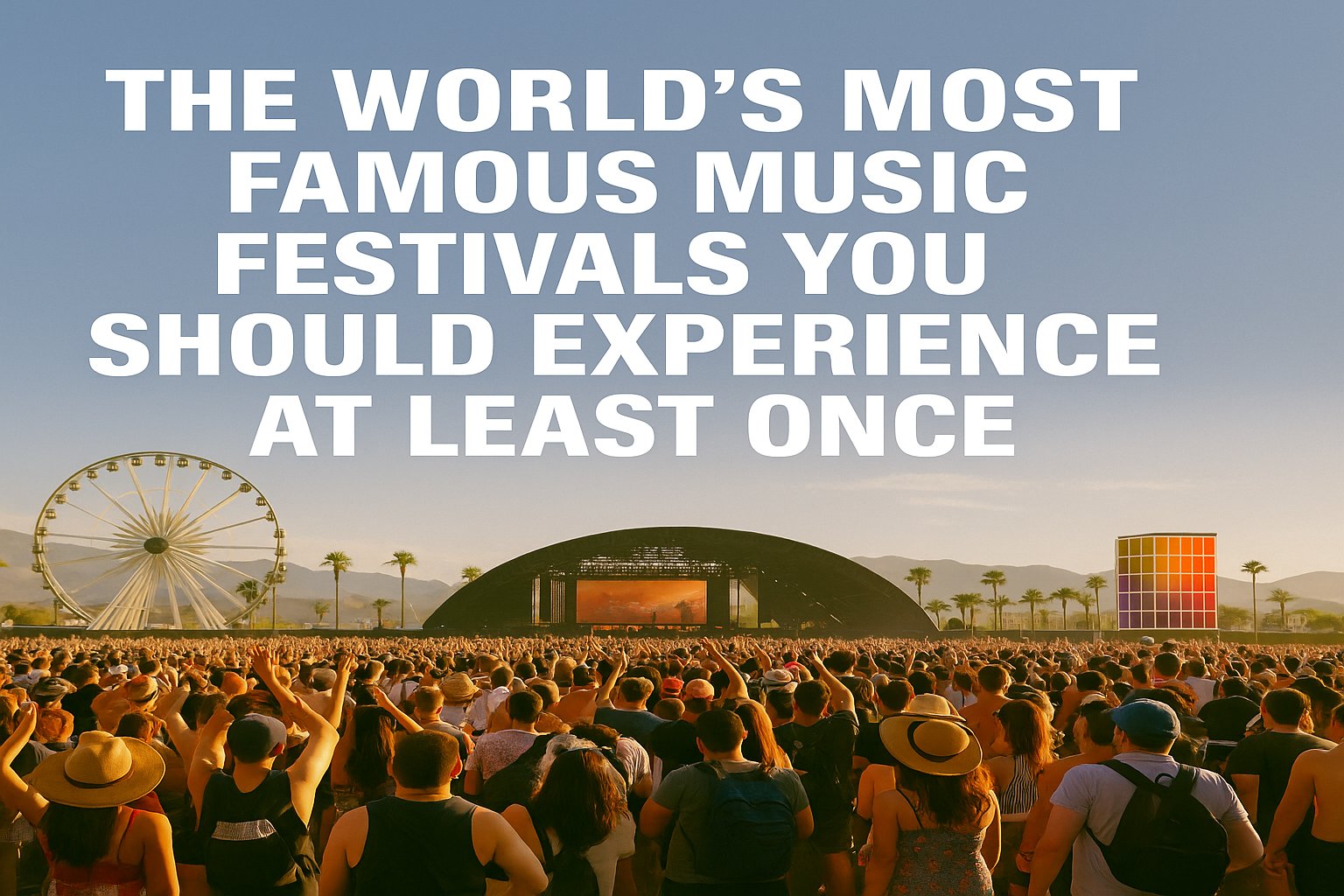
Music festivals have evolved far beyond live performances and crowded dance floors. Today, they are global cultural experiences where music, fashion, travel, technology and creativity come together to create moments that stay with people long after the final song ends. From spectacular stages in the California desert to electronic music celebrations in Belgium and vibrant cultural gatherings in the United Kingdom, the world’s most exciting music festivals offer something unique to every kind of music lover. For travellers, they provide a reason to explore a new destination; for artists, they offer a powerful platform to connect with international audiences; and for fans, they create the feeling of being part of something much bigger than a concert.
What makes a music festival truly memorable is not simply its lineup. The atmosphere, location, stage design, crowd energy and cultural identity all contribute to its appeal. Some festivals are known for bringing together the biggest names in popular music, while others have built their reputations around electronic dance music, alternative sounds or artistic expression. If you are planning a music-focused getaway, searching for your next unforgettable live-music experience or simply curious about the festivals shaping global entertainment culture, these five events deserve a place on your radar.
1. Coachella, United States: Where Music Meets Fashion and Pop Culture
Few music festivals have achieved the cultural influence of Coachella Valley Music and Arts Festival. Held in Indio, California, in the Colorado Desert, Coachella has become much more than an annual gathering for live music. It is a major intersection of entertainment, fashion, celebrity culture, art and social media, attracting international visitors who come for the performances as much as the overall experience. Its desert setting, distinctive art installations and carefully curated atmosphere have helped establish it as one of the most recognisable music festivals in the world.
Coachella’s appeal lies in its ability to bring different musical worlds together. Across its stages, audiences can experience pop, hip-hop, rock, indie, electronic music and emerging international sounds. The festival has hosted performances by some of the biggest names in global entertainment, while also giving audiences opportunities to discover artists who may soon become household names. This combination of established superstars and rising talent keeps the event culturally relevant and encourages music fans to explore beyond their usual playlists.
Fashion is another essential part of the Coachella identity. Festivalgoers often treat the event as an opportunity to experiment with personal style, from relaxed desert-inspired outfits to bold designer looks and statement accessories. Fashion labels, beauty brands and lifestyle companies also pay attention to the festival because it offers a setting where products can become part of a larger cultural conversation. Social media has amplified this influence, turning festival outfits, celebrity appearances and stage moments into widely shared content. For travellers, Coachella offers an energetic combination of live music, contemporary art and California’s desert landscape, although the heat, crowds and accommodation demand require careful planning.
2. Tomorrowland, Belgium: A Fantasy World Built Around Electronic Music
For electronic dance music fans, Tomorrowland in Boom, Belgium, is one of the most spectacular festival experiences anywhere in the world. Famous for its elaborate stage designs, immersive visual effects and international atmosphere, the festival transforms its grounds into a fantasy-inspired environment where music and imagination take centre stage. Rather than feeling like a conventional concert venue, Tomorrowland creates an entire world around its performances, with intricate decorations, themed stages and production designed to make every part of the experience feel connected.
The festival is particularly associated with electronic dance music, including house, techno, trance and other dance-oriented styles. International DJs and electronic music producers perform for audiences who travel from across the globe, creating a gathering that feels genuinely international. For many attendees, the attraction is not just seeing a favourite artist perform but experiencing the collective energy of thousands of people moving to the same rhythm. The festival’s scale and production values have also made it a major reference point for discussions about live-event design and entertainment innovation.
One of Tomorrowland’s most distinctive qualities is its storytelling approach. Each edition typically develops a visual theme that influences the festival’s creative direction, allowing the stages, decorations and wider atmosphere to feel like parts of a larger narrative. This commitment to immersive design has helped the event build a recognisable identity that extends beyond music. Its international audience also makes it a destination for travellers interested in meeting people from different countries and cultures. Anyone planning to attend should research ticket releases, accommodation options and transport well in advance, as demand can be exceptionally high. For electronic music enthusiasts, Tomorrowland represents the possibility of turning a weekend of performances into a fully immersive experience.
3. Glastonbury Festival, United Kingdom: A Celebration of Music, Art and Community
Set on Worthy Farm in Somerset, England, Glastonbury Festival is one of the most influential names in live music. Unlike events built around a single genre or a narrowly defined aesthetic, Glastonbury embraces an expansive mix of musical styles, performing arts, comedy, theatre and cultural expression. Its long history and distinctive character have made it an institution in British festival culture, attracting audiences who value both major performances and the unexpected discoveries that can happen while exploring the grounds.
Music remains at the heart of Glastonbury, with stages hosting everything from internationally recognised headliners to emerging performers and niche musical acts. Rock, pop, indie, electronic music, hip-hop and other genres coexist within a festival environment that rewards curiosity. Visitors may arrive with a schedule of performances they do not want to miss, only to discover a new favourite artist while wandering between stages. This element of exploration gives Glastonbury a different character from festivals where the experience revolves around a single main stage or musical style.
Another defining feature is its sense of community and its wider cultural programme. The festival includes spaces dedicated to arts, performance, independent ideas and social causes, creating an atmosphere that extends beyond entertainment alone. Its rural setting adds to the experience, although British weather can be unpredictable, and muddy conditions have become part of its famous reputation. Practical preparation matters: comfortable footwear, waterproof clothing, a portable charger and a realistic plan for moving between stages can make a significant difference. Glastonbury is also highly sought after, so visitors should follow official announcements regarding registration, ticket sales and festival dates. For anyone seeking a music festival that combines legendary performances with creativity, diversity and a strong sense of shared experience, Glastonbury remains a standout destination.
4. Lollapalooza, United States and Beyond: A Festival Brand With Global Reach
Lollapalooza began as a touring alternative-music festival in the United States and developed into a recognisable international festival brand. Its original identity was closely associated with alternative rock and the independent music scene, but its programming has broadened considerably over the years. Today, Lollapalooza events feature a wide selection of contemporary music, including pop, hip-hop, rock, electronic music and emerging acts, reflecting the increasingly diverse tastes of global audiences.
The Chicago edition, held in Grant Park, is particularly well known for its city-centre setting. Unlike festivals situated in remote countryside or desert landscapes, Lollapalooza places live music within a major urban environment. Chicago’s skyline, lakefront surroundings and public spaces contribute to an experience that combines festival energy with the appeal of a city break. Visitors can spend the day moving between performances and then explore the city’s restaurants, architecture, museums and neighbourhoods, making the festival attractive to travellers who want more than a music-focused itinerary.
Lollapalooza’s international expansion has also helped it reach audiences beyond the United States, with editions in countries including Brazil, Chile, Argentina and Germany at different points in its global development. Each location brings its own cultural context and audience, while the wider festival identity connects these events through a shared emphasis on large-scale performances and contemporary music. This global presence makes Lollapalooza an interesting example of how entertainment brands can adapt a familiar format for different markets without losing their central identity. For music fans, it offers flexibility: rather than travelling to one particular destination, they can explore whether an edition closer to home or in a preferred travel destination suits their interests. Lineups and event details vary by location, so checking the official festival website for the specific edition is essential.
5. Montreux Jazz Festival, Switzerland: An Intimate Connection Between Music and Place
For a different kind of festival experience, Montreux Jazz Festival on the shores of Lake Geneva in Switzerland offers a compelling alternative to enormous dance-music gatherings and sprawling multi-genre events. Established in 1967, the festival has developed an international reputation for musical excellence and an eclectic approach to programming. Although jazz is central to its heritage, its musical identity has expanded over time to include soul, blues, rock, pop, electronic music and other genres. The result is a festival that honours musical tradition while remaining open to new sounds and creative experimentation.
Montreux’s lakeside setting is an important part of its appeal. The surrounding Swiss landscape, waterfront promenades and nearby mountains provide a striking backdrop for performances, creating an atmosphere that feels closely connected to its destination. Rather than experiencing the festival only as a series of scheduled concerts, visitors can combine live music with scenic walks, local dining and exploration of the surrounding region. This makes Montreux especially appealing to travellers who want a cultural holiday with a more relaxed pace alongside memorable performances.
The festival is also known for its emphasis on musicianship and the possibility of unexpected musical encounters. Its programme has historically brought together major international performers, respected musicians and artists from different musical traditions. For audiences, this diversity creates opportunities to discover sounds outside familiar genres and appreciate the creativity behind live performance. Depending on the edition and venue, the experience can range from large public concerts to more intimate performances, giving the festival a varied atmosphere.
Montreux is a strong choice for travellers who value music history, scenic surroundings and artistic discovery. As with any internationally recognised event, it is sensible to review the official programme, ticket availability and accommodation options before planning a visit. For those who prefer a festival experience that combines cultural depth with the beauty of a European lakeside destination, Montreux offers a distinctive alternative.
How to Choose the Right Music Festival for Your Next Trip
Choosing the best international music festival depends on what you want from the experience. Coachella is particularly attractive to visitors interested in contemporary music, fashion and pop culture, while Tomorrowland is an obvious contender for electronic dance music enthusiasts who enjoy immersive stage production. Glastonbury appeals to travellers looking for musical variety and a wider cultural programme, Lollapalooza combines large-scale performances with the convenience of an urban destination, and Montreux offers a more music-focused cultural escape in a scenic Swiss setting.
Budget and logistics deserve as much attention as the lineup. Festival tickets are only one part of the total cost; flights, accommodation, local transportation, food and additional experiences can substantially increase the overall expense. Popular events may sell out quickly, and nearby hotels or rental properties can become significantly more expensive during festival periods. Before booking, check official dates, entry requirements, cancellation policies and transport arrangements. It is also worth reviewing the festival’s rules on bags, camping, accessibility, age restrictions and permitted items so that there are no surprises on arrival.
Most importantly, allow room for spontaneity. A festival schedule can help you catch the performances you care about most, but some of the best memories come from discovering an unfamiliar artist, sharing a moment with fellow music lovers or exploring a destination you might not otherwise have visited. A thoughtful plan makes the experience smoother, while a flexible attitude leaves space for the unexpected.
Final Thoughts: More Than Music, These Festivals Create Global Experiences
The world’s leading music festivals demonstrate how live entertainment can bring together music, travel, art, fashion and culture in powerful ways. From the desert spectacle of Coachella and the imaginative production of Tomorrowland to Glastonbury’s creative community, Lollapalooza’s international reach and Montreux’s lakeside musical heritage, each festival offers a different perspective on what makes live music special.
You do not need to attend every festival to appreciate their influence. Exploring their lineups, signature experiences and destinations can help you discover new artists, understand changing music trends and plan a future trip around an event that matches your interests. Ultimately, the best festival is not necessarily the biggest or most famous one. It is the one that connects you with the music, atmosphere and people that make the experience unforgettable.