
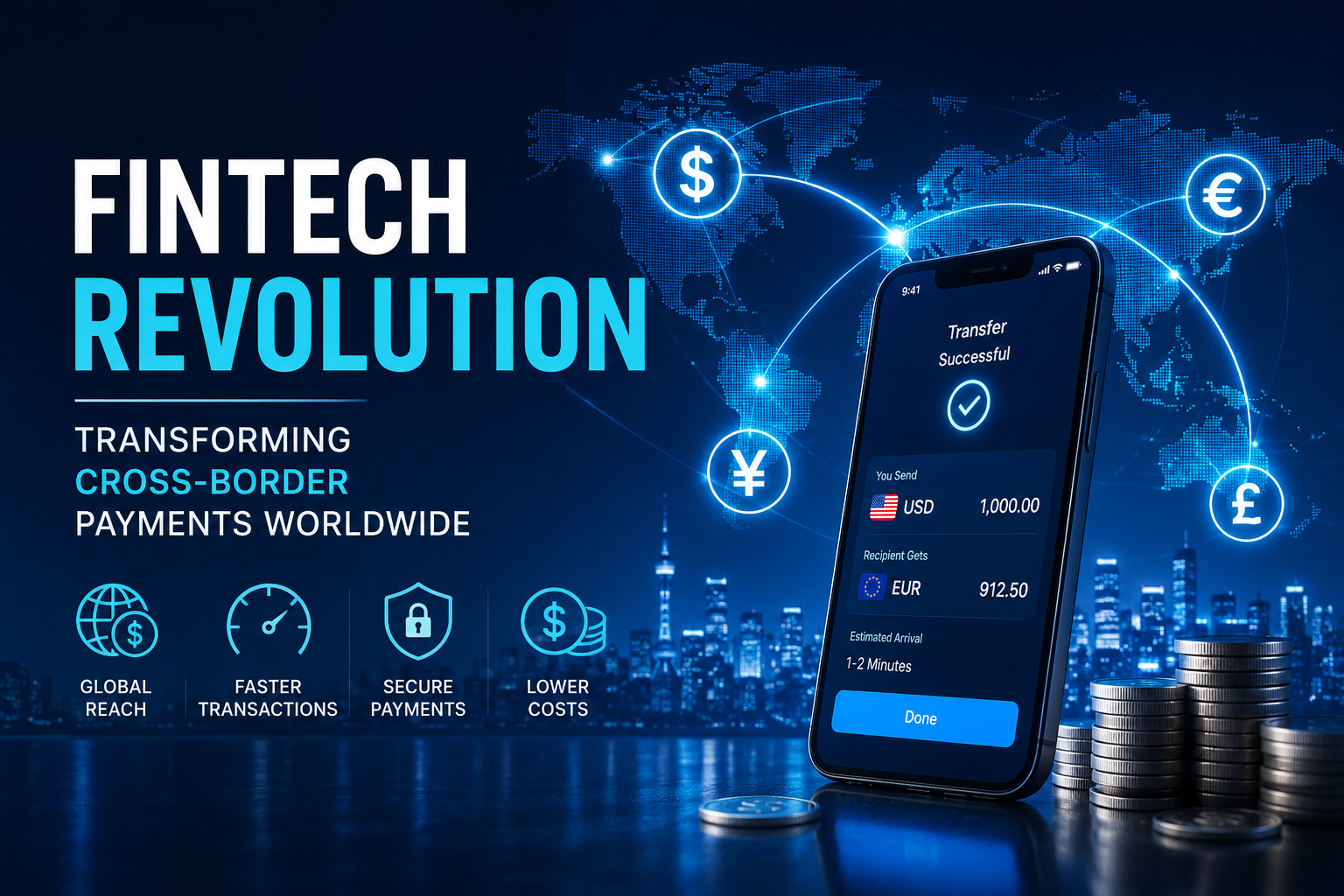
In today’s interconnected global economy, cross-border payments have become a fundamental part of international trade, business expansion, investment, and personal financial transactions. Whether a multinational corporation pays suppliers overseas, a freelancer receives compensation from an international client, or migrant workers send money home to their families, the ability to move money efficiently across borders is essential. However, traditional cross-border payment systems have long been associated with high fees, slow processing times, limited transparency, and complex regulatory requirements.
The fintech revolution is changing this landscape dramatically. Financial technology companies are leveraging digital innovation, artificial intelligence, blockchain technology, cloud computing, and advanced payment infrastructures to make international money transfers faster, cheaper, and more secure. As global commerce continues to expand, fintech is reshaping the future of cross-border payments and creating new opportunities for businesses and consumers alike.
Understanding the Traditional Challenges
For decades, international payments relied heavily on correspondent banking networks. In this system, multiple banks act as intermediaries between the sender and recipient. While effective, the process often involves several challenges.
High Transaction Costs
Traditional banks typically charge service fees, currency conversion fees, and intermediary bank fees. These costs can significantly reduce the amount received by the recipient, particularly for smaller transactions.
Slow Settlement Times
Cross-border payments may take several days to settle due to the involvement of multiple financial institutions operating across different time zones and regulatory environments.
Lack of Transparency
Customers often struggle to track international transfers in real time. Unexpected fees and uncertain delivery timelines can create frustration for both businesses and individuals.
Regulatory Complexity
Financial institutions must comply with anti-money laundering (AML), know-your-customer (KYC), and sanctions regulations across multiple jurisdictions. These requirements can increase operational complexity and costs.
These challenges created a strong demand for innovation, opening the door for fintech companies to disrupt the traditional payment ecosystem.
The Rise of Fintech in Global Payments
Fintech refers to the use of technology to improve and automate financial services. Over the past decade, fintech firms have emerged as major players in international payments by addressing the inefficiencies of traditional systems.
Companies such as Wise, Revolut, Payoneer, Stripe, Adyen, and Airwallex have introduced digital platforms that simplify global money movement. Their solutions focus on speed, affordability, transparency, and user experience.
The growth of fintech has been supported by several factors:
- Increasing internet and smartphone penetration
- Growth of e-commerce and digital marketplaces
- Expansion of remote work and freelance economies
- Rising demand for real-time payments
- Advances in cloud computing and data analytics
- Regulatory support for financial innovation
Today, fintech companies are processing billions of dollars in international transactions annually, challenging the dominance of traditional banks.
Key Technologies Driving the Revolution
Blockchain Technology
Blockchain has emerged as one of the most transformative technologies in cross-border payments. Unlike traditional payment systems that rely on intermediaries, blockchain enables direct peer-to-peer value transfer.
Transactions recorded on distributed ledgers offer several benefits:
- Faster settlement times
- Reduced operational costs
- Enhanced transparency
- Improved security
- Greater traceability
Blockchain-based payment networks can process transactions within minutes rather than days. Major financial institutions and fintech companies are increasingly exploring blockchain solutions to streamline international payments.
Artificial Intelligence and Machine Learning
AI is helping fintech companies improve payment efficiency and security. Machine learning algorithms can analyse vast amounts of transaction data to identify suspicious activities and prevent fraud.
AI-powered systems are also being used for:
- Risk assessment
- Customer verification
- Currency forecasting
- Compliance monitoring
- Personalized financial services
As AI technology continues to evolve, its role in optimizing global payment systems is expected to expand significantly.
Cloud Computing
Cloud infrastructure enables fintech companies to scale operations rapidly while maintaining high levels of reliability and security.
Cloud-based platforms support:
- Real-time transaction processing
- Global accessibility
- Data storage and analytics
- Cost-efficient service delivery
By reducing infrastructure costs, cloud technology allows fintech firms to offer more competitive pricing than traditional financial institutions.
Application Programming Interfaces (APIs)
APIs enable seamless integration between payment providers, banks, businesses, and financial applications.
Modern API-driven payment systems allow companies to:
- Automate international payments
- Access real-time exchange rates
- Monitor transactions instantly
- Improve operational efficiency
This level of connectivity is transforming how businesses manage global financial operations.
Benefits for Businesses
The fintech revolution is delivering substantial advantages for businesses engaged in international commerce.
Faster Transactions
Speed is crucial in global business. Fintech platforms enable near-instant or same-day settlements, improving cash flow management and reducing operational delays.
Lower Costs
By minimizing intermediaries and automating processes, fintech providers significantly reduce transaction expenses. Businesses can save substantial amounts on international payment fees.
Improved Transparency
Modern fintech solutions offer real-time payment tracking, allowing businesses to monitor transactions throughout the payment journey.
Enhanced Global Reach
Small and medium-sized enterprises can now access international markets more easily. Fintech platforms provide affordable payment solutions that were previously available only to large corporations.
Better Currency Management
Many fintech companies offer competitive foreign exchange rates and multi-currency accounts, helping businesses manage currency risks more effectively.
Impact on Consumers
Consumers are also benefiting from innovations in cross-border payments.
Affordable Remittances
Millions of migrant workers send money to family members in other countries. Fintech services have reduced remittance costs, enabling families to receive a larger share of transferred funds.
Greater Convenience
Mobile payment applications allow users to send money internationally from smartphones without visiting bank branches.
Faster Access to Funds
Recipients can often receive money within minutes or hours rather than waiting several business days.
Financial Inclusion
Digital payment platforms are helping underserved populations access financial services, particularly in regions with limited banking infrastructure.
This expansion of financial inclusion supports economic development and reduces barriers to participation in the global economy.
The Role of Digital Wallets
Digital wallets have become increasingly important in international payment ecosystems.
Platforms such as PayPal, Apple Pay, Google Wallet, and regional fintech solutions enable consumers to store funds, make purchases, and transfer money across borders.
Digital wallets offer several advantages:
- User-friendly interfaces
- Enhanced security features
- Instant payment capabilities
- Integration with e-commerce platforms
- Reduced dependency on traditional banking systems
As smartphone adoption continues to rise worldwide, digital wallets are expected to play an even larger role in global payment networks.
Regulatory Developments
Regulation remains a critical component of the fintech ecosystem.
Governments and financial authorities are working to balance innovation with consumer protection and financial stability.
Key regulatory priorities include:
- Anti-money laundering compliance
- Data privacy protection
- Cybersecurity standards
- Consumer rights safeguards
- Financial crime prevention
Many jurisdictions have introduced regulatory sandboxes that allow fintech companies to test innovative solutions under controlled conditions.
International cooperation among regulators is becoming increasingly important as cross-border financial transactions grow in volume and complexity.
Challenges Facing Fintech Payment Providers
Despite rapid progress, several challenges remain.
Cybersecurity Risks
As payment systems become more digital, they become attractive targets for cybercriminals. Fintech companies must invest heavily in security technologies and risk management.
Regulatory Differences
Varying regulations across countries can create operational complexity and increase compliance costs.
Infrastructure Gaps
In some regions, limited internet connectivity and digital infrastructure hinder fintech adoption.
Consumer Trust
Building trust remains essential. Customers must have confidence that their funds and personal information are secure.
Addressing these challenges will be critical for sustaining long-term growth in the fintech sector.
The Emergence of Central Bank Digital Currencies
Central Bank Digital Currencies (CBDCs) are gaining attention as governments explore digital versions of national currencies.
CBDCs could significantly influence cross-border payments by:
- Reducing transaction costs
- Improving settlement speed
- Enhancing transparency
- Increasing financial inclusion
Several countries are conducting pilot programs and research initiatives to evaluate the potential benefits and risks of CBDCs.
If implemented successfully, these digital currencies could become an important component of future global payment systems.
Future Trends in Cross-Border Payments
The future of international payments is likely to be shaped by several emerging trends.
Real-Time Global Payments
Consumers and businesses increasingly expect instant transactions. Real-time payment networks are becoming a priority for financial institutions worldwide.
Increased Automation
Artificial intelligence and automation will continue to streamline payment processing, compliance, and fraud detection.
Greater Interoperability
Future payment systems will focus on improving connectivity between banks, fintech providers, digital wallets, and blockchain networks.
Expansion of Embedded Finance
Financial services are increasingly being integrated directly into digital platforms, allowing users to make international payments without leaving their preferred applications.
Sustainable Financial Innovation
Fintech companies are also exploring environmentally sustainable technologies and operational practices to support responsible growth.
Conclusion
The fintech revolution is fundamentally transforming cross-border payments worldwide. Through innovations such as blockchain, artificial intelligence, cloud computing, digital wallets, and API-driven platforms, fintech companies are addressing long-standing challenges associated with international money transfers.
Businesses benefit from lower costs, faster settlements, enhanced transparency, and improved access to global markets. Consumers enjoy more affordable remittances, greater convenience, and expanded financial inclusion. Meanwhile, emerging technologies such as Central Bank Digital Currencies and real-time payment networks are paving the way for the next generation of global financial services.
Although challenges related to cybersecurity, regulation, and infrastructure remain, the overall trajectory is clear. The future of cross-border payments is becoming faster, more transparent, more accessible, and increasingly digital. As fintech innovation continues to accelerate, it will play a central role in shaping the global economy and connecting individuals, businesses, and markets across borders like never before.