
Introduction
The global economy is entering a transformative era in 2027, driven by rapid technological advancements, changing consumer preferences, sustainability goals, and demographic shifts. Industries that were once considered niche markets have evolved into major economic forces, attracting billions of dollars in investment and creating new opportunities for businesses worldwide.
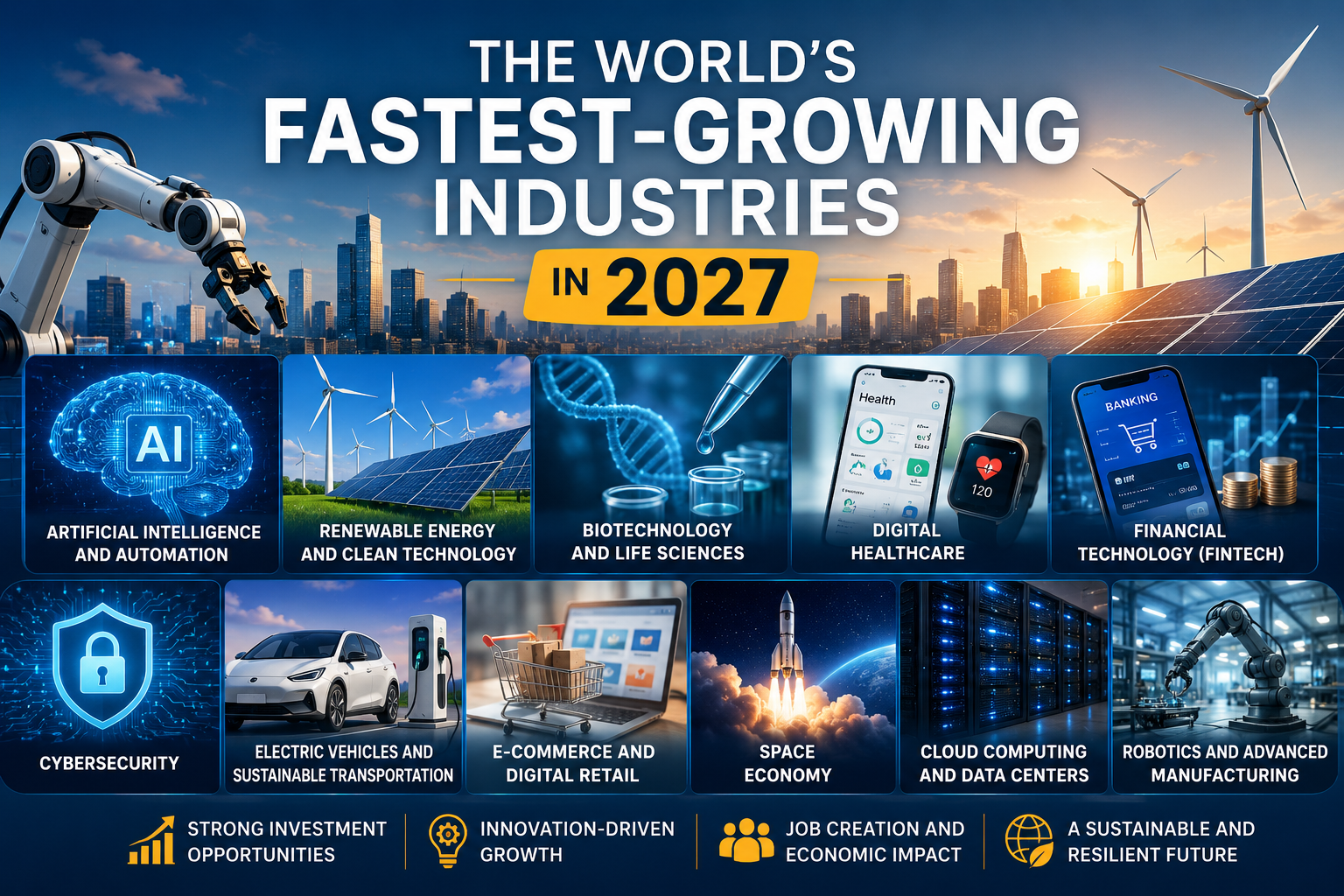
Artificial intelligence, renewable energy, biotechnology, fintech, and digital healthcare are among the sectors leading this growth. As governments, corporations, and consumers embrace innovation, these industries are expected to reshape global markets and redefine how people live and work.
This article explores the world’s fastest-growing industries in 2027, examining the key trends, opportunities, and challenges that are fuelling their expansion.
1. Artificial Intelligence and Automation
Artificial Intelligence (AI) remains one of the most influential and fastest-growing industries in 2027. Businesses across every sector are integrating AI-driven solutions to improve efficiency, reduce costs, and enhance customer experiences.
Key Growth Drivers
- Expansion of generative AI technologies
- Increased enterprise adoption of AI tools
- Demand for automation in manufacturing and services
- Growth of AI-powered cybersecurity solutions
AI is transforming industries ranging from healthcare and finance to retail and logistics. Companies use AI for predictive analytics, personalized recommendations, fraud detection, and autonomous decision-making.
Market Impact
Global investments in AI continue to reach record levels as organizations compete to gain a technological advantage. AI-powered software, robotics, and intelligent assistants have become essential business tools.
2. Renewable Energy and Clean Technology
As countries pursue ambitious climate goals, renewable energy remains one of the fastest-growing sectors globally. Governments and corporations are investing heavily in sustainable energy infrastructure to reduce carbon emissions.
Key Growth Areas
- Solar energy
- Wind power
- Green hydrogen
- Battery storage technology
- Smart energy grids
The declining cost of renewable energy technologies has accelerated adoption across developed and emerging economies.
Why the Industry Is Growing
Environmental regulations, energy security concerns, and growing public awareness of climate change continue to drive investment in clean energy projects.
Renewable energy companies are expanding rapidly, creating jobs and attracting substantial private and public funding.
3. Biotechnology and Life Sciences
Biotechnology is experiencing remarkable growth due to advances in genetic research, personalized medicine, and innovative treatments.
Emerging Trends
- Gene editing technologies
- mRNA-based therapies
- Precision medicine
- Regenerative medicine
- AI-assisted drug discovery
Healthcare providers increasingly use personalized treatment approaches based on genetic information, improving outcomes and reducing costs.
Investment Opportunities
Biotech startups and pharmaceutical companies continue to attract significant venture capital and institutional investment due to the industry’s potential for breakthrough innovations.
4. Digital Healthcare
The healthcare industry has undergone a digital revolution, making digital healthcare one of the world’s fastest-growing sectors.
Key Innovations
- Telemedicine platforms
- Remote patient monitoring
- AI-powered diagnostics
- Wearable health technology
- Digital therapeutics
Patients increasingly prefer convenient and accessible healthcare services, driving demand for virtual care solutions.
Future Outlook
Healthcare systems worldwide are investing in digital infrastructure to improve efficiency, reduce costs, and expand access to medical services.
5. Financial Technology (Fintech)
Fintech continues to disrupt traditional banking and financial services through innovative digital solutions.
Growth Drivers
- Mobile banking adoption
- Digital wallets
- Embedded finance
- Blockchain technology
- AI-driven financial services
Consumers increasingly expect fast, secure, and convenient financial experiences.
Industry Transformation
Fintech companies are expanding into lending, wealth management, insurance, and cross-border payments, creating new opportunities for businesses and consumers alike.
6. Cybersecurity
As digital transformation accelerates, cybersecurity has become a critical priority for organizations worldwide.
Why Demand Is Rising
- Increasing cyberattacks
- Growth of cloud computing
- Expansion of remote work
- Regulatory compliance requirements
Businesses are investing heavily in cybersecurity solutions to protect sensitive data and maintain customer trust.
Key Segments
- Cloud security
- Identity management
- Threat intelligence
- Endpoint protection
- Zero-trust security frameworks
Cybersecurity spending is expected to continue rising as cyber threats become more sophisticated.
7. Electric Vehicles and Sustainable Transportation
The transportation sector is undergoing a major transformation as electric vehicles (EVs) gain widespread adoption.
Growth Factors
- Government incentives
- Advances in battery technology
- Expansion of charging infrastructure
- Consumer demand for sustainable mobility
Automakers are investing billions in EV production and innovation.
Related Industries
The growth of EVs also supports related sectors such as battery manufacturing, charging networks, and energy storage systems.
8. E-Commerce and Digital Retail
E-commerce remains one of the most dynamic industries globally, fueled by changing consumer behaviour and technological innovation.
Major Trends
- Social commerce
- AI-powered personalization
- Mobile shopping
- Subscription-based retail
- Fast delivery services
Consumers increasingly prefer online shopping due to convenience, competitive pricing, and expanded product choices.
Business Opportunities
Retailers that successfully integrate digital technologies can enhance customer experiences and strengthen market competitiveness.
9. Space Economy
The commercial space industry has emerged as a significant growth sector.
Key Segments
- Satellite communications
- Earth observation services
- Space tourism
- Launch services
- Space manufacturing
Private companies are driving innovation and reducing the cost of accessing space.
Future Potential
The space economy offers opportunities in telecommunications, environmental monitoring, scientific research, and national security.
10. Data Centers and Cloud Computing
The explosion of AI, digital services, and connected devices has increased demand for data storage and processing power.
Growth Drivers
- Cloud adoption
- AI infrastructure requirements
- Big data analytics
- Internet of Things (IoT)
- Edge computing
Technology companies continue investing heavily in advanced data center infrastructure.
Strategic Importance
Reliable cloud services have become essential for modern businesses, making this sector a foundational component of the digital economy.
11. Robotics and Advanced Manufacturing
Robotics is revolutionizing manufacturing, logistics, healthcare, and agriculture.
Key Applications
- Industrial automation
- Warehouse robotics
- Surgical robots
- Agricultural automation
- Autonomous systems
Companies are adopting robotics to improve productivity, reduce labor costs, and enhance operational efficiency.
Growth Outlook
The combination of AI and robotics is expected to unlock new capabilities and expand automation into additional industries.
12. Sustainable Consumer Products
Consumers are increasingly prioritizing environmentally responsible products and brands.
Fast-Growing Categories
- Eco-friendly packaging
- Sustainable fashion
- Plant-based foods
- Green household products
- Ethical beauty brands
Businesses that align with sustainability values are gaining competitive advantages and attracting environmentally conscious consumers.
Challenges Facing High-Growth Industries
Despite strong growth prospects, these industries face several challenges:
Regulatory Uncertainty
Governments continue developing new regulations for AI, fintech, biotechnology, and digital platforms.
Talent Shortages
Demand for skilled professionals often exceeds supply, particularly in technology and healthcare sectors.
Cybersecurity Risks
Digital expansion increases vulnerability to cyber threats and data breaches.
Economic Volatility
Global economic conditions, inflation, and geopolitical tensions can impact investment and growth.
Organizations that effectively manage these challenges will be better positioned for long-term success.
Conclusion
The world’s fastest-growing industries in 2027 reflect a broader transformation of the global economy. Artificial intelligence, renewable energy, biotechnology, digital healthcare, fintech, cybersecurity, electric vehicles, and cloud computing are driving innovation and creating new opportunities across markets.
Businesses that embrace these emerging trends can gain competitive advantages, attract investment, and position themselves for sustainable growth. At the same time, governments, investors, and consumers play critical roles in supporting innovation and ensuring that economic growth remains inclusive and environmentally responsible.
As technology continues to evolve and global priorities shift, these high-growth industries will shape the future of business, employment, and economic development for years to come.