
Introduction
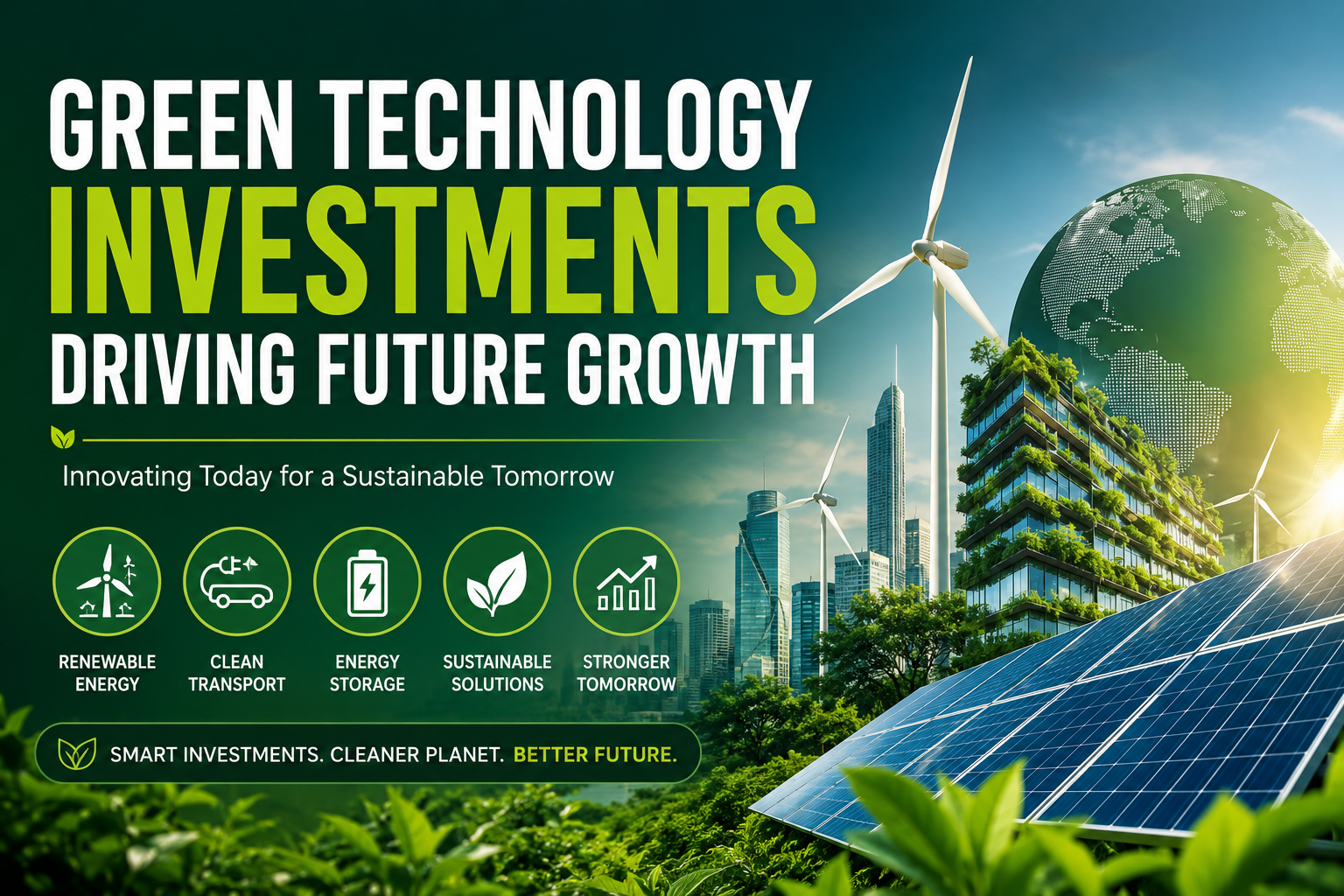
As the world faces mounting environmental challenges, including climate change, resource depletion, and increasing energy demands, green technology has emerged as one of the most important drivers of sustainable economic growth. Governments, corporations, and investors worldwide are directing significant capital toward innovative technologies designed to reduce environmental impact while creating long-term economic value. From renewable energy and electric vehicles to smart infrastructure and sustainable manufacturing, green technology investments are transforming industries and shaping the future of global business.
The transition to a greener economy is no longer viewed solely as an environmental necessity. It has become a strategic economic opportunity that promises innovation, job creation, enhanced competitiveness, and long-term resilience. As nations work toward net-zero emissions goals and consumers increasingly prioritize sustainability, green technology investments are expected to play a central role in driving future growth across international markets.
Understanding Green Technology
Green technology refers to products, systems, and processes that minimize environmental harm while promoting efficient use of resources. These technologies aim to reduce greenhouse gas emissions, conserve natural resources, improve energy efficiency, and support sustainable development.
Key sectors within green technology include:
- Renewable energy (solar, wind, hydroelectric, and geothermal)
- Electric vehicles and clean transportation
- Energy storage systems
- Smart grids and smart infrastructure
- Sustainable agriculture technologies
- Water conservation and purification systems
- Green construction and building technologies
- Circular economy and recycling innovations
The growing adoption of these technologies reflects a global shift toward sustainable economic models that balance profitability with environmental responsibility.
The Global Rise of Green Investments
Green technology investments have experienced remarkable growth over the past decade. According to international energy and finance organizations, annual global investment in clean energy and sustainability-related projects has reached trillions of dollars.
Several factors are driving this trend:
Government Policies and Regulations
Governments worldwide are implementing ambitious climate targets and introducing policies that encourage green innovation. Tax incentives, subsidies, grants, and carbon reduction programs have created favourable conditions for investment.
Major economies such as the United States, China, the European Union, Japan, and India have announced substantial funding initiatives to accelerate renewable energy deployment, electric mobility, and sustainable infrastructure development.
Corporate Sustainability Commitments
Leading multinational corporations are increasingly committing to environmental, social, and governance (ESG) goals. Many companies have pledged to achieve carbon neutrality and reduce emissions throughout their supply chains.
As a result, businesses are investing heavily in green technologies to improve operational efficiency, meet regulatory requirements, and enhance their brand reputation among environmentally conscious consumers.
Growing Investor Demand
Institutional investors, venture capital firms, and private equity funds are recognizing the long-term potential of sustainable investments. ESG-focused investment strategies have gained popularity as investors seek opportunities that generate both financial returns and positive environmental impact.
Green bonds, sustainability-linked loans, and climate-focused investment funds have become important financial instruments supporting green technology development.
Renewable Energy: Powering the Future
Renewable energy remains one of the most significant areas of green technology investment. Solar and wind energy have become increasingly cost-competitive, making them attractive alternatives to traditional fossil fuels.
Solar Energy Expansion
Advancements in photovoltaic technology have dramatically reduced the cost of solar power generation. Large-scale solar farms, rooftop solar installations, and community solar projects are expanding rapidly across developed and emerging markets.
Investments in solar energy contribute to:
- Reduced carbon emissions
- Lower electricity costs
- Energy independence
- Job creation in manufacturing and installation sectors
Wind Energy Growth
Both onshore and offshore wind projects continue to attract significant investment. Offshore wind farms, in particular, offer substantial power generation capacity and are becoming a key component of many countries’ renewable energy strategies.
The expansion of wind energy infrastructure supports economic growth while reducing reliance on fossil fuel-based electricity generation.
Electric Vehicles Transforming Transportation
The transportation sector is undergoing a major transformation driven by electric vehicle (EV) technology. Governments and automakers worldwide are investing billions of dollars in EV production, charging infrastructure, and battery innovation.
Benefits of Electric Mobility
Electric vehicles offer numerous advantages:
- Reduced greenhouse gas emissions
- Lower operating costs
- Improved air quality
- Reduced dependence on imported oil
Major automotive manufacturers are introducing extensive electric vehicle portfolios, while governments are implementing incentives to encourage EV adoption.
Charging Infrastructure Development
The success of electric mobility depends on accessible charging networks. Significant investments are being made in public charging stations, fast-charging technology, and smart charging systems.
These infrastructure projects create business opportunities for technology providers, utility companies, and construction firms while supporting broader transportation electrification goals.
Energy Storage and Battery Innovation
One of the biggest challenges associated with renewable energy is intermittency. Solar and wind power generation can fluctuate depending on weather conditions, making reliable energy storage essential.
Battery Technology Advancements
Innovations in battery technology are improving energy storage capacity, efficiency, and affordability. Lithium-ion batteries currently dominate the market, but research into next-generation battery technologies continues to accelerate.
Promising developments include:
- Solid-state batteries
- Sodium-ion batteries
- Flow batteries
- Advanced recycling solutions
These technologies are critical for both renewable energy integration and electric vehicle performance.
Grid Stability and Resilience
Large-scale energy storage systems help stabilize electricity grids by storing excess renewable energy and releasing it during periods of high demand. This improves grid reliability and supports the transition toward cleaner energy systems.
Smart Cities and Sustainable Infrastructure
Urbanization is creating new challenges related to transportation, energy consumption, and resource management. Smart city technologies offer innovative solutions that improve sustainability and efficiency.
Intelligent Energy Management
Smart grids use digital technologies to monitor and optimize electricity distribution. These systems improve energy efficiency, reduce waste, and enhance reliability.
Key features include:
- Real-time energy monitoring
- Automated demand management
- Integration of renewable energy sources
- Enhanced cybersecurity protection
Sustainable Urban Development
Green buildings, efficient public transportation systems, and smart waste management solutions are becoming increasingly important components of urban development strategies.
Investments in sustainable infrastructure generate economic benefits while improving quality of life for growing urban populations.
Sustainable Agriculture and Food Security
Agriculture faces significant challenges related to climate change, population growth, and resource constraints. Green technology is helping farmers increase productivity while reducing environmental impact.
Precision Agriculture
Advanced technologies such as drones, sensors, artificial intelligence, and satellite monitoring enable precision farming practices.
Benefits include:
- Reduced water usage
- Lower fertilizer consumption
- Improved crop yields
- Enhanced resource efficiency
Vertical Farming and Controlled Environment Agriculture
Innovative farming methods such as vertical farming allow food production in urban environments using less land and water.
These technologies can contribute to food security while reducing transportation costs and environmental impact.
Circular Economy and Resource Efficiency
The traditional “take-make-dispose” economic model is increasingly being replaced by circular economy principles that emphasize reuse, recycling, and waste reduction.
Recycling Innovations
New technologies are improving the efficiency of recycling processes and enabling recovery of valuable materials from electronic waste, plastics, and industrial byproducts.
Sustainable Manufacturing
Manufacturers are adopting cleaner production methods that reduce waste, conserve resources, and minimize environmental impact.
These practices often result in:
- Lower operating costs
- Improved resource utilization
- Enhanced supply chain resilience
- Stronger brand reputation
Economic Benefits of Green Technology Investments
Green technology investments generate substantial economic advantages beyond environmental protection.
Job Creation
The green economy supports millions of jobs worldwide across sectors such as renewable energy, construction, manufacturing, engineering, and research.
As investment levels continue to rise, employment opportunities are expected to expand significantly.
Innovation and Competitiveness
Countries and companies that lead in green technology development gain competitive advantages in emerging global markets. Innovation drives productivity improvements, attracts investment, and strengthens economic growth.
Energy Security
Renewable energy investments reduce dependence on imported fossil fuels and enhance national energy security. Diversified energy systems are often more resilient to geopolitical disruptions and price volatility.
Challenges and Risks
Despite strong growth potential, green technology investments face several challenges.
High Initial Costs
Many green technologies require significant upfront capital investment. Although long-term operating costs are often lower, financing can remain a barrier for some projects.
Supply Chain Constraints
The production of batteries, solar panels, and renewable energy equipment depends on critical minerals and global supply chains that may face disruptions.
Regulatory Uncertainty
Changes in government policies, incentives, or environmental regulations can affect investment decisions and project economics.
Addressing these challenges will require collaboration among governments, businesses, investors, and research institutions.
The Future Outlook
The future of green technology investment appears exceptionally promising. As climate concerns intensify and sustainability becomes a strategic priority, demand for innovative environmental solutions is expected to increase substantially.
Emerging technologies likely to attract growing investment include:
- Green hydrogen production
- Carbon capture and storage
- Advanced battery systems
- Sustainable aviation fuels
- Artificial intelligence for energy optimization
- Next-generation renewable energy technologies
Global investment in these sectors is expected to accelerate as governments pursue climate goals and businesses seek competitive advantages in a rapidly evolving marketplace.
Conclusion
Green technology investments are no longer a niche segment of the global economy. They have become a powerful engine of innovation, sustainability, and economic growth. Renewable energy, electric vehicles, smart infrastructure, sustainable agriculture, and circular economy solutions are transforming industries while addressing some of the world’s most pressing environmental challenges.
As governments, corporations, and investors continue to prioritize sustainability, green technology will play an increasingly important role in shaping future economic development. While challenges remain, the opportunities presented by green innovation are substantial. Organizations that embrace and invest in these technologies today are likely to be better positioned for success in the low-carbon economy of tomorrow.
The transition toward a greener future is not only an environmental imperative but also one of the most significant economic opportunities of the twenty-first century. Green technology investments are driving future growth, creating jobs, fostering innovation, and building a more sustainable and resilient global economy for generations to come.