Introduction
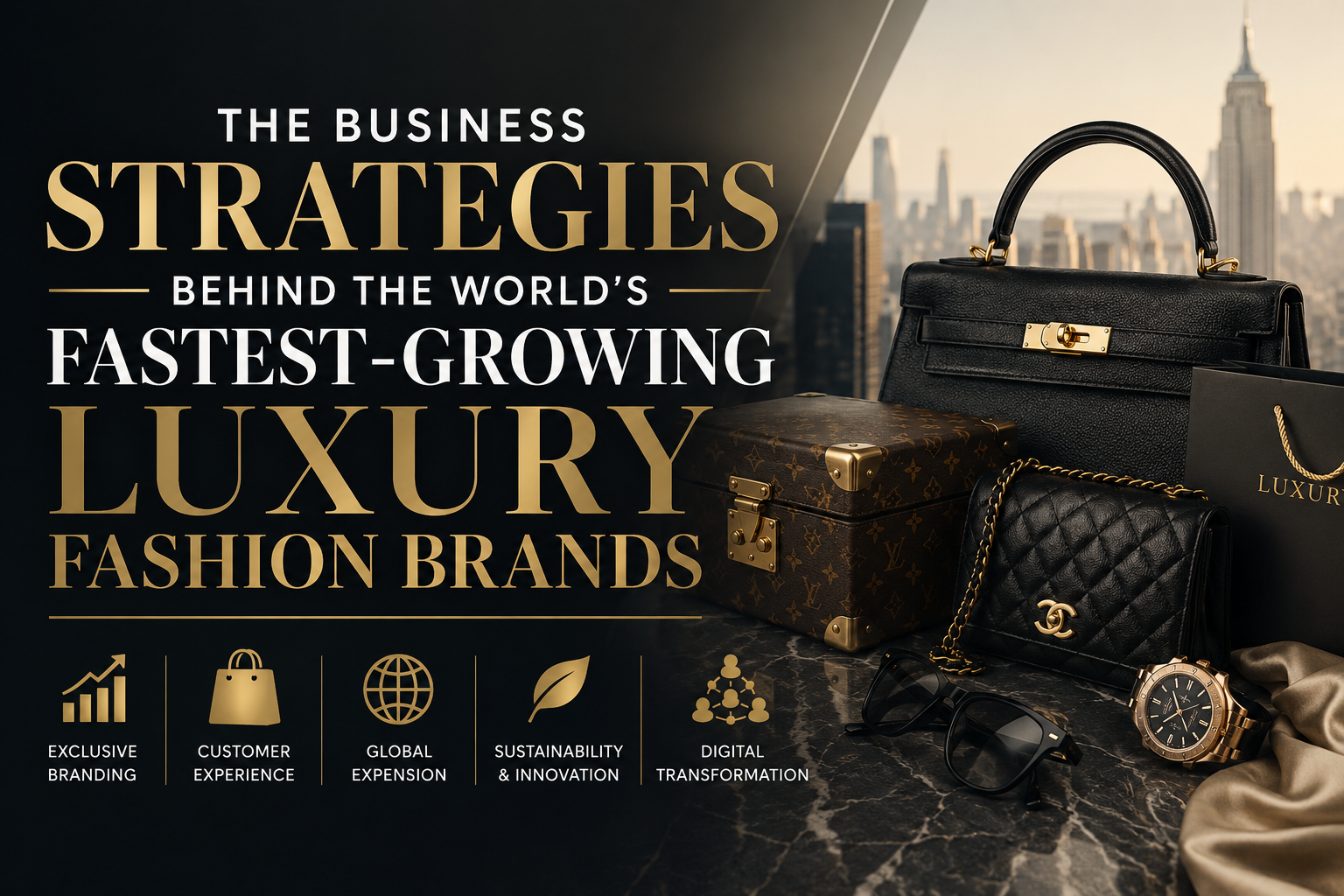
The global luxury fashion industry continues to evolve at an extraordinary pace. While traditional fashion houses such as Louis Vuitton, Chanel, Hermès, Gucci, and Dior remain dominant forces, a new generation of luxury brands is emerging alongside them, capturing the attention of affluent consumers worldwide. Despite economic uncertainty, changing consumer preferences, and increasing competition, the world’s fastest-growing luxury fashion brands have managed to achieve remarkable growth through innovation, exclusivity, digital transformation, and customer-centric strategies.
Luxury fashion is no longer defined solely by craftsmanship and heritage. Today’s successful brands combine tradition with technology, sustainability, personalization, and immersive experiences. As consumer expectations evolve, luxury brands must continuously adapt while preserving the exclusivity that defines their identity.
This article explores the key business strategies driving the success of the world’s fastest-growing luxury fashion brands and examines how they are reshaping the future of the luxury industry.
The Power of Brand Heritage and Storytelling
One of the most valuable assets in luxury fashion is a compelling brand story. Consumers purchasing luxury products are not simply buying clothing, handbags, or accessories—they are investing in a lifestyle, status, and emotional connection.
Luxury brands leverage their history, craftsmanship, and cultural significance to create strong emotional bonds with customers. Companies such as Hermès and Chanel consistently emphasize their heritage through marketing campaigns, fashion shows, and product narratives.
Fast-growing luxury brands understand that storytelling helps differentiate them in a crowded market. By communicating their values, origins, and craftsmanship, brands create authenticity that resonates with modern consumers seeking meaningful purchases.
Digital platforms have expanded storytelling opportunities, allowing brands to share behind-the-scenes content, artisan craftsmanship, and exclusive experiences directly with global audiences.
Exclusivity as a Growth Engine
Exclusivity remains one of the most effective business strategies in luxury fashion. Unlike mass-market retailers, luxury brands intentionally limit supply to maintain desirability and prestige.
The concept of scarcity drives consumer demand. Limited-edition collections, exclusive collaborations, invitation-only events, and restricted product releases create anticipation and urgency among buyers.
Hermès offers a classic example through its highly coveted Birkin and Kelly bags. Long waiting lists and limited availability have elevated these products into symbols of luxury and status.
Many emerging luxury brands are adopting similar approaches by releasing capsule collections and limited-production items. This strategy not only preserves exclusivity but also strengthens pricing power and brand perception.
Digital Transformation and E-Commerce Excellence
Luxury fashion brands once viewed e-commerce with skepticism, fearing it could dilute exclusivity. Today, digital transformation has become a critical growth driver.
The fastest-growing luxury brands have embraced sophisticated online platforms that deliver premium shopping experiences comparable to flagship boutiques.
Key digital strategies include:
- Personalized product recommendations
- Virtual styling consultations
- AI-powered customer service
- Virtual try-on technology
- Augmented reality experiences
- Seamless omnichannel shopping
Consumers increasingly expect convenience without sacrificing luxury. Brands that successfully integrate technology while maintaining exclusivity gain a competitive advantage.
The growth of luxury e-commerce has also enabled brands to reach international markets more efficiently, expanding their customer base beyond traditional fashion capitals.
Leveraging Social Media and Influencer Marketing
Social media has transformed luxury marketing. Platforms such as Instagram, TikTok, YouTube, and emerging digital channels play a significant role in shaping consumer perceptions and purchasing decisions.
Luxury brands no longer rely solely on traditional advertising campaigns. Instead, they collaborate with celebrities, influencers, athletes, artists, and content creators to reach new audiences.
The fastest-growing brands use social media strategically to:
- Build brand awareness
- Showcase new collections
- Engage younger consumers
- Create aspirational content
- Drive online traffic and sales
Luxury brands are increasingly partnering with micro-influencers and niche creators who offer authentic engagement and strong community connections.
Successful campaigns combine exclusivity with accessibility, allowing consumers to interact with luxury brands while maintaining an aspirational image.
Winning Gen Z and Gen Alpha Consumers
Younger consumers are becoming increasingly influential in the luxury market. Gen Z and the emerging Gen Alpha demographic have different expectations from previous generations.
These consumers prioritize:
- Authenticity
- Sustainability
- Inclusivity
- Digital engagement
- Personalization
- Brand values
Fast-growing luxury brands understand that younger buyers seek more than status symbols. They want brands that align with their beliefs and lifestyles.
Luxury companies are responding by investing in digital experiences, creating interactive content, supporting social causes, and developing innovative products that appeal to younger audiences.
By establishing relationships with these consumers early, brands position themselves for long-term growth and customer loyalty.
Sustainability as a Competitive Advantage
Sustainability has become a major business priority across the luxury fashion industry. Increasing environmental awareness is influencing purchasing decisions among affluent consumers worldwide.
Leading luxury brands are investing heavily in:
- Sustainable materials
- Ethical sourcing
- Carbon reduction initiatives
- Circular fashion programs
- Supply chain transparency
- Regenerative agriculture
Consumers increasingly expect brands to demonstrate environmental responsibility while maintaining quality and craftsmanship.
Luxury fashion companies are uniquely positioned to lead sustainability efforts because their focus on durability, timeless design, and premium materials naturally aligns with responsible consumption.
Brands that successfully integrate sustainability into their business models strengthen customer trust and enhance their long-term competitiveness.
Personalization and Clienteling
Modern luxury consumers expect highly personalized experiences. The fastest-growing luxury brands use data analytics and customer insights to deliver tailored interactions throughout the customer journey.
Personalization strategies include:
- Custom-made products
- Individual styling services
- Personalized recommendations
- Exclusive previews
- VIP events
- Private shopping experiences
Clienteling has become a crucial growth strategy. Luxury sales associates now use sophisticated customer relationship management systems to understand preferences, purchase histories, and individual needs.
These personalized interactions help build stronger customer relationships and increase lifetime value.
Luxury brands recognize that exceptional service often matters as much as the product itself.
Strategic Collaborations and Partnerships
Collaborations have become powerful tools for luxury brand growth. Strategic partnerships enable brands to generate excitement, reach new audiences, and reinforce cultural relevance.
Successful collaborations span multiple industries, including:
- Fashion
- Art
- Music
- Sports
- Technology
- Automotive
Luxury brands have demonstrated that unexpected partnerships can create significant demand and media attention.
These collaborations often produce limited-edition products that combine exclusivity with innovation, attracting both loyal customers and new consumers.
The most effective partnerships align with brand values while introducing fresh perspectives and creative energy.
Global Expansion with Local Relevance
The luxury fashion market has become increasingly global. Growth opportunities now extend far beyond traditional markets in Europe and North America.
Fast-growing luxury brands are expanding into regions such as:
- Asia-Pacific
- Middle East
- India
- Southeast Asia
- Latin America
However, successful expansion requires more than opening new stores. Brands must adapt to local cultures, preferences, and consumer behaviour’s while maintaining a consistent global identity.
Luxury companies are investing in localized marketing campaigns, regional partnerships, and culturally relevant product offerings.
This balance between global prestige and local relevance helps brands build strong connections with diverse customer segments.
Experiential Retail and Flagship Stores
Physical retail remains a vital component of luxury fashion despite the growth of e-commerce.
The world’s fastest-growing luxury brands are transforming stores into immersive destinations rather than simple points of sale.
Modern flagship stores offer:
- Interactive installations
- Exclusive product launches
- Personalized services
- Luxury lounges
- Art exhibitions
- Hospitality experiences
These environments strengthen emotional connections between brands and consumers.
Experiential retail also supports social media engagement, as customers increasingly share unique in-store experiences with their audiences.
By creating memorable experiences, luxury brands reinforce their positioning and encourage long-term loyalty.
Data-Driven Decision Making
Luxury fashion companies are increasingly using data analytics to improve business performance.
Advanced technologies help brands understand:
- Consumer preferences
- Purchasing behavior
- Market trends
- Inventory management
- Product demand
- Marketing effectiveness
Artificial intelligence and predictive analytics enable faster and more informed decision-making.
Data-driven strategies help luxury brands optimize product development, pricing, customer engagement, and market expansion.
Companies that successfully combine creativity with analytics gain a significant competitive advantage in today’s rapidly evolving marketplace.
Maintaining Pricing Power
One defining characteristic of successful luxury brands is their ability to maintain strong pricing power.
Rather than competing through discounts, luxury brands focus on:
- Superior quality
- Craftsmanship
- Exclusivity
- Brand prestige
- Customer experience
Many leading luxury companies have implemented strategic price increases while continuing to experience strong demand.
Consumers perceive luxury products as investments, making them less sensitive to price fluctuations compared to mass-market goods.
Maintaining pricing power supports profitability and reinforces brand positioning in the premium segment.
The Role of Innovation in Luxury Fashion
Innovation has become essential for sustained growth. Luxury brands are investing in research and development to create products and experiences that meet evolving consumer expectations.
Areas of innovation include:
- Smart textiles
- Sustainable materials
- Digital fashion
- Artificial intelligence
- Virtual reality
- Blockchain authentication
These innovations enhance product value while addressing challenges such as counterfeiting, sustainability, and customer engagement.
Luxury brands that embrace innovation without compromising craftsmanship are better positioned to succeed in the future marketplace.
Conclusion
The world’s fastest-growing luxury fashion brands are succeeding because they combine timeless luxury principles with modern business strategies. Heritage, craftsmanship, exclusivity, and quality remain fundamental, but growth increasingly depends on digital transformation, sustainability, personalization, innovation, and global expansion.
As consumer expectations continue to evolve, luxury brands must balance tradition with change. Those that successfully create meaningful customer experiences, embrace technology, maintain exclusivity, and demonstrate social responsibility will remain industry leaders in the years ahead.
The future of luxury fashion belongs to brands that understand that luxury is no longer just about products it is about storytelling, experiences, values, and relationships. By integrating these elements into their business strategies, the industry’s fastest-growing brands are setting new standards for success in the global luxury marketplace.