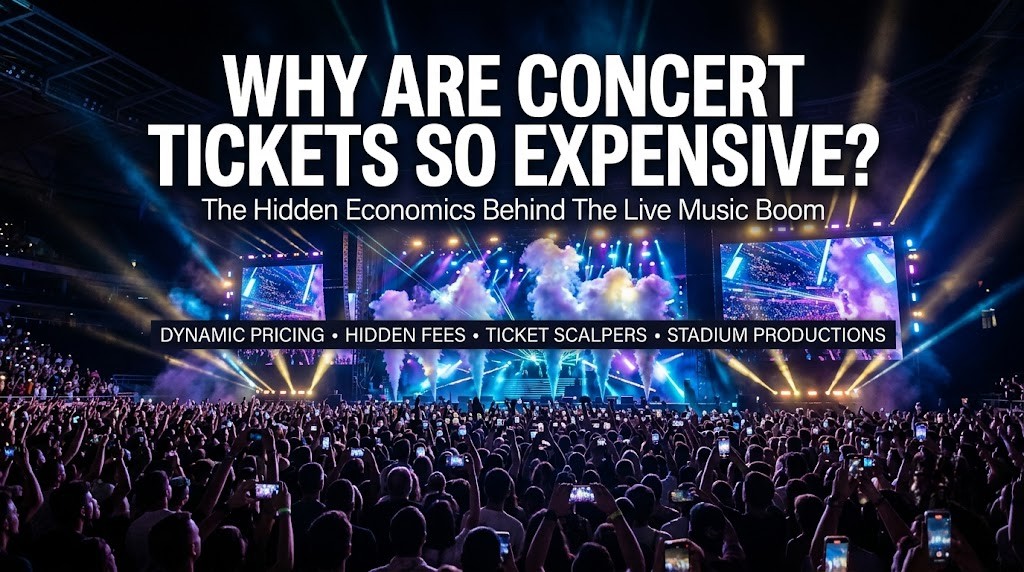
For millions of music lovers, attending a live concert is no longer just about buying a ticket it has become a luxury experience. The excitement of watching a favourite artist perform on stage, surrounded by thousands of fans, has transformed into a premium event where prices can reach hundreds or even thousands of dollars.
A decade ago, concert tickets were often considered an affordable form of entertainment. Today, major tours by global superstars such as Taylor Swift, Beyoncé, Coldplay, and BTS have created a new era of high-demand live entertainment where tickets sell out within minutes and resale prices can exceed the original cost several times over.
Behind every ticket price is a complex ecosystem involving technology platforms, venue costs, artist management, production companies, marketing expenses, and a growing competition between millions of fans fighting for limited seats.
The question is no longer only “How much does a concert ticket cost?” but rather “Why has the entire concert industry become so expensive?”
The Rise of the Luxury Concert Experience
Modern concerts are no longer simple performances with a singer, a microphone, and a stage. Today’s biggest tours are closer to luxury entertainment productions, combining music, technology, fashion, visual effects, and immersive storytelling.
A stadium concert by an artist like Taylor Swift or Beyoncé involves massive LED screens, custom-designed stages, advanced lighting systems, dancers, costume changes, pyrotechnics, special effects, and hundreds of production crew members working behind the scenes.
For example, Taylor Swift’s Eras Tour became one of the most ambitious live productions ever created. The show featured multiple eras of her career, complex stage designs, costume transformations, and a production scale that required enormous investment. Similarly, Beyoncé’s Renaissance World Tour was designed as a futuristic visual experience with high-end fashion, choreography, and technology.
Fans are not simply purchasing access to a performance anymore. They are paying for a carefully designed entertainment experience that feels closer to a luxury event.
This shift has allowed artists and promoters to position concerts as premium cultural moments rather than traditional music shows.
Dynamic Pricing: Why Ticket Prices Change Within Minutes
One of the biggest reasons concert tickets have become expensive is the introduction of dynamic pricing.
Similar to airline tickets and hotel rooms, dynamic pricing allows ticket prices to change based on demand. When thousands or millions of fans attempt to buy tickets simultaneously, prices can automatically increase depending on availability.
Platforms such as Ticketmaster have introduced demand-based pricing systems where popular seats may become more expensive when demand rises.
For example, a ticket originally listed at £100 may increase significantly if thousands of fans are competing for the same section. The system is designed to reflect market demand, but many fans argue that it makes attending concerts unpredictable and unaffordable.
Artists and promoters defend dynamic pricing by saying it helps reduce unfair resale profits. Instead of allowing scalpers to capture all the value, higher prices can redirect some revenue back to the official ticket market.
However, for fans, the experience often feels like competing in a financial auction rather than simply buying a ticket.
Hidden Fees: The Cost You Discover at Checkout
The advertised ticket price is often not the final amount fans pay.
Service charges, facility fees, processing fees, delivery charges, and transaction costs can significantly increase the total price of a concert ticket.
A ticket displayed at £150 may become much more expensive after additional fees are added during checkout. These extra costs have become one of the most criticised parts of the modern ticketing industry.
Companies argue that these fees help cover technology infrastructure, payment processing, venue partnerships, and customer support. However, many fans believe these charges reduce transparency because the real price is revealed only at the final stage of purchase.
The growing frustration around hidden fees has pushed governments and consumer groups to demand clearer ticket pricing from major entertainment companies.
Ticket Scalpers and the Secondary Market Problem
Another major factor behind expensive concert tickets is the secondary ticket market.
When highly anticipated concerts go on sale, professional resellers often purchase large numbers of tickets using automated systems and then sell them at significantly higher prices.
For global tours, resale prices can become extreme. Tickets that originally cost a few hundred pounds may appear online for thousands due to limited supply and overwhelming demand.
Platforms such as StubHub and other resale marketplaces have created a huge secondary economy around live entertainment.
While resale platforms provide opportunities for fans who missed the original sale, they have also contributed to concerns about affordability and fairness.
For artists with extremely loyal fan communities, such as BTS, Taylor Swift, and Beyoncé, demand is so high that even millions of genuine fans cannot access tickets at original prices.
Stadium Productions Cost Millions to Build
Behind every unforgettable concert moment is a massive financial operation.
A global stadium tour requires transportation of equipment across countries, hotel arrangements for hundreds of employees, insurance, security, venue rentals, marketing campaigns, and technical specialists.
Large-scale productions often involve dozens of trucks carrying stage equipment from city to city. The cost of building temporary stadium environments, installing lighting systems, operating video technology, and managing logistics can reach millions of dollars.
Artists also invest heavily in creating unique experiences because competition in the entertainment industry has increased. Fans today expect concerts to be visually spectacular because they compare live shows with high-quality streaming content, music videos, and social media clips.
A simple performance is no longer enough. The concert must become an unforgettable experience worth sharing online.
Streaming Changed the Value of Live Music
The rise of platforms like Spotify, Apple Music, and YouTube has transformed how artists earn money.
While streaming has made music easier to access, it has also reduced the revenue artists receive from individual song plays.
Because digital music consumption generates smaller earnings per listener, live performances have become one of the most important revenue sources for major artists.
Concerts, merchandise, VIP packages, and exclusive experiences now represent a significant part of an artist’s business model.
This is why many musicians focus on creating premium tours rather than relying only on album sales or streaming income.
VIP Packages Turn Concerts into Luxury Experiences
Modern concerts increasingly include premium ticket categories designed for fans who want more than a standard seat.
VIP packages can include early venue access, exclusive merchandise, premium seating, backstage-style experiences, special lounges, signed products, and collectible items.
Artists and promoters have created different levels of access, similar to luxury travel or hospitality industries.
A regular ticket may provide entry to the show, while premium packages offer a more exclusive experience.
This approach has created a new market where dedicated fans are willing to pay significantly more for memories, limited-edition products, and closer connections with their favourite artists.
Brand Partnerships Are Changing Concert Economics
Major concerts are also becoming powerful marketing platforms for global brands.
Companies collaborate with artists and tours to reach millions of highly engaged fans.
Luxury fashion brands, technology companies, beverage companies, and automotive brands often partner with major tours to create exclusive campaigns.
For example, fashion houses frequently work with artists on stage wardrobes, while technology companies support innovative concert experiences through advanced audio, lighting, and digital platforms.
These partnerships help reduce production costs while allowing brands to connect with younger audiences through cultural moments.
Concerts have evolved into large-scale entertainment ecosystems where music, fashion, technology, and branding meet.
Why Fans Still Pay Premium Prices
Despite rising costs, demand for live concerts continues to grow.
The reason is simple: live experiences cannot be completely replaced by streaming.
Watching a performance online provides convenience, but being physically present among thousands of fans creates an emotional connection that digital platforms cannot replicate.
For many people, attending a major concert has become a once-in-a-lifetime experience. Fans save money, travel internationally, purchase merchandise, and plan entire trips around seeing their favourite artists.
A concert ticket is no longer viewed only as entertainment spending. It has become a memory, a social experience, and sometimes even a luxury purchase.
The Future of Concert Ticket Prices
As technology advances and artists continue creating larger productions, concert prices are unlikely to return to previous levels.
Artificial intelligence, virtual reality, advanced stage technology, and personalised fan experiences may create even more premium entertainment formats in the future.
However, the industry faces a challenge: maintaining profitability while keeping live music accessible to ordinary fans.
The future of concerts will likely involve a balance between premium luxury experiences and affordable options that allow wider audiences to participate.
One thing is certain live music has become one of the most valuable experiences in modern entertainment. Behind every ticket is not just a seat in a stadium, but an entire global industry built around creating unforgettable moments.