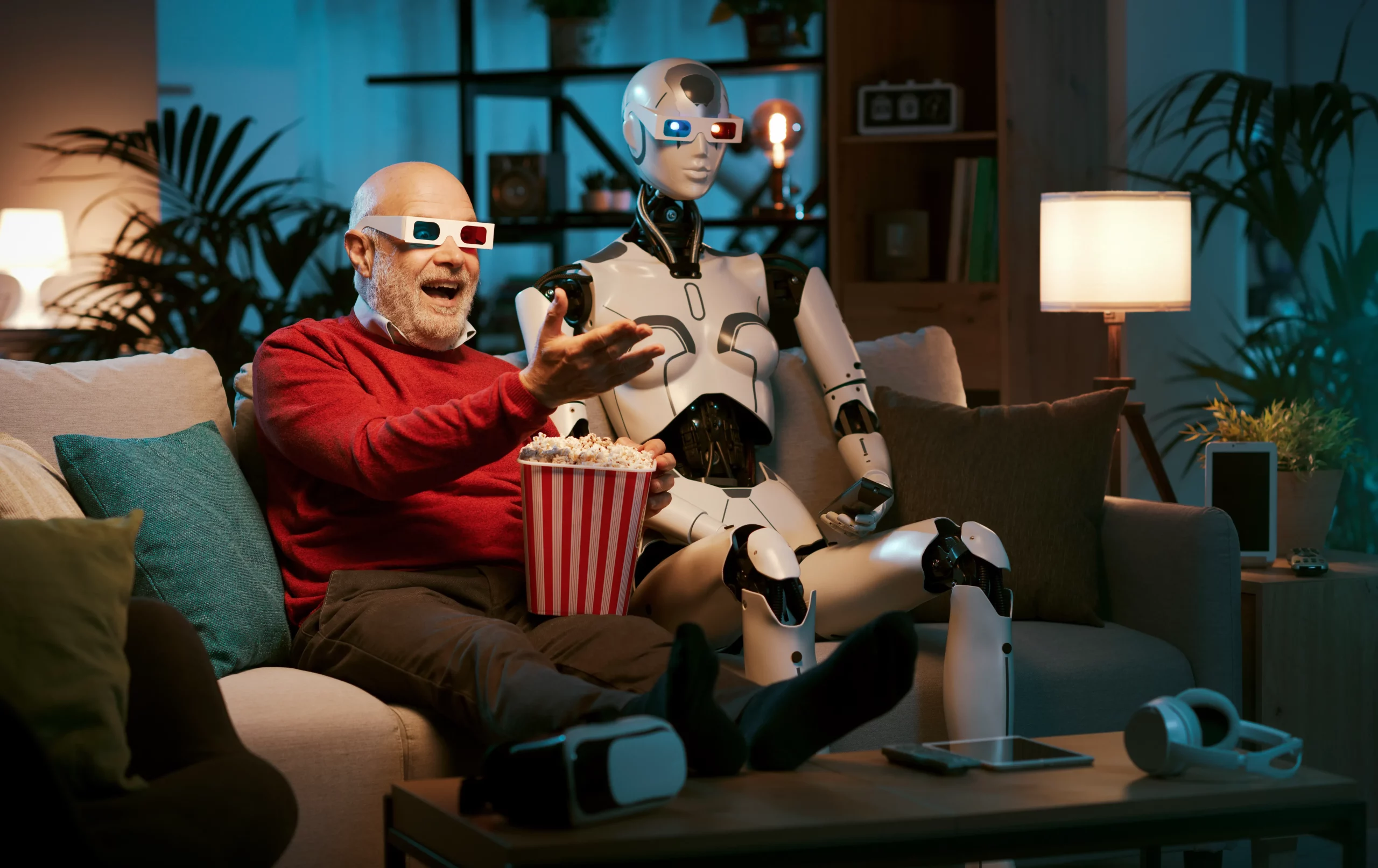
For more than a century, the entertainment industry operated on a familiar axis of power: studios financed content, distributors-controlled access, and audiences consumed what was curated for them.
That model is no longer dominant.
In 2026, the canter of gravity in entertainment has shifted away from centralized gatekeepers toward distributed creators, algorithmic intelligence, and highly engaged fan communities. Artificial intelligence has compressed production cycles. Streaming growth has plateaued. Subscription fatigue has altered consumer behaviour. And creators — once considered niche or supplementary — are building global media businesses rivalling traditional studios in revenue, cultural impact, and speed.
This is not a temporary disruption.
It is a structural rewrite.
The creator-driven segment of the entertainment economy is now estimated to exceed $100 billion globally, encompassing digital video, podcasts, music, live events, merchandise, subscriptions, and brand partnerships. And that figure continues to grow as AI reduces barriers to production and platforms reward direct audience relationships.
The result: a power shift that is redefining how content is made, distributed, monetized, and valued.
The End Of Streaming Hypergrowth
A decade ago, streaming platforms were the insurgents. They disrupted cable television, rewrote distribution models, and unleashed a global race for subscribers. Billions were invested in original content. Valuations soared. Growth appeared endless.
But markets mature.
By 2026, streaming platforms face a very different reality:
- Slowing subscriber growth in North America
- Rising churn rates
- Increasing customer acquisition costs
- Content oversupply
- Mounting production budgets
- Investor pressure for profitability
Subscription fatigue is real. Consumers juggle multiple platforms and reassess value monthly. Price increases, bundled tiers, and ad-supported plans reflect an industry searching for margin stability.
Studios that once pursued aggressive expansion are now focused on cost discipline. Greenlighting has tightened. Experimental projects have been scaled back. Mid-budget films have struggled to find consistent support.
And while streaming remains dominant in distribution, its explosive growth phase is over.
In that transition, a new ecosystem has flourished.
Creator Economy 3.0: From Influencers To Media Moguls
The early creator economy was largely ad-supported and platform-dependent. Influencers monetized through sponsorships and brand deals, often vulnerable to algorithm changes and platform policies.
Today’s creator economy is different.
Creators have diversified revenue streams:
- Subscription communities
- Premium content tiers
- Live tours and ticketed events
- Merchandise lines
- Licensing deals
- Digital courses
- Equity partnerships
- Direct-to-consumer products
Some operate with full production teams. Others leverage AI tools to maintain lean operations while achieving high output.
The defining difference between Creator Economy 1.0 and 3.0 is ownership.
Creators increasingly control their audiences through email lists, private communities, and multi-platform distribution. They are less dependent on a single algorithm and more focused on building durable brand equity.
Many are effectively operating as micro-studios.
AI: The Production Multiplier
Artificial intelligence is the accelerant behind this transformation.
AI tools are now embedded across every stage of content creation:
Pre-production:
- Script drafting assistance
- Concept art generation
- Market trend analysis
- Predictive audience modelling
Production:
- Automated editing workflows
- AI-assisted cinematography
- Voice cloning and dubbing
- Real-time translation
Post-production:
- Enhanced visual effects
- Audio mastering
- Subtitle generation
- Localization at scale
What once required large teams and extensive budgets can now be executed by smaller teams in significantly less time.
AI reduces friction. It lowers cost. It compresses experimentation cycles.
For legacy studios, AI represents cost savings and workflow optimization.
For independent creators, it represents competitive parity.
The playing field is not level — but it is narrower than ever before.
Democratization Of Distribution
The internet democratized distribution. Platforms globalized it. AI now optimizes it.
Algorithms determine discoverability. Engagement drives amplification. Data informs iteration.
Unlike traditional broadcast models, modern entertainment ecosystems are interactive. Audiences respond instantly. Feedback is measurable. Content can pivot rapidly.
Creators test formats in real time. They evaluate watch-time analytics. They refine titles and thumbnails based on engagement metrics.
The entertainment cycle is no longer linear — it is iterative.
This agility gives creators an advantage over slower institutional models.
Fan Power as Economic Engine
Perhaps the most significant shift is the economic power of fan communities.
Fandom is no longer passive.
Communities mobilize around creators, contributing to crowdfunding campaigns, purchasing merchandise, supporting subscription tiers, and promoting content organically across platforms.
In many cases, fan-driven revenue models outperform traditional ad-based monetization.
Direct-to-fan subscriptions create recurring revenue streams. Exclusive content deepens loyalty. Community access enhances perceived value.
Fans are not just viewers.
They are stakeholders.
The Resurgence Of Live Entertainment
Paradoxically, as digital entertainment dominates, live experiences have surged.
Concerts, festivals, immersive theatre, and experiential events are commanding premium pricing.
Consumers increasingly value physical presence in an era saturated with digital interaction.
Hybrid experiences are also emerging:
- Livestreamed concerts with interactive chat
- Augmented reality overlays during live events
- Exclusive digital collectibles tied to ticket access
This fusion of digital scale and physical intimacy is reshaping revenue models.
For creators, live events are high-margin opportunities. For traditional entertainment companies, they represent stable growth channels.
Globalization Without Borders
AI-powered localization has accelerated global content exchange.
Real-time dubbing and subtitle generation allow content to travel across languages instantly. Cultural exports no longer require heavy infrastructure investments.
Korean dramas, Indian cinema, Latin music, and African digital creators have built massive international audiences.
This globalization increases competition but also expands opportunity.
Entertainment is no longer regional.
It is borderless.
Advertising In The Creator Era
Advertising models are evolving alongside content models.
Brands increasingly favor creator partnerships over traditional media placements. Authenticity and trust drive conversion more effectively than institutional campaigns.
AI-powered ad targeting allows hyper-personalized sponsorship integrations. Performance metrics are precise. ROI is measurable.
Creators act as distribution channels with built-in trust layers.
For brands, this shift represents efficiency.
For creators, it represents leverage.
The Economics Of Decentralization
Traditional entertainment relied on scale economics: massive budgets, mass audiences, blockbuster returns.
The creator economy thrives on niche economics.
Thousands of micro-communities generate sustainable revenue streams without requiring mass-market appeal.
This fragmentation challenges traditional hit-driven economics.
Success is no longer defined solely by global dominance.
It can be defined by loyal depth.
Risks And Friction Points
No transformation is without risk.
Content Saturation
Lower barriers to entry mean an explosion of content. Discoverability becomes harder. Quality varies widely.
Algorithm Dependence
While creators seek ownership, many still rely on platform algorithms for reach.
AI Authenticity Concerns
As AI-generated content increases, audiences may struggle to distinguish human creativity from machine output.
Labor Displacement
Automation in editing, dubbing, and post-production raises workforce concerns.
Regulatory Uncertainty
AI usage, digital rights, and platform governance face evolving legal frameworks.
The industry’s trajectory will depend on how these tensions are managed.
Investment Implications
For investors and executives, the $100 billion creator shift represents both threat and opportunity.
Key areas of growth include:
- AI-powered production tools
- Direct-to-fan monetization platforms
- Creator financing models
- Hybrid live-digital infrastructure
- Global localization technology
Legacy media companies may increasingly partner with creators rather than compete against them.
The lines between studio and creator are blurring.
The Psychology Of Control
Beyond economics, this shift reflects a psychological change.
Audiences crave agency.
Creators crave ownership.
Platforms optimize for engagement.
The ecosystem rewards participation over passivity.
Entertainment is no longer something consumed from a distance.
It is something interacted with, shaped, and co-created.
The New Power Map
Old power map:
Studios → Distributors → Advertisers → Audience
New power map:
Creators ↔ Community ↔ Platforms ↔ Brands
The arrows are circular.
Power flows dynamically.
No single entity controls the system.
What Comes Next
Looking ahead, several trajectories seem likely:
- AI-native production companies built entirely on automated workflows
- Creator equity funds investing in digital personalities
- Global content collaborations unconstrained by geography
- Increased consolidation among streaming platforms
- Premium subscription communities replacing broad-based ad revenue
The most successful entertainment companies will likely combine institutional scale with creator agility.
The Bottom Line
The $100 billion creator shift is not a trend cycle.
It is a redistribution of power.
Artificial intelligence has lowered barriers. Streaming fatigue has opened space. Fans have gained influence. Creators have matured into entrepreneurs.
The entertainment industry is no longer defined by who owns the largest studio lot.
It is defined by who owns the relationship with the audience.
In this new era, content is abundant.
Attention is scarce.
Trust is priceless.
And connection is currency.
The next decade of entertainment will not belong solely to corporations or to independent creators.
It will belong to those who understand how to integrate AI efficiency, community loyalty, and adaptive monetization into a cohesive strategy.
The stage is no longer fixed.
It is fluid.
And the spotlight is moving.