
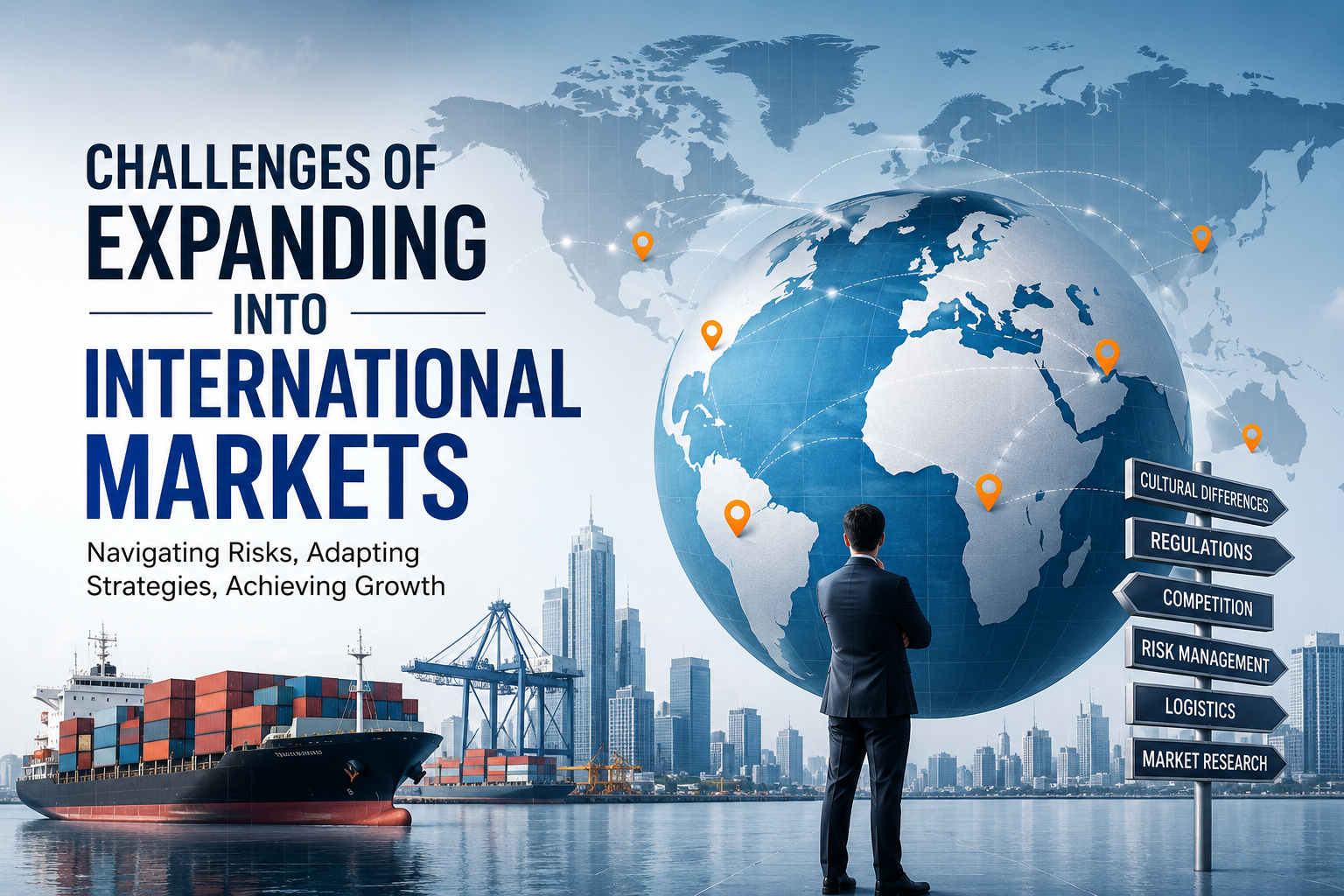
In today’s interconnected world, expanding into international markets has become an attractive growth strategy for businesses of all sizes. Advances in technology, transportation, and communication have made it easier than ever for companies to reach customers beyond their domestic borders. International expansion offers numerous opportunities, including increased revenue, access to new customer segments, diversification of risk, and enhanced brand recognition. Many successful organizations, from multinational corporations to emerging startups, have leveraged global markets to achieve sustainable growth and strengthen their competitive position.
However, entering foreign markets is far from a simple process. While the potential rewards can be substantial, international expansion also presents a range of challenges that businesses must carefully navigate. Differences in culture, legal systems, economic conditions, consumer preferences, and competitive environments can create obstacles that may hinder success if not properly addressed. Companies that underestimate these challenges often face financial losses, operational difficulties, and damage to their reputation.
This article explores the major challenges businesses encounter when expanding into international markets and discusses strategies for overcoming them.
Cultural Differences
One of the most significant challenges in international expansion is understanding and adapting to cultural differences. Culture influences consumer behaviour, communication styles, business practices, and purchasing decisions. What works well in one country may not be effective in another.
For example, advertising campaigns that resonate with customers in one region may be misunderstood or considered offensive in another. Colors, symbols, gestures, and language can have different meanings across cultures. A product name that sounds appealing in one language may carry negative connotations in another.
Businesses must conduct thorough cultural research before entering a new market. Understanding local customs, traditions, values, and consumer expectations help companies develop products and marketing strategies that align with the preferences of the target audience. Employing local experts and conducting market surveys can provide valuable insights into cultural nuances.
Language Barriers
Language differences present another major challenge for businesses expanding internationally. Effective communication is essential for marketing, customer service, negotiations, and daily business operations. Miscommunication caused by language barriers can lead to misunderstandings, lost opportunities, and damaged relationships.
Translating business materials is not simply a matter of converting words from one language to another. Messages must be localized to ensure they are culturally appropriate and meaningful to the target audience. Poor translations can create confusion and negatively affect a company’s credibility.
Businesses should invest in professional translation and localization services. Hiring multilingual staff and providing language training for employees can also improve communication and strengthen relationships with customers and business partners.
Legal and Regulatory Compliance
Every country has its own legal and regulatory framework governing business activities. Companies expanding internationally must comply with various laws related to taxation, labour, consumer protection, environmental standards, intellectual property, and trade regulations.
Navigating these legal requirements can be complex and costly. Failure to comply may result in fines, legal disputes, operational restrictions, or even the inability to conduct business in the target market. Regulations can also change over time, requiring businesses to continuously monitor and adapt to new requirements.
To address this challenge, companies should seek guidance from legal professionals who specialize in international business law. Establishing strong compliance systems and staying informed about regulatory developments can help reduce legal risks and ensure smooth operations.
Economic and Financial Risks
Economic conditions vary significantly across countries. Factors such as inflation, interest rates, unemployment levels, economic growth, and currency stability can influence business performance in foreign markets.
Currency fluctuations are particularly challenging for international businesses. Changes in exchange rates can affect pricing, profitability, and financial planning. A sudden depreciation of a foreign currency may reduce revenue when converted into the company’s home currency.
Additionally, economic instability, recessions, or political uncertainty can negatively impact consumer spending and market demand. Businesses must carefully evaluate economic conditions before entering a new market and develop strategies to manage financial risks.
Many organizations use financial forecasting, currency hedging, and diversified market portfolios to reduce exposure to economic uncertainties. Conducting thorough market analysis can also help businesses make informed investment decisions.
Political and Geopolitical Risks
Political factors play a critical role in international business success. Government policies, trade agreements, political stability, and diplomatic relations can significantly influence market conditions.
Changes in government leadership or policies may lead to new regulations, increased taxes, import restrictions, or changes in foreign investment rules. Political unrest, conflicts, and geopolitical tensions can disrupt business operations and create uncertainty.
For example, trade disputes between countries may result in tariffs that increase costs for businesses. Political instability can also affect supply chains, transportation networks, and customer confidence.
Businesses should conduct political risk assessments before entering new markets and develop contingency plans to address potential disruptions. Maintaining flexibility and monitoring geopolitical developments can help organizations respond effectively to changing circumstances.
Intense Competition
International markets often involve competition from both local and global companies. Established local businesses typically have a deep understanding of customer preferences, market dynamics, and regulatory requirements. They may also possess strong brand loyalty and extensive distribution networks.
New entrants must compete for market share while building brand awareness and customer trust. This can require significant investments in marketing, product development, and customer acquisition.
To overcome competitive challenges, businesses should identify their unique value proposition and focus on differentiating themselves from competitors. Offering superior quality, innovative products, exceptional customer service, or competitive pricing can help companies establish a strong market presence.
Supply Chain and Logistics Challenges
Managing international supply chains is often more complicated than operating within a domestic market. Businesses must coordinate transportation, inventory management, customs procedures, warehousing, and distribution across multiple countries.
Delays in shipping, port congestion, customs inspections, and transportation disruptions can increase costs and affect customer satisfaction. Global events such as pandemics, natural disasters, and geopolitical conflicts can further disrupt supply chains.
Companies should develop resilient supply chain strategies by diversifying suppliers, maintaining safety stock, and leveraging technology to improve visibility and coordination. Building strong relationships with logistics providers and local partners can also enhance operational efficiency.
Human Resource Management
Expanding internationally requires businesses to manage a diverse workforce with different cultural backgrounds, languages, and employment expectations. Recruiting, training, and retaining talent in foreign markets can be challenging.
Labor laws and workplace regulations vary significantly between countries. Businesses must comply with local requirements regarding wages, benefits, working hours, employee rights, and workplace safety.
Cultural differences can also affect management styles and employee expectations. Leadership approaches that are effective in one country may not produce the same results elsewhere.
Organizations can address these challenges by investing in cross-cultural training, adopting inclusive management practices, and developing human resource policies that align with local regulations and cultural norms.
Understanding Consumer Preferences
Consumer behaviour differs across regions due to cultural, economic, social, and demographic factors. Products and services that are successful in one market may not meet the needs or preferences of customers in another.
For example, food companies often modify Flavors and ingredients to suit local tastes. Technology firms may need to adapt product features to match regional preferences and usage patterns.
Conducting comprehensive market research is essential for understanding customer needs and expectations. Businesses should gather feedback from local consumers and continuously monitor market trends to refine their offerings and remain competitive.
Building Brand Trust and Reputation
Establishing a strong brand presence in a new market takes time and effort. Consumers are often more likely to trust familiar brands, making it difficult for foreign companies to gain credibility.
Negative publicity, cultural misunderstandings, or product quality issues can quickly damage a company’s reputation. In today’s digital environment, information spreads rapidly through social media and online reviews, amplifying both positive and negative customer experiences.
Businesses should prioritize transparency, quality, and customer satisfaction when entering new markets. Collaborating with local partners, engaging with communities, and delivering consistent value can help build trust and strengthen brand reputation.
Technology and Infrastructure Differences
The availability and quality of technology and infrastructure vary across countries. Differences in internet connectivity, transportation systems, payment methods, and digital adoption can affect business operations and customer experiences.
For example, an e-commerce company entering a developing market may encounter challenges related to limited internet access or underdeveloped logistics networks. Payment preferences may also differ significantly, requiring businesses to offer localized payment options.
Companies should assess infrastructure conditions and technological capabilities before expanding into new markets. Adapting business models and investing in appropriate technologies can help address these challenges effectively.
Strategies for Successful International Expansion
Despite the challenges, many businesses successfully expand into international markets by adopting strategic approaches. Key strategies include:
- Conducting comprehensive market research to understand local conditions and customer needs.
- Developing localized products and marketing campaigns tailored to specific markets.
- Partnering with local businesses and experts to gain market insights and operational support.
- Ensuring legal and regulatory compliance through professional guidance and strong governance practices.
- Building flexible supply chains capable of adapting to disruptions and changing market conditions.
- Investing in cultural intelligence and employee training to improve communication and collaboration.
- Monitoring economic and political developments to identify risks and opportunities early.
These strategies can significantly improve the likelihood of successful international expansion and long-term growth.
Conclusion
Expanding into international markets offers businesses valuable opportunities for growth, increased revenue, and global recognition. However, achieving success in foreign markets requires careful planning, extensive research, and a deep understanding of the challenges involved. Cultural differences, language barriers, legal complexities, economic risks, political uncertainty, competition, supply chain disruptions, and consumer preferences all play important roles in determining the outcome of international expansion efforts.
Organizations that approach international growth strategically and remain adaptable to changing conditions are better positioned to overcome these obstacles. By investing in market research, localization, compliance, talent development, and risk management, businesses can build a strong foundation for sustainable success in global markets. As globalization continues to shape the modern economy, companies that effectively navigate the challenges of international expansion will be well-equipped to thrive in an increasingly competitive and interconnected world.