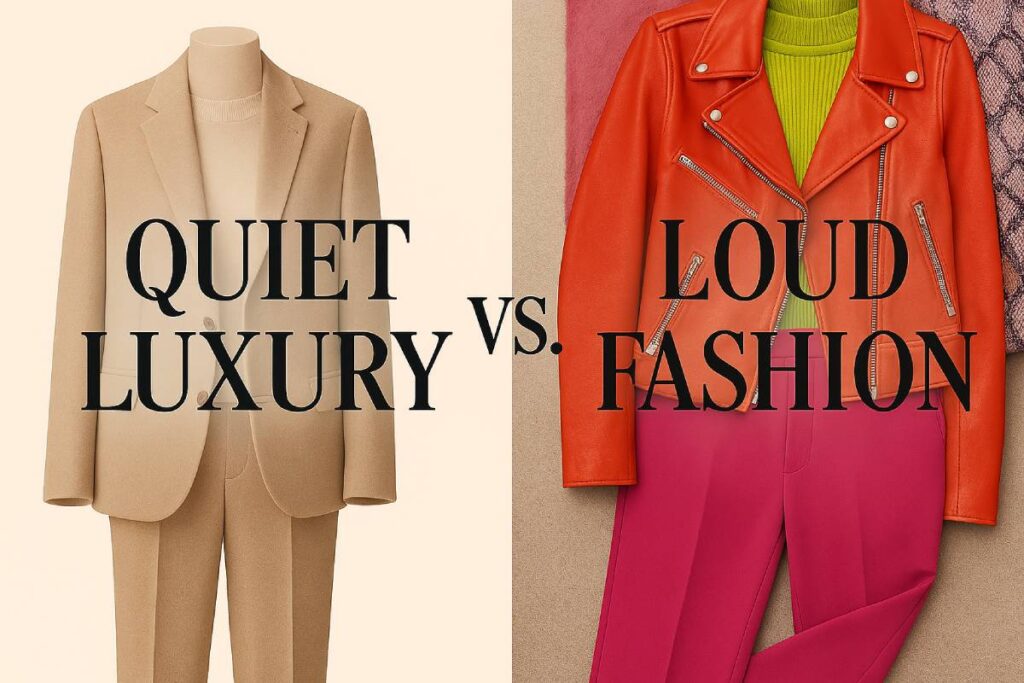
Fashion in 2026 is no longer following a single dominant aesthetic. Instead, it is defined by a fascinating split two powerful style movements coexisting, competing, and even blending with each other. On one side is quiet luxury, the understated, refined aesthetic built on neutral palettes, clean tailoring, and subtle elegance. On the other is bold expression, a dramatic, attention-grabbing style rooted in oversized silhouettes, vibrant colors, and experimental design.
At first glance, these two directions seem completely opposite. One whispers; the other shouts. But the real story of 2026 fashion is not about conflict it’s about evolution. Quiet luxury is no longer just about minimalism for status. It is transforming into something deeper: intentional dressing.
This shift reflects a larger cultural change in how people view clothing, identity, and consumption.
The Rise of Quiet Luxury: From Status Symbol to Subtle Intelligence
Quiet luxury gained global attention in the early 2020s as a reaction against loud branding and fast fashion overload. It is defined by simplicity, restraint, and quality over quantity.
Key elements include:
- Neutral color palettes (beige, ivory, black, grey, navy)
- Tailored silhouettes with perfect fit
- High-quality fabrics like cashmere, silk, and wool
- Absence of visible logos or branding
- Minimal but refined accessories
Brands like The Row, Loro Piana, and Hermès have become symbols of this aesthetic.
But by 2026, quiet luxury has evolved beyond “looking expensive without logos.” It now reflects a mindset: intentional consumption.
People are no longer dressing quietly just to signal wealth. Instead, they are choosing fewer, better pieces that align with personal identity, lifestyle, and long-term value.
Quiet luxury is becoming less about being seen and more about being understood.
The Rise of Bold Expression: Fashion as Identity and Performance
On the opposite end of the spectrum, bold expression fashion is thriving more than ever. These aesthetic embraces drama, individuality, and emotional storytelling through clothing.
Key characteristics include:
- Oversized or sculptural silhouettes
- Bright, saturated colors
- Experimental layering
- Statement pieces (capes, exaggerated coats, metallic textures)
- Mix of textures and patterns
Design houses like Balenciaga, Versace, and Diesel have continued to push this direction globally.
Bold fashion is deeply tied to digital culture. In an era dominated by Instagram, TikTok, and short-form content, clothing is not just personal it is performative. Outfits are designed to be photographed, filmed, and shared.
This has created a shift where fashion becomes a tool of storytelling. The louder the outfit, the stronger the narrative.
For Gen Z especially, bold fashion is not about shock value it is about visibility and self-expression.
The Clash: Two Opposite Styles, One Cultural Moment
At first, quiet luxury and bold expression seem incompatible. One is invisible sophistication; the other is visual impact. But in reality, they are responding to the same cultural pressures.
Both trends emerge from:
- Digital saturation and content overload
- Desire for identity in a globalized world
- Economic uncertainty influencing consumption habits
- Social media’s influence on personal branding
Quiet luxury responds by saying: “I will simplify and refine.”
Bold expression responds by saying: “I will stand out and be seen.”
Both are valid reactions to the same modern environment.
The Real Shift: Intentional Dressing
The most important evolution in 2026 is not the dominance of either style it is the rise of intentional dressing.
Intentional dressing means every outfit choice is made with awareness:
- Why am I wearing this?
- What does this say about me?
- How does this fit into my life, not just a trend?
This is where quiet luxury and bold expression begin to merge.
A person might wear a neutral-toned, well-tailored outfit but pair it with a single bold accessory. Another might choose a dramatic silhouette but in a carefully curated monochrome palette.
Fashion is no longer binary. It is curated.
Why Quiet Luxury Is Not About Being “Basic” Anymore
One misconception about quiet luxury is that it is boring or repetitive. In 2026, that is far from the truth.
Modern quiet luxury includes:
- Architectural tailoring
- Subtle asymmetry
- Elevated basics with perfect structure
- Layering of high-quality textures
- Thoughtful proportion play
The focus is no longer on invisibility, but precision.
This is why it is evolving into intentional dressing. Each piece serves a purpose. Nothing is random. Everything is edited.
Why Bold Fashion Is Becoming More Refined
At the same time, bold expression is also evolving. It is no longer chaotic or purely maximalist for attention.
Modern bold fashion is becoming:
- More structured
- More concept-driven
- More culturally rooted
- More wearable in daily life
Even dramatic outfits are now designed with balance in mind. Designers are blending exaggerated silhouettes with wearable elements.
Bold fashion in 2026 is less about excess and more about controlled impact.
Social Media’s Role in the Style Divide
Social media plays a massive role in amplifying both trends.
Quiet luxury thrives on:
- Clean aesthetics
- Minimalist feeds
- Soft lighting and neutral tones
Bold expression thrives on:
- Viral outfit moments
- Fashion reels and transitions
- Street style photography
Both styles perform well online, but in different ways. Quiet luxury builds aspiration. Bold fashion builds attention.
Together, they represent the dual economy of modern fashion content.
Gen Z and the New Fashion Identity
Gen Z is the biggest driver of this dual trend system. Unlike previous generations, they do not follow one style identity.
Instead, they:
- Mix aesthetics freely
- Switch styles based on mood
- Combine luxury with streetwear
- Prioritize individuality over consistency
For them, fashion is not a fixed identity it is fluid expression.
This is why the quiet vs bold debate is fading. The new rule is: there are no rules.
The Future: Hybrid Fashion Will Dominate
Looking ahead, the future of fashion is clearly hybrid. Designers and consumers are already blending both aesthetics into single wardrobes.
We will see:
- Minimalist outfits with bold statement pieces
- Loud silhouettes in muted tones
- Luxury craftsmanship applied to experimental designs
- Wardrobes built on versatility rather than category
Brands that understand this balance will dominate the next era of fashion.
Conclusion: Fashion Is Becoming More Intentional, Not More Extreme
The 2026 fashion landscape is not about choosing between quiet luxury and bold expression. It is about understanding the intention behind both.
Quiet luxury is evolving into thoughtful, precise dressing rooted in quality and meaning. Bold expression is evolving into structured creativity that celebrates individuality.
Together, they represent a broader cultural shift: fashion is no longer just about trends—it is about intentional identity building.
In this new era, the most stylish people are not those who follow one aesthetic, but those who understand when to be subtle, when to be bold, and most importantly why they are choosing either.
Fashion is no longer quiet or loud.
It is intentional.