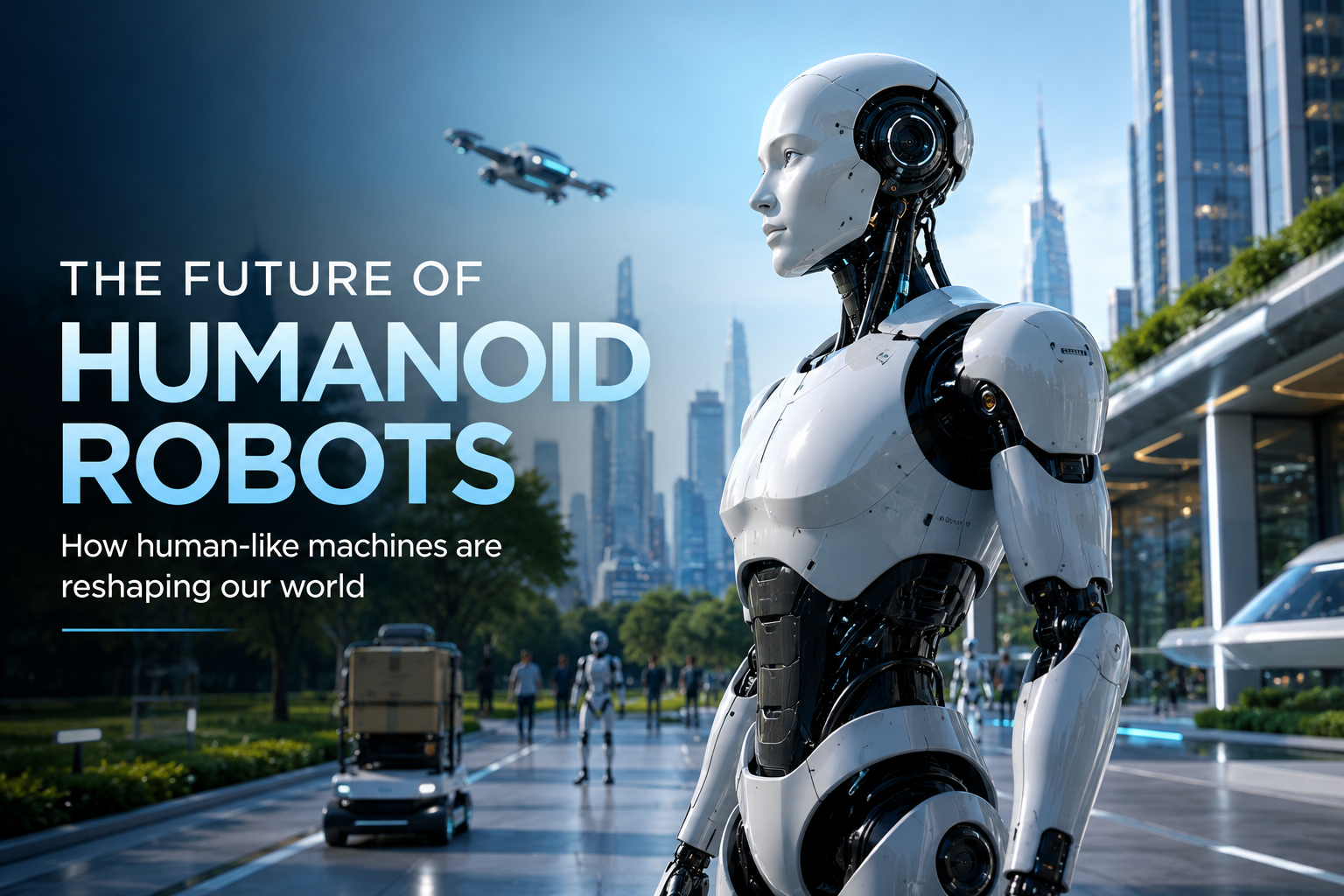
Humanoid robots have long been a staple of science fiction. From the helpful droids of Star Wars to the intelligent androids depicted in futuristic movies, the idea of machines that look and act like humans has captured public imagination for decades. Today, that vision is rapidly moving from fiction to reality. Advances in artificial intelligence, robotics, sensors, computer vision, and battery technology are enabling a new generation of humanoid robots capable of performing increasingly complex tasks in real-world environments.
As major technology companies and startups invest billions of dollars into robotic development, humanoid robots are emerging as one of the most significant technological trends of the 21st century. While widespread adoption is still in its early stages, experts believe these machines could transform industries ranging from manufacturing and logistics to healthcare, retail, and home assistance.
What Are Humanoid Robots?
A humanoid robot is a machine designed to resemble the human body in structure and movement. Unlike industrial robots that are typically fixed to a specific location and perform repetitive tasks, humanoid robots are built to navigate environments designed for humans.
Most humanoid robots feature:
- A head equipped with cameras and sensors
- Two arms with articulated joints
- Hands capable of grasping objects
- Two legs for walking and balance
- Artificial intelligence systems for perception and decision-making
The primary advantage of humanoid design is compatibility with existing human infrastructure. Buildings, tools, vehicles, stairs, doors, and workstations were all designed for human bodies. Instead of redesigning the world for machines, engineers are creating robots that can operate within the environments humans already use.
Why Humanoid Robots Are Becoming Viable Now
Several technological breakthroughs have accelerated the development of humanoid robots.
Artificial Intelligence
Recent advancements in AI have dramatically improved a robot’s ability to understand and respond to its environment. Large language models, machine learning algorithms, and advanced planning systems allow robots to interpret instructions, recognize objects, and adapt to changing conditions.
Rather than following rigid programming, modern robots can learn from experience and handle unexpected situations more effectively.
Improved Computer Vision
Computer vision systems powered by AI enable robots to identify objects, understand spatial relationships, and navigate complex environments. High-resolution cameras combined with depth sensors help robots perceive the world similarly to humans.
Better Hardware
More efficient motors, lightweight materials, and compact sensors have made humanoid robots more practical. Battery technology has also improved, allowing robots to operate for longer periods without recharging.
Cloud Computing
Robots can now leverage cloud-based computing resources to process large amounts of data and continuously improve their capabilities through software updates.
Leading Companies in the Humanoid Robot Race
A growing number of companies are competing to develop commercially viable humanoid robots.
Tesla Optimus
Tesla’s Optimus project is one of the most closely watched initiatives in the industry. CEO Elon Musk has repeatedly stated that humanoid robots could eventually become more significant than Tesla’s electric vehicle business.
Optimus is designed to perform repetitive and physically demanding tasks in factories and warehouses. Tesla plans to utilize its expertise in AI, sensors, and autonomous systems to create robots capable of operating safely around humans.
Figure AI
Figure AI has attracted significant attention and investment from major technology companies. The startup aims to build general-purpose humanoid robots capable of working in manufacturing, logistics, and commercial environments.
Its partnership with leading AI firms has strengthened its position as a major competitor in the field.
Agility Robotics
Agility Robotics developed Digit, a humanoid robot specifically designed for logistics and warehouse operations. Digit can walk, carry packages, climb steps, and navigate industrial settings.
Several large corporations are already testing the robot for practical business applications.
Unitree Robotics
China-based Unitree Robotics has gained recognition for creating affordable robotic platforms. The company is actively expanding into humanoid robotics and aims to make advanced robots more accessible to businesses worldwide.
Transforming Manufacturing and Industry
Manufacturing is expected to be among the first sectors to experience widespread humanoid robot adoption.
Factories often struggle with labour shortages, repetitive tasks, and workplace safety challenges. Humanoid robots can help address these issues by performing physically demanding work without fatigue.
Potential manufacturing applications include:
- Assembly line operations
- Material handling
- Quality inspection
- Equipment maintenance
- Packaging and shipping
Unlike traditional industrial robots that require specialized workstations, humanoid robots can move throughout factories and perform multiple functions.
This flexibility could significantly reduce operational costs while increasing productivity.
Revolutionizing Logistics and Warehousing
Global e-commerce growth has increased demand for efficient warehouse operations. Companies are under pressure to process orders faster while managing labor shortages.
Humanoid robots offer several advantages in logistics environments:
- Loading and unloading goods
- Picking and packing orders
- Inventory management
- Transporting materials
- Operating around human workers
Because warehouses are often designed for people, humanoid robots can integrate more easily than specialized automated systems.
Major retailers and logistics providers are already exploring robotic solutions to improve efficiency and reduce costs.
Healthcare Applications
Healthcare represents another promising area for humanoid robotics.
Many countries face aging populations and shortages of healthcare professionals. Humanoid robots could help support caregivers and improve patient care.
Potential healthcare uses include:
Patient Assistance
Robots could help patients move, walk, and perform daily activities, particularly in rehabilitation settings.
Elder Care
Humanoid robots may assist older adults by providing reminders, monitoring health conditions, and offering companionship.
Hospital Support
Robots can transport supplies, deliver medications, and assist staff with routine tasks, allowing healthcare workers to focus on patient treatment.
While robots are unlikely to replace doctors or nurses, they may become valuable support tools within healthcare systems.
The Future Home Robot
One of the most anticipated applications for humanoid robots is in the home.
For decades, consumers have dreamed of having robotic assistants capable of handling household chores. Advances in AI are bringing that possibility closer to reality.
Future home robots may be able to:
- Clean and organize rooms
- Prepare simple meals
- Wash dishes
- Fold laundry
- Monitor home security
- Assist elderly family members
- Provide educational support for children
Although today’s robots remain expensive and limited in capability, declining costs and technological improvements could eventually make home robots as common as personal computers or smartphones.
Economic Impact and Labor Concerns
The rise of humanoid robots raises important economic questions.
Supporters argue that robots can address labor shortages, improve productivity, and boost economic growth. Many industries struggle to recruit workers for physically demanding, repetitive, or hazardous jobs.
Robots could fill these gaps while allowing humans to focus on more creative, strategic, and interpersonal work.
However, concerns about job displacement remain significant.
Some roles may become partially or fully automated, particularly in manufacturing, warehousing, and routine service industries. Governments, businesses, and educational institutions may need to invest in workforce retraining programs to help workers adapt to changing job markets.
Historically, technological revolutions have eliminated certain jobs while creating entirely new industries and opportunities. The humanoid robot revolution is likely to follow a similar pattern.
Ethical and Social Challenges
As humanoid robots become more advanced, society must address several ethical issues.
Privacy
Robots equipped with cameras and microphones could collect large amounts of personal data. Clear regulations will be needed to protect privacy and prevent misuse.
Safety
Ensuring robots can operate safely around people is essential. Developers must implement robust safeguards to prevent accidents and system failures.
Accountability
Questions arise regarding responsibility when robots make mistakes or cause harm. Legal frameworks will need to define accountability among manufacturers, operators, and software providers.
Human Relationships
As robots become more human-like, concerns about emotional attachment and social interaction may increase. Society will need to establish boundaries regarding the role of robots in personal relationships.
Challenges Slowing Adoption
Despite impressive progress, several obstacles remain.
High Costs
Advanced humanoid robots currently cost tens of thousands—or even hundreds of thousands—of dollars. Mass production will be necessary to make them affordable for widespread use.
Battery Limitations
Operating a human-sized robot requires significant energy. Battery performance remains a major engineering challenge.
Reliability
Humanoid robots must consistently perform tasks in unpredictable environments. Achieving human-level reliability remains difficult.
Regulatory Issues
Governments are still developing policies related to robotic deployment, workplace safety, and liability.
These challenges may slow adoption, but ongoing research continues to improve capabilities and reduce costs.
What the Next Decade May Look Like
Over the next ten years, humanoid robots are likely to transition from experimental prototypes to practical tools used across multiple industries.
Experts predict that businesses will initially adopt robots for repetitive and labor-intensive tasks. As costs decrease and AI capabilities improve, broader deployment in healthcare, retail, hospitality, and homes may follow.
Just as smartphones transformed communication and computers transformed productivity, humanoid robots have the potential to become a foundational technology that changes how society works and lives.
Conclusion
Humanoid robots represent one of the most exciting frontiers in modern technology. Driven by breakthroughs in artificial intelligence, robotics, computer vision, and automation, these machines are steadily moving from research laboratories into real-world applications.
Companies such as Tesla, Figure AI, Agility Robotics, and Unitree are leading a race that could reshape industries and redefine the relationship between humans and machines. While challenges related to cost, safety, regulation, and employment remain, the potential benefits are enormous.
From factories and warehouses to hospitals and homes, humanoid robots may soon become an integral part of everyday life. The coming decade will determine whether these intelligent machines fulfil their promise as transformative tools that enhance productivity, improve quality of life, and help solve some of society’s most pressing challenges.