
Introduction
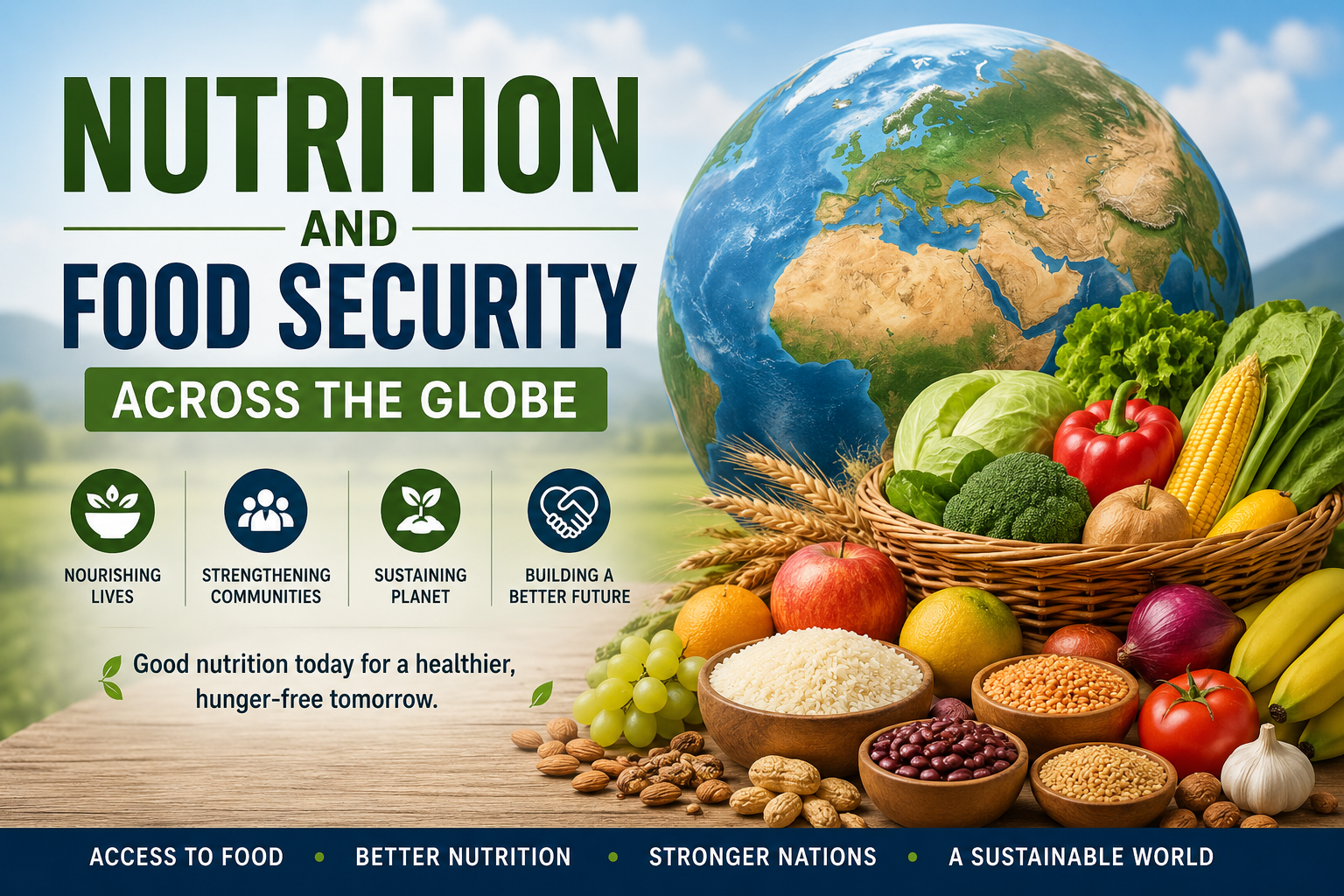
Nutrition and food security are among the most important global health issues of the twenty-first century. Adequate nutrition is essential for human growth, development, health, and well-being. Food security, as defined by the United Nations Food and Agriculture Organization (FAO), exists when all people have physical, social, and economic access to sufficient, safe, and nutritious food that meets their dietary needs and food preferences for an active and healthy life. Despite significant advances in agriculture, technology, and food production, millions of people around the world continue to suffer from hunger, malnutrition, and food insecurity.
The challenge of ensuring adequate nutrition and food security is complex and influenced by numerous factors, including poverty, climate change, population growth, conflicts, economic instability, and unequal food distribution. At the same time, many countries are facing a rise in obesity and diet-related diseases, creating a double burden of malnutrition. Addressing these issues requires international cooperation, sustainable policies, and innovative solutions.
Understanding Nutrition and Food Security
Nutrition refers to the process by which the body obtains and uses nutrients from food. A healthy diet provides essential nutrients such as carbohydrates, proteins, fats, vitamins, minerals, and water. Good nutrition supports immune function, cognitive development, physical growth, and overall health.
Food security consists of four key dimensions:
- Availability – Sufficient quantities of food must be available through production, imports, or reserves.
- Access – Individuals must have the financial and physical means to obtain food.
- Utilization – Food consumed must provide adequate nutrition and be safely prepared and stored.
- Stability – Food availability, access, and utilization must remain consistent over time.
When any of these dimensions are compromised, food insecurity can occur, leading to poor nutrition and adverse health outcomes.
The Global State of Hunger and Malnutrition
Although global food production has increased substantially over the past decades, hunger remains a serious challenge. According to international organizations such as the FAO, World Food Programme (WFP), and UNICEF, hundreds of millions of people worldwide experience food insecurity each year.
Hunger and malnutrition disproportionately affect low-income countries, particularly in regions such as Sub-Saharan Africa and parts of South Asia. Children are especially vulnerable. Undernutrition during childhood can result in stunted growth, weakened immunity, poor cognitive development, and increased risk of illness and death.
Malnutrition exists in several forms:
Undernutrition
Undernutrition occurs when individuals do not receive enough calories or nutrients. Common indicators include:
- Stunting (low height for age)
- Wasting (low weight for height)
- Underweight
- Micronutrient deficiencies
Micronutrient Deficiencies
Many people suffer from deficiencies in essential vitamins and minerals such as iron, iodine, vitamin A, and zinc. These deficiencies can cause anaemia, impaired vision, weakened immune systems, and developmental problems.
Overnutrition
Overnutrition results from excessive consumption of calories, unhealthy fats, sugars, and processed foods. It contributes to obesity, diabetes, cardiovascular diseases, and certain cancers.
Today, many countries face a “double burden” where undernutrition and obesity coexist within the same population, community, or even household.
Factors Affecting Global Food Security
Poverty
Poverty remains one of the primary causes of food insecurity. Families with limited income often struggle to afford nutritious food. Even when food is available in markets, economic barriers can prevent access to healthy diets.
Poor households frequently rely on inexpensive foods that are high in calories but low in nutritional value. This contributes to both undernutrition and obesity.
Climate Change
Climate change poses a significant threat to global food security. Rising temperatures, changing rainfall patterns, droughts, floods, and extreme weather events negatively affect agricultural productivity.
Farmers around the world face increasing challenges in growing crops and raising livestock. Reduced crop yields can lead to food shortages, higher prices, and increased hunger, particularly in vulnerable regions.
Population Growth
The global population continues to grow, placing greater demand on food systems. Feeding billions of people requires increased agricultural production while preserving natural resources.
As populations expand, competition for land, water, and energy intensifies. Sustainable food production methods are essential to meet future nutritional needs.
Conflict and Political Instability
Wars, civil unrest, and political instability disrupt food production and supply chains. Agricultural activities may be halted, transportation networks damaged, and markets disrupted.
Countries experiencing conflict often face severe food crises. Displaced populations, including refugees, frequently encounter challenges in accessing sufficient and nutritious food.
Economic Shocks
Economic downturns, inflation, and unemployment can reduce people’s purchasing power. Rising food prices make healthy diets less affordable, especially for low-income households.
The COVID-19 pandemic highlighted how global crises can disrupt food systems and increase food insecurity worldwide.
Nutrition Challenges Across Different Regions
Africa
Many African countries face persistent challenges related to hunger, undernutrition, and food insecurity. Factors such as poverty, drought, climate variability, and conflict contribute to these problems.
However, there have also been significant improvements through agricultural development programs, school feeding initiatives, and nutrition-focused interventions.
Asia
Asia is home to a large portion of the world’s population and experiences diverse nutrition challenges. Some countries struggle with undernutrition and micronutrient deficiencies, while others face increasing rates of obesity and non-communicable diseases.
Rapid urbanization and changing dietary patterns have led to greater consumption of processed foods in many parts of the region.
Europe and North America
Most countries in Europe and North America have relatively high levels of food availability. However, food insecurity still exists among low-income populations.
Obesity, diabetes, and diet-related chronic diseases are major public health concerns. Efforts focus on promoting healthy eating, reducing food waste, and improving access to nutritious foods.
Latin America
Latin America has made considerable progress in reducing hunger, yet economic inequality continues to affect food access. Many countries face a growing burden of obesity while still addressing pockets of undernutrition.
Government nutrition programs and social protection initiatives play an important role in improving food security.
The Role of Sustainable Agriculture
Sustainable agriculture is essential for ensuring long-term food security. It involves farming practices that increase productivity while protecting the environment and preserving natural resources.
Key approaches include:
- Efficient water management
- Soil conservation
- Crop diversification
- Integrated pest management
- Climate-resilient farming techniques
Sustainable agriculture helps improve food production while reducing environmental damage and supporting rural livelihoods.
Technological innovations such as precision farming, improved seed varieties, and digital agricultural tools are also helping farmers increase yields and adapt to changing conditions.
Food Waste and Its Impact
Food waste is a major global challenge. A significant portion of food produced worldwide is lost during harvesting, transportation, storage, processing, or consumption.
Reducing food waste can improve food availability, conserve resources, and lower greenhouse gas emissions.
Strategies to address food waste include:
- Improving storage and transportation systems
- Educating consumers about responsible food consumption
- Strengthening food distribution networks
- Encouraging food donation programs
By reducing waste, countries can make food systems more efficient and sustainable.
International Efforts to Improve Nutrition and Food Security
Several international organizations work to address hunger and malnutrition.
Food and Agriculture Organization (FAO)
The FAO supports countries in improving agricultural productivity, food systems, and nutrition policies.
World Food Programme (WFP)
The WFP provides emergency food assistance and supports long-term food security initiativesin vulnerable communities.
UNICEF
UNICEF focuses on child nutrition, breastfeeding promotion, micronutrient supplementation, and prevention of malnutrition.
World Health Organization (WHO)
The WHO develops nutrition guidelines and supports global efforts to combat malnutrition and diet-related diseases.
Sustainable Development Goals (SDGs)
The United Nations Sustainable Development Goal 2 aims to achieve “Zero Hunger” by ending hunger, achieving food security, improving nutrition, and promoting sustainable agriculture.
International cooperation remains critical for achieving these goals and ensuring that all people have access to healthy diets.
Future Solutions
Addressing global nutrition and food security requires a comprehensive approach that includes:
- Reducing poverty and inequality
- Investing in sustainable agriculture
- Strengthening food supply chains
- Promoting nutrition education
- Supporting climate adaptation measures
- Expanding social protection programs
- Empowering women in agriculture and food systems
- Encouraging healthy dietary practices
- Reducing food waste
- Enhancing international collaboration
Governments, businesses, researchers, farmers, and civil society organizations must work together to build resilient and inclusive food systems.
Conclusion
Nutrition and food security are fundamental to human health, economic development, and social stability. Despite remarkable progress in food production, millions of people continue to face hunger, malnutrition, and limited access to nutritious diets. At the same time, obesity and diet-related diseases are increasing across many regions, creating complex public health challenges.
Factors such as poverty, climate change, conflict, population growth, and food waste continue to threaten global food security. However, sustainable agriculture, technological innovation, effective policies, and international cooperation offer promising pathways forward.
Ensuring that every person has access to sufficient, safe, and nutritious food is not only a health priority but also a moral and developmental imperative. By strengthening food systems and promoting equitable access to healthy nutrition, the global community can move closer to a future free from hunger and malnutrition.