Introduction: The Rise of a New Football Marketing Era
Football has always been more than a sport. It is a global entertainment industry where athletes are not only judged by their performances on the pitch but also by their influence, personality, and ability to connect with audiences worldwide. In the modern era, players have become brands, and some have transformed themselves into global cultural icons.
Among the new generation of football superstars, Kylian Mbappé represents a new model of football marketing. He is not only one of the most talented players of his generation but also a symbol of how footballers can build powerful personal brands through digital media, social responsibility, global partnerships, and strategic storytelling.
While legends such as Cristiano Ronaldo and Lionel Messi established the era of athlete-driven marketing, Mbappé is helping create the next phase: a football brand built around authenticity, youth culture, technology, and global influence.
1. From Football Player to Global Brand
Traditional football marketing focused mainly on trophies, goals, and club success. Today, fans connect with athletes as personalities. Mbappé understands this shift and has developed an identity that extends beyond football.
His brand image is built on several elements:
- Elite sporting ability
- Youthful energy
- Confidence and ambition
- French cultural identity
- Social awareness
- Global appeal
At a young age, Mbappé became a household name after winning the 2018 FIFA World Cup with France national football team. His performances created worldwide recognition, but his marketing power came from how he presented himself afterward.
Unlike many athletes who rely only on luxury and fame, Mbappé has positioned himself as a modern role model. His image appeals especially to younger audiences who value personality, purpose, and authenticity.
2. The Power of Personal Branding in the Digital Age
Social media has completely changed sports marketing. Players are no longer dependent only on clubs or media companies to communicate with fans.
Mbappé uses digital platforms to maintain direct relationships with millions of followers. His online presence combines:
- Match moments
- Training content
- Personal achievements
- Brand campaigns
- Charity initiatives
- Lifestyle content
This creates a feeling of accessibility. Fans do not only watch him play; they follow his journey.
This strategy reflects a major change in football marketing: the athlete has become a media channel.
A footballer’s value is now measured not only by goals and assists but also by:
- Social media influence
- Fan engagement
- Global recognition
- Commercial partnerships
Mbappé represents this new business model perfectly.
3. Creating a Global Appeal Beyond Football
One of Mbappé’s biggest marketing strengths is his international appeal.
Football brands today are competing for audiences across continents. A superstar must connect with fans in Europe, Asia, Africa, North America, and the Middle East.
Mbappé’s background gives him a unique global identity:
- French football excellence
- African heritage
- International success
- Young generation appeal
This allows brands to communicate with diverse audiences.
For global companies, Mbappé is not just a footballer; he represents ambition, speed, innovation, and future success.
4. Strategic Brand Partnerships
Mbappé’s commercial partnerships show how modern athlete marketing has evolved.
He has worked with major global brands including Nike and luxury and lifestyle brands, positioning himself between sports, fashion, and entertainment.
The modern consumer does not separate sports from lifestyle. Football stars influence:
- Fashion choices
- Gaming culture
- Technology trends
- Youth identity
Mbappé’s marketing value comes from his ability to exist in multiple spaces.
A teenager following football may admire his skills, while a fashion audience may connect with his style and personality.
5. The Influence of Youth Culture
One of the biggest differences between Mbappé and previous football icons is his connection with younger generations.
Generation Z and younger audiences consume sports differently. They want:
- Behind-the-scenes access
- Short-form content
- Authentic stories
- Interactive experiences
Mbappé fits naturally into this environment.
His brand is built around speed, innovation, and modern football culture.
He represents the generation of players who grew up with:
- Social media
- Gaming
- Digital communities
- Global online fandom
This makes him valuable to brands targeting younger consumers.
6. Mbappé and the Future of Athlete Entrepreneurship
Modern footballers are increasingly becoming entrepreneurs. They are building businesses, foundations, and personal brands.
Mbappé has moved toward this direction by developing his own identity beyond football.
His approach shows that future athletes will not simply promote products; they will create ecosystems around themselves.
The next generation of football marketing may involve:
- Personal media platforms
- Digital communities
- Fashion collaborations
- Gaming partnerships
- Entertainment projects
- Social impact initiatives
Mbappé is an example of how athletes can become long-term brands rather than temporary advertising faces.
7. Social Responsibility as a Marketing Strategy
Modern consumers expect public figures to stand for something.
Mbappé has invested significant attention in social causes, especially youth development and opportunities for children.
Through initiatives and public actions, he has built an image of responsibility.
This matters because brands increasingly prefer ambassadors who represent values, not only popularity.
A player’s reputation now influences commercial success.
Mbappé’s marketing strength comes from combining:
Performance + Personality + Purpose
8. The Real Madrid Effect and Global Expansion
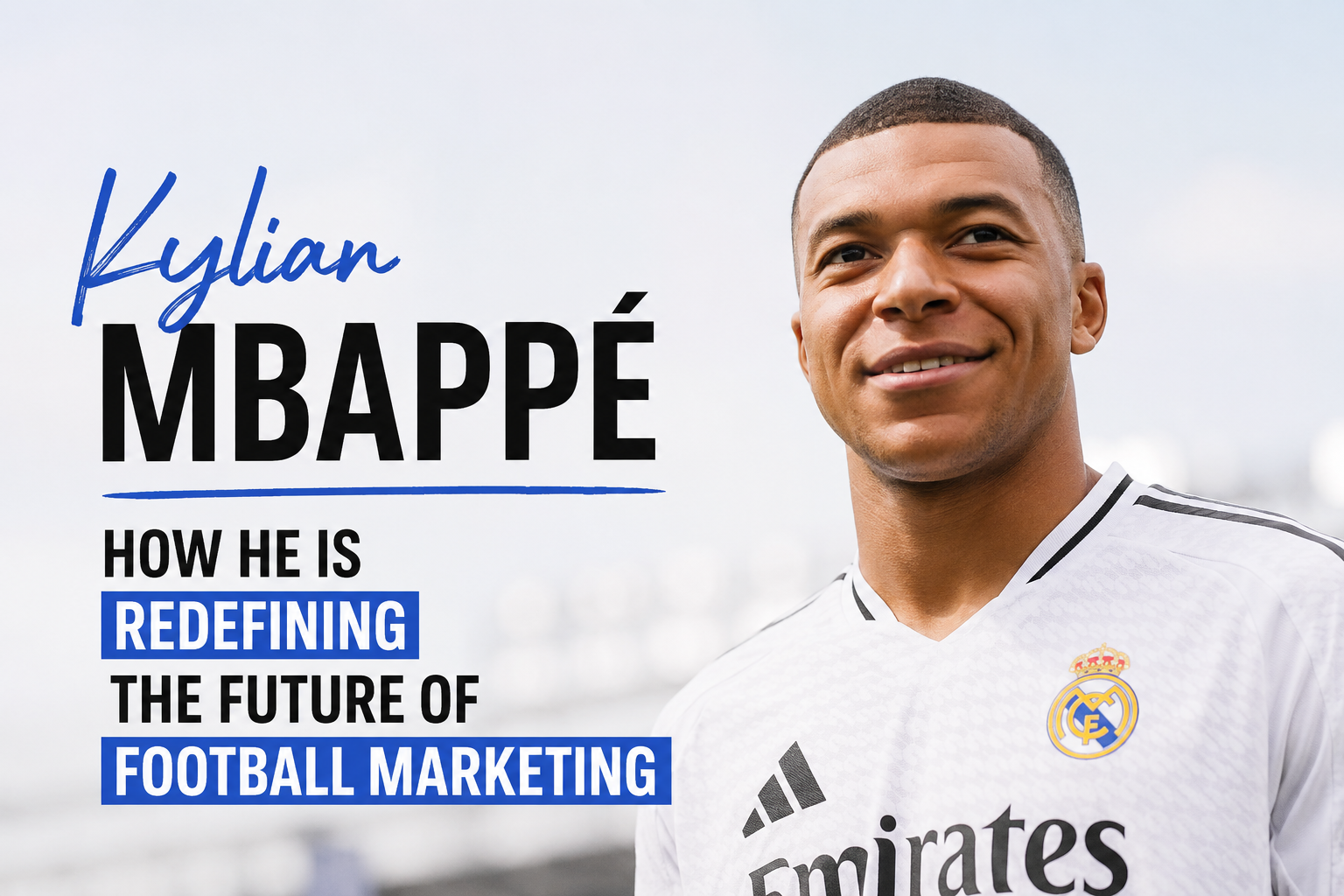
Mbappé’s move to Real Madrid represents another major stage in his global brand journey.
Real Madrid is one of the most commercially powerful football clubs in the world. The club has historically transformed players into global icons.
Playing for such a club increases:
- International visibility
- Sponsorship opportunities
- Global fan engagement
- Media exposure
The partnership between Mbappé and Real Madrid represents the combination of two powerful brands.
9. Data, Technology, and the Future of Football Marketing
The future of sports marketing will rely heavily on technology.
Brands will use:
- Artificial intelligence
- Fan data
- Personalised content
- Virtual experiences
- Digital communities
Mbappé’s generation is positioned at the center of this transformation.
Future football marketing will not only ask:
“Who is the best player?”
It will ask:
“Who can create the strongest connection with global audiences?”
Mbappé’s ability to attract attention makes him valuable in this new environment.
10. Changing the Definition of Football Stardom
Earlier generations measured football greatness mainly through trophies and statistics.
Today, football greatness includes:
- Influence
- Cultural impact
- Brand value
- Global reach
Mbappé is helping redefine what it means to be a football superstar.
He is not only competing to become one of the greatest players on the pitch; he is building a legacy as one of football’s most powerful global personalities.
Conclusion: The Future Belongs to Multi-Dimensional Athletes
Kylian Mbappé represents the future of football marketing because he combines sporting excellence with modern branding strategies.
He understands that today’s football stars are more than athletes. They are creators, influencers, entrepreneurs, and cultural figures.
His journey shows how football marketing is moving from simple sponsorship deals toward deeper emotional connections between players, brands, and fans.
The future of football marketing will belong to athletes who can inspire audiences both during the match and beyond it. Mbappé’s rise proves that the next generation of football icons will not only win trophies they will build global movements.