Introduction: From Motorsport Competition to Global Spectacle
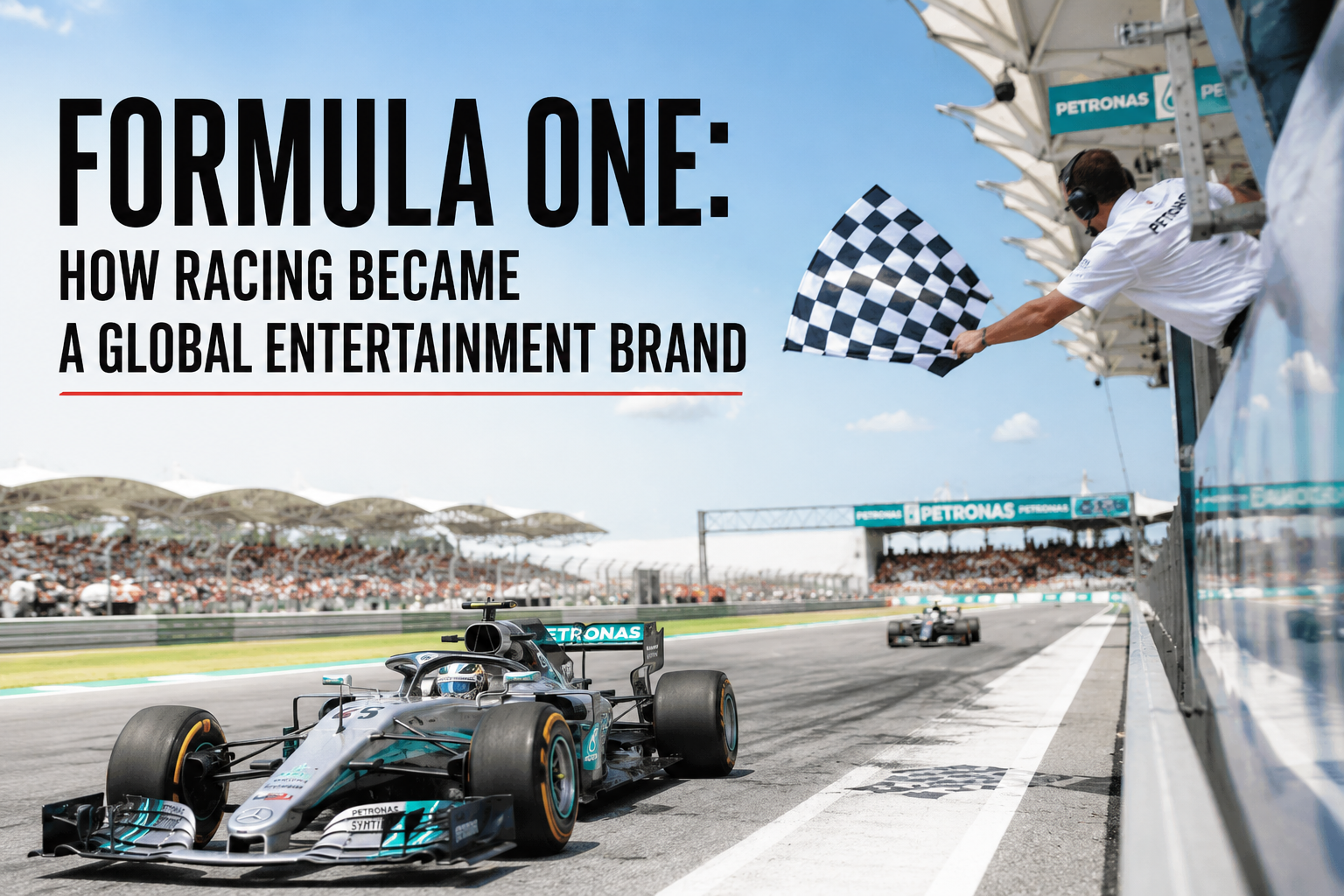
Formula One has always represented the highest level of motorsport engineering, speed, and competition. For decades, it was primarily viewed as a technical racing championship where the world’s best drivers and automotive manufacturers competed for victory. However, in recent years, Formula One has transformed into something much bigger: a global entertainment brand.
Today, Formula One is not only about cars racing around a track. It is a combination of sport, luxury, technology, fashion, celebrity culture, digital media, and storytelling. The championship has successfully expanded beyond traditional motorsport audiences and attracted millions of new fans worldwide.
The transformation of Formula One shows how a sports organization can reinvent itself by understanding modern consumers, creating emotional connections, and building a powerful global identity.
1. The Evolution of Formula One: From Racing Series to Entertainment Platform
Formula One began in 1950 as a championship focused mainly on racing performance and technical excellence. The sport’s early identity was built around:
- Engineering innovation
- Driver skill
- Competition between manufacturers
- European racing heritage
For many years, Formula One had a strong but limited audience. Fans mainly followed races through television broadcasts and newspapers.
However, the modern entertainment industry changed consumer expectations. Audiences wanted more than just competition; they wanted stories, personalities, behind-the-scenes access, and emotional connections.
Formula One recognized this shift and began transforming itself from a racing championship into a global entertainment platform.
2. The Netflix Effect: Changing How the World Sees Formula One
One of the biggest moments in Formula One’s modern growth was the launch of the Netflix documentary series Formula 1: Drive to Survive.
The series changed the way people understood motorsport.
Before, many casual viewers saw Formula One as complicated:
- Technical rules
- Complex strategies
- Limited driver access
- Long race weekends
“Drive to Survive” introduced audiences to:
- Driver personalities
- Team rivalries
- Emotional pressure
- Business decisions
- Behind-the-scenes drama
The show turned drivers into global celebrities and helped attract younger audiences who may never have watched Formula One before.
This demonstrated the power of storytelling in sports marketing.
The lesson was simple: people do not only follow events; they follow stories.
3. Building Driver Personalities as Global Brands
Modern Formula One marketing is heavily focused on drivers as individual brands.
Drivers are no longer only athletes; they are entertainers, influencers, and cultural figures.
Examples include:
- Lewis Hamilton becoming a global figure in fashion, music, and social causes
- Max Verstappen building a massive international fanbase through performance and personality
- Younger drivers connecting with fans through social media platforms
Formula One understands that fans often support personalities before teams.
A person may become interested in racing because of a driver’s story, lifestyle, or character.
This has created stronger emotional connections between athletes and audiences.
4. Formula One and the Power of Digital Marketing
Digital media has completely changed Formula One’s relationship with fans.
Traditional sports depended heavily on television. Today, Formula One uses:
- YouTube
- TikTok
- Online communities
- Interactive content
The sport creates content throughout the entire race weekend, not just during the race.
Fans now consume:
- Driver interviews
- Team updates
- Funny moments
- Technical explanations
- Behind-the-scenes footage
This creates continuous engagement.
Instead of being a two-hour event every few weeks, Formula One has become an everyday entertainment brand.
5. Global Expansion Beyond Traditional Markets
Historically, Formula One was strongest in Europe. Countries such as the United Kingdom, Italy, and Monaco were central to its identity.
However, modern Formula One has expanded globally.
New markets include:
- United States
- Middle East
- Asia
The introduction of races in new locations has helped the sport reach different audiences.
The Las Vegas Grand Prix became an example of Formula One merging motorsport with entertainment.
The event included:
- Luxury experiences
- Celebrity appearances
- Concerts
- Premium hospitality
It was marketed not only as a race but as a global entertainment festival.
6. The Role of Luxury and Lifestyle Marketing
Formula One has always had a connection with luxury.
The sport naturally attracts premium brands because it represents:
- Performance
- Innovation
- Exclusivity
- Wealth
- Technology
Major partnerships with brands in industries such as:
- Fashion
- Watches
- Technology
- Automotive
- Finance
have strengthened Formula One’s premium image.
The paddock itself has become a cultural space where sports, celebrities, and luxury lifestyles meet.
Formula One has successfully positioned itself as a lifestyle brand, not just a racing competition.
7. Technology as a Marketing Advantage
Technology has always been part of Formula One’s identity.
The sport represents innovation through:
- Aerodynamics
- Hybrid engines
- Data analytics
- Advanced engineering
But modern Formula One has turned technology into entertainment.
Fans now enjoy understanding:
- How teams develop cars
- How strategies work
- How data influences decisions
Technology is no longer hidden behind the scenes; it has become part of the storytelling.
This makes Formula One attractive to both sports fans and technology enthusiasts.
8. Fan Experience: Creating a community
Successful entertainment brands create communities, and Formula One has focused heavily on this.
Modern fans participate through:
- Fantasy leagues
- Online discussions
- Social media reactions
- Fan events
- Merchandise
The goal is not just to make people watch races but to make them feel part of the Formula One world.
This community-based approach increases loyalty and long-term engagement.
9. Formula One’s Partnership Strategy
Formula One has become highly attractive to global brands because it offers access to a worldwide audience.
Sponsors are no longer simply placing logos on cars.
They are investing in:
- Content creation
- Fan experiences
- Digital campaigns
- Brand storytelling
Formula One’s marketing model has shifted from traditional sponsorship to partnership ecosystems.
Brands want to be associated with the emotion and excitement of racing.
10. The Business Transformation of Formula One
A major turning point came when Liberty Media acquired Formula One in 2017.
The company focused on making Formula One more consumer-friendly by improving:
- Digital engagement
- Fan access
- Entertainment value
- Global marketing
The strategy was to treat Formula One like an entertainment property rather than only a sporting competition.
This approach helped increase the sport’s commercial value and worldwide popularity.
11. Lessons Formula One Teaches Modern Brands
Formula One’s transformation provides important lessons for businesses:
1. Storytelling creates emotional connections
People remember stories more than statistics.
2. Digital platforms create global communities
Brands must meet audiences where they spend time.
3. Personalities drive engagement
People connect with people, not just organizations.
4. Experiences create stronger loyalty
Modern consumers want participation, not only consumption.
12. The Future of Formula One as an Entertainment Brand
The future of Formula One will likely continue moving toward:
- More digital experiences
- Virtual reality
- Global events
- New entertainment partnerships
- Greater fan interaction
The sport is becoming closer to a global entertainment company.
Future success will depend on balancing its original identity — racing excellence — with its new role as a worldwide cultural phenomenon.
Conclusion: Racing Became Entertainment
Formula One’s journey from a traditional motorsport championship to a global entertainment brand is one of the biggest transformations in modern sports marketing.
The sport succeeded because it understood that audiences wanted more than speed. They wanted stories, personalities, emotions, and experiences.
By combining racing, technology, luxury, digital media, and entertainment, Formula One created a powerful global brand.
Today, Formula One is not simply about who finishes first. It is about the entire world built around the race the drivers, the teams, the drama, the innovation, and the millions of fans who feel connected to the spectacle.
Formula One proves that the future of sports belongs to organizations that can turn competition into culture.