
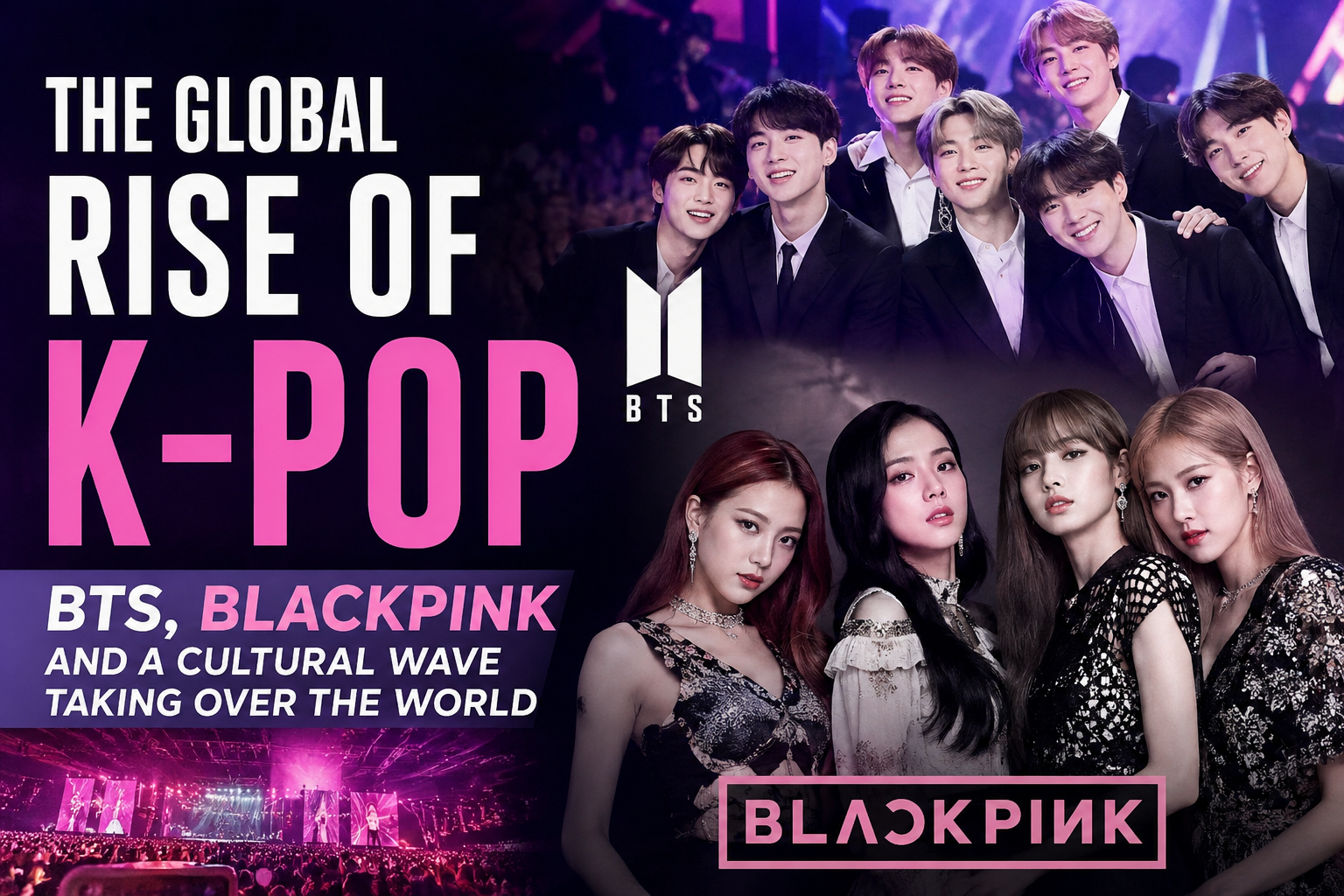
The global entertainment landscape has undergone a dramatic transformation over the past decade, and one of the most powerful forces behind this shift is the rise of the K-pop industry. What was once a highly localized segment of South Korea’s music scene has now become a worldwide cultural phenomenon. K-pop is no longer just about music; it is a complete entertainment ecosystem that combines performance, fashion, storytelling, digital engagement, and fandom culture in a way that few industries have achieved. At the center of this global expansion stand groups like BTS and BLACKPINK, whose influence has extended far beyond music charts into global branding, social movements, and even international diplomacy.
From Local Industry to Global Powerhouse
The origins of K-pop can be traced back to South Korea’s structured idol training system, which began taking shape in the 1990s. Entertainment companies invested heavily in developing artists not only as singers but as complete performers trained in dance, language, media interaction, and public image management. This system created highly polished acts that were designed for mass appeal, but initially, their reach remained largely within East Asia.
The real turning point came with the integration of digital platforms, especially YouTube and social media. Unlike Western music industries that relied heavily on traditional media channels, K-pop agencies strategically used online platforms to distribute content globally. This allowed fans from different parts of the world to access music videos, performances, and behind-the-scenes content instantly, breaking geographical barriers. Over time, this digital-first strategy transformed K-pop into a global export, laying the foundation for its explosive international success.
BTS and the Redefinition of Global Pop Stardom
Among all K-pop acts, BTS has had one of the most significant impacts on the global music industry. The group’s rise is often cited as a turning point where K-pop fully entered mainstream Western consciousness. BTS distinguished themselves through emotionally driven storytelling, addressing themes such as mental health, self-identity, societal pressure, and personal growth. These topics resonated deeply with younger audiences worldwide, who were seeking authenticity in pop culture.
What made BTS particularly influential was their ability to connect directly with fans through social media. Unlike traditional pop stars who often maintain distance from their audience, BTS members actively engaged with fans online, creating a sense of intimacy and shared experience. Their fandom, known as ARMY, became one of the most organized and influential fan communities globally, capable of driving streaming records, social media trends, and even charitable campaigns.
The group’s success on international charts, including Billboard Hot 100 achievements and sold-out stadium tours across continents, signaled a major shift in the global music hierarchy. BTS was no longer just a “Korean boy band”; they had become global pop icons competing at the highest level of the Western-dominated music industry.
BLACKPINK and the Globalization of K-Pop Fashion and Identity
While BTS redefined emotional storytelling in pop music, BLACKPINK played a crucial role in merging K-pop with global fashion and luxury branding. BLACKPINK’s image is deeply tied to high-fashion aesthetics, strong visual identity, and a blend of Western and Asian pop culture influences. Each member has become a global ambassador for luxury brands, representing fashion houses like Chanel, Dior, and Celine.
Their music, characterized by powerful beats and multilingual appeal, has found success across global charts, including collaborations with major Western artists. BLACKPINK’s presence at international events such as Coachella marked a historic moment, as they became one of the first K-pop girl groups to headline major Western music festivals.
Beyond music, BLACKPINK has helped reshape how K-pop is perceived in the global fashion industry. Their influence extends into beauty trends, social media aesthetics, and brand marketing strategies. In many ways, BLACKPINK represents the commercialization of K-pop as a global lifestyle brand rather than just a musical genre.
The Role of Digital Culture and Fandom Economics
A major reason behind K-pop’s global rise is its deep integration with digital culture. Unlike traditional music industries, K-pop thrives on constant content creation. Music videos are highly cinematic, teaser campaigns are meticulously planned, and social media engagement is continuous. This creates a 24/7 entertainment cycle where fans are always connected to their favourite artists.
Fandom culture in K-pop is also uniquely structured. Fans are not passive consumers; they actively participate in promoting artists, organizing streaming campaigns, and even influencing chart performance. This phenomenon has created what is often referred to as “fandom economics,” where fan engagement directly contributes to commercial success.
Streaming platforms like Spotify and YouTube have amplified this effect by making global distribution seamless Spotify. As a result, K-pop artists can achieve worldwide visibility almost instantly upon release, something that was previously impossible for non-English music industries.
Cultural Soft Power and South Korea’s Global Influence
The rise of K-pop is also closely linked to South Korea’s broader strategy of cultural soft power. The government and private entertainment companies have worked in parallel to export Korean culture, including music, television dramas, fashion, and beauty products. This cultural export strategy has significantly improved South Korea’s global image and economic influence.
K-pop has played a central role in making Korean culture mainstream in countries across Europe, the Americas, and South Asia. Fans who discover K-pop often develop interest in Korean language, food, and travel, creating a ripple effect that benefits multiple industries. This cultural ecosystem demonstrates how entertainment can function as a powerful tool of national branding in the global economy.
Challenges Behind the Global Success
Despite its massive success, the K-pop industry is not without criticism. The idol training system is often described as highly demanding, with long working hours, intense competition, and strict management structures. Concerns about mental health, privacy, and creative freedom have been raised repeatedly.
There is also ongoing debate about the sustainability of such a fast-paced industry. The constant pressure to produce content, maintain global relevance, and satisfy massive fandom expectations can take a toll on artists. Additionally, cultural adaptation for global audiences sometimes raises questions about authenticity versus commercial strategy.
These challenges highlight the complex reality behind the polished image of K-pop, reminding audiences that global success often comes with hidden pressures.
The Future of K-Pop in Global Entertainment
Looking ahead, the future of K-pop appears to be even more global, digital, and diversified. With increasing collaborations between K-pop artists and Western musicians, the boundaries between regional music industries are becoming less defined. The next phase of growth is likely to involve deeper integration with technology, including virtual concerts, AI-generated content, and immersive fan experiences.
At the same time, newer generations of K-pop groups are already emerging with more international members, multilingual songs, and global marketing strategies from the outset. This suggests that K-pop is evolving from a Korean cultural export into a fully global entertainment system.
Ultimately, the rise of K-pop is not just a music industry success story; it is a reflection of how digital culture, fandom engagement, and global connectivity can reshape entertainment on a massive scale. With BTS and BLACKPINK leading the charge, K-pop has firmly established itself as one of the defining cultural forces of the 21st century, and its influence is only expected to grow stronger in the years ahead.