The 2026 FIFA World Cup Isn’t Delivering the Economic Windfall Many Expected
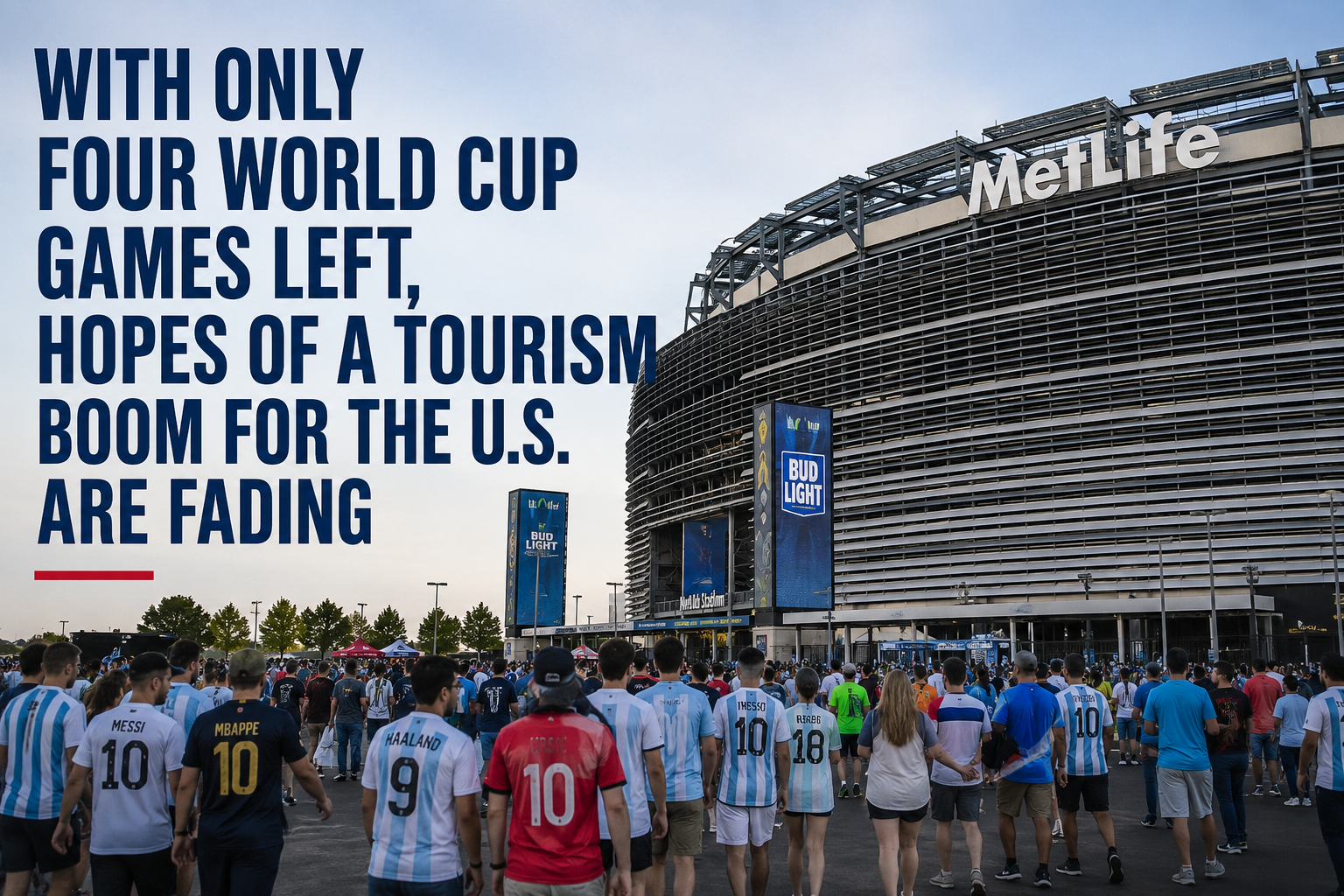
As the FIFA World Cup enters its final stages with only four matches remaining, one of the biggest conversations off the pitch is no longer about football it is about economics. Months before kick-off, analysts, tourism boards, hospitality businesses, and local governments predicted that the tournament would spark a historic tourism boom across the United States. Hotels prepared for record bookings, airlines added flights, restaurants expanded staff, and retailers stocked up for millions of expected visitors.
While stadiums have largely been packed and television audiences have reached impressive numbers worldwide, the anticipated wave of international tourists has not materialized at the scale many expected. Instead of overflowing city centers and unprecedented consumer spending, many host cities have experienced a more moderate increase in visitors than optimistic forecasts predicted.
With just four matches left in the tournament, the gap between expectations and reality has become increasingly difficult to ignore.
High Expectations Before the Tournament
The FIFA World Cup has traditionally been viewed as one of the strongest drivers of international tourism. Previous tournaments in countries such as Germany, Russia, Brazil, and Qatar attracted millions of foreign visitors who spent heavily on accommodation, transportation, entertainment, shopping, and dining.
The United States entered the tournament with enormous expectations. As one of the world’s largest tourism markets, officials believed the World Cup would strengthen the country’s image while generating billions of dollars in economic activity.
Industry reports projected significant gains for airlines, hotels, local businesses, entertainment venues, and transportation services. Some estimates suggested that host cities could collectively generate tens of billions of dollars through visitor spending during the tournament.
Those forecasts encouraged businesses to invest heavily in staffing, marketing campaigns, and infrastructure improvements months before the first match began.
Stadium Success Doesn’t Always Mean Tourism Success
One of the biggest misconceptions surrounding major sporting events is the assumption that full stadiums automatically translate into booming tourism.
The reality is much more complex.
Attendance figures have generally been strong throughout the World Cup, but many spectators have been domestic travelers rather than international tourists. American fans traveling between host cities have filled many seats, reducing the overall contribution of foreign visitor spending.
Domestic tourism certainly benefits local economies, but it often replaces spending that would have occurred elsewhere in the country rather than bringing substantial new money into the national economy.
International visitors, by contrast, typically stay longer, spend more on accommodation and attractions, and contribute additional foreign currency to the economy.
That distinction is becoming increasingly important as economists assess the tournament’s overall financial impact.
Why International Visitor Numbers Fell Short
Several factors have contributed to lower-than-expected international tourism during the tournament.
Rising Travel Costs
International travel remains significantly more expensive than it was before the pandemic. Airfares, hotel prices, travel insurance, and exchange rates have increased the total cost of attending the World Cup.
For many football supporters, especially families, a trip to the United States has become a premium experience that exceeds their travel budgets.
The high cost of accommodations in major host cities has only added to those financial pressures.
Strict Visa Procedures Continue to Be a Challenge
Although the United States has streamlined entry procedures for many travelers, visa requirements remain a hurdle for fans from numerous countries.
Long processing times and appointment delays discouraged some supporters from making last-minute travel plans.
Unlike tournaments hosted in countries with simplified fan-entry systems, obtaining permission to enter the United States often requires significantly more planning.
Geography Makes Multi-City Travel Expensive
The United States is geographically much larger than most previous World Cup hosts.
Fans hoping to attend multiple matches often needed to travel thousands of miles between host cities.
Unlike compact tournaments where supporters can easily travel by train or short flights, the U.S. tournament required expensive domestic flights, longer travel times, and additional accommodation costs.
For international visitors already facing expensive overseas flights, these added expenses reduced the appeal of attending multiple matches.
Global Economic Uncertainty
Persistent inflation, slower economic growth, and weaker consumer confidence in several major economies have also affected travel decisions.
Even passionate football supporters have become more cautious about discretionary spending.
Many fans chose to watch the tournament from home rather than commit to a costly overseas vacation.
Local Businesses Experienced Mixed Results
Not every business has struggled during the tournament.
Hotels located near stadiums have generally performed well on match days, while sports bars and entertainment venues have benefited from increased foot traffic.
However, many restaurants, retailers, museums, and attractions expected consistent crowds throughout the tournament have reported more modest business than anticipated.
Several businesses had hired additional staff expecting sustained demand, only to discover that customer traffic fluctuated dramatically depending on the match schedule.
This uneven distribution of visitors has reduced the widespread economic boost many cities originally anticipated.
Airlines and Hotels Face Reality
The aviation and hospitality industries were among the biggest beneficiaries expected from the World Cup.
Some airlines introduced new routes specifically targeting football fans, while hotels increased room rates in anticipation of exceptionally high occupancy.
Although occupancy rates remained healthy around major matches, they often fell below the most optimistic forecasts.
In some cities, hotel operators were forced to lower prices closer to match dates after realizing demand was softer than expected.
Airlines also experienced strong travel peaks but not the sustained surge that many had projected months earlier.
Television Success Outpaces Physical Attendance
Ironically, while international tourism has underperformed expectations, global television audiences have remained exceptionally strong.
Millions of viewers have followed matches through streaming services and broadcasters around the world.
The World Cup continues to demonstrate its enormous digital and media value, even if physical attendance from overseas fans has been more limited.
Sponsors, advertisers, broadcasters, and digital platforms have still enjoyed substantial exposure thanks to record online engagement.
This highlights an important shift in modern sporting events: global audiences increasingly participate virtually rather than through international travel.
Economic Benefits Extend Beyond Tourism
Although tourism may not have reached expected levels, the World Cup has still generated meaningful economic activity.
Infrastructure investments, stadium upgrades, transportation improvements, security operations, broadcasting, event management, and temporary employment have all contributed to local economies.
Construction projects completed ahead of the tournament will continue serving communities long after the final whistle.
The event has also showcased American cities to billions of viewers worldwide, potentially encouraging future leisure and business travel.
These long-term branding benefits are difficult to measure immediately but could produce returns over the coming years.
Lessons for Future Mega Sporting Events
The experience offers valuable lessons for organizers planning future international tournaments.
Economic impact studies often assume ideal visitor numbers and spending patterns. In reality, changing consumer behavior, economic uncertainty, travel costs, and geopolitical factors can significantly alter outcomes.
Cities bidding for major sporting events may increasingly adopt more conservative financial forecasts rather than relying on best-case scenarios.
Future hosts may also focus more on improving visa accessibility, transportation networks, and affordable accommodation options to encourage greater international attendance.
Looking Ahead
With only four World Cup matches remaining, economists will soon begin producing detailed analyses of the tournament’s financial performance.
It is likely that the event will still generate billions of dollars in economic activity, but perhaps not at the extraordinary levels many early forecasts suggested.
Rather than representing a tourism explosion, the tournament may ultimately be remembered as a successful sporting spectacle with a more moderate economic impact.
For the United States, the World Cup has reinforced its ability to host one of the world’s largest sporting events while also highlighting the evolving nature of global tourism.
Today’s football fans are more selective about international travel, more sensitive to costs, and increasingly engaged through digital platforms rather than physical attendance.
Final Thoughts
The closing stages of the FIFA World Cup reveal an important reality: hosting a global sporting event no longer guarantees an unprecedented tourism boom. While the United States has delivered world-class venues, vibrant fan experiences, and globally watched matches, the expected flood of international visitors has been smaller than anticipated.
That does not mean the tournament has been unsuccessful. The World Cup has strengthened the country’s global profile, generated substantial media exposure, supported thousands of jobs, and delivered memorable sporting moments. However, it also serves as a reminder that modern mega-events operate in a rapidly changing economic landscape where travel costs, visa policies, digital engagement, and consumer spending habits all shape the final outcome.
As the final four games capture the world’s attention, the biggest victory for the United States may ultimately lie not in short-term tourism revenue but in the long-term legacy of hosting one of football’s greatest celebrations.