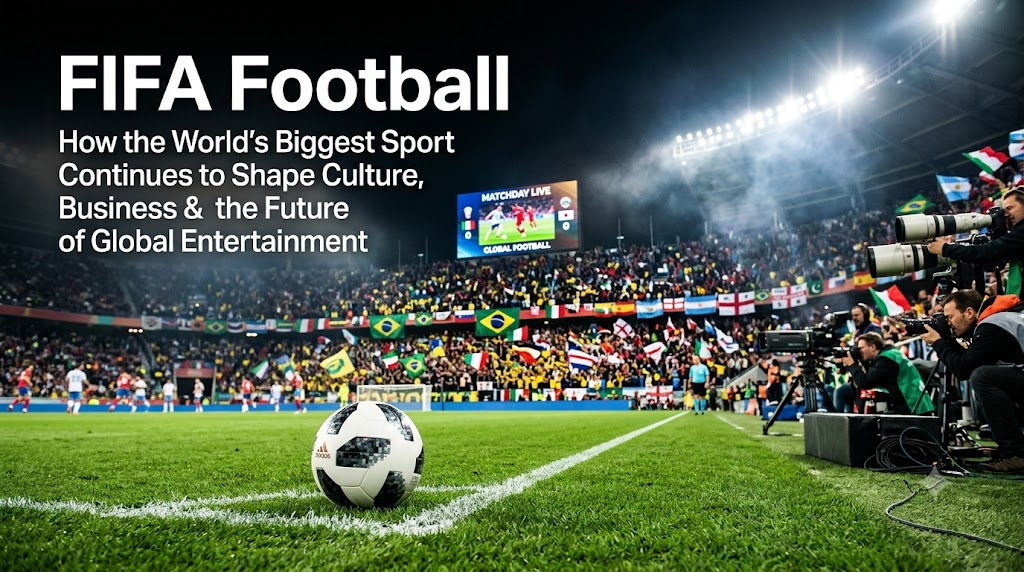
Few sporting organizations command the global influence of FIFA football. Every four years, billions of viewers stop what they are doing to witness the FIFA World Cup, making it the most-watched sporting event on Earth. Yet football’s influence extends far beyond the World Cup. From youth academies in Africa to elite clubs in Europe, from digital fan communities in Asia to emerging leagues in North America, FIFA football has become one of the most powerful cultural and commercial forces in modern society.
Football is unique because it requires minimal equipment while offering maximum emotional investment. A ball, an open space, and two makeshift goals are often enough to inspire dreams. That accessibility has helped transform football into the world’s universal language, connecting people regardless of nationality, religion, or economic background.
As the sport continues to embrace innovation, sustainability, women’s football, and digital transformation, FIFA stands at the center of one of the fastest-evolving entertainment industries in the world.
The Global Reach of FIFA Football
Football’s popularity is unmatched across continents. More than 200 national football associations operate under FIFA, making it one of the largest sporting organizations worldwide. The game’s appeal crosses cultural and political boundaries in a way few other sports can.
Whether it’s children playing on beaches in Brazil, fans gathering in cafés across Europe, communities celebrating victories in Africa, or packed stadiums throughout Asia, football has become an integral part of everyday life.
International tournaments have helped create unforgettable moments that transcend generations. Historic goals, dramatic penalty shootouts, underdog victories, and emotional celebrations become part of global sporting history almost instantly.
Unlike many sports concentrated in a handful of countries, football thrives everywhere. This worldwide participation continues to strengthen FIFA’s influence on both amateur and professional levels.
The FIFA World Cup: Sport’s Ultimate Stage
The FIFA World Cup represents the pinnacle of international football. Every edition showcases the best players, tactical innovations, and national rivalries while bringing billions of fans together for a month-long celebration of sport.
Qualification itself is a remarkable journey, with national teams competing over several years for limited tournament places. This process ensures that every region of the world has an opportunity to participate, reinforcing football’s global identity.
Hosting the World Cup also creates enormous economic and tourism opportunities. Countries invest heavily in stadiums, transportation systems, hospitality infrastructure, and urban development projects. While debates continue regarding long-term financial impacts, there is little doubt that hosting the tournament places nations firmly in the international spotlight.
The expanded format for future tournaments reflects FIFA’s ambition to increase participation while introducing more nations to football’s biggest stage.
Technology Is Transforming Modern Football
Football has undergone one of the most significant technological revolutions in sporting history. While the essence of the game remains unchanged, decision-making, player analysis, broadcasting, and fan experiences have evolved dramatically.
Video Assistant Referee (VAR) technology has fundamentally altered how controversial decisions are reviewed. Although debates surrounding VAR continue, its introduction reflects football’s growing emphasis on accuracy and fairness.
Goal-line technology has virtually eliminated disputes regarding whether the ball crossed the line, providing instant confirmation for referees and spectators alike.
Meanwhile, clubs increasingly rely on GPS tracking systems, wearable performance monitors, AI-powered tactical analysis, and advanced data analytics to improve player fitness, injury prevention, and match preparation.
Broadcast technology has also enhanced the viewing experience through ultra-high-definition cameras, aerial drone footage, immersive audio, and real-time statistical graphics.
Technology is no longer simply supporting football—it has become part of its competitive landscape.
Women’s Football Is Entering a New Era
One of football’s most exciting developments has been the extraordinary rise of women’s football. Increased investment, improved professional leagues, larger audiences, and stronger commercial partnerships have accelerated the sport’s growth.
International tournaments continue to break attendance records while attracting millions of television and streaming viewers worldwide. Young girls now have more opportunities than ever before to pursue professional football careers.
Major clubs are expanding their women’s programs, investing in coaching, facilities, youth academies, and player development.
This momentum has also attracted global sponsors eager to support diversity, inclusion, and the future of sport. Women’s football is no longer viewed as an emerging segment—it has become one of football’s fastest-growing markets.
Football’s Economic Power
Football has evolved into a trillion-dollar ecosystem involving clubs, sponsors, broadcasters, apparel manufacturers, technology companies, betting operators, tourism, hospitality, and media organizations.
Elite clubs generate substantial revenues through broadcasting rights, commercial sponsorships, merchandise sales, ticketing, and digital subscriptions.
Global brands compete aggressively for partnerships with FIFA competitions because football offers unmatched international exposure. Sponsorship visibility during major tournaments reaches billions of consumers across television, streaming platforms, and social media.
Player transfers have also become major financial events, with record-breaking deals demonstrating the increasing value of elite talent in the global sports economy.
Even smaller football markets benefit from investment through youth development programs, infrastructure projects, and international partnerships.
Football today is not only entertainment—it is one of the world’s largest sports industries.
The Digital Revolution Is Changing Fan Engagement
The modern football fan consumes far more than ninety minutes of action.
Social media platforms provide behind-the-scenes training footage, tactical breakdowns, interviews, transfer updates, and interactive content throughout the year. Clubs now operate as media companies, producing documentaries, podcasts, live streams, and exclusive digital experiences.
Streaming services have expanded football’s reach by making matches accessible on smartphones, tablets, and connected televisions. Younger audiences increasingly engage through highlights, short-form videos, fantasy football competitions, and interactive second-screen experiences.
Artificial intelligence is beginning to personalize fan experiences through customized match recommendations, multilingual content, automated highlights, and predictive analytics.
As digital engagement continues to grow, football organizations are investing heavily in global online communities rather than relying solely on traditional broadcasting.
Youth Development Remains Football’s Foundation
Behind every superstar lies years of disciplined training within structured youth systems.
Football academies have become essential components of long-term success for clubs and national associations. These institutions focus not only on technical ability but also education, nutrition, psychology, leadership, and physical development.
Countries with strong youth pathways consistently produce elite players capable of competing on the world stage.
Grassroots football initiatives supported by FIFA also help identify talent in underserved regions while promoting education, inclusion, and healthy lifestyles.
Developing future generations remains one of football’s most important investments.
Sustainability Is Becoming a Priority
Major sporting organizations increasingly recognize their environmental responsibilities, and football is no exception.
Large tournaments require significant transportation, energy consumption, and infrastructure development. In response, organizers are adopting more sustainable practices, including renewable energy usage, carbon reduction initiatives, recyclable materials, improved public transportation, and environmentally responsible stadium construction.
Many football clubs are also implementing sustainability programs ranging from reducing plastic waste to improving energy efficiency and supporting local environmental initiatives.
Supporters increasingly expect clubs and governing bodies to demonstrate measurable progress toward climate responsibility.
Environmental sustainability is becoming an essential part of football’s long-term future.
Challenges Facing FIFA Football
Despite its remarkable success, FIFA football continues to face several significant challenges.
Governance and transparency remain ongoing priorities as football organizations seek to strengthen trust among fans, sponsors, and stakeholders.
Player welfare has become another major concern. Increasingly crowded calendars, international travel, and expanded competitions raise questions about athlete workload and injury prevention.
Financial inequality between elite clubs and smaller organizations also continues to shape competitive balance across domestic and international competitions.
Additionally, football must continue combating racism, discrimination, online abuse, and corruption while ensuring that the sport remains inclusive and accessible worldwide.
Successfully addressing these issues will define football’s credibility for future generations.
The Future of FIFA Football
Football’s future appears brighter than ever.
Artificial intelligence, virtual reality, advanced analytics, immersive broadcasting, smart stadiums, and digital collectibles are expected to transform how supporters experience the sport.
Emerging football markets across Asia, Africa, and North America continue expanding rapidly, introducing millions of new fans each year.
Women’s football will likely experience unprecedented commercial growth, while youth participation remains strong across nearly every continent.
Meanwhile, FIFA’s commitment to expanding international competitions ensures that more nations will have opportunities to compete on the world’s biggest stages.
As technology and globalization continue reshaping sport, football remains uniquely positioned to unite people across cultures, languages, and generations.
Final Thoughts
FIFA football has grown far beyond a sporting competition. It is a global cultural movement, an economic powerhouse, and one of humanity’s greatest shared experiences. Every pass, goal, and celebration reflects the passion of billions of supporters who see football as more than entertainment—it is identity, tradition, and hope.
From local grassroots pitches to sold-out World Cup stadiums, football continues to inspire dreams while bringing the world together in ways few other activities can achieve. As innovation reshapes the game and new generations embrace the sport, FIFA football remains firmly at the heart of global sport, proving that the beautiful game truly belongs to everyone.