
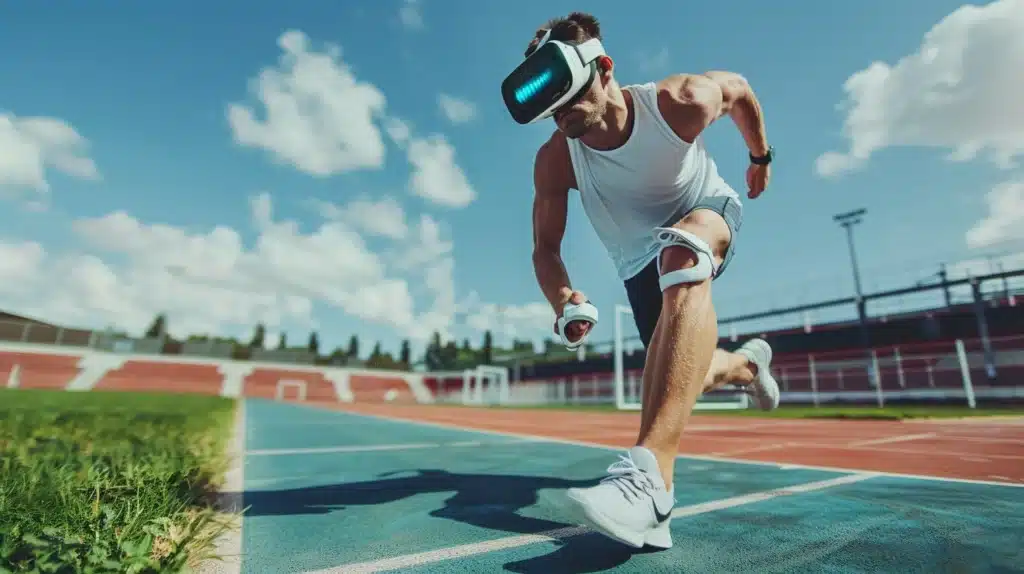
From smart wearables and AI-driven analytics to recovery technology and immersive training environments, sports are entering an era where performance is no longer measured only by what happens on the field. The modern athlete is increasingly surrounded by data, sensors and intelligent systems designed to reveal what the human eye cannot see. Coaches can track workload in real time medical teams can monitor recovery patterns and athletes can use technology to understand everything from movement efficiency to sleep quality.
This shift is transforming professional sport at almost every level. Technology is not replacing athletic talent; instead, it is giving athletes a more detailed understanding of their bodies, decisions and environments. As sports organizations invest heavily in sports science and digital innovation, the competitive advantage is increasingly connected to how effectively teams can turn information into better performance.
1. AI-Powered Performance Analytics
Artificial intelligence is becoming one of the most influential technologies in modern sports performance. Traditionally, coaches relied on match footage, statistics and personal observation to evaluate an athlete. Today, AI-powered sports analytics platforms can process enormous amounts of performance data and identify patterns that may be difficult for humans to recognize.
Computer vision systems can analyse player positioning, movement trajectories, acceleration, changes in direction and tactical behavior. In sports such as football, basketball and tennis, these systems can transform video footage into detailed performance data. Coaches can study how an athlete moves during high-pressure situations, where positioning mistakes occur and how tactical decisions affect the outcome of a play.
The real value of artificial intelligence in sports is not simply the volume of information it produces. It is the ability to turn complex information into actionable insights. An athlete may discover that a small change in positioning consistently creates better opportunities, while a coach might identify patterns showing when a player becomes less effective because of fatigue.
AI is also moving toward predictive performance analysis. Instead of simply explaining what happened, advanced systems can help estimate what could happen next. By combining historical performance, workload, opponent data and contextual information, teams can build more sophisticated strategies around training and competition.
This makes AI-powered performance analytics one of the most important emerging technologies in professional athletics. As algorithms become more sophisticated, sports teams will increasingly use artificial intelligence not just to analyse performance after an event, but to support decisions before and during competition.
2. Wearable Technology and Smart Athlete Tracking
Wearable technology has changed the way athletes monitor their physical performance. Devices such as GPS trackers, smart watches, heart-rate monitors and specialized biometric sensors can collect continuous information about movement and physiological responses.
For professional athletes, wearable sensors can measure metrics such as distance covered, sprint frequency, acceleration, deceleration, heart rate and training intensity. This information provides coaches and sports scientists with a clearer picture of how much stress an athlete is experiencing during training or competition.
One of the most important developments is the ability to monitor training load. Training too little may limit performance development, while training too aggressively can increase fatigue and injury risk. By analysing workload over time, sports performance teams can create more individualized training programs instead of applying the same routine to every athlete.
Wearables are also becoming increasingly sophisticated in consumer fitness. Modern devices can monitor sleep, heart-rate variability, recovery indicators and daily activity. While professional teams have access to more advanced systems, the underlying concept is spreading rapidly across amateur sports and everyday fitness.
The broader trend is toward personalized athletic performance. Instead of asking whether an athlete completed a particular workout, technology can help answer a more useful question: how did the athlete respond to that workout? That distinction is becoming increasingly important in data-driven sports training.
3. Advanced Recovery and Sports Medicine Technology
Elite performance is not simply about training harder. Recovery has become an essential part of the modern athlete’s performance strategy, and technology is playing a major role in understanding and improving it.
Sports organizations are increasingly using recovery technologies such as compression systems, cryotherapy, advanced massage devices, infrared-based treatments and recovery monitoring platforms. These technologies are designed to help athletes manage the physical demands associated with intense training and competition.
Perhaps more importantly, sports medicine is becoming increasingly data-driven. Medical and performance teams can combine information from wearable sensors, workload monitoring, sleep tracking and injury history to identify potential warning signs before a problem becomes serious.
This approach is particularly valuable because many sports injuries develop through a combination of factors rather than one isolated event. Changes in workload, insufficient recovery, fatigue and repetitive movement can all contribute to physical problems. Technology can help sports professionals identify unusual patterns and respond earlier.
Recovery technology is also becoming more personalized. Instead of treating recovery as a standardized routine, teams can increasingly tailor strategies according to an athlete’s workload, physical condition and competition schedule.
The result is a major change in sports culture. Recovery is no longer viewed simply as downtime between workouts. It is increasingly considered an active component of athletic development, supported by sports science, biometric monitoring and personalized recovery strategies.
4. Virtual Reality and Immersive Sports Training
Virtual reality is bringing a new dimension to athletic training by allowing athletes to practice situations without physically reproducing the entire environment.
In traditional training, athletes repeatedly perform drills on the field or court. Virtual reality can supplement this process by recreating specific game scenarios in a controlled digital environment. Athletes can practice decision-making, visual recognition and tactical responses without experiencing the same physical demands as a real match.
This can be particularly valuable in sports where reaction speed and decision-making are critical. A quarterback, for example, can repeatedly practice reading defensive formations. A football player can work on recognizing passing opportunities, while athletes in other sports can rehearse tactical situations that would otherwise require a full training session.
The technology also creates opportunities for repetition. An athlete can experience the same scenario multiple times, analyse the response and then repeat it with adjustments. This makes VR potentially useful not only for physical preparation but also for developing cognitive skills.
Another advantage is controlled exposure. Coaches can create specific situations that may be difficult to reproduce consistently during normal practice. As immersive technology improves, virtual environments can become increasingly realistic, giving athletes opportunities to train their perception and decision-making in highly targeted ways.
The future of sports training may therefore involve a combination of physical and virtual preparation. Athletes will still need real-world practice, but immersive technology can provide an additional layer of repetition, visualization and tactical development.
5. Smart Equipment and Connected Sports Gear
Sports equipment is also becoming smarter. From connected basketballs and intelligent footballs to sensor-equipped footwear and smart protective equipment, manufacturers are embedding technology directly into the products athletes use.
Smart equipment can collect information about movement, impact, technique and performance. For example, sensor-based footwear can provide insights into running mechanics, while connected equipment can help athletes understand aspects of technique that are difficult to evaluate through ordinary observation.
This technology is particularly interesting because it brings performance analysis closer to the athlete. Instead of relying entirely on a coach or specialist to interpret performance data, athletes can increasingly interact directly with information generated by their own equipment.
Smart equipment is also influencing injury prevention. Sensors embedded into helmets and protective gear can monitor impacts and provide valuable information about the forces experienced during competition. Although technology cannot eliminate injury risk, better information can support medical evaluation and more informed decisions around athlete safety.
The development of connected sports gear also reflects a wider trend across the sports industry: equipment is becoming part of an athlete’s digital ecosystem. Shoes, clothing, protective equipment, wearable devices and training platforms can increasingly work together to create a more complete picture of performance.
As sensor technology becomes smaller, cheaper and more accurate, smart equipment could become increasingly common beyond professional sport. What begins as high-performance technology for elite athletes often eventually becomes accessible to recreational players, runners and fitness enthusiasts.
The New Era of Data-Driven Athletic Performance
The biggest change brought by sports technology is not any single device or platform. It is the way different technologies are beginning to work together. A wearable device can collect physiological information, AI can analyse performance patterns, smart equipment can measure movement and recovery systems can help interpret how an athlete responds to training.
Together, these technologies are creating a much more detailed performance ecosystem. Instead of viewing athletic performance as a simple combination of strength, speed and skill, modern sports science increasingly treats it as a complex interaction between physical condition, technique, psychology, recovery, environment and decision-making.
This does not mean technology will make athletic talent irrelevant. Sport remains fundamentally human. Instinct, discipline, creativity, resilience and competitive mentality cannot simply be replaced by an algorithm. The purpose of technology is to give athletes and coaches better information so that human expertise can be applied more effectively.
There is also an important question surrounding the growing use of sports data: how much information is too much? Athletes may benefit from detailed monitoring, but constant measurement can also create pressure. Teams will need to balance data-driven optimization with the athlete’s personal experience and professional judgment.
The next generation of sports technology will likely focus on making this information more intelligent, personalized and accessible. AI systems may become better at connecting performance data with recovery patterns. Wearables may become less intrusive while collecting more accurate biometric information. Virtual environments may become increasingly realistic, and smart equipment may provide athletes with instant feedback during training.
The competitive advantage of the future may therefore belong not simply to the athlete with the most advanced technology, but to the athlete and team that know how to use it intelligently.
Sports have always evolved alongside technology, from better materials and improved footwear to advanced broadcasting and stadium infrastructure. Today, that evolution is happening inside the performance itself. The modern athlete is entering an era where every movement can be measured, every training session can be analysed and almost every aspect of preparation can be optimized.
The result is a new definition of athletic performance one where human ability and digital intelligence work together. And as sports technology continues to develop, the line between training, data science, sports medicine and innovation will become increasingly connected, reshaping how athletes prepare, compete and recover in the years ahead.