
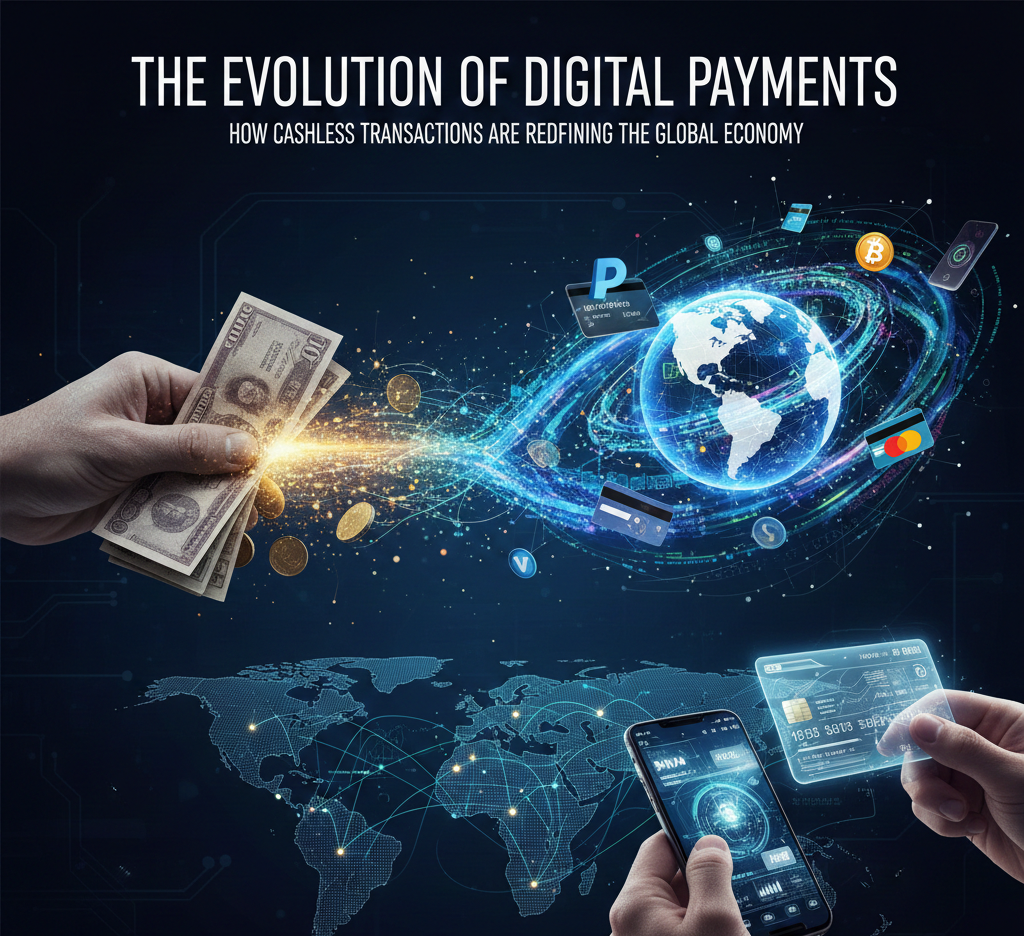
Digital payments have evolved from a niche convenience to a dominant force in global financial ecosystems. What began with online banking and credit cards has transformed into a vast network of mobile wallets, QR payments, real-time transfers, and cryptocurrency-enabled transactions. This transformation is reshaping how people shop, do business, manage money, and interact with financial institutions.
A Revolution Powered by Technology
The major catalyst behind digital payments has been the proliferation of smartphones. Over 6 billion people globally now carry mobile devices, effectively making every smartphone a mini bank. Apps such as Google Pay, PhonePe, Alipay, and Apple Pay have revolutionized how billions conduct everyday transactions.
Equally important is the rise of fintech companies innovators who challenged traditional banking norms by offering faster, cheaper, and more user-friendly solutions.
Financial Inclusion and Global Impact
In many developing countries, digital payments have served as a gateway to financial inclusion:
- Individuals without bank accounts can now receive government benefits through mobile payments.
- Rural populations can access digital loans and savings tools.
- Small merchants can accept payments without needing expensive POS systems.
Countries in Africa achieved massive success with platforms like M-Pesa, showing how digital finance can transform entire economies.
The Pandemic: A Global Turning Point
COVID-19 accelerated digital payment adoption by almost a decade. Restrictions on physical movement and concerns about virus transmission pushed both consumers and businesses toward contactless payments. The e-commerce industry boomed, and digital wallets saw unprecedented growth.
Governments also shifted toward digital systems to manage subsidies, relief funds, vaccination registrations, and tax services.
Rise of Real-Time Payments
Real-time payment systems are revolutionizing the global financial landscape:
- India’s UPI became a benchmark, processing billions of transactions monthly.
- Brazil’s PIX system saw rapid adoption soon after launch.
- Europe’s SEPA Instant Credit Transfer is expanding fast.
These systems reduce transfer delays, lower banking costs, and support global commerce.
Security Innovations
As digital payments rise, so do cybersecurity threats. But technological advancements are keeping pace:
- AI-powered fraud detection
- Biometric authentication
- Tokenization
- End-to-end encryption
These tools ensure that digital transactions remain safe and trusted.
Digital Currencies and CBDCs
One of the biggest developments in the financial world is the rise of central bank digital currencies (CBDCs). Over 100 countries are exploring digital versions of national currencies. CBDCs could:
- Reduce transaction costs
- Improve transparency
- Standardize international payment systems
- Reduce reliance on cash
Meanwhile, cryptocurrencies and blockchain technology continue influencing innovation, although regulations remain a challenge.
Empowering Small Businesses
Digital payment infrastructure enables small merchants to:
- Accept payments instantly
- Avoid cash management risks
- Access digital credit
- Build transaction histories for loans
This has been especially transformative in emerging economies.
Future of Digital Payments
The next decade will see:
- Biometric-only payments (fingerprint, face, voice)
- AI-driven financial advice
- Cross-border instant transfers
- Smart wearable payment devices
- Deeper integration with e-commerce and social media platforms
Digital payments are no longer just a trend they are the foundation of a global cashless economy.