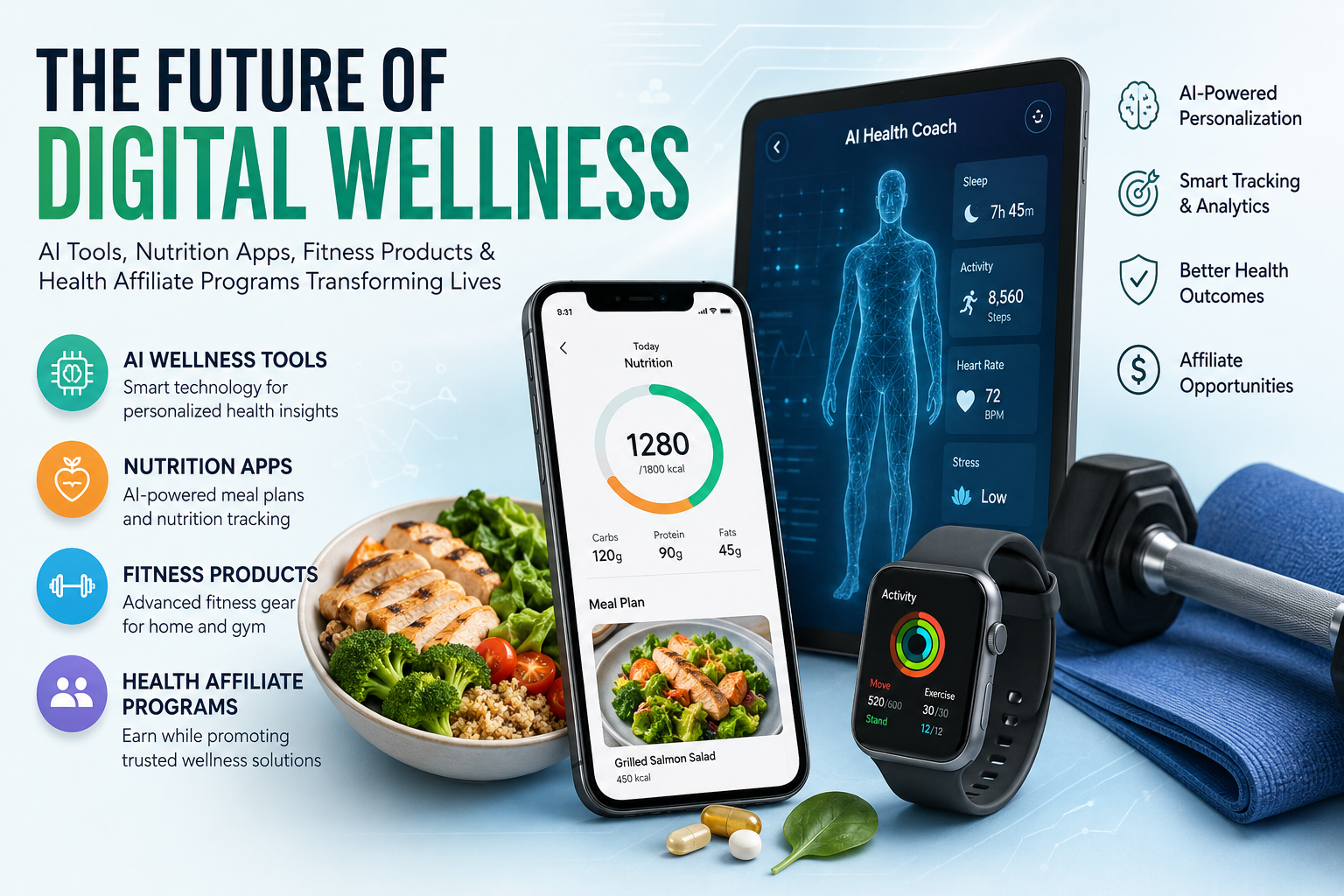
The global wellness industry is experiencing a major transformation driven by artificial intelligence, smart technology, and personalized healthcare solutions. Consumers are no longer satisfied with generic diet plans or one-size-fits-all fitness advice. Instead, people want customized wellness experiences that match their lifestyle, body type, health goals, and medical needs.
This growing demand has created massive opportunities for AI wellness tools, nutrition applications, fitness products, and health affiliate programs. From AI-powered meal planning to wearable fitness devices that track real-time biometrics, technology is redefining how people manage their physical and mental well-being.
As digital health adoption accelerates worldwide, businesses and content creators are also finding new monetization opportunities through health affiliate marketing and wellness partnerships. The combination of advanced health technology and digital marketing is shaping one of the most profitable industries of the decade.
The Rise of AI in the Wellness Industry
Artificial intelligence has become one of the most influential technologies in modern healthcare and wellness. AI systems can now analyse massive amounts of health data to provide personalized recommendations for nutrition, exercise, sleep, and stress management.
Unlike traditional wellness programs, AI-powered platforms continuously learn from user behaviour and biometric data. This allows them to create highly accurate health insights tailored to individual needs.
For example, AI nutrition platforms can evaluate factors such as:
- Age
- Gender
- Weight
- Activity level
- Medical history
- Food preferences
- Sleep patterns
- Metabolic response
Using this information, AI systems generate customized meal plans, calorie recommendations, hydration tracking, and nutrient optimization strategies.
The global AI healthcare market is projected to grow rapidly over the next decade as consumers increasingly rely on digital wellness solutions. Countries such as the United States, Canada, the United Kingdom, Australia, and Singapore are leading the adoption of AI-driven healthcare technology.
AI Wellness Tools Revolutionizing Healthcare
AI wellness tools are becoming essential for people seeking convenient and data-driven health solutions. These tools help users monitor their lifestyle habits while offering actionable recommendations for improvement.
1. AI Health Coaches
Virtual AI health coaches provide personalized guidance for exercise, diet, mental health, and productivity. These systems use machine learning algorithms to analyse user progress and adapt recommendations over time.
Popular features include:
- Daily wellness tracking
- Habit monitoring
- Stress management guidance
- Personalized fitness routines
- Sleep optimization suggestions
- Real-time health feedback
Many AI coaching platforms now integrate with smartphones and wearable devices to provide seamless health monitoring.
2. Smart Wearable Technology
Wearable fitness products are among the fastest-growing segments in digital wellness. Smartwatches, fitness trackers, and biometric sensors allow users to monitor critical health metrics in real time.
Modern wearables can track:
- Heart rate
- Blood oxygen levels
- Sleep quality
- Calories burned
- Stress levels
- Physical activity
- Recovery performance
Companies such as Apple, Fitbit, Garmin, and WHOOP continue to dominate the wearable fitness market with increasingly advanced technology.
These devices not only improve fitness tracking but also support preventive healthcare by identifying early warning signs of potential health problems.
3. AI Mental Wellness Platforms
Mental health technology has gained enormous popularity in recent years. AI-powered wellness apps now provide meditation programs, mood tracking, stress reduction exercises, and emotional support tools.
Many professionals and remote workers use AI wellness applications to manage anxiety, burnout, and work-related stress. As awareness of mental health increases globally, demand for digital mental wellness tools continues to rise.
Nutrition Apps Changing Eating Habits Worldwide
Nutrition apps are helping millions of people make healthier food choices through personalized guidance and intelligent tracking systems. These applications combine AI technology, food databases, and behavioural analytics to improve dietary habits.
Personalized Meal Planning
One of the biggest advantages of modern nutrition apps is personalized meal planning. Instead of generic diets, users receive meal recommendations based on:
- Weight-loss goals
- Fitness objectives
- Allergies
- Dietary restrictions
- Health conditions
- Nutrient deficiencies
AI algorithms continuously optimize meal plans based on user feedback and progress.
Calorie and Macronutrient Tracking
Nutrition apps simplify calorie counting and nutrient monitoring. Users can scan barcodes, log meals, and receive detailed nutritional breakdowns instantly.
Advanced apps also provide insights into:
- Protein intake
- Carbohydrate balance
- Healthy fats
- Fiber consumption
- Vitamin levels
- Hydration tracking
This data helps users maintain healthier eating habits while improving long-term wellness outcomes.
Integration with Fitness Platforms
Many nutrition applications integrate directly with fitness trackers and exercise apps. This creates a complete wellness ecosystem where users can monitor both physical activity and nutrition from a single dashboard.
The integration of AI nutrition tools with wearable technology represents a major advancement in personalized healthcare.
Fitness Products Driving the Home Wellness Economy
The global fitness industry has evolved significantly with the rise of home workouts, smart gym equipment, and connected fitness ecosystems.
Consumers increasingly invest in fitness products that offer convenience, flexibility, and personalized training experiences.
Smart Home Fitness Equipment
Connected fitness devices have transformed home exercise routines. Products such as smart treadmills, AI-powered exercise bikes, and interactive fitness mirrors provide guided workouts and performance tracking.
Features commonly include:
- Live coaching
- AI workout recommendations
- Real-time performance analysis
- Virtual classes
- Recovery monitoring
- Personalized fitness plans
This technology allows users to access professional-level fitness experiences from home.
Recovery and Wellness Products
Recovery-focused fitness products are also gaining popularity among athletes and health-conscious consumers. Examples include:
- Massage guns
- Compression therapy devices
- Infrared saunas
- Cold therapy equipment
- Smart sleep systems
These products support muscle recovery, stress reduction, and overall physical wellness.
Personalized Fitness Experiences
AI fitness platforms now adapt workouts based on user performance, recovery status, and fitness goals. This personalized approach improves exercise effectiveness while reducing injury risk.
As technology continues to evolve, fitness products are becoming more intelligent, interactive, and data-driven.
The Growth of Health Affiliate Programs
Health affiliate marketing has emerged as one of the most profitable digital business models in the wellness industry. Affiliate programs allow content creators, bloggers, influencers, and marketers to earn commissions by promoting health-related products and services.
Why Health Affiliate Marketing Is Growing
Several factors contribute to the rapid growth of health affiliate programs:
- Increasing global health awareness
- Rising demand for wellness products
- Growth of e-commerce healthcare platforms
- Expansion of subscription-based wellness services
- Popularity of fitness and nutrition apps
Consumers actively search online for trusted health recommendations before making purchasing decisions. This creates strong opportunities for affiliate marketers who produce valuable health content.
Popular Health Affiliate Categories
High-performing health affiliate niches include:
AI Wellness Platforms
AI health coaching apps and digital wellness subscriptions often provide recurring commissions for affiliates.
Nutrition and Supplement Brands
Nutrition companies offer affiliate partnerships for vitamins, supplements, protein products, and meal replacement programs.
Fitness Equipment
Smart fitness products and home gym equipment generate high affiliate payouts due to premium product pricing.
Mental Wellness Apps
Meditation and stress-management platforms increasingly use affiliate marketing to expand their customer base.
Benefits for Content Creators
Health affiliate programs provide several advantages:
- Passive income opportunities
- Recurring monthly commissions
- High-demand products
- International audience reach
- Multiple monetization channels
Bloggers and health publishers can combine affiliate marketing with SEO-driven content strategies to generate long-term revenue.
The Importance of Data Privacy in Digital Health
As AI wellness tools collect increasing amounts of personal health data, privacy and security concerns have become critical issues.
Consumers want assurance that their health information remains protected. Companies operating in the digital wellness industry must comply with strict data protection regulations such as:
- GDPR in Europe
- HIPAA in the United States
- International cybersecurity standards
Transparency, encryption, and ethical AI practices are essential for maintaining consumer trust in digital healthcare platforms.
The Future of Personalized Wellness
The future of health technology will likely focus on deeper personalization, predictive analytics, and integrated wellness ecosystems.
Emerging innovations may include:
- AI-generated preventive healthcare plans
- Real-time metabolic monitoring
- Personalized supplement recommendations
- Virtual health assistants
- Advanced biometric tracking
- Digital twin healthcare modeling
As artificial intelligence becomes more sophisticated, wellness platforms will offer increasingly accurate and individualized health solutions.
The integration of AI with healthcare, nutrition, fitness, and mental wellness represents a major shift toward preventive and proactive healthcare models.
Conclusion
AI wellness tools, nutrition apps, fitness products, and health affiliate programs are rapidly transforming the global healthcare landscape. Consumers now have access to highly personalized digital wellness solutions that improve convenience, health awareness, and lifestyle management.
At the same time, businesses and content creators are capitalizing on the growing demand for digital health products through affiliate marketing and online wellness platforms.
As technology continues to evolve, the digital wellness economy is expected to become one of the most influential sectors in global healthcare. Companies that prioritize personalization, data security, and evidence-based health solutions will likely lead the future of modern wellness.
The combination of artificial intelligence and personalized healthcare is not only changing how people stay healthy but also redefining the future of preventive medicine worldwide.