For years, wearable technology was defined by one simple idea: tracking. Smartwatches counted steps, fitness bands monitored heart rate, and smart rings measured sleep patterns. These devices became digital companions that helped users understand basic aspects of their health and fitness.
But the wearable industry is entering a much bigger transformation.
Wearables were only the beginning. The next phase is not about creating better devices; it is about building an intelligent health ecosystem that can understand human behavior, predict health patterns, and provide personalized guidance in real time.
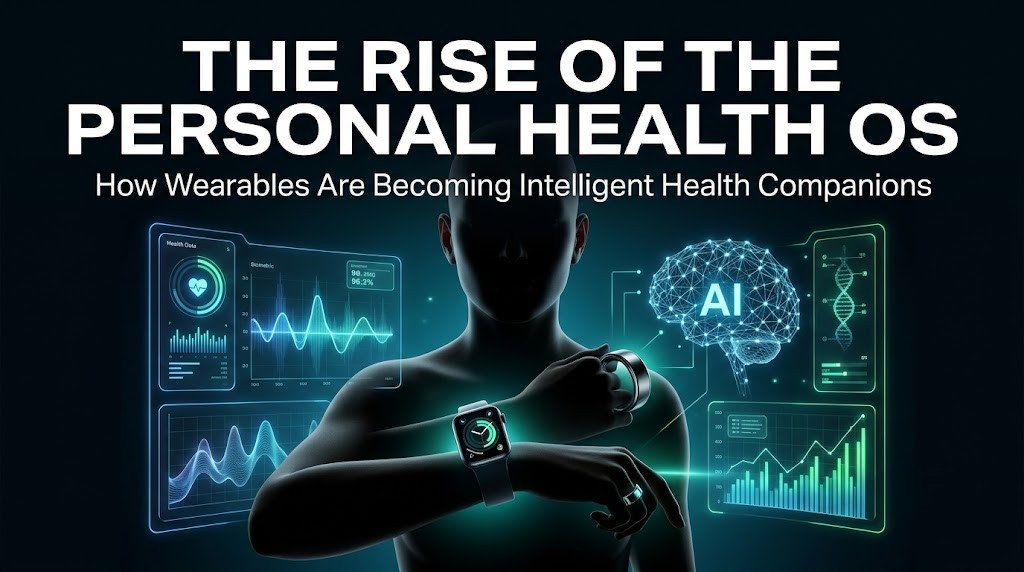
The future of wearable technology is moving toward the creation of a Personal Health Operating System (Personal Health OS) a connected intelligence layer that collects, analyses, and transforms personal health data into meaningful actions.
The device itself is becoming less important. The real value lies in the intelligence behind it.
From Fitness Tracking to Continuous Health Intelligence
The first generation of wearables focused on activity tracking. Users wanted to know how many steps they walked, how many calories they burned, or how long they slept. These features helped millions of people become more aware of their daily habits.
However, health is much more complex than counting steps.
Modern wearables are evolving into advanced health monitoring platforms capable of collecting thousands of data points every day. Heart rate variability, blood oxygen levels, sleep cycles, stress patterns, body temperature changes, and recovery metrics are becoming part of a continuous health profile.
Instead of looking at isolated measurements, the next generation of wearable technology focuses on understanding patterns over time.
A single heart rate reading may not reveal much. But months or years of health data can reveal changes in fitness, stress, recovery, and potential health risks.
This shift from temporary measurements to long-term intelligence is creating a completely new category of digital healthcare.
The Real Product Is Not the Device — It Is the Intelligence Layer
The biggest change in wearable technology is that hardware is slowly moving into the background.
Smartwatches, rings, and sensors are becoming tools for collecting information. The real competitive advantage will come from artificial intelligence systems that can interpret this information and deliver personalized recommendations.
Imagine a wearable system that understands when your sleep quality is declining, identifies increased stress levels, notices changes in your recovery patterns, and suggests lifestyle adjustments before problems become serious.
This is where artificial intelligence becomes the foundation of personal healthcare.
AI can analyse massive amounts of individual health data and identify connections that humans may miss. Instead of providing simple statistics, future wearable platforms will provide context.
The question will no longer be “How many hours did I sleep?”
The question will become “Why is my sleep quality changing, and what should I do about it?”
Apple, Oura, Whoop, Garmin, Fitbit, and Samsung Are Building the Health Ecosystem
The competition in wearable technology is no longer just about selling smartwatches or fitness trackers.
Companies are competing to create complete health ecosystems where devices, software, artificial intelligence, healthcare services, and personalized recommendations work together.
Apple has positioned the Apple Watch as a health-focused platform rather than just a smartwatch. Features such as heart monitoring, fitness tracking, and health integrations show how wearable devices are becoming part of everyday healthcare management.
Oura Ring has focused on passive health tracking through its smart ring technology, particularly in areas such as sleep, readiness, and recovery insights.
Whoop has built its identity around performance, recovery, and athlete-focused health analytics. Instead of focusing only on activity, Whoop emphasizes understanding how the body responds to training and stress.
Garmin continues to expand its presence in sports and outdoor health tracking, offering advanced performance metrics for athletes and fitness enthusiasts.
Fitbit helped popularize consumer fitness tracking and continues to contribute to the broader health data ecosystem.
Samsung is also investing heavily in connected health experiences through smartwatches, sensors, and AI-powered health features.
While these companies approach the market differently, they share the same vision: becoming the central platform where personal health information is collected, understood, and transformed into action.
Wearables Are Connecting Healthcare, Wellness, and Sports
The future of wearable technology is not limited to fitness enthusiasts.
The industry is moving toward a broader ecosystem that connects multiple areas of human health.
In healthcare, continuous health monitoring could help doctors understand patient conditions beyond occasional medical appointments. Instead of relying only on periodic checkups, healthcare providers may eventually use long-term health data to make more informed decisions.
In wellness, AI-powered platforms can provide personalized recommendations related to sleep, nutrition, stress management, and lifestyle improvement.
In sports, wearable technology is already changing how athletes train. Professional teams use performance data to optimize recovery, prevent injuries, and improve decision-making.
The boundaries between healthcare, fitness, and wellness are becoming increasingly connected.
A fitness tracker is no longer just a fitness product. It is becoming part of a larger personal health infrastructure.
Longitudinal Health Data Is Becoming the New Competitive Advantage
One of the most valuable assets in future healthcare technology will be longitudinal health data.
Unlike traditional medical records that capture limited moments in time, wearable devices create continuous streams of information.
This creates a detailed picture of how an individual’s health changes over months and years.
Companies that can collect, analyse, and protect this data will have a significant advantage.
The power is not only in collecting information but in understanding relationships between different health signals.
For example, changes in sleep patterns combined with activity levels, stress indicators, and recovery data could help create personalized health recommendations.
This long-term understanding of the human body could transform preventive healthcare.
Instead of reacting to illness after symptoms appear, technology could help identify risks earlier and encourage healthier behaviour.
AI Coaching and Personalized Healthcare Are the Next Frontier
The combination of wearable technology and artificial intelligence is creating a new form of digital coaching.
Future wearable platforms may act like personal health assistants that understand individual goals, habits, and biological patterns.
For one person, the system might focus on improving sleep. For another, it may prioritize fitness performance, stress management, or chronic condition monitoring.
AI-powered health coaching could make personalized guidance available to millions of people without requiring constant human supervision.
This does not mean replacing doctors or healthcare professionals. Instead, wearable intelligence can support better decision-making by providing more complete information.
The relationship between technology and healthcare is shifting from occasional interaction to continuous support.
Challenges: Privacy, Accuracy, and Trust
Despite the enormous potential, the growth of Personal Health OS platforms comes with important challenges.
Health data is among the most sensitive information people generate. As companies collect more personal information, privacy and security will become major concerns.
Consumers will need transparency about how their health data is collected, stored, and used.
Accuracy is another important challenge. Wearable devices are improving rapidly, but they are not perfect replacements for medical equipment. Users and companies must understand the difference between wellness insights and clinical diagnosis.
Building trust will be essential for the future success of wearable healthcare technology.
The Future of Wearables Is Invisible Intelligence
The next era of wearable technology will not be defined by bigger screens, better designs, or more sensors.
It will be defined by intelligence.
The most successful wearable companies will not simply create devices that track health. They will create platforms that understand people.
The future Personal Health OS will combine wearable sensors, artificial intelligence, healthcare services, digital coaching, and personalized recommendations into one connected ecosystem.
The wearable wars have moved beyond devices.
The real competition is about who can build the smartest, most trusted, and most useful health intelligence platform for everyday life.
Wearables started as fitness accessories.
They are becoming something much bigger the foundation of a new era of personalized, proactive, and intelligent healthcare.