
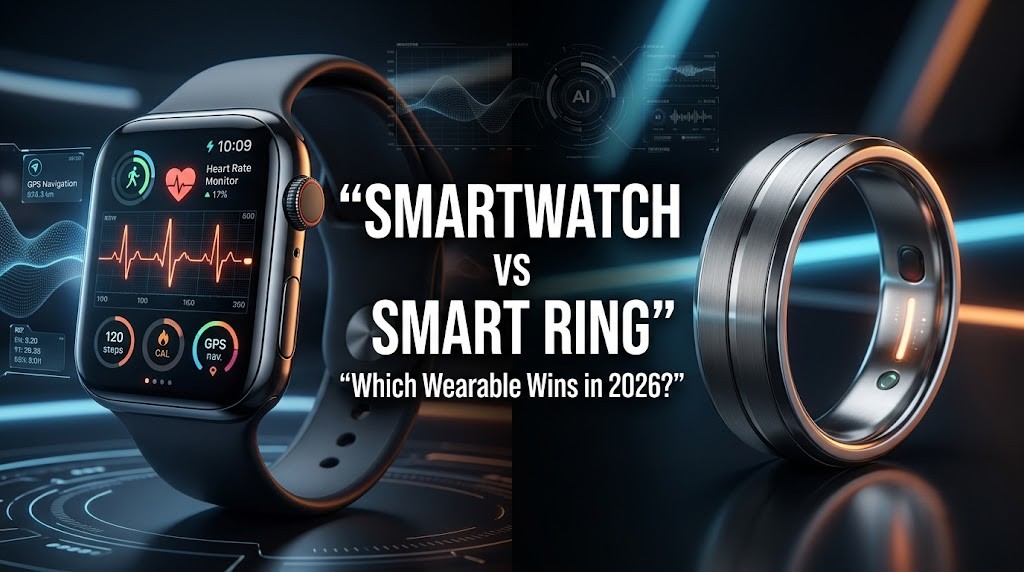
The Rise of Wearable Technology
Wearable technology has transformed the way people interact with their health, fitness, and digital lives. A decade ago, smartwatches were considered futuristic gadgets that mainly displayed notifications and counted steps. Today, they have evolved into sophisticated health companions capable of monitoring heart rate, blood oxygen levels, sleep quality, stress, workouts, and even detecting irregular heart rhythms.
Now, a new contender has entered the wearable market: the smart ring. Compact, stylish, and surprisingly powerful, smart rings are becoming increasingly popular among professionals, athletes, and everyday users who want health tracking without wearing a large device on their wrist.
As more companies invest in wearable innovation, consumers are asking one important question: Should you buy a smartwatch or a smart ring?
The answer depends on your lifestyle, priorities, and expectations. While both devices offer impressive features, they serve different purposes. This guide compares smartwatches and smart rings across design, health tracking, battery life, comfort, productivity, pricing, and overall value to help you decide which wearable deserves a place in your daily routine.
What Is a Smartwatch?
A smartwatch is essentially an extension of your smartphone that sits on your wrist. Besides telling time, modern smartwatches allow users to receive calls, reply to messages, monitor workouts, navigate with GPS, stream music, make payments, and track various health metrics.
Over the years, smartwatches have become multifunctional devices suitable for professionals, fitness enthusiasts, and outdoor adventurers. Their larger displays make interaction easier, allowing users to access apps, notifications, calendars, maps, and voice assistants directly from their wrists.
For many users, a smartwatch replaces the need to constantly check their phones, making it both a productivity and wellness device.
What Is a Smart Ring?
A smart ring is a miniature wearable packed with advanced sensors inside a ring-shaped body. Unlike smartwatches, smart rings focus primarily on health monitoring rather than communication or entertainment.
Despite their tiny size, smart rings can measure sleep quality, heart rate, body temperature, stress levels, recovery, activity, and readiness scores with impressive accuracy.
Because they have no large screen, smart rings rely on smartphone apps to display detailed insights and historical trends. Their discreet appearance makes them ideal for users who prefer minimalistic accessories while still benefiting from continuous health tracking.
As wearable technology becomes smaller and more efficient, smart rings are quickly gaining popularity among users who value comfort and simplicity.
Design and Everyday Comfort
One of the biggest differences between smartwatches and smart rings is how they feel during daily use.
Smartwatches are larger devices that remain visible throughout the day. While modern designs have become slimmer and lighter, some users still find them bulky, especially while sleeping or wearing formal clothing.
Smart rings, on the other hand, feel almost identical to traditional rings after a short adjustment period. Since they occupy very little space, they rarely interfere with typing, sleeping, or exercising.
Many professionals appreciate that smart rings blend naturally with business attire without attracting attention. They also avoid the “tech gadget” appearance that some users associate with smartwatches.
For users prioritising discreet wearability, smart rings clearly have the advantage.
Health Tracking Accuracy
Health monitoring has become the primary reason many consumers purchase wearable devices.
Both smartwatches and smart rings track important health metrics, including heart rate, sleep, activity, calories burned, and stress.
However, the way they collect data differs.
Since smart rings fit snugly around the finger, where blood vessels are closer to the skin, they often provide highly consistent heart rate readings, especially during sleep.
Smartwatches, meanwhile, benefit from having more sensors and additional technologies such as ECG monitoring, blood oxygen measurement, skin temperature sensing, fall detection, and workout-specific tracking.
For athletes, runners, cyclists, and gym enthusiasts, smartwatches generally offer more comprehensive fitness data.
For users mainly interested in sleep quality, recovery, and overall wellness, smart rings perform exceptionally well.
Sleep Tracking
Sleep tracking is one area where smart rings have earned widespread recognition.
Many users dislike sleeping while wearing a smartwatch because of its size and weight. Smart rings are significantly smaller, making overnight wear much more comfortable.
Because they remain securely fitted throughout the night, smart rings often produce highly detailed sleep reports, including:
- Deep sleep
- REM sleep
- Light sleep
- Sleep efficiency
- Night-time heart rate
- Recovery scores
Smartwatches also provide sleep monitoring, but their larger design can sometimes reduce comfort for overnight wear.
If sleep optimisation is your primary goal, a smart ring may be the better investment.
Fitness and Workout Tracking
When it comes to exercise, smartwatches remain the clear winner.
They support dozens of workout modes, including:
- Running
- Swimming
- Cycling
- Hiking
- Strength training
- Yoga
- HIIT
- Rowing
- Skiing
- Golf
Many models include built-in GPS, allowing runners and cyclists to leave their phones at home while accurately recording routes, pace, distance, and elevation.
Smart rings can count steps and estimate activity levels, but they generally lack detailed workout metrics and real-time exercise displays.
For serious fitness enthusiasts, smartwatches provide a far richer workout experience.
Notifications and Productivity
A smartwatch acts as a miniature smartphone.
Users can receive:
- Calls
- Text messages
- Emails
- Calendar reminders
- Navigation alerts
- Social media notifications
- Voice assistant responses
Many models even allow users to answer calls, dictate messages, control smart home devices, and make contactless payments.
Smart rings do not offer these communication features. Most focus exclusively on health monitoring, leaving smartphone interactions to other devices.
Professionals who rely on quick notifications throughout the day will benefit more from a smartwatch.
Battery Life
Battery performance varies significantly between these wearables.
Most smartwatches last between one and three days before requiring charging, depending on GPS usage, display brightness, and health monitoring frequency.
Some premium sports watches can last considerably longer, especially in battery-saving modes.
Smart rings generally consume much less power because they lack large displays and constant interaction. Many models comfortably last between five and seven days on a single charge, with some lasting even longer depending on usage.
Users who dislike frequent charging may find smart rings more convenient for everyday wear.
Style and Fashion
Wearables have become fashion accessories as much as technology products.
Smartwatches offer customisable watch faces, interchangeable straps, and different case materials, allowing users to match their style with various outfits.
However, they remain clearly recognisable as electronic devices.
Smart rings are considerably more discreet. Available in finishes such as titanium, silver, black, and gold, they resemble premium jewellery rather than gadgets.
For individuals seeking subtle wearable technology that complements formal or professional clothing, smart rings often provide a more elegant appearance.
Price Comparison
Pricing varies widely depending on features and brand.
Entry-level smartwatches are generally more affordable, making them accessible to first-time wearable buyers. Premium models with advanced health tracking, cellular connectivity, and durable materials command higher prices.
Smart rings typically occupy the premium segment because of their miniaturised technology and specialised health sensors. Some also require a subscription to unlock advanced health analytics and personalised insights, increasing long-term ownership costs.
Before purchasing, buyers should consider both the initial device price and any ongoing subscription fees.
Who Should Buy a Smartwatch?
A smartwatch is the better choice if you:
- Want a device for communication as well as health tracking.
- Exercise regularly and need advanced workout metrics.
- Prefer GPS navigation during outdoor activities.
- Like controlling music, calls, and notifications from your wrist.
- Need productivity features throughout the working day.
For active lifestyles and multitasking, a smartwatch remains the most versatile wearable available.
Who Should Buy a Smart Ring?
A smart ring is ideal if you:
- Prioritise sleep and recovery tracking.
- Prefer discreet wearable technology.
- Dislike wearing bulky devices.
- Want longer battery life.
- Already own a smartwatch but seek more comfortable overnight health monitoring.
Minimalists and wellness-focused users often find smart rings to be an excellent companion.
Can You Use Both Together?
Interestingly, many users no longer choose between the two—they use both.
A smartwatch is worn during workouts, commuting, and working hours to access notifications, GPS, and fitness tracking.
The smart ring takes over during evenings and sleep, continuously monitoring recovery, heart rate, stress, and sleep quality without causing discomfort.
This combination offers comprehensive health insights while maximising comfort and functionality.
Although purchasing both devices represents a greater investment, it delivers the most complete wearable experience for users deeply interested in personal health data.
Smartwatch vs Smart Ring: Quick Comparison
| Feature | Smartwatch | Smart Ring |
| Display | Large touchscreen | No display |
| Notifications | Excellent | Limited |
| Calls & Messages | Yes | No |
| GPS | Usually included | Rare |
| Workout Tracking | Excellent | Basic |
| Sleep Tracking | Very good | Excellent |
| Comfort | Moderate | Excellent |
| Battery Life | 1–3 days | 5–7 days |
| Fashion | Sporty and customisable | Minimal and elegant |
| Best For | Fitness, productivity, communication | Wellness, sleep, recovery |
Final Verdict: Which One Is Better?
There is no universal winner because smartwatches and smart rings are designed with different priorities in mind.
If your daily routine revolves around workouts, productivity, navigation, communication, and app functionality, a smartwatch offers significantly more versatility. It acts as a powerful extension of your smartphone while delivering comprehensive fitness tracking.
On the other hand, if your primary focus is improving sleep, monitoring recovery, reducing distractions, and wearing technology that blends seamlessly into your lifestyle, a smart ring is an outstanding choice. Its comfort, long battery life, and discreet design make it one of the most appealing wearable innovations available today.
Ultimately, the best wearable is the one that fits naturally into your daily habits. A smartwatch excels as an all-in-one digital companion, while a smart ring shines as a specialised health and wellness tracker. As wearable technology continues to evolve, both devices are likely to become even more intelligent, accurate, and interconnected, giving users more personalised insights than ever before.