
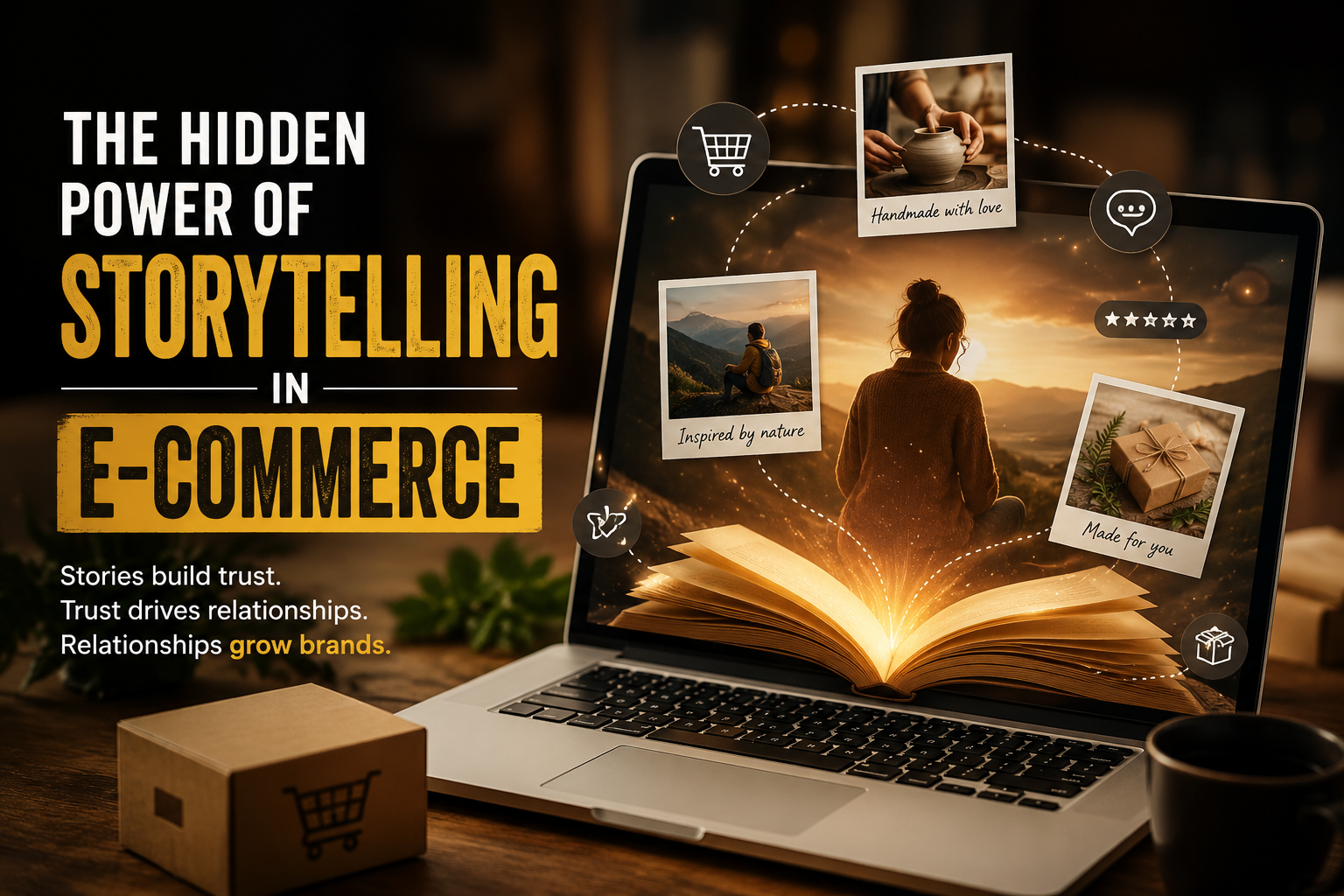
In the early days of e-commerce, online shopping was mostly about convenience. Consumers visited websites to compare prices, check reviews, and buy products quickly. Businesses focused on speed, discounts, and inventory. But today, the digital marketplace has become far more crowded and competitive. Thousands of brands may sell similar products at nearly identical prices, making it difficult for businesses to stand out through functionality alone.
This is where storytelling has become one of the most powerful tools in e-commerce.
Modern consumers do not simply buy products. They buy meaning, identity, emotion, and experience. A product can solve a practical problem, but a compelling story gives that product emotional value. Storytelling transforms ordinary items into memorable brands and turns one-time buyers into loyal communities.
From fashion startups to global technology companies, storytelling now plays a central role in online commerce. The brands that understand this are not only selling products they are creating narratives that customers want to become part of.
Why Storytelling Matters in E-commerce
Unlike physical stores, online shopping lacks face-to-face interaction. Customers cannot touch the product, speak directly with sales staff, or experience the atmosphere of a store. This creates a trust gap between businesses and consumers.
Storytelling helps bridge that gap.
A strong brand story humanizes an online business. It gives customers a reason to trust the company beyond product specifications and advertisements. Stories create emotional engagement, and emotional engagement strongly influences purchasing decisions.
Research in consumer psychology consistently shows that people remember stories more than facts. A customer may forget technical details about a product, but they are likely to remember how a brand made them feel.
For example, two companies may sell identical handmade candles. One simply lists scents and prices. The other shares the founder’s journey of creating candles inspired by childhood memories and family traditions. Even if the products are similar, the second brand feels more personal and meaningful.
That emotional connection often becomes the deciding factor.
Storytelling Creates Brand Identity
In crowded digital markets, products are easy to copy. Stories are not.
A brand’s story becomes part of its identity. It explains why the company exists, what it believes in, and what makes it different from competitors. Consumers increasingly prefer brands with clear values and authentic personalities.
This is especially important for smaller businesses and independent creators. They may not have massive advertising budgets, but storytelling allows them to compete through authenticity and relatability.
Successful e-commerce brands often communicate:
- The origin of the business
- The mission behind the products
- The challenges faced during growth
- The people involved in production
- The values the brand represents
These elements make a business feel real instead of corporate and distant.
For example, sustainable fashion brands often tell stories about ethical sourcing, environmental impact, and responsible manufacturing. Customers are not only purchasing clothing; they are supporting a larger mission.
In this way, storytelling transforms commerce into participation.
The Emotional Psychology Behind Buying
Most purchasing decisions are emotional first and logical second.
People often justify purchases using logic, but emotion usually drives the initial interest. Storytelling activates emotions such as nostalgia, ambition, excitement, trust, belonging, or inspiration.
Luxury brands understand this extremely well. They rarely market products purely based on features. Instead, they sell lifestyles, aspirations, and identity.
A watch company may not simply advertise timekeeping accuracy. It may tell stories about achievement, legacy, and confidence. A fitness brand may focus less on clothing materials and more on transformation, discipline, and self-improvement.
This emotional framing increases perceived value.
Customers are often willing to pay more for products connected to meaningful narratives because stories make products feel unique and personal. This is why branding frequently matters as much as product quality in e-commerce success.
Social Media and the Rise of Narrative Commerce
Social media has accelerated the importance of storytelling in online business.
Platforms like Instagram, TikTok, YouTube, and Pinterest reward brands that create engaging narratives rather than simple advertisements. Consumers increasingly expect brands to share behind-the-scenes content, founder journeys, customer experiences, and authentic moments.
This shift has created what many marketers call “narrative commerce.”
In narrative commerce, content itself becomes part of the shopping experience. Instead of directly pushing products, brands build emotional relationships through continuous storytelling.
For example:
- A skincare company documents real customer journeys.
- A coffee brand shares stories from farmers and sourcing locations.
- A startup founder posts daily struggles and progress online.
- A handmade jewellery brand explains the inspiration behind each design.
These stories create familiarity and trust over time.
Consumers begin to feel emotionally connected to the people behind the brand, making them more likely to support the business repeatedly.
Customer Stories Are More Powerful Than Advertisements
One of the most effective forms of storytelling in e-commerce comes from customers themselves.
User-generated content, testimonials, reviews, and customer experiences often influence buying decisions more than traditional advertising. Modern consumers trust real people more than polished marketing campaigns.
When customers share how a product improved their lives or solved a problem, they create authentic social proof.
For instance:
- A fitness customer sharing a transformation journey
- A parent explaining how a product simplified daily life
- A small business owner describing how software improved operations
These narratives feel relatable and believable because they come from genuine experiences.
Brands that encourage customer storytelling often build stronger communities and higher engagement. Instead of talking at customers, they allow customers to become part of the brand narrative.
This shift from audience to community is one of the biggest changes in modern e-commerce.
Storytelling Builds Long-Term Loyalty
Price competition alone rarely creates loyalty.
If customers choose a business only because it is cheaper, they may quickly switch to another company offering a better discount. But storytelling creates emotional attachment that goes beyond price.
People stay loyal to brands that reflect their identity or values.
Apple users, for example, are often loyal not only because of product performance but because Apple’s storytelling emphasizes creativity, innovation, and simplicity. Similarly, outdoor brands like Patagonia attract customers through stories about environmental activism and adventure culture.
When customers emotionally identify with a brand, they become advocates rather than just buyers.
They recommend products to friends, share content online, and continue supporting the business over time. This type of loyalty is far more valuable than short-term sales generated through aggressive advertising.
The Role of Authenticity
While storytelling is powerful, modern consumers are highly sensitive to inauthentic marketing.
People can quickly recognize when brands create artificial emotional narratives purely for profit. Forced storytelling often damages trust rather than building it.
Authenticity has therefore become essential.
Authentic storytelling includes:
- Honest communication
- Transparency about challenges
- Real customer experiences
- Consistent brand values
- Genuine emotional connection
Brands that admit mistakes, show real processes, and communicate openly often appear more trustworthy than those presenting unrealistic perfection.
This is particularly important in the age of social media, where consumers can directly interact with brands and publicly discuss their experiences.
Trust is now built through openness rather than polished corporate messaging alone.
Small Businesses Have a Unique Advantage
Interestingly, storytelling gives small businesses an advantage over large corporations.
Big companies may have greater resources, but smaller brands often feel more personal and relatable. Customers enjoy supporting businesses with visible founders, authentic missions, and human stories.
Independent creators, artists, and entrepreneurs can use storytelling to build highly engaged niche communities.
For example:
- A ceramic artist sharing the handmade process
- A baker documenting recipe passed through generations
- A designer explaining cultural inspirations behind products
These narratives create emotional depth that mass-market brands often struggle to replicate.
This is one reason why many consumers increasingly prefer independent brands over generic large-scale retailers.
The Future of Storytelling in E-commerce
As artificial intelligence, automation, and digital advertising continue evolving, storytelling may become even more important.
Technology makes products easier to replicate and marketing easier to automate. But human connection remains difficult to duplicate. Stories create emotional resonance that algorithms alone cannot replace.
Future e-commerce success will likely depend not only on logistics and pricing but also on the ability to create meaningful brand experiences.
Interactive storytelling, creator-led brands, immersive content, and community-driven commerce are already reshaping the digital economy. Consumers no longer want purely transactional relationships with businesses. They want connection, identity, and participation.
The brands that understand this shift are building deeper loyalty and stronger long-term growth.
Conclusion
Storytelling is no longer a secondary marketing strategy in e-commerce it has become a core business advantage.
In a world where consumers are overwhelmed with choices, stories help brands stand out, build trust, and create emotional connections. They transform ordinary products into meaningful experiences and customers into loyal communities.
The hidden power of storytelling lies in its ability to make commerce human. While technology continues changing the mechanics of online shopping, human emotions still drive decision-making.
People may buy products for practical reasons, but they remember brands because of the stories those brands tell.
In the future of e-commerce, businesses that master storytelling will not simply sell more products. They will build stronger identities, deeper relationships, and lasting cultural relevance.