MotoGP is widely regarded as the pinnacle of motorcycle racing an elite championship where engineering brilliance meets human courage. It represents the fastest, most technically advanced, and most demanding form of two-wheeled motorsport. But MotoGP didn’t become a global spectacle overnight. Its journey spans more than seven decades, shaped by innovation, rivalry, and the relentless pursuit of speed.
This article explores the history, evolution, and transformation of MotoGP from its modest beginnings in the post-war era to the cutting-edge, technology-driven championship we witness today.
1. The Origins of Motorcycle Grand Prix Racing (1949–1960s)
MotoGP traces its roots to the Fédération Internationale de Motocyclisme (FIM), which organized the first official Grand Prix Road Racing World Championship in 1949. It was the first motorsport world championship ever created, even predating Formula 1.
1.1 Early Categories and Structure
The original championship featured multiple classes based on engine sizes:
- 500cc (the premier class)
- 350cc
- 250cc
- 125cc
- Sidecars (600cc)
Races were held on public road circuits dangerous, narrow, and unprotected by modern standards. Tracks like the Isle of Man TT, Ulster Grand Prix, and Spa-Francorchamps were part of the early calendar.
1.2 Early Manufacturers
European manufacturers dominated the early years:
- Norton (UK)
- Gilera (Italy)
- MV Agusta (Italy)
- AJS (UK)
- Moto Guzzi (Italy)
These companies were pioneers of speed, experimenting with multi-cylinder engines and lightweight frames.
1.3 The Era of MV Agusta Dominance
The 1950s and 1960s belonged to MV Agusta, led by legendary rider Giacomo Agostini, who won 15 world championships, many of them aboard MV’s revolutionary multi-cylinder machines. This period set the foundation for competitive factory involvement and technological innovation.
2. Japanese Revolution and Technological Leap (1960s–1980s)
The late 1950s and early 1960s brought a major turning point: Japan entered the sport.
2.1 The Arrival of Japanese Manufacturers
Brands like:
- Honda
- Yamaha
- Suzuki
- Kawasaki
transformed the landscape with lightweight two-stroke machines and reliable engineering.
Honda’s philosophy was clear: “We will win on Sunday, sell on Monday.”
2.2 Two-Stroke vs. Four-Stroke Wars
Honda initially preferred four-stroke engines, believing in efficiency and reliability. However, rival manufacturers gained huge advantages with powerful two-stroke technology.
This resulted in:
- Higher RPMs
- Better power-to-weight ratios
- Greater top speeds
By the 1970s, two-stroke engines dominated the premier class.
2.3 Legendary Riders Reshaping the Sport
The 1970s and 1980s produced global icons:
- Kenny Roberts Sr. (USA): Introduced modern racing techniques like knee-down cornering.
- Barry Sheene (UK): A charismatic champion.
- Wayne Rainey and Eddie Lawson (USA): Masters of consistency.
- Mick Doohan (Australia): A 500cc-era legend.
Kenny Roberts’ arrival particularly changed MotoGP forever he brought professional training standards, advanced riding strategies, and the idea that a racer must work closely with engineers.
3. The Birth of Modern MotoGP: The 500cc Era (1980s–2002)
The 500cc class during this era is often considered the “golden age of motorcycle racing.”
3.1 Brutal, High-Power Machines
Two-stroke 500cc bikes were notoriously difficult to ride:
- 190+ horsepower
- Lightweight chassis
- Explosive power delivery
- Minimal electronics
Riders described them as “wild horses” requiring complete mastery.
3.2 Safety Improvements Begin
With growing speeds came growing risks. Fatalities and injuries forced MotoGP to begin focusing on safer:
- Circuits
- Run-off areas
- Barriers
- Protective gear
FIM also pushed races off public roads and into dedicated race circuits.
3.3 Global Expansion
MotoGP gained popularity in:
- Europe
- Australia
- USA
- Japan
More manufacturers joined, and TV broadcasting expanded its global reach.
4. Transition to the Four-Stroke MotoGP Era (2002–2010)
A major restructuring occurred in 2002, when the premier class officially changed from 500cc two-strokes to 990cc four-stroke MotoGP machines.
4.1 Why the Change?
The goals were:
- Safer and more controlled power delivery
- Cleaner and more efficient engines
- Encouraging technological development relevant to consumer bikes
Four-strokes allowed advanced electronics, traction control, and greater fuel efficiency.
4.2 The Rise of Valentino Rossi
No one dominated the early MotoGP era more than Valentino Rossi, often regarded as the greatest of all time (GOAT). His charisma, racing intelligence, and adaptability brought MotoGP into the mainstream.
Rossi’s accomplishments helped MotoGP reach millions of new fans globally.
4.3 Ducati Joins and Transforms Engineering Standards
In 2003, Ducati entered MotoGP and shook the sport with:
- Carbon fiber components
- Desmodromic valve systems
- Unmatched straight-line speed
The arrival of the Ducati Desmosedici made MotoGP even more competitive.
5. MotoGP’s Extreme Evolution: The 800cc Era (2007–2011)
For safety reasons and to reduce speeds, MotoGP reduced engine capacity to 800cc in 2007.
5.1 Effect of the New Rules
- Bikes became more agile but required higher corner speeds
- Electronics became even more important
- Traction control systems advanced
5.2 Casey Stoner & Ducati’s Dominance
In 2007, Casey Stoner unleashed the full potential of Ducati’s 800cc rocket, winning the world championship and pushing other manufacturers to innovate further.
6. The 1000cc Revival: Modern MotoGP (2012–Present)
Engine regulations changed again in 2012 to 1000cc, marking the beginning of the modern era.
6.1 Advanced Electronics Era
Current MotoGP bikes feature:
- Unified ECU
- Traction control
- Wheelie control
- Launch control
- Engine braking systems
This created a balance in competition by reducing the technological gap between factories.
6.2 The Marc Márquez Era
Marc Márquez emerged as a new phenomenon:
- Aggressive style
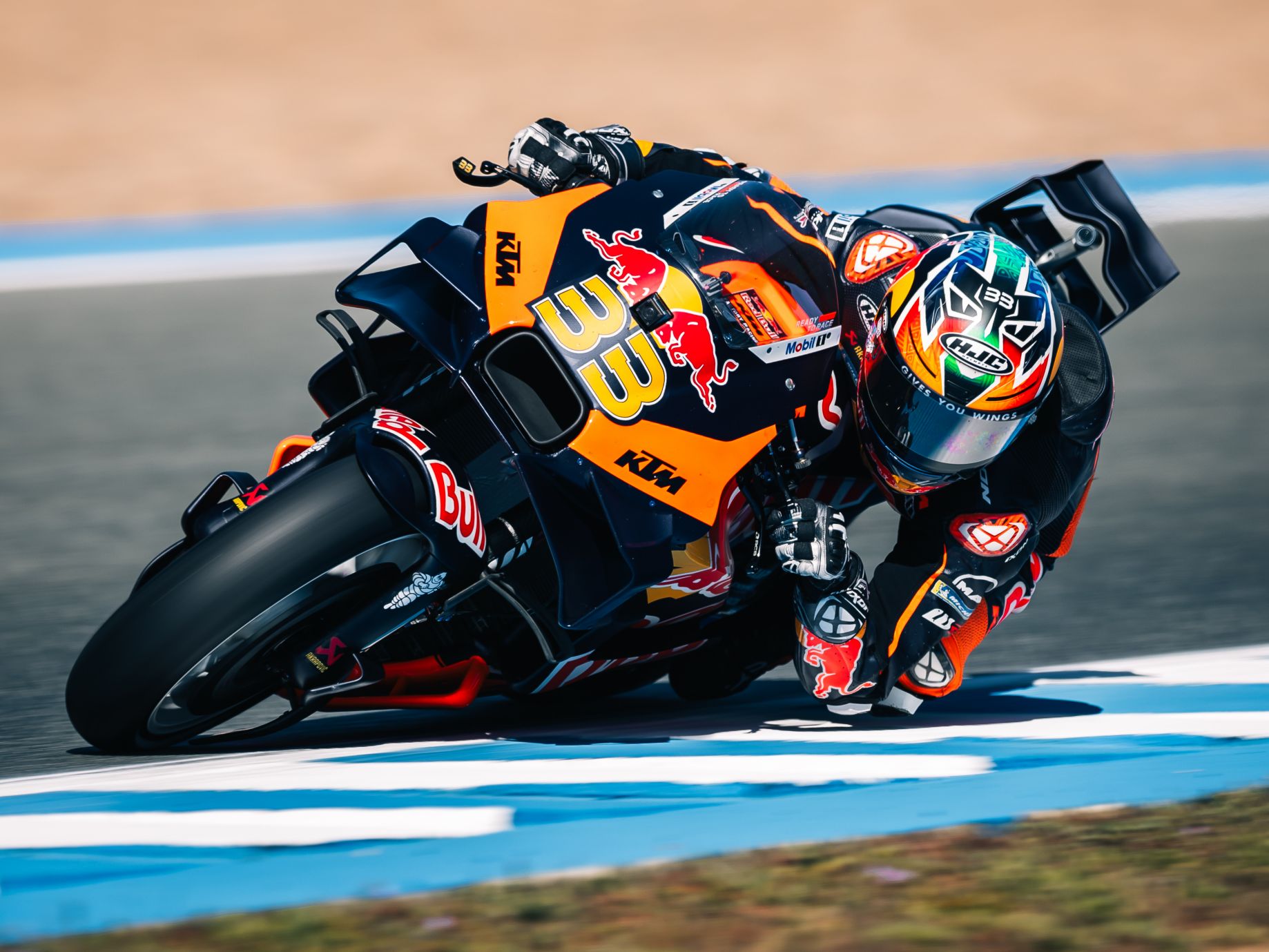
- Impossible lean angles (over 60 degrees)
- Incredible racecraft
He dominated from 2013 to 2019, redefining what was physically possible on a motorcycle.
6.3 Rise of Ducati Dominance (2020–Present)
Ducati returned to the top with:
- Innovative aerodynamics
- Holeshot devices
- Ride-height devices
- Powerful V4 engines
Ducati’s engineering led to a new era of speed and competition, with riders like Francesco “Pecco” Bagnaia becoming icons of the modern era.
7. Technological Evolution: From Metal Frames to Aerodynamic Marvels
MotoGP bikes today are as advanced as fighter jets.
7.1 Aerodynamics
Modern bikes use:
- Winglets for downforce
- Diffusers for airflow control
- Aero fairings to enhance braking and cornering
Aerodynamics have transformed MotoGP riding techniques and strategies.
7.2 Advanced Electronics
Sophisticated electronics prevent wheelspin, wheelies, and instability. These include:
- Lean-sensitive ABS
- Multi-map settings
- Gyroscope and IMU systems
7.3 Tyre Technology
Michelin (and previously Bridgestone) have produced specialized compounds:
- Soft, medium, hard options
- Weather-dependent tires
- Instant warm-up capabilities
7.4 Safety Gear Innovations
Riders now benefit from:
- Airbag suits
- Carbon helmets
- Impact-absorbing materials
- Heat-resistant leathers
8. Expansion of the MotoGP Ecosystem
8.1 Global Calendar
MotoGP now travels to:
- Europe
- Asia
- The Americas
- Middle East
New circuits like Mandalika (Indonesia) and Buddh International Circuit (India) widened the audience.
8.2 Commercial & Media Growth
MotoGP’s digital transformation includes:
- Live streaming platforms
- Social media activations
- Esports competitions
MotoGP has become a year-round global entertainment brand.
8.3 Sustainability Initiatives
MotoGP is working to become carbon-neutral, embracing:
- Biofuels
- Eco-friendly logistics
- Sustainable event management
9. The Future of MotoGP
MotoGP’s future will be shaped by:
- Further aerodynamic evolution
- AI-driven data analytics
- Advanced hybrid or biofuel engines
- More competitive satellite teams
- Expanded global fanbase
The sport aims to remain thrilling while being safer and more sustainable.
Conclusion
From its origins in 1949 to the cutting-edge championship of today, MotoGP has undergone an extraordinary transformation. What began as a raw, dangerous race on public roads has become a technologically advanced global spectacle, defined by innovation, heroism, and competition at the highest level.
MotoGP’s evolution mirrors the evolution of engineering, safety, and sporting culture and as technology continues to advance, the next chapters promise even more excitement, speed, and breakthroughs.