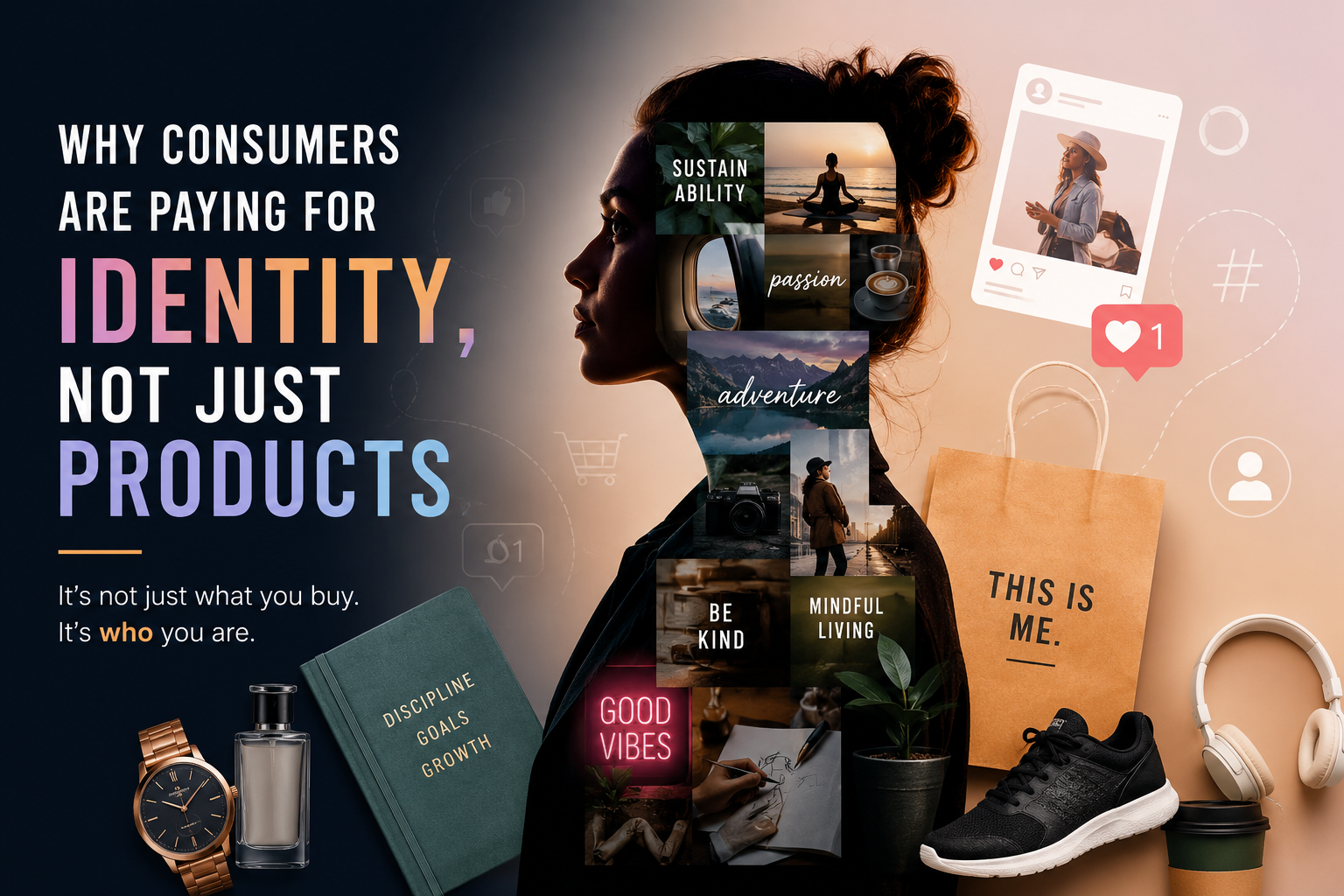
In the past, people bought products mainly for their function. Shoes protected feet, watches showed time, and cars helped people travel from one place to another. Today, consumer behaviour has changed dramatically. Modern consumers are no longer purchasing only for utility; they are purchasing for identity, emotion, values, and social belonging. A product is no longer just an object it has become a statement about who the buyer is.
This shift has transformed the global marketplace. Companies are no longer competing only on price or quality. They are competing on meaning. Brands that successfully connect with identity are building stronger customer loyalty, higher profit margins, and communities that extend far beyond traditional commerce.
The rise of identity-driven consumption explains why people willingly pay premium prices for certain brands even when cheaper alternatives exist. Consumers are buying stories, lifestyles, aesthetics, beliefs, and status. In many cases, the symbolic value of a product has become more important than its practical value.
The Evolution of Consumer Behaviour
Consumer culture has evolved through several stages. In the industrial era, products were valued primarily for durability and usefulness. During the twentieth century, branding became important as companies began differentiating similar products through advertising and emotional appeal.
The digital era accelerated this transformation. Social media, influencer culture, and personalized algorithms exposed consumers to thousands of carefully crafted lifestyles every day. Products became tools for self-expression. Buying decisions increasingly reflected personal identity rather than necessity.
For example, purchasing a reusable water bottle may signal environmental awareness. Wearing minimalist fashion may communicate sophistication or creativity. Choosing organic food can reflect health consciousness or ethical values. In each case, the product becomes part of a larger narrative about the consumer’s personality and beliefs.
This change is especially visible among younger generations. Millennials and Gen Z consumers often prioritize authenticity, purpose, and alignment with personal values. They want brands to represent something meaningful rather than simply sell products.
Products as Symbols of Identity
Sociologists and psychologists have long argued that consumption plays a major role in identity formation. People use products to communicate status, group membership, aspirations, and individuality.
Luxury fashion is one of the clearest examples. A designer handbag may carry practical utility, but its high price is often justified by symbolism rather than functionality. Buyers may associate the brand with success, exclusivity, or cultural sophistication.
However, identity-based purchasing is not limited to luxury markets. Even ordinary products now carry symbolic meaning. Technology brands, coffee chains, skincare products, fitness equipment, and home décor all contribute to how consumers present themselves online and offline.
Apple, for instance, sells more than electronic devices. Its products are associated with creativity, innovation, simplicity, and modern design. Many customers feel emotionally connected to the brand because it aligns with how they see themselves or how they want to be perceived.
Similarly, fitness brands like Lululemon or Gymshark do not merely sell clothing. They sell an aspirational lifestyle cantered around discipline, wellness, ambition, and self-improvement.
Consumers increasingly use brands to answer personal questions such as:
- Who am I?
- What do I value?
- Which community do I belong to?
- How do I want others to perceive me?
As a result, purchasing decisions have become deeply emotional and psychological.
The Role of Social Media
Social media platforms have significantly intensified identity-driven consumption. Platforms like Instagram, TikTok, Pinterest, and YouTube encourage users to curate visual representations of their lives. Products often become central elements in this self-presentation process.
People now consume in public. Every purchase has the potential to appear in photos, videos, or online recommendations. This visibility increases the symbolic importance of products.
Influencers play a major role in shaping consumer identity. Audiences often admire influencers not only for entertainment but also for lifestyle inspiration. Followers attempt to replicate aesthetics, routines, and habits by purchasing similar products.
For example, skincare products may become popular because they are associated with a “clean girl” aesthetic. Certain coffee brands may symbolize productivity culture. Minimalist desk setups may represent ambition and professionalism.
Algorithms further reinforce this behaviour. Social media platforms continuously recommend products and lifestyles aligned with users’ interests and identities. Over time, consumers become part of digital subcultures defined by specific aesthetics, values, and purchasing habits.
This environment has made emotional branding more powerful than ever before.
Community and Belonging
Humans naturally seek belonging. Brands that create strong communities often develop loyal customer bases because consumers feel emotionally connected to something larger than a transaction.
Modern brands increasingly function like cultural communities rather than businesses. Customers participate in shared experiences, online discussions, exclusive events, and lifestyle movements.
Nike is a strong example. The company markets ideas of perseverance, ambition, and athletic identity. Consumers who buy Nike products may feel connected to a global culture of motivation and achievement.
Similarly, outdoor brands such as Patagonia attract consumers who value sustainability and environmental activism. Customers support the brand not only because of product quality but because purchasing becomes an expression of ethical identity.
Community-driven branding creates powerful emotional attachment. Consumers feel understood and represented by the brand. This emotional relationship often leads to repeat purchases and long-term loyalty.
Importantly, communities also provide social validation. People enjoy feeling connected to groups that reflect their interests and values. Brands that successfully foster belonging become embedded in consumers’ identities.
The Power of Storytelling
Storytelling has become one of the most effective tools in modern marketing because identity is shaped through narratives. Consumers are more likely to connect with brands that communicate compelling stories about purpose, craftsmanship, sustainability, or transformation.
A simple product can become highly desirable when attached to a meaningful story. Handmade products, for example, often gain emotional value because consumers appreciate the creator’s journey and authenticity.
Many successful direct-to-consumer brands focus heavily on storytelling. They share founder stories, behind-the-scenes content, customer transformations, and mission-driven messaging.
This strategy works because stories create emotional resonance. Consumers remember emotions more than product specifications.
A skincare brand that promotes self-confidence may feel more meaningful than one focused only on ingredients. A coffee company that emphasizes ethical sourcing may attract consumers who value social responsibility.
The product becomes part of a broader emotional experience.
Identity and Premium Pricing
One of the most important business implications of identity-driven consumption is pricing power. Consumers are often willing to pay significantly more for products that align with their identity.
This explains why relatively simple products can command premium prices when supported by strong branding and cultural relevance.
For example:
- Sneakers become collectible status symbols.
- Water bottles become lifestyle accessories.
- Journals become productivity tools associated with personal growth.
- Candles become representations of self-care and aesthetic living.
The emotional and symbolic value increases perceived worth beyond material cost.
Companies that successfully build identity-based brands can avoid competing solely on price. Instead, they compete on emotional connection, exclusivity, values, and cultural influence.
This shift has changed the economics of modern commerce.
The Rise of Personalization
Consumers increasingly expect personalized experiences because identity is individual. Businesses now use data, AI, and algorithms to tailor recommendations, advertisements, and shopping experiences.
Streaming platforms recommend content based on preferences. Fashion brands suggest curated outfits. Music platforms create personalized playlists. E-commerce websites display products aligned with browsing behaviour.
Personalization strengthens emotional engagement because consumers feel recognized and understood.
Custom products are also becoming more popular. Personalized jewelry, made-to-order fashion, customized skincare, and AI-generated recommendations all reinforce individuality.
The future of commerce is likely to become even more identity-cantered as technology improves personalization capabilities.
Criticism of Identity-Based Consumption
Despite its commercial success, identity-driven consumption also faces criticism. Some argue that modern consumer culture encourages excessive materialism and superficial self-worth.
Social media often creates pressure to maintain curated lifestyles that may be financially unsustainable. Consumers may purchase products primarily for social validation rather than genuine need.
There is also concern about “performative ethics,” where consumers buy products to appear socially conscious without creating meaningful impact.
Additionally, companies sometimes exploit identity and emotional vulnerability for profit. Brands may adopt social causes primarily as marketing strategies rather than genuine commitments.
Critics argue that identity should not depend heavily on consumption because this creates endless cycles of comparison and dissatisfaction.
These concerns highlight the complex relationship between psychology, commerce, and digital culture.
The Future of Consumer Identity
Identity-driven consumption will likely continue shaping the future of global commerce. Younger consumers increasingly prioritize authenticity, transparency, sustainability, and emotional connection.
Artificial intelligence, virtual reality, and digital communities may further blur the line between identity and commerce. Virtual fashion, digital collectibles, creator-led brands, and online communities are already changing how people express themselves through consumption.
At the same time, consumers are becoming more aware of manipulative marketing tactics. Brands that fail to demonstrate authenticity may struggle to maintain trust.
The future marketplace will likely reward companies that genuinely understand cultural behaviour and emotional psychology rather than simply producing products.
Ultimately, modern consumers are not just buying objects. They are buying meaning, belonging, aspiration, and identity.
Conclusion
The shift from product-based consumption to identity-based consumption represents one of the most important transformations in modern business and culture. Products are no longer valued only for what they do but for what they represent.
Consumers use brands to express personality, values, aspirations, and community membership. Social media, storytelling, personalization, and digital culture have accelerated this trend, making emotional connection a central component of successful commerce.
For businesses, this shift creates both opportunities and responsibilities. Companies that authentically connect with consumer identity can build powerful loyalty and long-term success. However, brands that manipulate identity without genuine purpose risk losing credibility.
As commerce becomes increasingly emotional and symbolic, understanding human psychology may become more valuable than understanding products themselves. In the modern economy, people are not simply purchasing items they are constructing versions of themselves through what they choose to buy.