For more than a century, the automobile industry was controlled by companies that mastered engineering, manufacturing, and mechanical innovation. But the next generation of transportation will not be decided only by who builds the best engine or the most luxurious vehicle.
The future of mobility will be controlled by companies that can master something far more powerful: artificial intelligence, real-time data, and computing intelligence.
The race to build autonomous cars has transformed from a traditional automotive competition into a global technology battle. Automakers, AI companies, and semiconductor giants are all competing to answer one question:
Who will create the safest, smartest, and most scalable self-driving system in the world?
Companies like Waymo, Tesla, NVIDIA, and Mercedes-Benz are following completely different strategies.
Some are focusing on real-world testing. Some are betting on AI vision. Others are building the computing infrastructure that powers the entire ecosystem.
The winner of this race may not just become a leader in transportation—it could define the future of a trillion-dollar industry.
The New Battlefield: From Horsepower to Artificial Intelligence
For decades, car companies competed through engines, speed, design, and manufacturing efficiency. Today, the definition of a smart vehicle has completely changed.
A modern autonomous vehicle is essentially a moving computer equipped with cameras, sensors, artificial intelligence models, and powerful processors.
A self-driving car must make thousands of decisions every second:
Should it slow down because a pedestrian is approaching?
Should it change lanes because another vehicle is merging?
Can it predict what a cyclist or another driver might do next?
These decisions require enormous amounts of data and computing power.
This is why autonomous driving is no longer only an automotive challenge. It is an AI challenge.
The companies that collect better data, train better AI models, and process information faster will have a significant advantage.
Waymo: Building the Future Through Real-World Experience
Among autonomous driving companies, Waymo has taken one of the most practical approaches: putting self-driving vehicles into real-world environments.
Instead of focusing only on future promises, Waymo has spent years collecting driving data from actual roads, cities, weather conditions, and traffic situations.
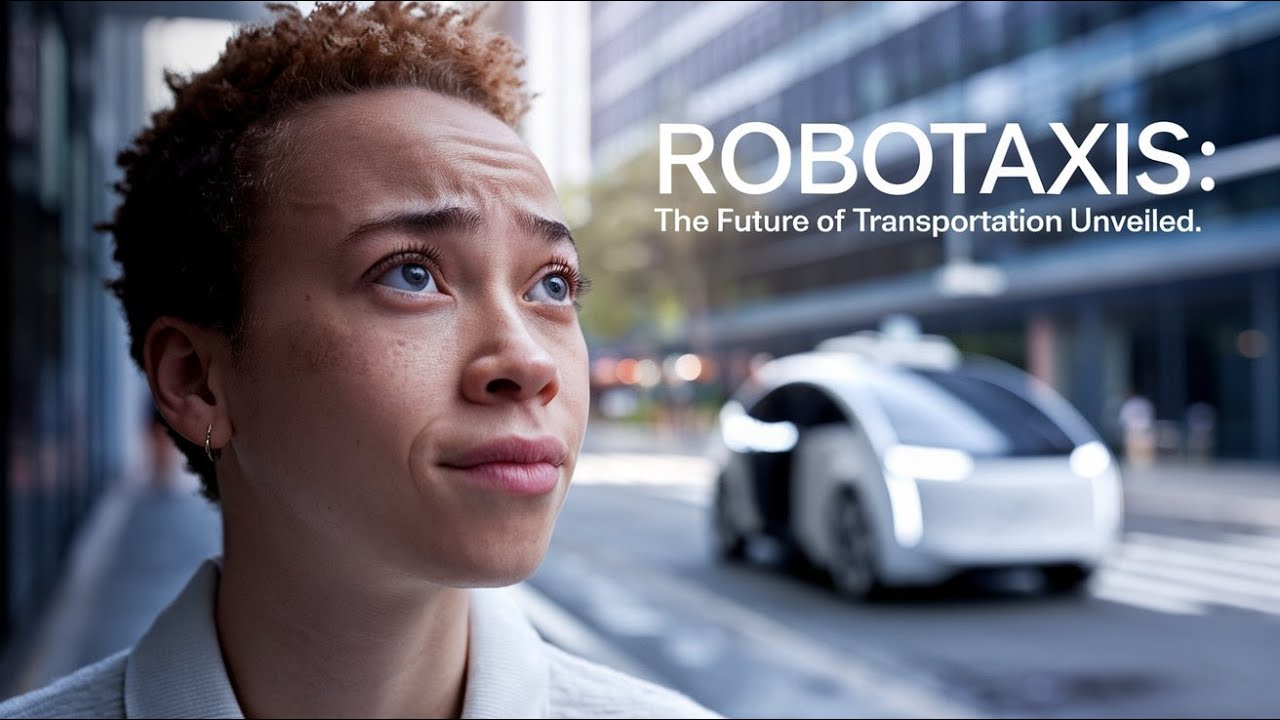
Its robotaxi service represents a major shift in how people think about transportation.
Imagine a future where you do not own a car. Instead, you simply open an app, request a ride, and an autonomous vehicle arrives at your location without a human driver.
This could completely change urban transportation.
For example, cities could reduce parking demand because fewer people would need personal vehicles. Businesses could redesign delivery systems. Elderly people and disabled individuals could gain greater mobility.
However, Waymo’s biggest challenge is scalability.
Operating autonomous vehicles in limited locations is one thing. Expanding across thousands of cities with different roads, regulations, and driving behaviours is a much bigger challenge.
The question is not only whether autonomous cars work.
The real question is:
Can autonomous driving work everywhere, safely and profitably?
Tesla: The AI-First Approach to Autonomous Driving
Tesla has taken a different path.
While many companies rely heavily on expensive sensors such as LiDAR, Tesla has focused on a camera-based AI system known as its Full Self-Driving technology.
The company believes that advanced neural networks trained on billions of miles of driving data can eventually create human-level driving intelligence.
Tesla’s advantage comes from its massive global vehicle fleet.
Every Tesla vehicle on the road can generate valuable driving data. This creates a continuous learning cycle:
More vehicles create more data.
More data improves AI models.
Better AI models improve autonomous capabilities.
This data advantage is one of Tesla’s strongest assets.
The company has also invested heavily in AI computing infrastructure to train its models.
However, Tesla faces challenges around safety, regulatory approval, and public trust.
Autonomous driving is not only about technical capability. It is also about proving that machines can make safer decisions than humans.
A single accident can influence public perception and regulatory policies worldwide.
NVIDIA: The Invisible Power Behind Autonomous Vehicles
While Waymo and Tesla are building autonomous driving systems, NVIDIA is building the technology that enables many companies to create them.
The future of autonomous vehicles depends heavily on computing power.
Cars need processors capable of handling massive amounts of information from cameras, sensors, and AI systems.
This is where NVIDIA plays a critical role.
The company’s automotive AI platforms provide the computing foundation for intelligent vehicles.
Think of NVIDIA as the company building the “brain” behind the future car.
Just as smartphones required powerful chips to become smart devices, autonomous vehicles require advanced computing systems to become intelligent machines.
The automotive industry may eventually look similar to the smartphone industry, where hardware manufacturers, software developers, and chip companies all compete for dominance.
NVIDIA’s opportunity is enormous because it does not need to win the autonomous car race directly.
It can benefit by powering multiple winners.
Mercedes-Benz: Luxury Meets Autonomous Technology
Traditional automakers are also entering the autonomous driving race.
Mercedes-Benz represents a different philosophy: combining luxury vehicles with advanced automation.
The company has focused on achieving higher levels of autonomous driving while maintaining its reputation for safety and engineering excellence.
Its Level 3 autonomous driving technology allows vehicles to handle certain driving tasks under specific conditions.
This represents an important milestone because it moves beyond driver assistance toward true automated driving.
For premium customers, autonomous technology could become another luxury feature—similar to advanced entertainment systems, premium interiors, and personalized experiences.
However, traditional automakers face a major challenge.
They must transform from manufacturing companies into technology companies while maintaining profitability.
The Future of Commerce: Why Small Businesses Must Adapt Faster Than Ever
While autonomous vehicles are transforming transportation, another revolution is happening in commerce.
The future of business will not belong only to the biggest corporations.
It will belong to businesses that can adapt quickly, understand customers deeply, and use technology intelligently.
Small businesses have historically competed against large companies through creativity, personal relationships, and specialization.
Now, artificial intelligence is giving them access to tools that were once available only to global corporations.
A small online store today can use AI for marketing, customer service, inventory management, and personalized recommendations.
This creates a new opportunity:
Technology can reduce the gap between small businesses and industry giants.
AI: The Biggest Advantage for Small Businesses
Artificial intelligence will likely become one of the most powerful tools for entrepreneurs.
A small fashion brand can use AI to predict upcoming trends, create personalized recommendations, and analyse customer behavior.
A local restaurant can use AI-powered systems to understand customer preferences and optimize delivery operations.
A small e-commerce company can automate customer support through intelligent chatbots and improve conversion rates through personalized shopping experiences.
For example, a small online skincare brand can analyse customer reviews and identify that buyers are searching for products suitable for sensitive skin.
Instead of competing with global beauty companies through massive advertising budgets, the brand can use AI insights to create more targeted products.
AI allows small businesses to compete through intelligence rather than size.
Customer Experience Will Become the Ultimate Competitive Advantage
Technology alone will not guarantee success.
Businesses that understand human behavior will win.
Customers today expect faster responses, personalized recommendations, and seamless experiences.
Companies like Amazon have built their success around customer obsession.
From one-click purchasing to personalized recommendations, Amazon has shown that convenience can become a competitive advantage.
Small businesses can apply the same principle on a smaller scale.
A customer who receives personalized service from a small brand may become more loyal than someone purchasing from a large corporation.
The future of commerce will not only be about selling products.
It will be about creating relationships.
Digital Payments: Making Business More Accessible
Another major advantage for small businesses will be digital payment technology.
The growth of online payments has removed many barriers for entrepreneurs.
A small business owner can now sell products globally without needing physical stores or complicated banking systems.
Digital payments enable faster transactions, better financial tracking, and easier international expansion.
In the future, businesses will not only compete on what they sell.
They will compete on how easily customers can discover, purchase, and interact with them.
The Next Decade: Speed Will Beat Size
The biggest lesson from both autonomous vehicles and modern commerce is clear:
The future belongs to companies that learn faster.
Waymo is learning from millions of driving situations.
Tesla is learning from vehicle data.
NVIDIA is enabling faster AI development.
Small businesses are learning from customer behavior and digital tools.
The ability to adapt will become more valuable than traditional advantages like size, history, or resources.
The next decade will reward companies that combine technology with human understanding.
Final Thoughts: Innovation Will Define the Winners
The future of autonomous cars and commerce is being shaped by the same forces: artificial intelligence, data, and customer experience.
Whether it is a self-driving vehicle navigating a busy city or a small business serving customers worldwide, success will depend on the ability to make smarter decisions faster.
The companies that master AI, safety, personalization, and scalability will define the next era of innovation.
The question is no longer:
“Who has the biggest resources?”
The real question is:
Who can adapt, innovate, and use technology to create the future?
What do you think will become the biggest advantage in the next decade: AI, customer experience, or digital payments?