The Rise of AI-Powered Driving: A New Era Behind the Wheel
Artificial intelligence has quietly become one of the most transformative forces in the automotive industry. While electric vehicles and self-driving technology often dominate headlines, AI-powered driving assistants are revolutionizing the way people interact with their vehicles every single day. From helping drivers navigate unfamiliar roads to monitoring fatigue, optimizing fuel efficiency, and even carrying on natural conversations, AI assistants are redefining what it means to drive in the modern world.
Today’s vehicles are no longer just machines built to transport people from one destination to another. They have evolved into intelligent mobility platforms capable of learning driver preferences, processing enormous amounts of data, and making split-second decisions that improve convenience, safety, and efficiency. Whether it’s a premium luxury sedan, an electric SUV, or a connected family car, artificial intelligence is becoming an essential feature rather than a futuristic luxury.
As automotive manufacturers continue investing billions of dollars into AI research and software development, drivers across the globe are beginning to experience a smarter, more personalized relationship with their vehicles. The driving experience is shifting from manual control to intelligent collaboration between humans and machines.
What Are AI Assistants in Modern Cars?
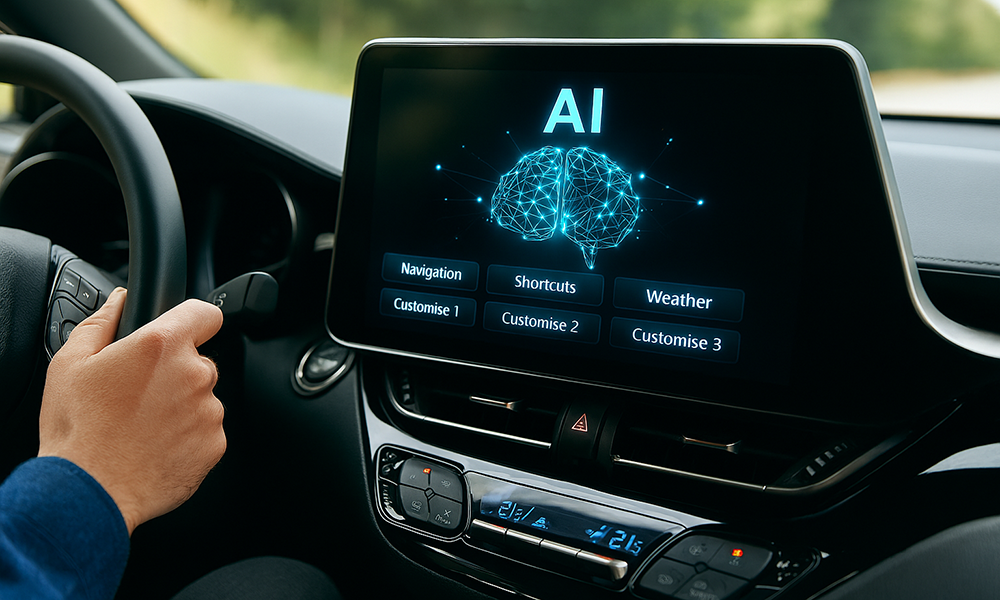
An AI assistant is a software-powered digital companion integrated into a vehicle’s infotainment and operating system. Unlike traditional voice command systems that respond only to predefined instructions, modern AI assistants understand natural language, learn user habits, anticipate needs, and continuously improve through machine learning.
Instead of memorizing rigid commands, drivers can simply speak naturally. A driver might say, “I’m feeling cold,” and the vehicle can automatically increase the cabin temperature. Mention feeling tired, and the AI assistant may recommend the nearest coffee shop or suggest taking a break after analysing driving patterns.
The intelligence behind these assistants comes from cloud computing, onboard processors, machine learning algorithms, computer vision, GPS data, connected sensors, and real-time internet connectivity. Together, these technologies create a driving experience that feels intuitive rather than mechanical.
Making Roads Safer Through Intelligent Assistance
Safety remains one of the biggest reasons automakers are embracing artificial intelligence. Human error contributes to the vast majority of road accidents worldwide, making AI-driven safety features increasingly valuable.
Modern AI assistants constantly analyse information from cameras, radar, ultrasonic sensors, and lidar systems to detect potential hazards long before a driver notices them. These systems can identify pedestrians stepping into the road, monitor surrounding vehicles, recognize traffic signs, and predict possible collision scenarios in real time.
Many vehicles now include driver monitoring systems that observe facial expressions, blinking frequency, steering behavior, and head position. If signs of fatigue or distraction are detected, the AI assistant can issue audio alerts, recommend rest stops, or activate advanced safety systems to reduce accident risks.
Rather than replacing drivers, AI acts as an additional layer of awareness that continuously watches the road and assists when necessary.
Natural Conversations Replace Traditional Commands
One of the biggest improvements in automotive AI is the shift from command-based interactions to conversational communication.
Older infotainment systems required drivers to remember exact phrases like “Call John Smith” or “Navigate to Home.” Today’s AI assistants understand context, follow-up questions, and conversational language.
A driver can ask:
- “Find the closest charging station.”
- “Is there heavy traffic ahead?”
- “Play relaxing music.”
- “What’s the weather like where I’m going?”
- “Find a restaurant with good reviews nearby.”
Instead of treating every request separately, AI remembers previous interactions and responds naturally, making communication feel more like talking to another person than operating a computer.
This conversational capability reduces distraction because drivers spend less time navigating menus or touching screens.
Personalized Driving Like Never Before
Artificial intelligence learns individual driving habits over time.
After weeks or months of driving, many AI systems begin recognizing preferred routes, frequently visited locations, favourite music playlists, climate settings, seating positions, steering wheel adjustments, and even driving styles.
Imagine entering your vehicle on a winter morning. Without pressing a button, the car recognizes the driver through facial recognition or smartphone authentication, adjusts the seat, warms the cabin, loads the preferred navigation destination, starts a favourite podcast, and selects the ideal driving mode.
This level of personalization creates an experience where the vehicle adapts to the driver instead of requiring the driver to adjust the vehicle every time.
As AI continues learning, recommendations become increasingly accurate and useful.
Smarter Navigation Through Predictive Intelligence
Navigation systems have evolved far beyond simply providing directions.
AI assistants analyse live traffic conditions, weather forecasts, road closures, accident reports, construction updates, parking availability, and historical driving data to recommend the fastest or most efficient route.
Predictive navigation can even anticipate destinations before drivers enter them.
If someone regularly leaves work at 6 p.m. on Fridays to visit family, the AI assistant may automatically suggest the route while accounting for current traffic conditions.
Electric vehicle owners benefit even more because AI calculates battery consumption, elevation changes, charging station availability, waiting times, and optimal charging stops throughout long journeys.
The result is less stress, shorter travel times, and greater confidence behind the wheel.
AI Is Making Electric Vehicles Smarter
Electric vehicles depend heavily on software, making them the perfect environment for artificial intelligence.
AI assistants continuously monitor battery health, driving efficiency, weather conditions, regenerative braking performance, and energy consumption.
Rather than simply displaying battery percentage, intelligent systems estimate actual driving range based on current driving behavior and environmental conditions.
Drivers receive suggestions such as reducing speed, using regenerative braking more effectively, or selecting a different charging station if another offers faster charging with shorter wait times.
These intelligent recommendations reduce range anxiety and help owners maximize battery performance over time.
Predictive Maintenance Reduces Unexpected Breakdowns
Traditional vehicle maintenance often follows fixed service schedules regardless of actual component condition.
Artificial intelligence changes this approach by continuously monitoring thousands of data points collected from sensors throughout the vehicle.
AI can detect subtle changes in engine performance, battery health, tire pressure, brake wear, suspension behavior, and electrical systems before major failures occur.
Instead of waiting for warning lights to appear, drivers receive proactive maintenance recommendations that prevent expensive repairs and improve vehicle reliability.
Fleet operators especially benefit because predictive maintenance minimizes downtime and reduces operational costs.
Connected Cars Create Smarter Ecosystems
Modern AI assistants extend far beyond the vehicle itself.
Connected cars communicate with smartphones, smart homes, wearable devices, cloud platforms, and digital assistants to create seamless daily experiences.
Drivers can remotely start the engine, lock doors, monitor charging status, precondition cabin temperature, locate parked vehicles, or schedule maintenance appointments using mobile applications.
Future vehicle-to-vehicle (V2V) and vehicle-to-infrastructure (V2I) communication will allow AI assistants to exchange information about traffic conditions, accidents, hazardous weather, and road hazards almost instantly.
This interconnected ecosystem promises safer roads and more efficient transportation networks worldwide.
AI Enhances Driver Comfort
Artificial intelligence also improves comfort during everyday driving.
Advanced cabin systems automatically adjust lighting, music, temperature, seat ventilation, and air purification based on passenger preferences and external conditions.
Some vehicles analyse stress levels through driving behavior and physiological indicators. If the AI detects rising stress during heavy traffic, it may recommend calmer music, reduce notification interruptions, or suggest an alternate route with lighter congestion.
Long-distance journeys become more enjoyable because AI continuously adapts the environment to improve passenger well-being.
The Growing Role of Generative AI
Recent advances in generative artificial intelligence are transforming in-car experiences even further.
Instead of simply answering predefined questions, generative AI can explain vehicle features, summarize news, translate conversations, create travel itineraries, answer complex questions, and even assist with productivity tasks while parked.
Drivers may soon ask questions like:
“What are the best attractions near my destination?”
“Summarize today’s business news.”
“Plan a weekend road trip with scenic stops.”
These interactions turn vehicles into intelligent travel companions rather than simple transportation tools.
Challenges Facing AI in the Automotive Industry
Despite remarkable progress, AI-powered driving assistants still face several important challenges.
Privacy remains one of the biggest concerns. AI systems collect significant amounts of personal data, including driving habits, location history, voice recordings, and behavioral patterns. Automakers must ensure this information is securely stored and handled responsibly.
Cybersecurity is another major priority. As connected vehicles become increasingly dependent on software and internet connectivity, protecting them from cyberattacks becomes essential.
There are also regulatory differences between countries regarding autonomous driving, data sharing, and AI decision-making. Manufacturers must comply with evolving laws while maintaining consistent user experiences across global markets.
Finally, AI is not infallible. Weather conditions, unexpected road situations, or inaccurate sensor readings can still challenge intelligent systems, reinforcing the importance of keeping human drivers engaged.
The Future of AI Assistants in Cars
The coming decade promises even greater innovation.
Future AI assistants will become proactive rather than reactive. Instead of waiting for instructions, they will anticipate needs based on schedules, calendars, health data, traffic conditions, and driving history.
Advancements in edge computing, 5G connectivity, quantum computing, and multimodal AI models will allow vehicles to process information faster while relying less on cloud servers.
As autonomous driving technologies continue maturing, AI assistants will transition from helping drivers operate vehicles to managing significant portions of the driving process under appropriate conditions.
Cars may eventually become intelligent personal mobility spaces where work, entertainment, communication, and transportation seamlessly merge into one connected experience.
Conclusion
Artificial intelligence is fundamentally changing the driving experience by making vehicles safer, smarter, more personalized, and increasingly connected. What began as simple voice commands has evolved into intelligent digital companions capable of understanding conversations, learning habits, predicting maintenance needs, optimizing navigation, and enhancing comfort.
While challenges surrounding privacy, cybersecurity, and regulation remain, the pace of innovation suggests that AI assistants will become standard features in vehicles across every price segment. Drivers are no longer interacting with passive machines; they are partnering with intelligent systems designed to improve every journey.
As automotive technology continues advancing, AI assistants will play a central role in shaping the future of mobility. The road ahead is not just electric or autonomous it is intelligent. For consumers, manufacturers, and the transportation industry as a whole, AI is transforming the car from a mode of transportation into a responsive, adaptive, and trusted travel companion