Introduction
Fitness technology has evolved far beyond counting steps and measuring calories. Today’s smart wearables have become sophisticated health companions capable of tracking sleep quality, heart rate variability, recovery, stress levels, and even long-term wellness trends. At the center of this transformation is WHOOP, a wearable that has redefined how people think about performance and recovery rather than simply tracking workouts. Alongside brands such as Apple, Garmin, Oura, Fitbit, and Samsung, WHOOP represents a new generation of fitness technology that prioritizes data-driven decision-making and personalized health insights.
The global fitness technology industry is experiencing remarkable growth as consumers become more health-conscious and seek smarter ways to optimize their lifestyles. Artificial intelligence, advanced biometric sensors, cloud computing, and machine learning are making wearables more accurate and valuable than ever before. Instead of simply recording activities, modern devices analyse patterns, predict fatigue, recommend recovery strategies, and provide actionable coaching tailored to each individual.
As wearable technology becomes increasingly intelligent, fitness is shifting from a reactive approach to a proactive one. Whether someone is training for a marathon, managing workplace stress, improving sleep quality, or simply trying to maintain a healthier lifestyle, smart wearables are becoming essential tools. WHOOP has emerged as one of the most influential brands in this movement, helping shape what many experts believe is the future of fitness technology.
The Evolution of Fitness Technology
The journey of fitness technology has been extraordinary. Early fitness trackers focused primarily on counting steps, estimating calorie burn, and encouraging users to move more throughout the day. While these features introduced millions of people to wearable technology, they only scratched the surface of what biometric data could reveal.
Today’s wearables combine sophisticated sensors with artificial intelligence to generate meaningful health insights. Instead of asking how many steps someone walked, modern devices answer far more valuable questions. Are you fully recovered? How well did you sleep? Is your body under stress? Should today’s workout be intense or moderate? Are your habits improving your long-term health?
This shift from simple activity tracking to personalized health intelligence marks one of the biggest advancements in consumer technology. Companies are investing heavily in research to improve sensor accuracy, battery efficiency, and predictive analytics, creating devices that function more like digital health coaches than traditional fitness trackers.
What Makes WHOOP Different?
Unlike traditional smartwatches that prioritize notifications, apps, and touchscreens, WHOOP takes an entirely different approach. Its minimalist design has no display, encouraging users to focus less on constantly checking statistics and more on understanding their overall health trends through the companion app.
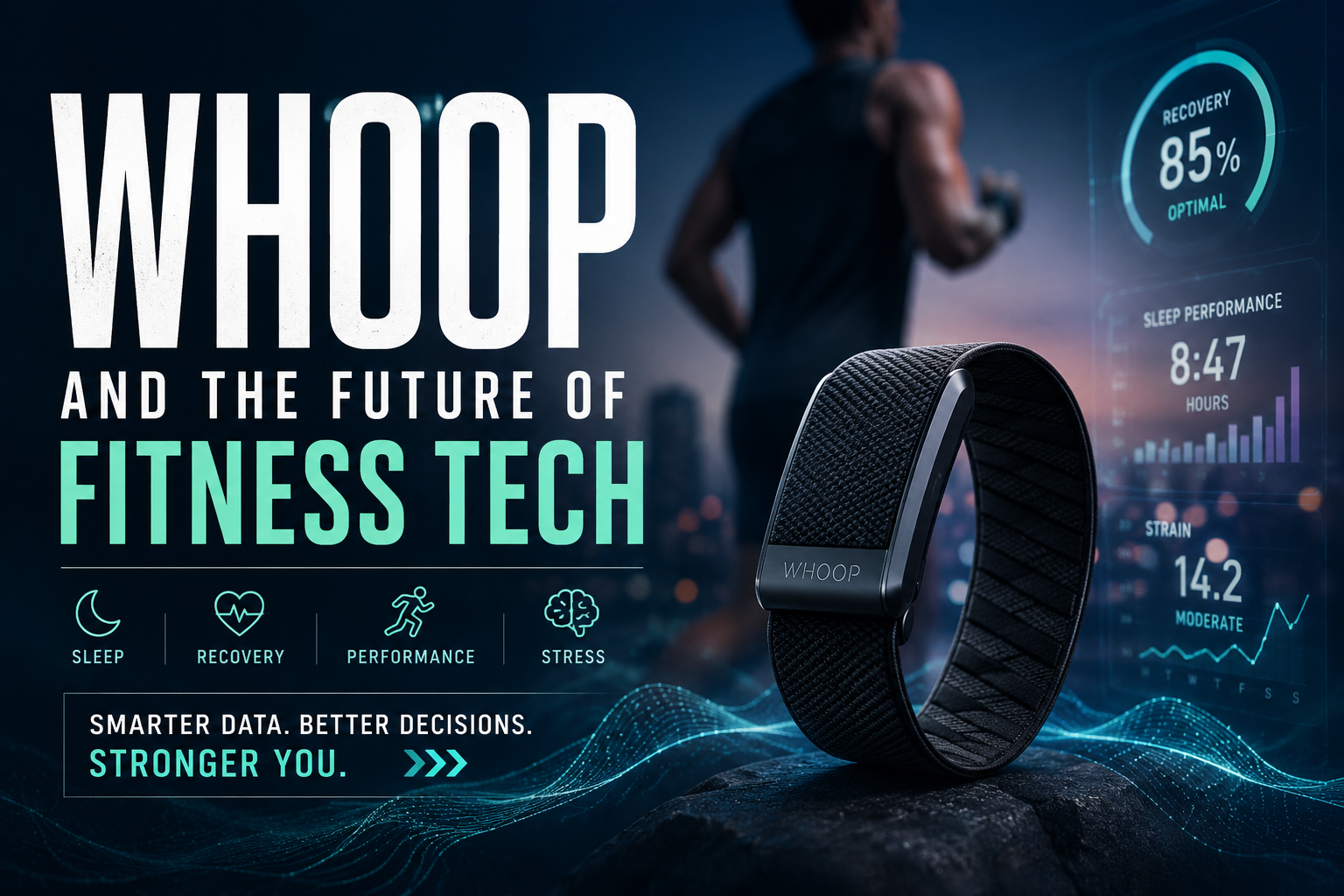
WHOOP continuously measures heart rate, heart rate variability (HRV), respiratory rate, skin temperature, blood oxygen levels, sleep performance, and physical strain. Using advanced algorithms, it converts this information into personalized recommendations that help users decide when to train harder and when recovery should take priority.
One of WHOOP’s defining features is its Recovery Score, which combines multiple biometric indicators into a single daily assessment. Instead of relying solely on motivation, athletes and everyday users receive evidence-based guidance about how prepared their bodies are for physical activity.
This philosophy has attracted elite athletes, professional sports teams, military personnel, executives, and health-conscious individuals who recognize that recovery is just as important as exercise itself.
Recovery Is Becoming the New Competitive Advantage
For decades, fitness culture celebrated intense workouts while often ignoring recovery. However, sports science now confirms that the body becomes stronger during recovery, not during exercise itself.
WHOOP helped popularize this concept by making recovery measurable. Rather than encouraging users to push themselves every day, the platform recommends training intensity based on physiological readiness.
This approach helps reduce overtraining, lowers injury risk, improves athletic performance, and supports long-term health. It also aligns with growing scientific understanding that adequate sleep, stress management, hydration, and nutrition play equally important roles in physical performance.
As more consumers prioritize sustainable wellness instead of short-term fitness goals, recovery-focused technology is expected to become increasingly mainstream.
Artificial Intelligence Is Personalizing Every Workout
Artificial intelligence is transforming wearable devices into highly personalized health assistants. Modern fitness platforms analyse millions of data points to identify trends that would be impossible for individuals to detect on their own.
WHOOP uses AI-powered analytics to recommend optimal sleep duration, recovery periods, workout intensity, and behavioral changes based on each user’s physiology. Instead of generic fitness advice, users receive recommendations unique to their daily condition.
Other leading brands are following a similar path by introducing AI coaching, adaptive workout plans, injury prevention alerts, and personalized wellness insights. As machine learning models continue to improve, wearables will become even better at predicting illness, detecting fatigue, and optimizing performance before problems occur.
The future of fitness technology will likely involve continuous learning systems that adapt to every individual’s lifestyle, habits, genetics, and long-term health objectives.
Sleep Tracking Is Becoming More Important Than Step Counting
Sleep has emerged as one of the most valuable health metrics available through wearable technology. Scientific research consistently demonstrates that sleep quality influences athletic performance, immune function, mental health, productivity, and cardiovascular wellness.
WHOOP places exceptional emphasis on sleep analysis. Instead of simply reporting hours slept, the platform measures sleep stages, disturbances, recovery efficiency, and recommended sleep duration based on physical strain accumulated throughout the day.
This personalized approach helps users understand how lifestyle choices affect recovery and performance. Many users discover that improving sleep habits produces greater health benefits than increasing workout intensity.
As awareness of sleep science continues growing, comprehensive sleep monitoring is expected to remain one of the fastest-growing segments of wearable health technology.
Beyond Athletes: Fitness Technology for Everyone
While professional athletes helped popularize advanced wearables, today’s devices serve a much broader audience. Office workers use them to monitor stress, parents rely on them to improve sleep routines, and older adults track cardiovascular health to support healthy aging.
Corporate wellness programs increasingly integrate wearable technology to encourage healthier lifestyles among employees. Insurance providers are also exploring partnerships with wearable companies to reward healthy behaviour through personalized wellness initiatives.
Healthcare professionals are beginning to recognize wearable-generated data as a valuable supplement to traditional medical evaluations. Continuous monitoring provides a richer understanding of long-term health patterns compared to occasional clinic visits.
This expansion beyond sports demonstrates that fitness technology is evolving into comprehensive health technology.
The Rise of Subscription-Based Fitness Platforms
One of the most significant business innovations introduced by WHOOP is its subscription-first model. Rather than focusing solely on hardware sales, the company emphasizes ongoing software improvements, personalized analytics, educational content, and continuous feature development.
This approach ensures users receive evolving capabilities through regular updates rather than replacing devices frequently. Subscription revenue also allows companies to invest more aggressively in artificial intelligence, research, and algorithm improvements.
Many technology companies are adopting similar models because recurring subscriptions create sustainable ecosystems that continuously deliver value to customers.
As wearable software becomes increasingly sophisticated, services may become more important than the physical devices themselves.
Challenges Facing the Fitness Tech Industry
Despite impressive innovation, the fitness technology industry faces several important challenges. Data privacy remains one of the biggest concerns as wearables collect highly sensitive biometric information. Consumers increasingly expect transparent privacy policies, secure cloud storage, and greater control over personal health data.
Accuracy is another critical issue. Although wearable sensors continue improving, differences still exist between consumer devices and clinical-grade medical equipment. Manufacturers must balance affordability, battery life, comfort, and measurement precision.
Battery performance also remains a key area of innovation. Consumers want continuous monitoring without frequent charging interruptions. WHOOP’s wearable battery pack demonstrates one possible solution by allowing charging while the device remains on the wrist.
Accessibility represents another challenge. Premium wearable subscriptions can be expensive, limiting adoption among budget-conscious consumers. Future competition may encourage more affordable pricing while expanding advanced health monitoring to larger audiences.
Emerging Technologies Shaping the Next Generation of Wearables
The next decade promises even greater transformation. Flexible sensors, non-invasive glucose monitoring, hydration tracking, blood pressure measurement, and emotional wellness analysis are actively being developed across the wearable technology industry.
Artificial intelligence will become increasingly predictive rather than reactive. Instead of informing users after poor sleep or elevated stress, future systems may anticipate problems before they occur and recommend preventive interventions.
Integration with smart homes, connected gyms, telemedicine platforms, nutrition apps, and digital healthcare ecosystems will create a more complete picture of personal wellness.
Generative AI may also transform wearable experiences by allowing users to ask conversational questions such as, “Why am I feeling fatigued today?” or “How can I improve tomorrow’s recovery?” with personalized responses based on months or years of biometric history.
WHOOP’s Role in the Future of Fitness Tech
WHOOP has influenced the wearable industry by proving that meaningful health insights matter more than flashy screens or endless notifications. Its emphasis on recovery, sleep optimization, physiological readiness, and continuous improvement has reshaped consumer expectations.
Competitors have responded by introducing similar recovery metrics, sleep coaching features, and advanced health analytics, demonstrating WHOOP’s impact across the industry.
As healthcare increasingly shifts toward preventive care, devices capable of continuously monitoring health indicators will become valuable tools not only for athletes but also for physicians, employers, researchers, and individuals seeking healthier lives.
WHOOP’s philosophy reflects a broader industry movement toward smarter, more personalized wellness experiences powered by artificial intelligence and biometric intelligence.
Conclusion
The future of fitness technology is no longer limited to counting steps or recording workouts. It is about understanding the human body in real time, identifying patterns before problems develop, and helping individuals make informed decisions every day. WHOOP has played a significant role in driving this transformation by emphasizing recovery, sleep, strain, and personalized health insights rather than conventional fitness metrics.
As artificial intelligence, biometric sensors, and digital healthcare continue to evolve, wearable devices will become even more integrated into everyday life. They will not simply track activity but actively guide healthier behaviour, optimize performance, and support preventive healthcare across all age groups. From elite athletes pursuing peak performance to everyday individuals striving for better sleep, reduced stress, and improved well-being, smart wearables are becoming indispensable companions.
The companies that succeed in the next era of fitness technology will be those that combine scientific accuracy, meaningful personalization, strong privacy protections, and intuitive user experiences. WHOOP has already demonstrated what this future can look like, and its influence is likely to shape the wearable industry for years to come. As innovation accelerates, fitness technology is evolving into something much greater than wearable gadgets it is becoming the foundation of a smarter, healthier, and more connected future.