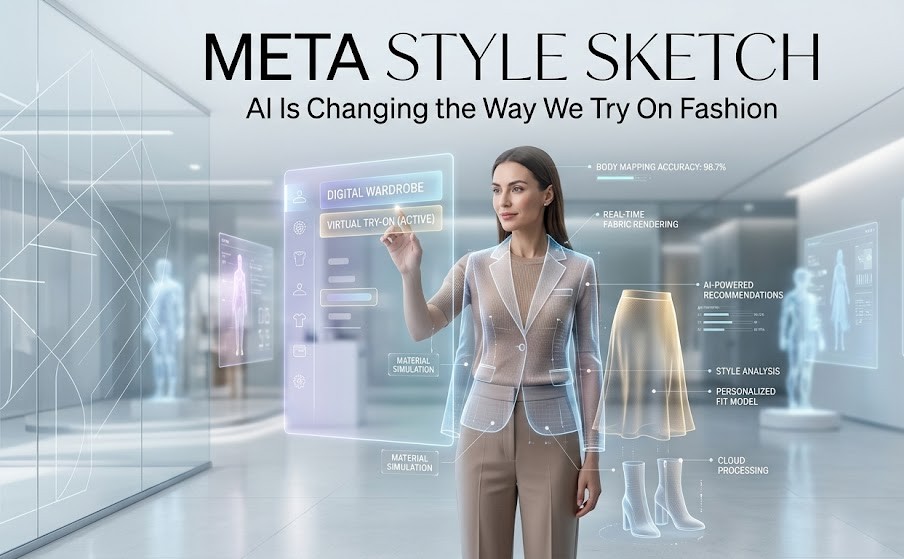
Fashion technology is entering a new phase, and artificial intelligence is beginning to influence something people do every day: deciding what to wear. From personalised shopping recommendations to virtual fitting rooms, technology has steadily changed how consumers discover, explore and purchase clothing. Now, Meta is taking that experience a step further with Style Sketch, a new AI-powered fashion application designed to help users create outfits, experiment with different looks and make better use of the clothes they already own. Launched quietly across Indonesia, Singapore and Thailand, the application brings together artificial intelligence, digital wardrobe management and virtual outfit visualisation in a single mobile experience. Rather than functioning like another online shopping platform, Style Sketch focuses on personal styling, offering users a digital space to explore their existing wardrobe and discover new ways to wear familiar pieces.
From Instagram Photos to a Digital Wardrobe
One of the most interesting aspects of Style Sketch is the way it approaches wardrobe organisation. Most people have dozens, sometimes hundreds, of clothing photographs scattered across their phones and social media accounts, but very few have an organised digital record of what they actually own. Meta wants to turn that collection of everyday photographs into something more useful. The application can connect with Instagram and use clothing items visible in previously shared photographs to help build a virtual wardrobe. Users who prefer not to rely on existing social media pictures can also add garments manually by taking photographs, recording short videos or uploading images directly from their phone’s camera gallery.
This approach could make building a digital wardrobe considerably less time-consuming. Traditionally, wardrobe organisation applications require users to photograph individual garments, categorise them and enter details before receiving useful recommendations. Style Sketch attempts to simplify that process by drawing on visual content that users may already have available. Once clothing items are added, the AI-powered system can help organise the collection and generate outfit combinations based on the available pieces and individual style preferences. The idea is straightforward but meaningful: instead of constantly searching for something new to wear, users can discover combinations they may have overlooked in their existing collection.
AI-Powered Virtual Try-On Brings Personal Styling to Your Phone
Virtual try-on technology has become one of the most talked-about developments in fashion technology, particularly as online shopping continues to grow. One of the biggest challenges of buying clothing online is understanding how a particular outfit might look on an individual rather than on a professional model. Product photographs often show clothing in ideal lighting, carefully selected poses and standardised settings, leaving shoppers uncertain about how the same garment might appear on their own bodies. Style Sketch brings this concept into everyday outfit planning through AI-generated visualisation.
According to the application’s description, users can preview suggested clothing combinations on a realistic model designed to reflect their body shape and skin tone. This creates a more personalised way to explore outfits without physically changing clothes every time they want to experiment with a different combination. Instead of relying entirely on imagination, users can get a visual representation of how different pieces might work together. The technology also reflects a wider movement towards more personalised digital experiences, where artificial intelligence is being used to adapt recommendations and visual content to individual characteristics.
However, virtual try-on should be understood as a styling and visualisation tool rather than a guarantee of how clothing will fit in real life. Fabric behaviour, garment measurements, material texture and actual sizing still matter when purchasing clothes. Nevertheless, the ability to preview combinations digitally could make everyday fashion decisions more convenient and encourage users to experiment with styles they might not otherwise consider.
Making Better Use of Clothes You Already Own
An interesting difference between Style Sketch and many conventional fashion applications is its emphasis on existing wardrobes rather than new purchases. The fashion industry is heavily influenced by changing trends, seasonal collections and continuous product launches, encouraging consumers to explore new clothing options throughout the year. Yet, having more clothes does not necessarily make getting dressed easier. Many people repeatedly wear the same combinations simply because they struggle to identify alternative ways to style individual pieces.
Style Sketch attempts to address this familiar problem by allowing users to select a particular garment and receive outfit suggestions built around it. A jacket that has been sitting unused in the wardrobe, for example, could become the starting point for several different looks. The application can suggest combinations using other available clothing items, helping users explore different possibilities without necessarily purchasing additional products.
This feature also introduces an interesting connection between AI styling and more conscious consumption. Although the application is not presented as a sustainability platform, encouraging people to reuse and restyle existing clothing could support more thoughtful wardrobe habits. Consumers may become more aware of what they already own, reduce unnecessary purchases and get greater value from individual garments. In an industry where trends can change rapidly, the ability to create fresh combinations from familiar pieces offers a different perspective on personal fashion.
Your Personal AI Stylist Can Also Help Plan Everyday Outfits
Choosing an outfit is not always about personal preference. Weather conditions, daily schedules, social occasions and practical requirements can all influence what someone decides to wear. A comfortable outfit for a warm afternoon may not be suitable for a rainy evening, while clothing selected for a business meeting may be completely different from what someone would wear for a casual weekend outing.
Style Sketch aims to make these decisions easier through daily outfit recommendations that take weather conditions into account. Rather than simply suggesting random combinations, the application can help users explore clothing options that are more relevant to their everyday circumstances. This adds another layer of usefulness to the digital wardrobe concept, transforming it from a collection of clothing photographs into a practical personal styling assistant.
The application also extends its planning capabilities to travel. Users can enter their destination, trip duration and planned activities to receive day-by-day outfit suggestions. The recommendations take the weather forecast and itinerary into consideration, helping users think about what to pack before leaving home. For someone preparing for a week-long holiday, this could make the packing process more organised by providing outfit ideas for different days and activities.
Travel wardrobe planning is particularly interesting because packing often involves balancing personal style with limited luggage space. People frequently pack extra clothing because they are uncertain about which combinations will work across different situations. An AI-powered outfit planner could help create a more structured packing list by identifying combinations that make better use of fewer items. It may not eliminate the need for personal judgement, but it offers another way to approach an otherwise repetitive task.
Fashion Discovery Meets Personalised Technology
Beyond organising existing clothing, Style Sketch also connects with the broader idea of digital fashion discovery. Consumers increasingly find inspiration through social media platforms, fashion creators, online publications and brand accounts. Instagram, in particular, has become an important destination for discovering outfit ideas, emerging aesthetics and seasonal trends. However, finding an attractive look online and recreating it using clothes already available at home are two very different experiences.
Style Sketch aims to bridge that gap by helping users explore looks and identify ways to recreate similar styles with pieces from their own wardrobes. This could make fashion inspiration more practical, moving beyond simply saving photographs of outfits that users may never actually wear. The application’s approach reflects a wider shift towards contextual AI recommendations, where technology does not simply show users what is popular but attempts to make those ideas relevant to their personal circumstances.
The experience also has a social element. Outfit choices are often influenced by friends, family members and online communities, especially when people are preparing for an event or trying an unfamiliar style. Style Sketch reportedly allows users to share outfit options and seek feedback, adding a collaborative dimension to the styling experience. Rather than making every fashion decision independently, users can bring other people into the process and compare different looks before settling on a final choice.
Why Meta Is Entering the AI Fashion Space
Meta’s decision to introduce a dedicated fashion application is part of a larger effort to expand its presence in AI-powered consumer products. The company already operates some of the world’s most widely used social platforms, including Instagram, Facebook and WhatsApp. These platforms have developed into major spaces for entertainment, communication, shopping inspiration and brand discovery. Style Sketch represents an opportunity to take some of that existing digital behaviour and turn it into a more specialised experience.
Instagram integration is particularly important to the application’s positioning. Unlike a new fashion platform that must persuade users to upload their entire wardrobe from scratch, Meta can potentially draw on a visual history that already exists within its social ecosystem. People routinely share photographs of their outfits, holidays, events and everyday activities. These images can provide a starting point for creating a digital clothing collection, making the transition into an AI-powered styling experience more convenient.
The launch also arrives as Meta experiments with several standalone applications built around artificial intelligence. Its recent releases include Waddle World, an AI-powered virtual pet experience, Pocket, a tool associated with creating games through AI, and Vibes, which focuses on AI-generated video content. These launches suggest that Meta is exploring opportunities beyond its established social networking products, testing different ways to bring artificial intelligence into everyday consumer activities.
For the company, developing smaller, focused applications could also provide opportunities to understand how people interact with AI outside traditional social feeds. Instead of introducing every new feature within Instagram or Facebook, Meta can experiment with dedicated experiences designed around specific interests and behaviours.
The Competition Is Already Taking Shape
Although Style Sketch brings Meta’s social media ecosystem into the fashion technology space, AI-powered wardrobe management is not an entirely new concept. Several existing platforms are already exploring digital closets, outfit recommendations and virtual styling. Startups such as Alta are working in the AI wardrobe category, while Google Photos has also introduced tools that help users organise clothing photographs and explore outfit combinations.
This means Meta is entering a market where the basic idea has already been established. Its challenge will be to make the experience more useful, accessible and engaging than competing alternatives. A digital wardrobe is valuable only when users can organise their clothing accurately and receive recommendations that genuinely match their preferences. Similarly, virtual try-on technology needs to deliver convincing visual results if consumers are going to trust it as part of their daily styling routine.
Meta’s strongest potential advantage may be its existing connection with Instagram. The platform already plays a significant role in global fashion culture, from luxury labels and independent designers to streetwear communities and everyday creators. Bringing that visual ecosystem into a dedicated AI styling application could create a natural connection between fashion inspiration and personal wardrobe management. Whether that advantage translates into long-term adoption will depend on the quality of the recommendations and how seamlessly the application fits into users’ daily routines.
What the Launch Means for the Future of Fashion Technology
The introduction of Style Sketch highlights how artificial intelligence is gradually moving beyond traditional productivity tools and entering more personal areas of everyday life. Fashion is particularly suited to experimentation with AI because it combines visual information, individual preferences, creative expression and practical decision-making. These are areas where personalised recommendations and image-based technologies can offer experiences that feel more relevant than conventional search or browsing.
For fashion retailers and brands, the development is also worth watching. Virtual styling tools could eventually influence how consumers discover products, explore collections and interact with fashion businesses online. Brands that understand how AI-powered personalisation works may find new opportunities to create more engaging digital shopping experiences. At the same time, the growing use of personal photographs and wardrobe information raises important questions about data permissions, privacy and how visual information is processed. Users should understand what they are sharing and review the application’s privacy settings before connecting personal accounts or uploading photographs.
Another important consideration is accessibility. AI fashion tools will become more meaningful when they can accommodate different body shapes, personal preferences, budgets and clothing categories rather than focusing on a narrow interpretation of fashion. The technology must also account for the fact that personal style is constantly evolving. An effective digital stylist should offer inspiration without making users feel restricted to a fixed set of recommendations.
A Small Launch With a Bigger Fashion-Tech Ambition
For now, Meta’s Style Sketch remains a limited regional release rather than a globally available fashion platform. The application is available on iOS and Android in Indonesia, Singapore and Thailand, and the company has not confirmed whether it plans to introduce the experience in additional markets. Its quiet launch makes it difficult to predict how quickly the product will develop or whether it will become a permanent part of Meta’s consumer application portfolio.
Nevertheless, the concept offers an interesting glimpse into how technology could change the relationship people have with their wardrobes. From transforming Instagram photographs into digital closets to generating personalised outfit combinations and planning travel wardrobes, Style Sketch brings several everyday fashion activities into one AI-powered experience. Its biggest appeal may not be helping people buy more clothing, but helping them see the possibilities in what they already own.
As artificial intelligence becomes increasingly integrated into consumer applications, the next generation of fashion technology may focus less on simply showing people what to purchase and more on understanding how they dress, what they prefer and how they can make better use of their existing collections. Meta’s latest experiment is an early step in that direction, and its success could offer useful insights into where personalised fashion and AI-powered styling are heading next.