
Introduction
Travel technology has evolved rapidly over the past decade. What was once limited to online booking platforms and digital boarding passes now encompasses artificial intelligence, contactless payments, digital wallets, eSIM connectivity, and real-time financial management. Among the companies driving this transformation, Revolut has emerged as a significant player by bridging the gap between fintech and travel.
Originally launched as a digital banking platform focused on international spending and currency exchange, Revolut has expanded into a comprehensive financial ecosystem that caters to travelers, digital nomads, business professionals, and global citizens. Its suite of travel-oriented features demonstrates how financial technology is becoming an integral component of the modern travel experience.
This article explores Revolut’s role in travel technology, its key features for travelers, the benefits and challenges of using the platform, and what its growth reveals about the future of international travel.
The Rise of Travel Technology
The travel industry has experienced a major digital transformation. Travelers increasingly expect seamless experiences from booking flights to managing expenses abroad. Several technological trends are shaping the industry:
- Contactless payments
- Mobile banking
- AI-powered trip planning
- Digital identity verification
- Real-time currency conversion
- Travel insurance integration
- eSIM and global connectivity solutions
As international travelers seek convenience and transparency, traditional banking systems often struggle to meet modern expectations. Hidden foreign transaction fees, poor exchange rates, and lengthy customer service processes can create friction during trips.
This gap has created opportunities for fintech companies like Revolut to innovate and simplify global travel finance.
What Is Revolut?
Founded in 2015 in London, Revolut began as a financial technology startup offering low-cost foreign exchange services. Its mission was to eliminate unnecessary banking fees and make international money management easier.
Today, Revolut serves millions of customers across multiple countries and offers services including:
- Multi-currency accounts
- International money transfers
- Debit cards
- Investment products
- Savings accounts
- Cryptocurrency trading
- Travel insurance
- eSIM connectivity
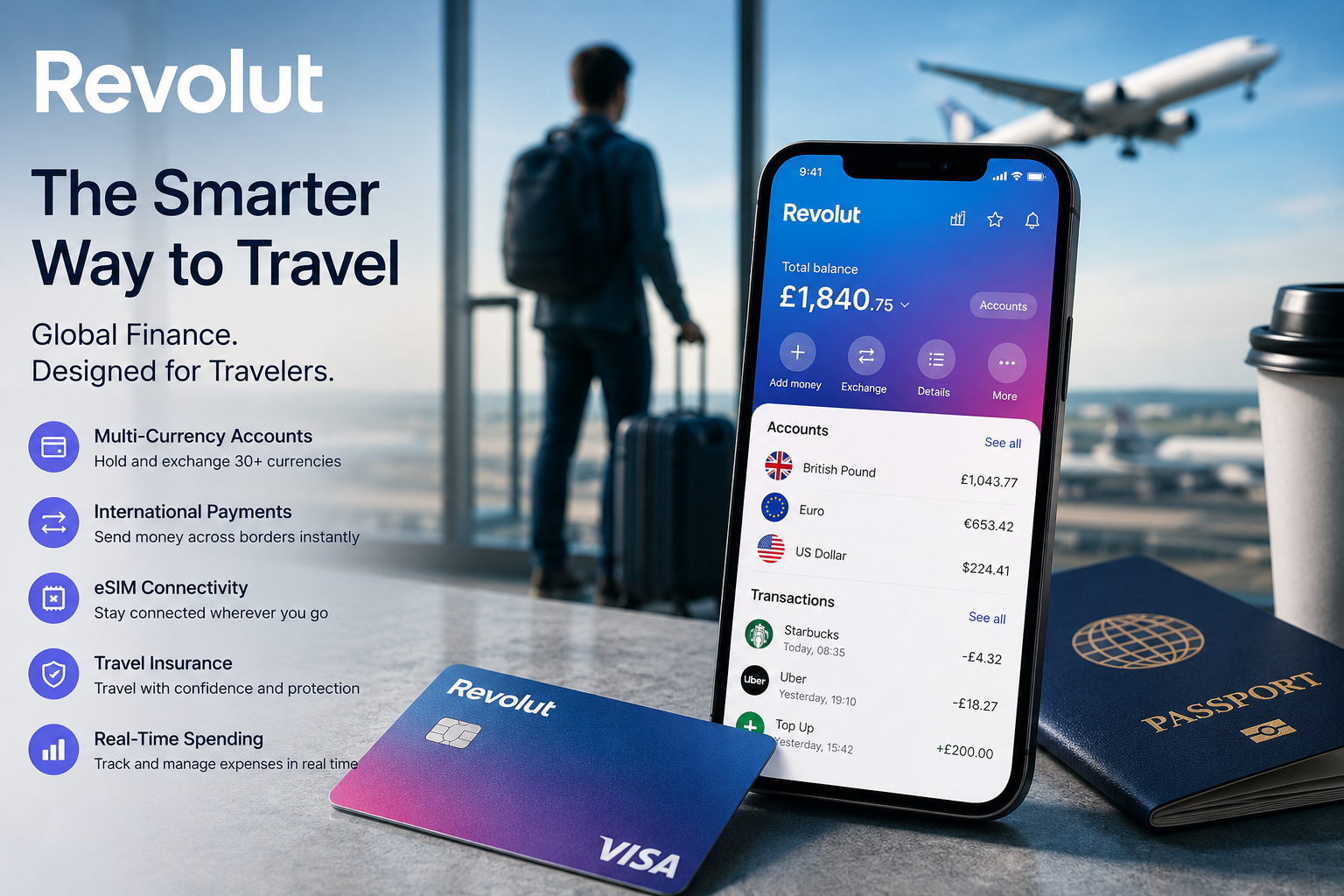
For travelers, Revolut has become particularly attractive because it combines financial management, payment processing, and travel-related services within a single mobile application.
Multi-Currency Accounts: A Core Travel Innovation
One of Revolut’s most notable travel-focused features is its multi-currency account system.
Traditional travelers often face several financial challenges when visiting foreign countries:
- Currency exchange fees
- Poor exchange rates at airports
- Foreign transaction charges
- Difficulty managing multiple currencies
Revolut addresses these issues by allowing users to hold and exchange numerous currencies within a single account.
For example, a traveller visiting Europe, Japan, and the United Kingdom can maintain balances in euros, Japanese yen, and British pounds without opening separate bank accounts.
Benefits include:
- Competitive exchange rates
- Instant currency conversion
- Reduced transaction costs
- Greater control over travel budgets
This functionality has made Revolut particularly popular among frequent travelers and digital nomads.
Global Payments Without Borders
Cross-border payments have historically been expensive and slow. Traditional banks often charge substantial fees for international transfers while taking several days to complete transactions.
Revolut streamlines this process through digital payment infrastructure.
Travelers can:
- Send money internationally
- Split travel expenses with friends
- Transfer funds across borders
- Pay merchants using local currencies
This capability is especially useful for:
- Backpackers traveling across multiple countries
- Business travelers
- Remote workers
- International students
By reducing barriers to international payments, Revolut supports a more connected global travel environment.
Contactless and Mobile Payments
The rise of mobile payments has significantly changed how people spend money while traveling.
Revolut integrates with major digital wallets, including:
- Apple Pay
- Google Wallet
- Various regional payment platforms
Travelers can make purchases using smartphones or smartwatches instead of carrying large amounts of cash.
Advantages include:
Enhanced Security
Digital payments reduce exposure to theft or card loss.
Faster Transactions
Contactless payments speed up purchases at airports, hotels, restaurants, and public transportation systems.
Better Expense Tracking
All transactions appear instantly within the Revolut app, helping travelers monitor spending in real time.
As contactless infrastructure expands globally, mobile-first financial solutions are becoming increasingly important in travel technology.
Real-Time Expense Management
Budget management is a common challenge for travelers.
Unexpected costs, fluctuating exchange rates, and multiple payment methods can make tracking expenses difficult.
Revolut offers real-time spending analytics through its mobile application.
Users can:
- Categorize spending
- Set budgets
- Receive instant notifications
- Monitor account balances
- Analyse travel expenses
For long-term travelers and digital nomads, these tools provide greater financial visibility and control.
Instead of reviewing bank statements after returning home, travelers can make informed spending decisions throughout their journeys.
Revolut eSIM: Connectivity Meets Travel Finance
A relatively recent addition to Revolut’s ecosystem is its eSIM service.
Connectivity has become an essential component of travel technology. Travelers rely on internet access for:
- Navigation
- Translation
- Communication
- Mobile payments
- Booking services
Traditional roaming charges can be expensive, while purchasing local SIM cards can be inconvenient.
Revolut’s eSIM solution allows eligible users to access mobile data internationally through a digital setup process.
Benefits include:
- Instant activation
- Reduced roaming costs
- Convenient mobile management
- Improved travel flexibility
The integration of connectivity services within a financial app reflects a broader trend toward all-in-one travel platforms.
Travel Insurance Integration
Insurance remains one of the most overlooked aspects of travel planning.
Unexpected situations such as:
- Medical emergencies
- Flight delays
- Lost baggage
- Trip cancellations
can result in significant financial losses.
Certain Revolut plans include travel insurance benefits, allowing users to access coverage through the same application they use for payments and budgeting.
This integration simplifies travel preparation and highlights the convergence of financial services and travel technology.
Instead of managing separate providers for banking, insurance, and travel support, users can centralize multiple services within one ecosystem.
Security Features for International Travelers
Security concerns are a major consideration when traveling abroad.
Revolut incorporates several technology-driven security features designed to protect users.
These include:
Instant Card Freezing
Users can freeze and unfreeze cards directly from the app.
Transaction Notifications
Real-time alerts provide immediate visibility into account activity.
Location-Based Security
Some security systems compare transaction locations with device locations to identify unusual activity.
Virtual Cards
Virtual cards can be used for online purchases, reducing exposure to fraud.
These features provide additional confidence for travelers navigating unfamiliar environments.
Digital Nomads and the Revolut Ecosystem
The growth of remote work has created a new category of traveler: the digital nomad.
Unlike traditional tourists, digital nomads often:
- Live in multiple countries annually
- Earn income internationally
- Manage cross-border finances
- Require reliable digital infrastructure
Revolut’s feature set aligns closely with these needs.
Digital nomads can benefit from:
- Multi-currency accounts
- International transfers
- Expense tracking
- Business accounts
- Global payment acceptance
As remote work continues to expand, financial platforms that support location-independent lifestyles are likely to gain further adoption.
Challenges and Limitations
Despite its advantages, Revolut is not without limitations.
Potential challenges include:
Service Availability
Not all Revolut features are available in every country.
Exchange Limits
Certain plans may impose limits on fee-free currency exchange.
Regulatory Differences
Financial regulations vary across jurisdictions, which can affect services and account functionality.
Dependence on Technology
Because Revolut operates primarily through digital channels, users need internet access and compatible devices.
Travelers should understand the platform’s terms and regional restrictions before relying on it as their primary financial solution abroad.
The Future of Revolut and Travel Technology
The future of travel technology is increasingly interconnected.
Financial services are becoming integrated with:
- Booking platforms
- Transportation systems
- Travel insurance
- Mobile connectivity
- AI-driven travel planning
Revolut’s expansion into travel-related services suggests a broader industry trend toward unified digital ecosystems.
Potential future developments may include:
- AI-powered travel budgeting
- Personalized financial recommendations
- Automated currency optimization
- Integrated travel booking services
- Advanced fraud prevention systems
- Expanded digital identity solutions
As travelers seek convenience and efficiency, platforms that combine financial management with travel services will likely play a larger role in the industry.
Conclusion
Revolut represents more than a digital banking platform; it exemplifies the growing convergence of fintech and travel technology. Through multi-currency accounts, international payments, mobile wallets, eSIM connectivity, travel insurance integration, and advanced security features, the company addresses many of the financial challenges associated with global travel.
Its success reflects changing consumer expectations. Modern travelers want seamless experiences, transparent pricing, real-time financial control, and integrated digital services. Revolut’s technology-driven approach aligns closely with these demands, making it a notable example of how innovation is reshaping international travel.
As travel becomes increasingly digital, connected, and borderless, platforms like Revolut are likely to remain at the forefront of the industry’s evolution, helping travelers navigate the world with greater convenience, flexibility, and confidence.