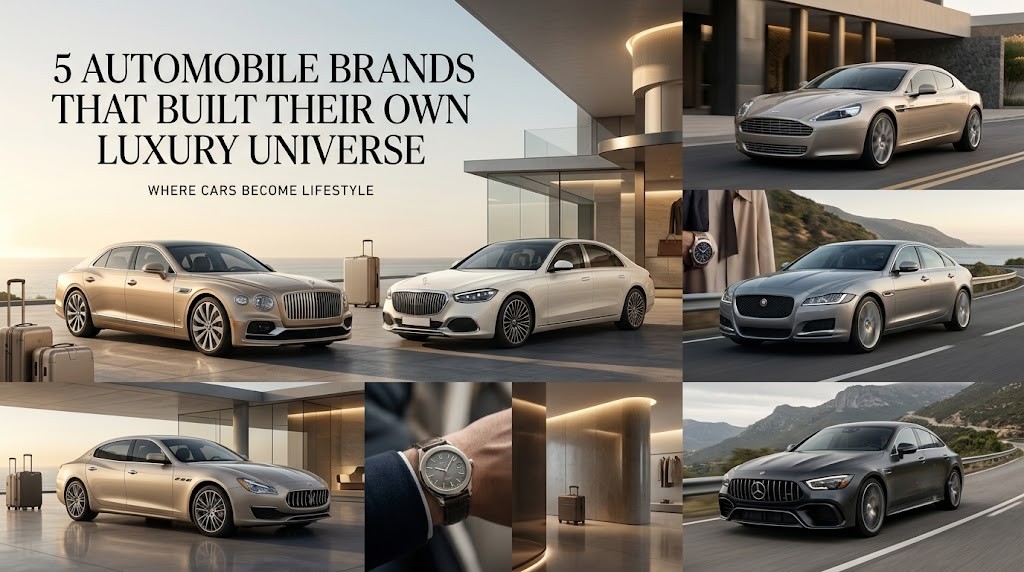
Luxury in the automotive world has never been limited to horsepower, handcrafted interiors, or a six-figure price tag. For the most influential automobile brands, luxury has evolved into something much broader: a complete universe built around design, craftsmanship, heritage, technology, hospitality, fashion, and exclusivity.
The strongest luxury marques no longer simply sell cars. They sell access to a particular world. That world has its own visual language, cultural references, lifestyle products, experiences, and even architecture. A customer buying one of these automobiles is often entering a carefully constructed ecosystem where everything—from the showroom to the luggage, watch, hotel experience, or racing heritage—feels connected.
This shift has transformed luxury automotive brands into lifestyle institutions. Among the companies that have developed particularly distinctive luxury universes are Ferrari, Bentley, Rolls-Royce, Porsche, and Mercedes-Benz. Each approaches the idea differently, but all have succeeded in making their brand identity extend far beyond the vehicle itself.
Ferrari: Where Performance Becomes a Lifestyle
Ferrari’s luxury universe begins with speed, but it does not end there. Few automotive names carry the same emotional connection to motorsport, Italian design, and exclusivity. The Prancing Horse has spent decades turning racing heritage into a lifestyle proposition that extends well beyond the racetrack.
Ferrari’s Formula 1 identity remains central to its mythology. The connection between its road cars and motorsport creates a sense of authenticity that is difficult to reproduce. Every new model is presented not merely as transportation, but as another chapter in a story built around engineering, competition, Italian craftsmanship, and performance.
That philosophy increasingly appears across Ferrari’s broader brand ecosystem. The company has developed fashion and lifestyle collections, accessories, collectibles, and exclusive experiences that allow enthusiasts to engage with the marque without necessarily sitting behind the wheel of a Ferrari. Its merchandising strategy has helped transform the instantly recognizable logo into a cultural symbol.
Ferrari’s approach to exclusivity is equally important. Ownership is positioned as an experience rather than a conventional purchase, supported by private events, driving programs, racing experiences, and highly curated customer relationships. The brand’s growing presence in lifestyle and experiential luxury demonstrates how an automobile company can create demand around an identity rather than simply a product.
The result is a luxury universe where the automobile remains the centrepiece, but the surrounding culture makes the ownership experience feel much larger.
Bentley: British Craftsmanship with a Modern Lifestyle
Bentley’s luxury universe is rooted in a very different tradition. Where Ferrari draws heavily from competition and performance, Bentley’s identity is built around British craftsmanship, grand touring, sophisticated design, and personalized luxury.
The brand has increasingly positioned itself as a modern luxury house rather than simply a manufacturer of premium automobiles. Inside a Bentley, traditional craftsmanship meets contemporary technology. Hand-finished materials, carefully selected veneers, intricate stitching, and extensive personalization create an experience that feels closer to bespoke furniture or haute craftsmanship than mass-market automotive production.
This philosophy extends beyond the cabin. Bentley has explored lifestyle products, luxury accessories, collaborations, and experiences that reflect the same design language as its vehicles. Its approach is less about placing a logo on merchandise and more about extending the values of the brand into adjacent categories.
Bentley’s connection with luxury hospitality and travel also makes natural sense. Its grand touring heritage has always been associated with long-distance journeys conducted in exceptional comfort. That makes the brand particularly well suited to an experiential luxury model, where the destination matters almost as much as the vehicle used to reach it.
Personalization is another defining element. Bentley’s bespoke division allows customers to specify highly individual combinations of materials, finishes, colors, and details. In a market where affluent consumers increasingly value uniqueness over simple status, this level of customization strengthens the idea that every vehicle can be part of a customer’s personal luxury universe.
Rolls-Royce: A World Built Around Bespoke Luxury
Rolls-Royce operates at one of the most exclusive points of the automotive luxury spectrum, and its universe is built around a simple principle: luxury should feel personal.
The Rolls-Royce experience has traditionally been associated with exceptional materials, quietness, craftsmanship, and chauffeur-driven comfort. But the modern brand has taken that philosophy further by creating an ecosystem in which bespoke design becomes the central attraction.
Through its Bespoke program, customers can commission extraordinarily personalized vehicles. Paint, leather, embroidery, wood, metal finishes, and even highly intricate artistic details can be developed around an individual’s preferences. The automobile becomes less like a standard product and more like a commissioned object.
Rolls-Royce has also developed a broader cultural presence through exclusive events, private client experiences, design-focused storytelling, and carefully curated lifestyle initiatives. Its Private Office concept in locations such as Dubai and Shanghai further reflects the direction of the brand: luxury clients are given environments designed for consultation, creativity, and personalization rather than conventional showroom transactions.
This matters because modern luxury is increasingly about participation. The customer does not simply select a car from a catalogue; they become involved in its creation.
The brand’s universe therefore revolves around discretion, craftsmanship, art, and individuality. Its famous Spirit of Ecstasy is more than an emblem on a bonnet—it represents entry into a world where conventional definitions of automotive ownership give way to bespoke creation.
Porsche: Performance Meets Design Culture
Porsche has created one of the most recognizable automotive identities in the world by maintaining a close relationship between engineering, design, motorsport, and lifestyle.
The Porsche universe is strongly connected to its distinctive design language. The silhouette of the 911, the simplicity of its interiors, and the brand’s long motorsport history have created a visual identity that enthusiasts can recognize instantly. But Porsche has also been remarkably successful at turning this identity into a broader cultural experience.
The Porsche Design brand is perhaps the clearest example. Established in the 1970s, Porsche Design extended the company’s design philosophy into watches, luggage, eyewear, fashion accessories, electronics, and other lifestyle products. The objective was not simply to sell merchandise but to translate Porsche’s principles of functional design and performance into different categories.
Porsche’s connection with collectors and enthusiasts has also created a powerful community around the brand. Events, driving experiences, heritage programs, motorsport activities, clubs, and specialized experiences allow customers to engage with Porsche as a culture rather than simply a carmaker.
The brand’s heritage strategy plays a particularly important role. Classic models are not treated merely as old vehicles; they form part of an ongoing design and engineering story. Programs dedicated to maintaining and celebrating historic cars reinforce the idea that Porsche’s past remains relevant to its present.
This creates a luxury universe with a distinctive character: less formal than traditional luxury houses, but deeply connected to design, performance, authenticity, and enthusiast culture.
Mercedes-Benz: From Automobiles to a Global Luxury Ecosystem
Mercedes-Benz has perhaps one of the broadest luxury ecosystems in the automotive industry. Its heritage stretches from the invention of the modern automobile to contemporary electric vehicles, advanced technology, fashion collaborations, design, hospitality, and premium customer experiences.
The Mercedes-Benz identity has historically been associated with engineering and prestige, but the company has increasingly emphasized luxury as a broader lifestyle proposition. Its approach combines automotive innovation with design and cultural relevance.
The brand’s Maybach name provides an especially clear example. Mercedes-Maybach occupies a distinct space focused on ultimate comfort, craftsmanship, technology, and exclusivity. The brand has expanded this positioning through collaborations and lifestyle initiatives that place Maybach within the wider world of luxury fashion, art, travel, and design.
Mercedes-Benz has also developed significant connections with the fashion industry. Its long-standing involvement with fashion weeks and designer collaborations demonstrates how the automobile can become part of a larger cultural conversation about style and creativity.
Technology is another major component of the Mercedes luxury proposition. Rather than treating digital features as separate from luxury, the brand increasingly integrates advanced interfaces, connectivity, driver assistance, and immersive cabin technology into the premium experience.
This combination gives Mercedes-Benz a particularly expansive luxury universe. It can speak simultaneously to heritage, innovation, fashion, performance, comfort, and contemporary design allowing the brand to remain relevant across different generations of luxury consumers.
Why Luxury Car Brands Are Becoming Lifestyle Brands
The transformation of automobile companies into lifestyle brands is not accidental. Luxury consumers today often seek experiences that feel coherent across different aspects of their lives.
A premium vehicle may be the initial point of contact, but the relationship can continue through fashion, travel, watches, architecture, hospitality, motorsport, art, and exclusive events. For brands, this creates more opportunities to build emotional loyalty and maintain a relationship with customers beyond the traditional vehicle ownership cycle.
There is also a powerful psychological element. Luxury is increasingly about belonging to a recognizable world. The customer is not only purchasing a product; they are expressing a preference for a particular philosophy of design, performance, craftsmanship, or cultural identity.
Ferrari builds its world around racing and Italian performance. Bentley emphasizes craftsmanship and grand touring. Rolls-Royce focuses on bespoke individuality. Porsche connects performance with design culture, while Mercedes-Benz brings together engineering, technology, fashion, and prestige.
Their strategies differ, but the underlying principle is similar: the car becomes the gateway, not the entire experience.
The Future of Automotive Luxury
As the automotive industry moves toward electrification, software-defined vehicles, personalization, and new mobility experiences, luxury brands face an interesting challenge. Mechanical performance alone may no longer be enough to differentiate an automobile.
The brands with the strongest identities will likely be those capable of preserving their heritage while creating new reasons for customers to engage with them. Physical craftsmanship can coexist with digital experiences. Motorsport heritage can coexist with electrification. Traditional luxury can be combined with contemporary design and technology.
The most successful automotive luxury universes will therefore be built around a clear and recognizable philosophy. The individual products may change, but the emotional world surrounding them must remain consistent.
That is ultimately what separates a luxury automobile brand from an expensive automobile manufacturer. A luxury universe gives customers something to identify with, participate in, and remember long after the engine or electric motor has stopped.
“Luxury is no longer defined only by what you own; it is defined by the world you become part of.”