
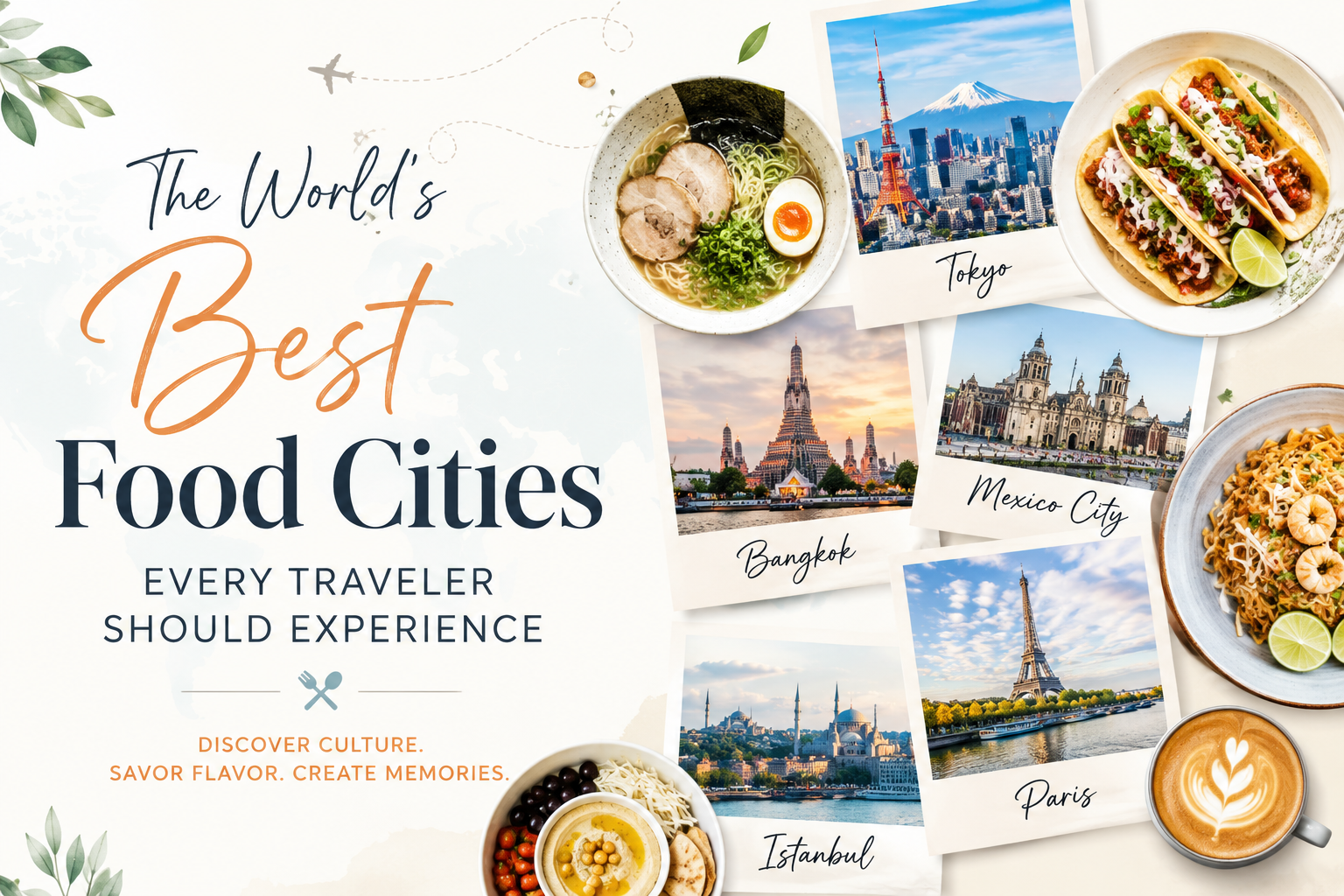
Food has become one of the biggest reasons people travel. While famous landmarks and beautiful landscapes still attract millions of tourists every year, many travelers now plan entire vacations around local cuisine. A city’s food tells stories that history books often cannot. Every street market, family-run restaurant, and fine-dining establishment reflects generations of culture, migration, innovation, and tradition. Whether it’s a bowl of handmade noodles served in a tiny alleyway or a multi-course tasting menu in a Michelin-starred restaurant, every meal offers a deeper understanding of a destination.
The world’s greatest food cities are more than places where you can eat well—they are places where culinary traditions thrive alongside modern creativity. Local chefs preserve age-old recipes while experimenting with new techniques, creating experiences that satisfy both first-time visitors and seasoned food enthusiasts. Exploring these cities through food means discovering neighbourhoods, meeting passionate vendors, and experiencing customs that have shaped local identities for centuries.
Tokyo, Japan: Precision Meets Perfection
Tokyo stands at the top of nearly every food lover’s bucket list, and for good reason. The Japanese capital offers an extraordinary range of culinary experiences, from humble ramen shops to some of the world’s most celebrated fine-dining restaurants. Every meal reflects an unwavering commitment to quality, freshness, and craftsmanship.
Sushi is naturally the city’s most famous culinary attraction, but limiting Tokyo to sushi alone would be a mistake. Visitors can enjoy steaming bowls of ramen, crispy tempura, Savory yakitori grilled over charcoal, delicate soba noodles, fluffy Japanese pancakes, and comforting bowls of curry rice. Even convenience stores serve surprisingly high-quality meals that impress international visitors.
What makes Tokyo exceptional is its respect for ingredients. Fish markets receive fresh seafood daily, vegetables are carefully selected according to the season, and chefs often spend decades mastering a single cooking technique. Dining in Tokyo teaches travelers that simplicity, when executed perfectly, can create unforgettable Flavors.
Bangkok, Thailand: The Capital of Street Food
Bangkok delivers one of the world’s most exciting street food scenes. The city buzzes with energy from sunrise until well after midnight, and food vendors occupy nearly every busy street. Walking through Bangkok means constantly encountering the aromas of grilled meats, fragrant herbs, spicy curries, and freshly cooked noodles.
The balance of sweet, sour, salty, spicy, and Savory Flavors defines Thai cuisine. A single meal often combines all five elements, creating remarkable depth without feeling overwhelming. Pad Thai, Tom Yum soup, Green Curry, Mango Sticky Rice, and Som Tam are only the beginning of what the city has to offer.
Unlike many destinations where street food is considered a budget option, Bangkok’s roadside stalls are often regarded as culinary institutions. Some have served the same family recipes for generations and attract locals just as much as tourists. Eating on small plastic stools beside a busy road becomes part of the authentic travel experience.
Mexico City, Mexico: A Celebration of Heritage
Mexico City has transformed into one of the world’s most exciting culinary destinations by embracing both indigenous traditions and contemporary gastronomy. Every neighbourhood offers unique specialties, and nearly every meal celebrates ingredients that have shaped Mexican cuisine for thousands of years.
Corn remains the heart of countless dishes, appearing in fresh tortillas, tamales, tacos, and tostadas. Combined with chilies, beans, avocados, tomatoes, chocolate, and fresh herbs, these ingredients create meals that are rich in both flavor and history.
Street tacos remain the city’s signature experience. Whether filled with slow-cooked meats, grilled vegetables, or seafood, they showcase remarkable diversity despite their simplicity. Alongside traditional food, innovative chefs are reinventing classic Mexican recipes, proving that honouring heritage and embracing innovation can exist together.
Istanbul, Turkey: Where Continents and Flavors Meet
Straddling Europe and Asia, Istanbul reflects centuries of cultural exchange through its remarkable cuisine. The city’s food combines influences from the Ottoman Empire, the Middle East, Central Asia, and the Mediterranean, resulting in one of the world’s richest culinary landscapes.
Breakfast alone is an event, featuring cheeses, olives, fresh bread, honey, jams, eggs, tomatoes, cucumbers, and endless cups of Turkish tea. Throughout the day, travelers encounter fragrant kebabs, flaky börek pastries, lentil soups, grilled seafood, and sweet desserts such as baklava.
Local markets add another dimension to Istanbul’s food culture. Vendors proudly display colourful spices, dried fruits, nuts, Turkish delight, and aromatic coffee. Simply wandering through these markets provides an immersive sensory experience that captures the city’s vibrant culinary identity.
Naples, Italy: The Birthplace of Pizza
For many travelers, Naples represents the soul of Italian comfort food. While Italy offers exceptional cuisine across every region, Naples holds a special place as the birthplace of pizza. Authentic Neapolitan pizza, with its soft, airy crust, fresh mozzarella, San Marzano tomatoes, and fragrant basil, continues to attract visitors from around the globe.
However, Naples offers much more than pizza. Fresh seafood, handmade pasta, creamy buffalo mozzarella, fried street snacks, and traditional pastries reveal the diversity of southern Italian cuisine. Every meal emphasizes high-quality ingredients rather than unnecessary complexity.
Dining in Naples feels deeply personal. Family-owned restaurants often serve recipes passed down through generations, preserving traditions that define the city’s culinary reputation. Meals are rarely rushed, allowing visitors to appreciate both the food and the warmth of Italian hospitality.
Seoul, South Korea: Tradition Reinvented
Seoul has emerged as one of Asia’s most dynamic food capitals by successfully blending centuries-old traditions with modern culinary innovation. Korean cuisine has gained worldwide popularity, but experiencing it in Seoul offers a completely different perspective.
Barbecue remains one of the city’s greatest attractions. Guests grill premium cuts of beef and pork directly at their tables before pairing them with an impressive variety of side dishes known as banchan. Kimchi accompanies nearly every meal, showcasing Korea’s rich fermentation culture.
Beyond barbecue, travelers can enjoy bibimbap, toktokkie, japchae, Korean fried chicken, hearty stews, and fresh seafood. Night markets add another layer of excitement, offering affordable snacks and desserts that encourage visitors to sample multiple dishes in a single evening.
Paris, France: The Art of Fine Dining
Paris has long represented elegance in the culinary world. The French capital continues to influence global gastronomy through its dedication to technique, presentation, and exceptional ingredients. Dining here ranges from neighbourhood cafés serving simple classics to luxurious restaurants offering elaborate tasting menus.
Freshly baked croissants, buttery pastries, artisan breads, carefully prepared cheeses, rich sauces, and beautifully crafted desserts form the foundation of the Parisian food experience. Even a simple sandwich purchased from a local bakery often reflects extraordinary attention to detail.
What truly distinguishes Paris is its respect for culinary craftsmanship. Bakers, cheesemakers, chocolatiers, and chefs spend years perfecting their skills, ensuring that quality remains central to every meal. Visitors quickly realize that eating well is not viewed as a luxury but as an essential part of everyday life.
Singapore: A Global Culinary Crossroads
Singapore demonstrates how multiculturalism can create one of the world’s most exciting food scenes. Chinese, Malay, Indian, Peranakan, and international influences coexist harmoniously, producing an astonishing variety of dishes within a relatively small city.
The country’s famous hawker centers provide affordable access to exceptional food. Diners can move from Hainanese chicken rice to laksa, satay, chili crab, roti prata, or nasi lemak within a single meal. This diversity reflects Singapore’s multicultural society and its ability to celebrate different culinary traditions equally.
Government support for preserving hawker culture has ensured that traditional recipes continue to thrive alongside contemporary restaurants. As a result, Singapore successfully balances heritage with innovation, making it an essential destination for adventurous eaters.
Barcelona, Spain: Mediterranean Flavors at Their Finest
Barcelona combines fresh Mediterranean ingredients with Catalan culinary traditions, creating a relaxed yet sophisticated dining culture. The city’s markets overflow with seasonal vegetables, seafood, cured meats, cheeses, and olives that form the foundation of local cuisine.
Tapas encourage social dining by allowing friends and families to share numerous small plates instead of ordering individual meals. Patatas bravas, croquettes, grilled octopus, anchovies, jamón, and pan con tomato showcase how simple ingredients can produce extraordinary Flavors.
Seafood also plays a central role in Barcelona’s identity. Fresh catches arrive daily from nearby coastal waters, ensuring exceptional quality in restaurants throughout the city. Combined with local wines and vibrant outdoor dining, Barcelona offers an unforgettable Mediterranean culinary experience.
Marrakech, Morocco: A Feast for the Senses
Marrakech immerses visitors in a world of bold spices, aromatic herbs, and colourful ingredients. Food here reflects centuries of Berber, Arab, African, and Mediterranean influences, creating dishes that are deeply flavourful without being overwhelming.
Traditional tagines, slow-cooked in distinctive clay pots, combine meat, vegetables, fruits, and spices into comforting meals that highlight Morocco’s culinary heritage. Couscous, grilled meats, freshly baked bread, and fragrant mint tea remain staples throughout the city.
The bustling markets add to the adventure. Vendors prepare fresh orange juice, grilled meats, pastries, olives, dried fruits, and spice blends in front of customers, creating an atmosphere where eating becomes inseparable from the city’s vibrant culture.
New Orleans, United States: America’s Culinary Melting Pot
Few American cities possess a culinary identity as distinctive as New Orleans. Influenced by French, Spanish, African, Caribbean, and Creole traditions, the city’s cuisine reflects centuries of cultural blending.
Gumbo, jambalaya, po’boys, crawfish boils, beignets, and étouffée represent only a small portion of its rich food heritage. Every dish tells the story of communities adapting recipes to local ingredients while preserving cultural traditions.
Music further enhances the dining experience. Jazz performances often accompany meals, creating an atmosphere where food and entertainment blend seamlessly. Visitors quickly understand why New Orleans is celebrated as one of America’s greatest culinary destinations.
Why Food Cities Leave Lasting Memories
The best food cities offer far more than delicious meals. They invite travelers to understand local history, appreciate cultural diversity, and connect with people through shared experiences around the dining table. Markets become classrooms, restaurants become storytellers, and every dish reveals something meaningful about the community that created it.
Food also creates memories that endure long after a journey ends. Travelers may forget hotel rooms or transportation schedules, but they rarely forget the first bite of authentic sushi in Tokyo, the aroma of spices in Marrakech, or the taste of freshly baked pizza in Naples. These sensory experiences become lasting reminders of the places visited and the cultures explored.
Modern travelers increasingly seek authenticity rather than simply checking famous landmarks off a list. Culinary exploration satisfies this desire by encouraging meaningful interactions with local traditions and everyday life. Whether enjoying street food in Bangkok, sharing tapas in Barcelona, or sipping coffee in a Parisian café, travelers experience destinations through the routines and rituals of the people who call these cities home.
Final Thoughts
Every great food city has its own personality, shaped by geography, history, climate, migration, and tradition. Some impress through centuries-old recipes, while others captivate with constant innovation. Yet they all share one essential quality: a deep respect for the role food plays in bringing people together.
For anyone planning future adventures, choosing destinations based on their culinary heritage can transform an ordinary vacation into an unforgettable cultural journey. The world’s greatest food cities prove that the most meaningful travel experiences often begin with a single meal and continue long after the last bite. Whether your preference is street food, traditional family recipes, or award-winning fine dining, these remarkable destinations promise Flavors, stories, and memories that will stay with you for a lifetime.