Introduction
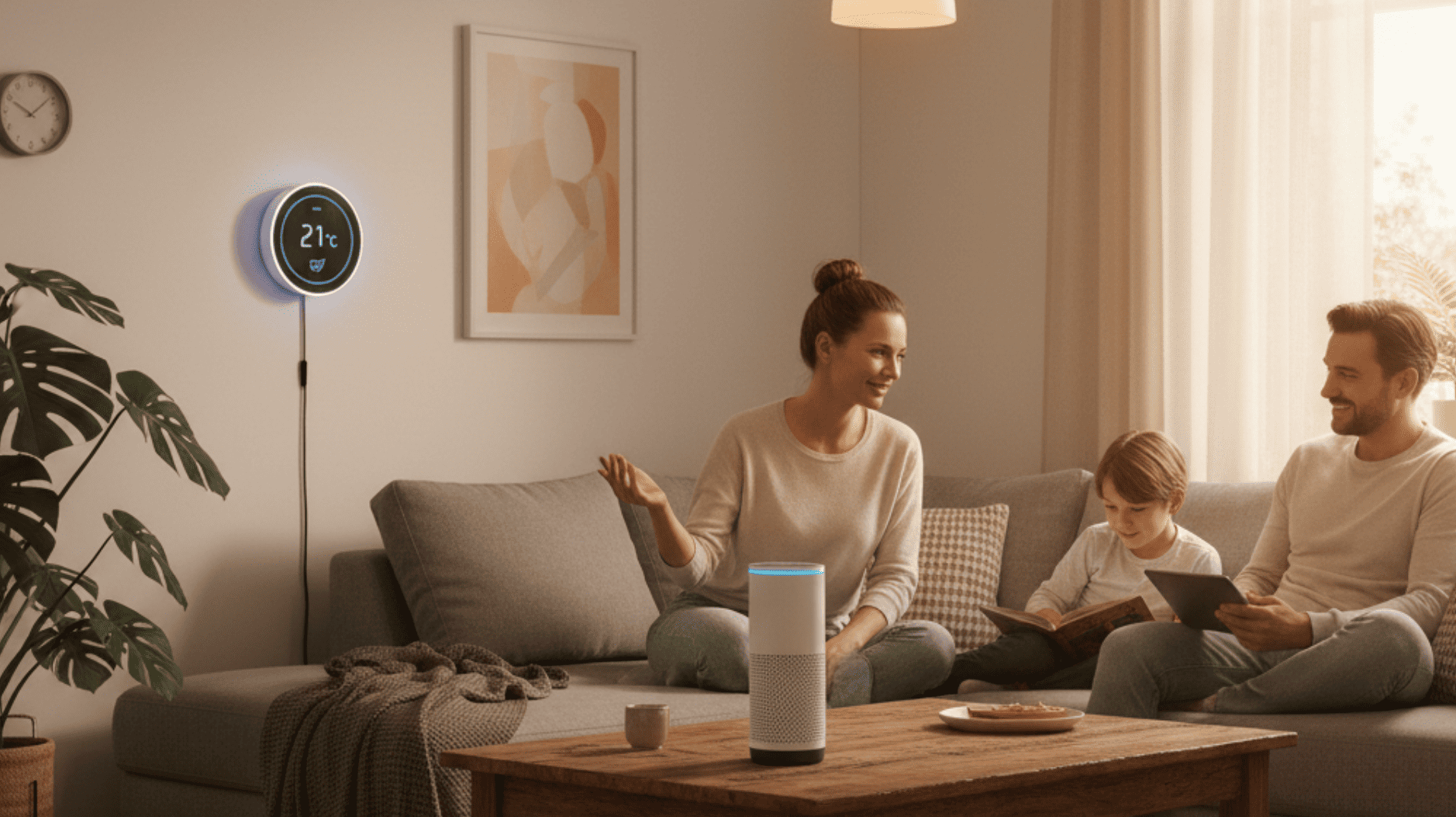
A simple voice command can dim the lights, lock the front door, play your favourite playlist, adjust the thermostat, or even order groceries without lifting a finger. What once felt like science fiction has quickly become part of everyday life for millions of households around the world. Voice-controlled homes are no longer reserved for technology enthusiasts. They are becoming a mainstream feature in apartments, suburban homes, luxury residences, and even hotels.
The rapid growth of smart speakers and voice assistants has transformed the way people interact with their living spaces. Families use voice commands to simplify daily routines, professionals rely on automation while working from home, and older adults appreciate the accessibility these technologies provide. The appeal is obvious: convenience, efficiency, and seamless control over connected devices.
However, the rise of voice-controlled homes has also sparked an important global conversation about digital privacy. As more microphones, cloud-connected devices, and artificial intelligence systems enter our homes, many consumers are asking a crucial question: Are smart homes making life easier at the cost of personal privacy?
The answer is more nuanced than a simple yes or no. Voice-controlled homes offer remarkable benefits, but they also require homeowners to understand how their devices collect, process, and protect data. Finding the right balance between convenience and privacy has become one of the defining challenges of the modern smart home.
What Is a Voice-Controlled Home?
A voice-controlled home is a smart home ecosystem where connected devices respond to spoken commands through an intelligent virtual assistant. Instead of pressing switches or opening mobile apps, users simply speak naturally to control lighting, entertainment systems, security cameras, appliances, heating and cooling systems, blinds, and many other connected technologies.
Modern voice assistants rely on artificial intelligence, natural language processing, and cloud computing to understand requests. Over time, these systems learn user preferences and create personalized experiences. A simple morning command can trigger multiple automated actions, such as opening curtains, reading the day’s weather, switching on the coffee machine, and adjusting indoor temperature.
This level of automation has fundamentally changed the relationship between homeowners and technology. Instead of operating devices individually, people now communicate with their homes almost as if they were speaking to another person.
Why Voice-Controlled Homes Continue to Grow
The popularity of voice-controlled homes is driven by changing lifestyles and increasing digital adoption across global markets. Busy professionals appreciate the ability to multitask, families enjoy simplified household management, and technology has become more affordable than ever before.
Consumers are also investing more in connected ecosystems rather than standalone gadgets. Lighting, entertainment, home security, kitchen appliances, and energy management systems now work together through centralized voice commands, creating a smoother user experience.
Artificial intelligence has significantly improved voice recognition accuracy. Today’s systems understand different accents, conversational language, and contextual requests far better than early-generation smart assistants. This improvement has increased consumer confidence and expanded adoption across multiple age groups.
As smart homes become more intelligent, voice interaction is gradually replacing traditional interfaces for many everyday tasks.
The Convenience That Makes Smart Homes So Appealing
Convenience remains the strongest selling point for voice-controlled homes. Instead of manually controlling multiple devices, homeowners can manage an entire environment using simple spoken commands.
Imagine returning home carrying shopping bags. Rather than searching for keys or light switches, a voice command can unlock compatible smart locks, illuminate the hallway, and activate indoor climate settings. These small conveniences save time and reduce everyday friction.
Entertainment is another area where voice technology excels. Users can instantly search for movies, control music across multiple rooms, adjust television settings, or create personalized playlists without touching a remote control.
In the kitchen, voice assistants help users follow recipes, convert measurements, set multiple cooking timers, and build shopping lists while keeping their hands free during food preparation.
The overall experience creates a more intuitive relationship between people and technology, allowing homes to respond naturally to daily routines.
Accessibility: A Life-Changing Innovation
While convenience attracts many buyers, accessibility may be the most meaningful benefit of voice-controlled homes.
For individuals with physical disabilities, limited mobility, or chronic health conditions, voice commands can dramatically improve independence. Everyday tasks such as adjusting lights, controlling doors, operating televisions, or making emergency calls become much easier without requiring physical interaction.
Older adults also benefit significantly from voice automation. Smart reminders for medications, calendar appointments, emergency contacts, and household controls help seniors remain independent for longer while giving family members additional peace of mind.
Children also find voice technology intuitive, allowing them to safely interact with educational content, audiobooks, and family-approved entertainment using simple commands.
In this context, voice-controlled homes are more than a luxury—they represent inclusive technology that improves quality of life.
The Privacy Question Every Homeowner Should Consider
Despite these advantages, privacy concerns continue to shape public opinion about voice-controlled homes.
Voice assistants remain in a listening mode so they can recognize activation phrases. While manufacturers generally explain that devices only begin recording after detecting a wake word, many consumers remain uncomfortable with microphones operating continuously inside private living spaces.
Questions naturally arise regarding what information is collected, how long recordings are stored, who can access the data, and how it may be used to improve artificial intelligence systems or personalize services.
Even when companies implement strong privacy policies, users often overlook account settings, recording history, and permission controls. As a result, many homeowners unknowingly share more personal information than they intend.
Privacy concerns are not always about malicious surveillance. Instead, they often revolve around transparency, informed consent, and maintaining control over personal data.
How Voice Data Is Processed
Understanding how voice assistants operate helps separate myths from reality.
Most modern voice assistants continuously monitor for a specific wake word using on-device processing. Once the activation phrase is recognized, the device records the user’s request and sends it securely to cloud servers where artificial intelligence interprets the command and returns a response.
Some companies allow users to review, download, or delete stored voice recordings through account settings. Others provide options to disable recording history entirely or automatically erase recordings after a selected period.
Although security standards have improved considerably, no connected technology is entirely immune to cybersecurity risks. Like smartphones and computers, smart home devices require regular software updates and responsible user management.
Consumers who understand these systems are generally better equipped to make informed decisions about privacy settings.
Cybersecurity Risks in Connected Homes
Privacy is only one side of the conversation. Cybersecurity represents another critical consideration.
Every connected device creates a potential entry point into a home network. Weak passwords, outdated firmware, unsecured Wi-Fi networks, or unsupported devices may increase vulnerability to cyberattacks.
Fortunately, most cybersecurity incidents can be minimized through basic digital hygiene. Strong passwords, multi-factor authentication, encrypted home networks, automatic software updates, and purchasing devices from reputable manufacturers significantly reduce security risks.
Consumers increasingly recognize that smart home security is not solely the manufacturer’s responsibility. Safe digital habits remain essential for protecting connected households.
Finding the Right Balance Between Innovation and Privacy
The debate surrounding voice-controlled homes should not be framed as technology versus privacy. Instead, it is about responsible innovation.
Manufacturers have made noticeable improvements in privacy controls over recent years. Many devices now include microphone mute buttons, clearer permission settings, improved encryption, local processing for certain commands, and greater transparency regarding stored data.
At the same time, consumers are becoming more privacy-conscious. Buyers increasingly compare products not only by features but also by security standards, software support, and company reputation regarding user data.
The future of smart homes will likely depend on earning long-term consumer trust rather than simply introducing more automation features.
Tips for Using Voice-Controlled Homes More Securely
Homeowners who want both convenience and privacy can adopt several practical habits. Purchasing devices from established manufacturers with regular software support is an important first step. Keeping firmware updated helps protect against newly discovered security vulnerabilities.
Users should also review privacy settings after installation rather than relying on default configurations. Many platforms allow customers to delete voice history, limit data collection, or disable optional personalization features.
Securing the home Wi-Fi network with a strong password and enabling multi-factor authentication for smart home accounts adds another valuable layer of protection.
Finally, consumers should periodically review which connected devices remain active. Removing unused smart products reduces unnecessary exposure while keeping the overall smart home ecosystem easier to manage.
The Future of Voice-Controlled Living
Voice technology is evolving beyond simple commands. Artificial intelligence is making digital assistants more conversational, context-aware, and predictive.
Future voice-controlled homes may anticipate user needs based on routines, environmental conditions, and personal preferences. Instead of waiting for commands, homes could proactively optimize energy usage, improve indoor air quality, recommend maintenance schedules, and personalize entertainment experiences.
At the same time, privacy expectations are becoming stronger worldwide. Governments continue developing regulations that encourage greater transparency, stronger consumer protections, and clearer data management practices.
The companies that succeed in the future smart home market will likely be those that combine cutting-edge artificial intelligence with privacy-first design principles.
Consumers no longer want to choose between convenience and security. They increasingly expect both.
Conclusion
Voice-controlled homes represent one of the most significant shifts in modern residential technology. They simplify everyday routines, improve accessibility, enhance energy efficiency, and create highly personalized living environments that continue to evolve through artificial intelligence.
Yet these benefits come with important responsibilities. Homeowners should understand how connected devices collect data, review privacy settings regularly, secure their home networks, and choose products from manufacturers committed to transparency and long-term software support.
Rather than viewing voice-controlled homes as either entirely safe or inherently risky, a more balanced perspective recognizes that technology is only as trustworthy as the systems, safeguards, and user choices behind it.
As smart homes become an integral part of everyday life across the globe, the future will not belong solely to the most intelligent devices. It will belong to the technologies that earn consumer trust by delivering both exceptional convenience and meaningful privacy protection.
For today’s homeowners, the question is no longer whether voice-controlled living is the future. The real question is how to embrace its remarkable convenience while remaining informed, secure, and in control of personal data.
.