Luxury travel used to be defined by what could be seen: the grandest suite, the most spectacular infinity pool, the rarest destination, the car waiting outside the airport. Today, the meaning of luxury is becoming considerably quieter.
For a growing group of affluent travellers, the ultimate privilege is not being noticed at all.
Privacy has evolved into one of the most desirable currencies in high-end travel. It is the ability to arrive without a crowd, spend days without encountering another guest, dine without an audience and disappear into a destination without having to share every moment online. In a world where almost everything can be photographed, tracked, posted and shared, genuine seclusion feels remarkably exclusive.
A new generation of luxury travel brands has built its identity around exactly that idea. From private islands and remote villas to discreet safari camps and members-only retreats, these companies are designing experiences where exclusivity is measured less by extravagance and more by distance from everyone else.
Aman: When Privacy Becomes a Philosophy
Few names have become as closely associated with discreet luxury as Aman. Rather than relying on the traditional spectacle of five-star hospitality, Aman has spent decades creating properties where architecture, space and service work together to create a sense of withdrawal from the outside world.
The Aman philosophy is particularly evident in the way its resorts are positioned. Many properties are surrounded by dramatic landscapes, historic settings or secluded environments, allowing guests to feel removed from conventional tourism. Even in destinations that attract millions of visitors, the experience inside an Aman property can feel remarkably detached from the crowds beyond its walls.
Privacy here is not simply about having a private room. It is embedded into the entire guest experience. Carefully considered layouts, generous personal space and discreet service mean that guests can move through a property without constantly feeling observed.
That subtlety is important. Aman does not need to announce exclusivity loudly. The absence of noise becomes the luxury.
One&Only: Seclusion With a Sense of Occasion
One&Only approaches privacy from a slightly different direction. Its resorts combine highly polished hospitality with locations designed to give guests a strong sense of personal space.
From private villas overlooking tropical landscapes to secluded residences designed for families and groups, One&Only understands that privacy increasingly means controlling how much of the outside world enters a holiday.
The appeal is especially strong for travellers who want the atmosphere of a spectacular resort without necessarily participating in the social energy that often comes with one. A private pool, dedicated outdoor space and personalized service can transform a conventional resort stay into something much more intimate.
For modern luxury travellers, that distinction matters. They may still want exceptional restaurants, wellness facilities and world-class service, but they want those experiences on their own terms.
Six Senses: Wellness, Nature and the Art of Disappearing
Six Senses has built its reputation around wellness and immersive destinations, but privacy is increasingly central to the appeal.
Its properties tend to emphasize natural surroundings, thoughtful architecture and experiences that encourage guests to slow down. Rather than constructing a holiday around constant entertainment, Six Senses creates environments where isolation itself becomes part of the experience.
Imagine waking up surrounded by forest, mountains or ocean with no urban skyline competing for attention. There is something psychologically powerful about that kind of environment. The luxury is not necessarily in having more things; it is in having fewer interruptions.
For travellers experiencing burnout from hyperconnected lifestyles, this can be more valuable than another extravagant amenity. A few uninterrupted days can feel like a genuine escape.
The Brando: When an Entire Island Becomes the Hotel
Some luxury properties take privacy to its logical extreme: instead of giving guests a private room, they give them an entire environment.
The Brando in French Polynesia is one of the world’s most recognizable examples. Located on the private atoll of Tetiaroa, the resort creates a level of physical separation that traditional city hotels simply cannot replicate.
Its villas are designed around personal space, while the surrounding landscape provides an extraordinary feeling of remoteness. The ocean, beaches and tropical environment become part of the experience rather than merely a backdrop.
What makes this form of luxury particularly compelling is its sense of permanence. Guests are not simply staying somewhere private; they are temporarily entering a world that feels distinctly separate from ordinary life.
There is no need to manufacture exclusivity when geography has already done the work.
Velaa Private Island: The New Meaning of Personal Space
In the Maldives, privacy has become almost synonymous with luxury. Among the resorts pushing that idea further is Velaa Private Island.
The concept is simple but powerful: create an environment where guests can spend much of their holiday within their own private world.
Large villas, private pools, direct access to the ocean and personalized experiences allow travellers to determine how social or secluded their stay becomes. That flexibility is increasingly important to high-end travellers.
Privacy does not always mean complete isolation. Sometimes it means having the choice.
A couple may want a romantic dinner without other tables nearby. A family may want a villa where children can play freely. A celebrity may need discretion. A group of friends may want to spend an entire afternoon together without leaving their residence.
The best luxury properties understand that privacy is personal.
Singita: Safari Without the Crowds
Privacy takes on a different character in the African wilderness.
Singita has developed an approach to luxury safari that combines spectacular landscapes with small-scale, highly personalized hospitality. Its lodges and camps are often located in expansive conservation areas, giving guests the opportunity to experience the wilderness away from the crowds associated with more conventional tourism.
The appeal is not simply having an expensive room overlooking the savannah. It is the feeling that the landscape belongs to the moment.
A private game drive can mean stopping for wildlife sightings without a convoy of vehicles surrounding the scene. A secluded dinner beneath the stars can feel less like a scheduled hotel activity and more like a memory created specifically for the guests sitting at the table.
Here, privacy and nature reinforce one another.
The fewer distractions there are, the more powerful the destination becomes.
Black Tomato: Designing the Journey Around the Traveller
While traditional luxury hotel brands focus heavily on where guests stay, Black Tomato takes a broader approach by designing highly customized journeys.
This matters because privacy increasingly extends beyond the hotel.
A private itinerary can influence how guests arrive, where they stay, how they move between destinations and which experiences they encounter along the way. Instead of following a standard luxury itinerary, travellers can create something that feels almost entirely personal.
That could mean chartering a yacht, arranging private access to a destination or creating an itinerary designed around unusual experiences.
The luxury is therefore not just the destination. It is the absence of compromise.
Private Aviation Is Changing the Journey, Too
The privacy trend does not stop when the traveller leaves the resort.
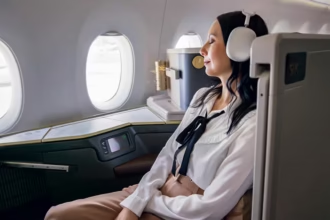
Companies such as VistaJet have helped transform private aviation into an extension of the luxury travel experience. For affluent travellers, the appeal of flying privately goes far beyond comfort.
There is time saved, flexibility gained and, perhaps most importantly, control over the journey.
Private aviation removes many of the public-facing stages of conventional travel. There are no crowded departure lounges, long security queues or fixed commercial schedules. The journey itself becomes more discreet.
This is particularly relevant to travellers who value their time as much as their money. When a luxury holiday can begin the moment someone leaves home rather than after navigating an airport, the definition of premium travel changes.
The Rise of Private Villas and Residences
Another major shift in luxury travel is the growing preference for private residences over traditional hotel rooms.
A suite may offer exceptional comfort, but a private residence offers something fundamentally different: control.
Travellers can have their own entrance, pool, kitchen, outdoor areas and living spaces. Families can stay together without occupying multiple rooms. Groups can dine privately and spend entire days without interacting with other guests.
This model has become particularly attractive for multigenerational travel, destination celebrations and extended stays.
Luxury is increasingly moving away from the idea of a room as a temporary sleeping space. Instead, the most desirable properties resemble private worlds.
Why Privacy Has Become the New Status Symbol
There is a cultural reason behind this transformation.
Luxury once depended heavily on visibility. A recognizable hotel, designer luggage or famous destination could communicate status immediately. But social media has changed the relationship between wealth and visibility.
When everyone can broadcast where they are, true exclusivity becomes harder to communicate through photographs alone.
Privacy solves that problem.
An experience that cannot easily be replicated, photographed or accessed by the general public possesses a different kind of value. The story becomes personal rather than performative.
That is why secluded islands, private villas, hidden lodges and members-only travel clubs have become so compelling. Their appeal is not necessarily that nobody knows they exist. It is that very few people can experience them in the same way.
Luxury Is Becoming Quieter
The future of luxury travel may therefore be less about adding more and more.
More restaurants. More pools. More entertainment. More technology. More spectacle.
Instead, the next generation of luxury travellers may increasingly seek subtraction: fewer people, fewer schedules, fewer interruptions and fewer reasons to check a phone.
The world’s most sophisticated travel brands are responding by creating spaces where guests can disappear without sacrificing comfort.
That is the paradox of modern luxury. The most extraordinary experience may not be the one everyone wants to see.
It may be the one you never feel the need to share.
“The rarest luxury is not being seen. It is having the freedom to disappear.”