For years, Apple has been remarkably good at making technology feel invisible. The iPhone became the device people carried everywhere, the Apple Watch moved computing onto the wrist, and AirPods made wireless audio feel almost effortless. Yet there has always been one major part of everyday life where Apple remained surprisingly cautious: the home. That may finally be changing. After years of speculation around a more ambitious Apple smart home strategy, reports now point toward a new generation of connected-home products, including a smart doorbell, security cameras, smart locks and a dedicated home hub.
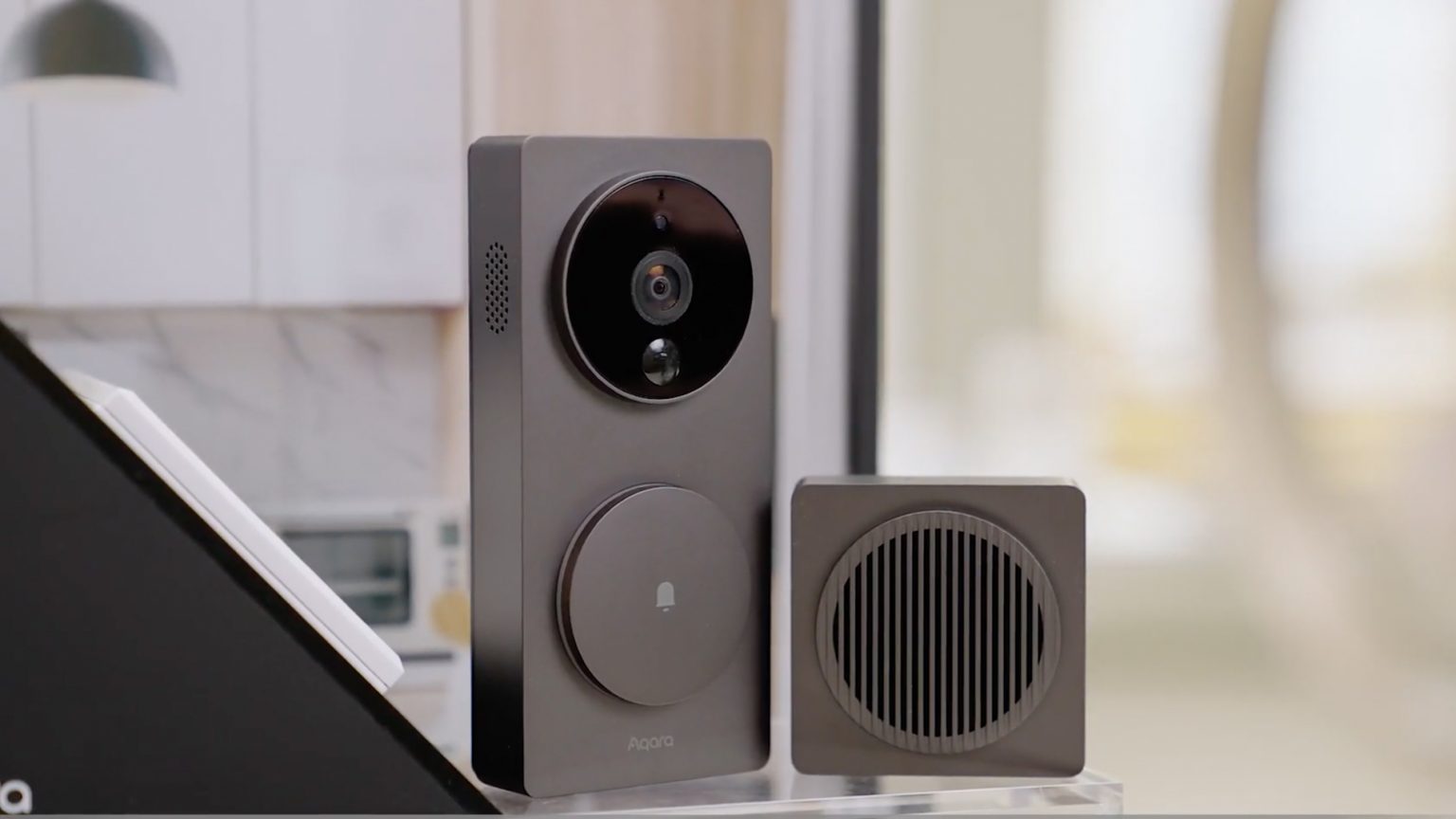
The idea of an Apple doorbell camera is particularly interesting because a doorbell is no longer simply a button that announces a visitor. In today’s smart-home market, it can recognize people, provide remote access, connect to security systems and become an extension of the homeowner’s digital ecosystem. Amazon has Ring, Google has Nest, and countless specialist brands have built their businesses around connected security. Apple’s entrance could therefore represent something bigger than another video doorbell: it could be the missing front-door layer of Apple’s wider ecosystem.
The Apple Doorbell Rumour Is Suddenly Looking More Serious
For a long time, an Apple-branded video doorbell existed largely in the world of rumours. Earlier reports suggested that Apple was exploring a smart doorbell capable of using Face ID-style recognition and communicating with a compatible smart lock. The concept was compelling but remained uncertain, with no clear launch timetable.
Now, however, the story has evolved. Recent reports say Apple and LG have been working together on a broader range of connected-home products, including a doorbell, smart deadbolt, thermostat, indoor security camera, outdoor camera and floodlight camera. The products are reportedly being developed to work with Apple’s upcoming smart-home hub, although the hardware itself is expected to carry the LG brand rather than Apple branding.
That distinction matters. The phrase “Apple doorbell” may eventually describe an Apple-designed product, an Apple-developed ecosystem accessory or an LG device deeply integrated with Apple Home. At this stage, consumers should not assume that a device carrying an Apple logo is confirmed. What is becoming clearer is Apple’s intention to make the smart home a much more important part of its product strategy.
What Could Make an Apple Smart Doorbell Different?
The biggest opportunity for Apple isn’t necessarily inventing a better camera. Smart doorbells already have excellent cameras, motion detection, two-way communication and mobile notifications. Apple’s advantage could instead come from how naturally the doorbell works with everything else a person already owns.
Imagine approaching your home with an iPhone or Apple Watch and having the front door, doorbell and home hub understand that you have arrived. Imagine receiving a visitor notification directly on your iPhone, viewing the feed through Apple Home, communicating with someone outside and potentially connecting the doorbell to a compatible smart lock. Earlier reporting specifically pointed toward a Face ID-enabled doorbell working alongside a wireless deadbolt.
That is a very Apple-like proposition: fewer separate apps, fewer disconnected devices and a more unified experience. Instead of treating the doorbell as an isolated security product, Apple could make it one component of a larger personal-computing environment that already includes the iPhone, Apple Watch, AirPods, Apple TV and HomePod.
Privacy Could Become Apple’s Biggest Selling Point
There is another reason an Apple smart doorbell could attract attention: privacy.
Security cameras are inherently sensitive devices because they observe what happens around a home. A camera mounted outside a front door can potentially capture family members, neighbours, delivery workers and anyone else who happens to pass by. That makes questions about cloud storage, video processing, account security and data access increasingly important for consumers.
Apple has already positioned HomeKit Secure Video around privacy and encrypted video storage, making security a major part of its smart-home philosophy. Earlier reports suggested that an Apple-developed doorbell could take advantage of this existing infrastructure, potentially giving it a strong privacy narrative compared with conventional cloud-connected security products.
Apple’s latest smart-home ambitions also appear to be moving toward more sophisticated processing of information inside the home. Reports about another Apple security camera suggest the company is exploring ways for cameras to interpret activity using AI while avoiding conventional continuous video storage. That could point toward a broader philosophy in which the camera understands what is happening without necessarily turning the home into a permanent video archive.
For Apple, this could become an important differentiator. The pitch would not simply be “see who is at your door.” It could become “know what is happening at your door while keeping your personal information protected.”
The Doorbell Makes More Sense with Apple’s New Home Hub
The most interesting part of this story may actually be sitting inside the house rather than outside it.
Apple has been working on a dedicated smart-home hub, reportedly featuring a roughly 6- to 7-inch square display, with versions that could sit on a surface or be mounted on a wall. The device is expected to act as a central interface for Apple’s home ecosystem, with Siri and Apple Intelligence playing a major role.
That changes the role of a smart doorbell. Instead of receiving every alert only on a smartphone, a homeowner could potentially see or interact with a visitor notification through a dedicated home interface. The hub could become a kind of digital household command center, connecting the front door with lighting, locks, cameras, thermostats, music and other connected accessories.
The concept is particularly significant because Apple’s historical smart-home strategy has often felt fragmented. Apple Home supports a wide range of third-party accessories, but Apple itself has not built the same broad hardware ecosystem that Amazon and Google have developed. A new home hub combined with security products could finally give Apple a physical centre of gravity inside the home.
Apple Could Be Rebuilding the Smart Home Around Siri
The timing is also important. Apple’s renewed interest in the home is arriving alongside its efforts to make Siri significantly more capable and personalized. Reports suggest Apple’s upcoming smart-home devices are designed around a more intelligent Siri experience, potentially allowing users to control devices and access information through more natural interactions.
This could make the doorbell more than a security camera. Consider a future interaction in which Siri can tell you that a delivery has arrived, identify a familiar household member at the door, communicate with a visitor, or coordinate the doorbell with other devices around the home. The real product would not be the camera itself. The real product would be the intelligence connecting the camera to everything else.
That is precisely where Apple could compete most effectively. Rather than winning through specifications alone, Apple could attempt to win through integration.
And Then There Is the Smart Lock
A doorbell becomes significantly more useful when it can communicate with the door itself.
Earlier rumours surrounding Apple’s doorbell described a system that could work with a compatible deadbolt and use Face ID-related technology for recognition. More recent reports about the Apple-LG partnership also mention a smart deadbolt alongside the doorbell.
This combination could create an entirely new front-door experience. The doorbell identifies who is outside, the home system understands whether that person should have access, and the lock responds accordingly. For a family, that could eventually mean different access permissions for household members, guests or service providers.
The technology would also fit naturally with Apple’s existing emphasis on identity and secure authentication. The iPhone has already made biometric authentication commonplace. Bringing a similar philosophy to the physical front door would be a logical extension of Apple’s ecosystem.
Of course, security is where convenience must be balanced carefully. A system that can automatically recognize and unlock a door needs extremely strong safeguards. Apple would have to demonstrate that its biometric and connected-lock architecture is reliable enough for something as sensitive as physical home access.
Apple Isn’t Entering an Empty Market
The challenge is that Apple is entering a smart-home market that has already matured considerably.
Ring has helped make video doorbells mainstream, while Google Nest has established a strong position among consumers who want cameras, doorbells and connected home products tied to Google’s ecosystem. There are also established players offering high-resolution cameras, local storage, AI recognition, smart locks and increasingly sophisticated automation.
That means Apple’s arrival cannot simply be about adding a camera to the Apple Home app. Consumers will expect excellent image quality, fast notifications, reliable connectivity, night vision, strong microphones and speakers, accurate motion detection and dependable cloud or local processing.
The bigger question is whether Apple can make the entire experience feel simpler than the competition.
The Apple Home Strategy Could Be Bigger Than One Doorbell
The doorbell may ultimately be only one piece of a much larger puzzle. Current reports describe a connected-home lineup that could include security cameras, a smart lock, thermostat and other accessories developed with LG, alongside Apple’s own smart-home hub.
That would represent a major change in Apple’s approach to the home. Instead of relying almost entirely on third-party HomeKit-compatible products, Apple would have a more coordinated ecosystem of hardware and software.
The company could also benefit from industry standards such as Matter and Thread, which are designed to make smart-home devices more interoperable. Reports indicate that the upcoming ecosystem will support modern connectivity standards including Matter and Thread, potentially giving users more flexibility rather than forcing every device into a completely closed ecosystem.
For consumers, that could be one of the most important developments. The future of smart homes is unlikely to be about buying one brand for every device. It is more likely to be about creating an ecosystem in which different products can communicate reliably while the user’s preferred platform provides the intelligence and interface.
What We Still Don’t Know
Despite the growing number of reports, it is important not to confuse rumours with official specifications.
Apple has not publicly confirmed every detail of an Apple-branded doorbell, including its final design, price, battery configuration, camera resolution, storage options or exact Face ID capabilities. Even the branding remains an important question because the latest reports point toward LG-branded products developed in partnership with Apple rather than a conventional Apple-branded accessory.
That uncertainty makes this story particularly interesting. The smart doorbell that eventually reaches consumers could be very different from the early rumours. It could be an Apple-branded product, an LG device built around Apple technology, or part of a broader accessory strategy where Apple provides the software and ecosystem while partners provide the hardware.
For now, the safest conclusion is that Apple is taking the smart home much more seriously than it has in the past.
Apple Is Coming Home
The phrase “Apple is coming home” may sound like marketing language, but it captures the larger shift happening inside Apple’s product strategy. For years, the company’s ecosystem followed people everywhere: in their pockets, on their wrists, in their ears and increasingly in their cars. The home remained one of the few major environments where Apple’s presence was comparatively limited.
A smart doorbell could change that.
The real attraction will not be the ability to watch a visitor from a smartphone. Consumers can already do that. Apple’s opportunity is to make the front door part of a larger intelligent environment where the doorbell, lock, cameras, Siri, Apple Home, iPhone, Apple Watch and home hub understand one another.
If Apple gets that experience right, the Apple smart doorbell could become much more than another connected security camera. It could be the first visible sign that Apple is finally ready to make the home itself a major part of its ecosystem.
And that may be the most interesting story of all: Apple isn’t simply putting a camera on the front door. It may be preparing to put its entire philosophy of personal technology there
Affiliate Disclosure: This article may contain affiliate links. If you purchase a product or sign up for a service through one of these links, we may earn a commission at no additional cost to you. Our reviews and opinions are based on our editorial assessment and are not influenced solely by affiliate compensation.