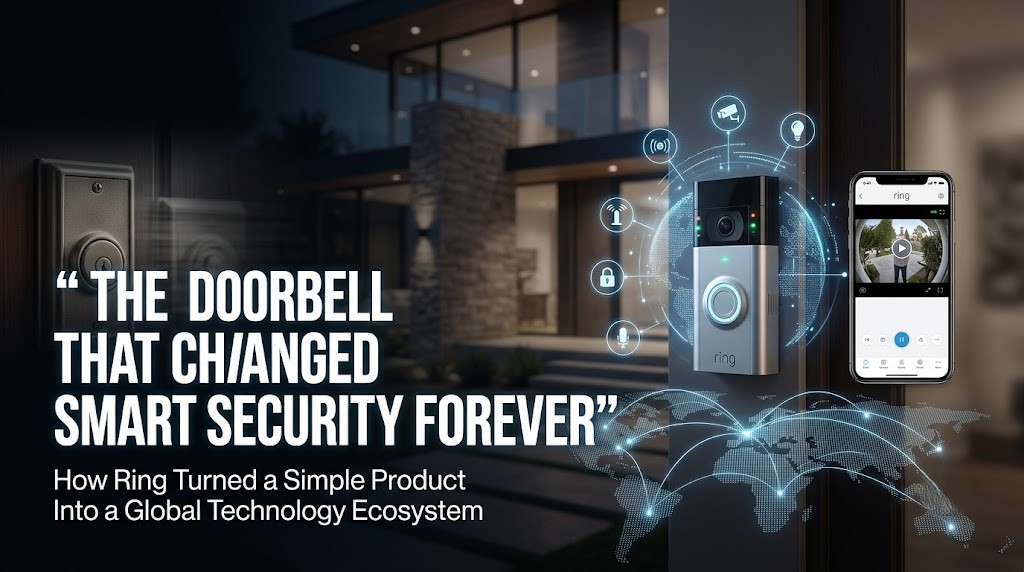
A doorbell was once one of the simplest objects in a home. It had one purpose: alert someone inside when a visitor arrived. It was a small device with almost no connection to the digital world.
Then technology changed the meaning of the doorbell forever.
Ring transformed a traditional household product into a connected security ecosystem. What started as a smart video doorbell became a global example of how technology, artificial intelligence, subscriptions, and e-commerce can completely redefine consumer behaviour.
Ring’s success was not only about creating a better camera. It was about understanding a deeper human need: people want to feel safe, connected, and in control of their surroundings. By combining hardware innovation with cloud technology and digital services, Ring turned everyday security into a smart lifestyle experience.
The story of Ring represents a larger shift happening across industries. The future of commerce is no longer only about selling physical products. The strongest brands are creating ecosystems where technology becomes a natural part of people’s daily lives.
From a Simple Doorbell to a Connected Security Ecosystem
Before smart home technology became mainstream, home security was often expensive, complicated, and controlled by professional companies. Traditional security cameras required complex installations, separate monitoring systems, and significant investment.
Ring changed this approach by making security accessible to everyday consumers.
The company introduced a simple idea: what if your doorbell could show you who was outside, even when you were not home?
This small innovation created a completely new category in the smart home market. The product combined a camera, motion sensors, mobile connectivity, and cloud technology into one easy-to-use device.
A homeowner could receive an alert on their smartphone, communicate with visitors remotely, and monitor activity around their property from anywhere in the world.
The innovation was not just the technology itself. The real breakthrough was making advanced security feel simple.
This strategy mirrors what many successful technology brands have done. Apple did not create the first smartphone, but it created a user experience that made smartphones part of everyday life. Similarly, Ring did not invent cameras, but it changed how consumers interacted with home security.
The Power of Turning a Product into an Experience
One of the biggest lessons from Ring’s growth is that modern consumers do not simply buy products. They buy experiences, convenience, and peace of mind.
A traditional doorbell was a one-time purchase. A smart doorbell became an ongoing relationship between the customer and the brand.
Through mobile applications, cloud storage, security notifications, and subscription services, Ring created a continuous digital experience. Customers were not just purchasing a device; they were joining a technology ecosystem.
This business model represents a major evolution in commerce.
Companies across industries are moving from one-time transactions toward recurring relationships. Software companies such as Adobe shifted from selling software licenses to subscription-based services. Automotive companies like Tesla continue expanding beyond vehicles by offering software updates and connected features.
The common strategy is clear: the product is only the beginning. The real value comes from the ecosystem built around it.
Artificial Intelligence Made Security Smarter
Artificial intelligence has become one of the most important technologies shaping the future of smart homes.
Ring uses AI-powered features to improve security experiences by helping users identify important events, reduce unnecessary alerts, and monitor their surroundings more effectively.
Traditional security cameras recorded everything. Smart security systems are designed to understand more.
The difference is significant.
Instead of receiving notifications for every movement, AI-based systems can analyze patterns and help users focus on meaningful activity. This reduces frustration and creates a more efficient security experience.
The growth of AI in consumer technology is visible across multiple industries.
Google has integrated artificial intelligence into smart home products through its Nest ecosystem. Samsung has expanded AI capabilities across connected devices, appliances, and mobile technology.
The future of smart living will increasingly depend on devices that do not simply respond to commands but understand user behaviour.
Amazon’s E-Commerce Advantage Changed the Game
A major turning point in Ring’s journey came when it became part of Amazon.
Amazon’s global e-commerce infrastructure helped Ring reach millions of customers around the world. The acquisition connected Ring’s hardware innovation with Amazon’s massive marketplace, logistics network, and customer ecosystem.
This combination demonstrated the power of technology companies expanding beyond their original industries.
Amazon started as an online bookstore but became a global technology company involved in cloud computing, smart devices, entertainment, and artificial intelligence.
Ring fit naturally into this broader vision.
The smart security market benefits from e-commerce because consumers can discover, compare, purchase, and install products more easily than ever before.
This trend has changed how technology brands grow. In the past, companies needed physical retail stores and large distribution networks. Today, digital platforms allow innovative products to reach global audiences faster.
Brands that understand online consumer behaviour can scale internationally without traditional barriers.
The Rise of Smart Homes and Connected Living
Ring’s growth is part of a much larger smart home revolution.
Consumers are increasingly adopting connected devices that improve convenience, efficiency, and security. From smart speakers and lighting systems to connected appliances and security solutions, homes are becoming digital ecosystems.
The global smart home industry continues expanding because consumers want technology that solves real-life problems.
A smart thermostat can reduce energy usage. A smart camera can improve security. A voice assistant can simplify daily tasks.
The biggest opportunity for brands is creating technology that feels invisible but valuable.
Successful smart home products do not require consumers to think about complicated technology. They simply make everyday activities easier.
This approach has helped companies like Philips with smart lighting solutions and IKEA with affordable connected home products build stronger relationships with modern consumers.
Why Security Became a Lifestyle Category
One of Ring’s biggest achievements was changing the perception of security.
Security was traditionally viewed as a necessity people considered only after problems occurred. Smart technology transformed it into a daily lifestyle experience.
People now want visibility, control, and instant access.
A parent can check their home while travelling. A homeowner can monitor deliveries. A family can communicate with visitors remotely.
Security became connected with convenience.
This shift is important because many successful technology brands win by entering emotional categories. They do not only solve functional problems; they address human feelings.
Apple connects with creativity and personal expression. Tesla connects with innovation and sustainability. Nike connects with ambition and identity.
Ring connects with safety and confidence.
That emotional connection is what turns products into brands.
The Subscription Economy Behind Smart Technology
Another major factor behind Ring’s success is the growth of subscription-based technology services.
Modern companies increasingly combine hardware sales with digital services to create long-term revenue models.
A smart device without software updates and cloud services becomes limited over time. A connected product with continuous improvements becomes more valuable.
Subscription models allow companies to provide additional features, storage options, advanced tools, and improved customer experiences.
This trend can be seen across multiple sectors.
Streaming platforms such as Netflix transformed entertainment through subscriptions. Fitness companies combine equipment with digital memberships. Software companies have moved almost entirely toward recurring services.
The same principle applies to smart home technology.
The future belongs to brands that can create ongoing value after the initial purchase.
Lessons From Ring for Future Global Brands
Ring’s journey provides important lessons for companies trying to build technology-driven brands.
The first lesson is that innovation does not always mean creating something completely new. Sometimes it means improving an existing product and connecting it to modern consumer needs.
The second lesson is that ecosystems are more powerful than individual products. A successful brand creates multiple touchpoints where customers continue interacting with the company.
The third lesson is that technology must solve human problems. Advanced features alone do not create demand. Consumers adopt products that make their lives easier, safer, or more enjoyable.
The future of commerce will belong to companies that combine technology with emotional value.
The Future of Smart Commerce
Ring represents a new generation of brands where physical products and digital experiences exist together.
The doorbell became a camera. The camera became a security platform. The platform became part of a connected lifestyle.
This transformation shows how technology can redefine ordinary objects and create global businesses.
The next wave of innovation will continue moving beyond traditional commerce. Smart appliances, artificial intelligence assistants, connected vehicles, wearable technology, and automated homes will create new opportunities for brands that understand consumer behaviour.
The biggest companies of tomorrow will not simply sell products.
They will create intelligent ecosystems that become part of everyday life.
Ring’s journey proves that even the simplest objects can become powerful technology platforms when innovation, convenience, and human needs come together.
The future of commerce is not just about what people buy.
It is about what technology becomes a part of. 🌐